Racial Equity and Health Policy

Survey of Immigrants

KFF-New York Times Survey: Immigrants Report Rising Fear, Negative Economic and Health Impacts, and Changing Political Views During the First Year of President Trump’s Second Term

The 2025 Survey of Immigrants, a partnership between KFF and The New York Times, takes an in-depth look at the experiences of immigrants during the first year of President Trump’s second term, including their worries related to increased immigration enforcement, their health and economic wellbeing, and the political views and preferences of immigrant voters. The survey paints a portrait of families under strain — where fear of detention and economic instability are negatively impacting immigrants’ health and reshaping immigrant families’ daily lives and views of U.S. political parties.

Read the News Release | Explore The New York Times’ Reporting
the Essentials
  • Disparities in Health and Health Care: 5 Key Questions and Answers

    This brief provides an introduction to what health and health care disparities are, why it is important to address them, what the status of disparities is today, recent federal actions to address disparities, and key issues related to addressing disparities in the future.
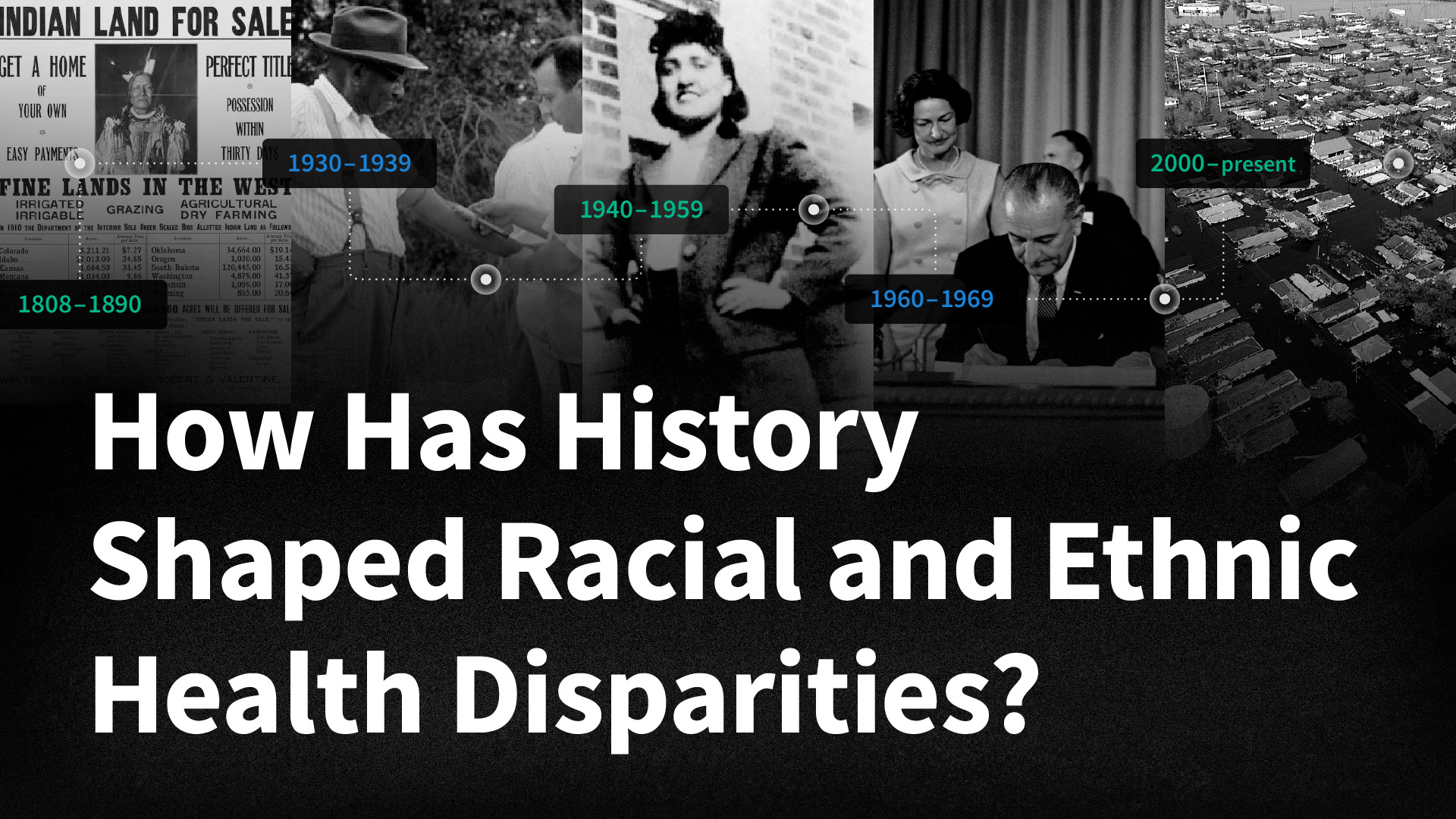
  • Timeline: How History Has Shaped Racial and Ethnic Health Disparities

    This timeline offers a historical view of significant U.S. federal policies and events spanning the early 1800s to today that have influenced present-day health disparities.
  • Health Policy 101: Chapter on Race, Inequality and Health

    Addressing persistent racial and ethnic disparities in health and health care is important for improving the nation’s health and economic prosperity. KFF explains such disparities and the factors that drive them, examines the actions to address them, and outlines future considerations.
  • Key Data on Health and Health Care by Race and Ethnicity

    Racial and ethnic disparities in health and health care remain a persistent challenge in the United States. An updated KFF resource examines how people of color fare compared to White people across 64 measures of health, health care, and social determinants of health.

Subscribe to KFF Emails

Choose which emails are best for you.
Sign up here

Filter

71 - 80 of 597 Results

  • Understanding the U.S. Immigrant Experience: The 2023 KFF/LA Times Survey of Immigrants

    Poll Finding

    The 2023 KFF/LA Times Survey of Immigrants - the largest nationally representative survey focused on this group - takes an in-depth look at the experiences of immigrants living in the U.S. in health care settings, in their homes, workplaces, and communities. The survey arises from a partnership between KFF and the Los Angeles Times.

  • Key Facts on Health Coverage of Immigrants

    Fact Sheet

    This fact sheet provides an overview of health coverage for immigrants based on data from the 2023 KFF/LA Times Survey of Immigrants, the largest nationally representative survey focused on immigrants and discusses potential implications of incoming Trump administration policies for coverage of immigrants.

  • Continued Rises in Extreme Heat and Implications for Health Disparities

    Issue Brief

    Recent literature shows that within the U.S., some communities of color have higher risks of heat-related mortality than White people. Consistent with trends in earlier years, between 2018-2021, AIAN people were most likely to die due to heat compared to all other racial and ethnic groups, and Black people had a higher rate of heat-related deaths compared to White people.

  • Living in an Undocumented Immigrant Family Under the Second Trump Administration: Fear, Uncertainty, and Impacts on Health and Well-Being

    Issue Brief

    During his second term, President Trump has implemented an array of immigration policy changes focused on restricting immigration and increasing interior immigration enforcement efforts. These policy changes include restrictions on both lawful and unlawful immigration into the U.S., increased interior enforcement activities to support mass deportation, attempts to end birthright citizenship for the children of noncitizen immigrants, and rescinding protections against enforcement action in previously protected areas such as schools, churches, and health care facilities. These actions have broad impacts across immigrant families of all statuses, including the millions of U.S. citizen children living in them.

  • Potential Implications of Immigration Restrictions on the U.S. Agricultural Workforce

    Issue Brief

    Using data from the 2022 National Agricultural Workers Survey (NAWS), this issue brief examines key characteristics of agricultural workers, including their citizenship status, health coverage, and access to health care. The Trump administration’s restrictive immigration policies may compound health challenges and risks this groups faces and have negative impacts on the cost and availability of food.

  • Five Key Facts About People Experiencing Homelessness

    Issue Brief

    This data note reviews trends in homelessness and characteristics of people who are homeless using data from HUD’s Point-in-Time (PIT) count of sheltered and unsheltered people experiencing homelessness.

  • KFF/ESPN Survey of 1988 NFL Players

    Poll Finding

    The Survey of 1988 NFL players, conducted by KFF in partnership with ESPN, looks at the overall health and well-being of former professional football players who played in the 1988 NFL season. While many are grappling with the immense toll the sport has taken on their physical and neurological health, most say they would do it all over again.

  • Health Provisions in the 2025 Federal Budget Reconciliation Law

    Issue Brief

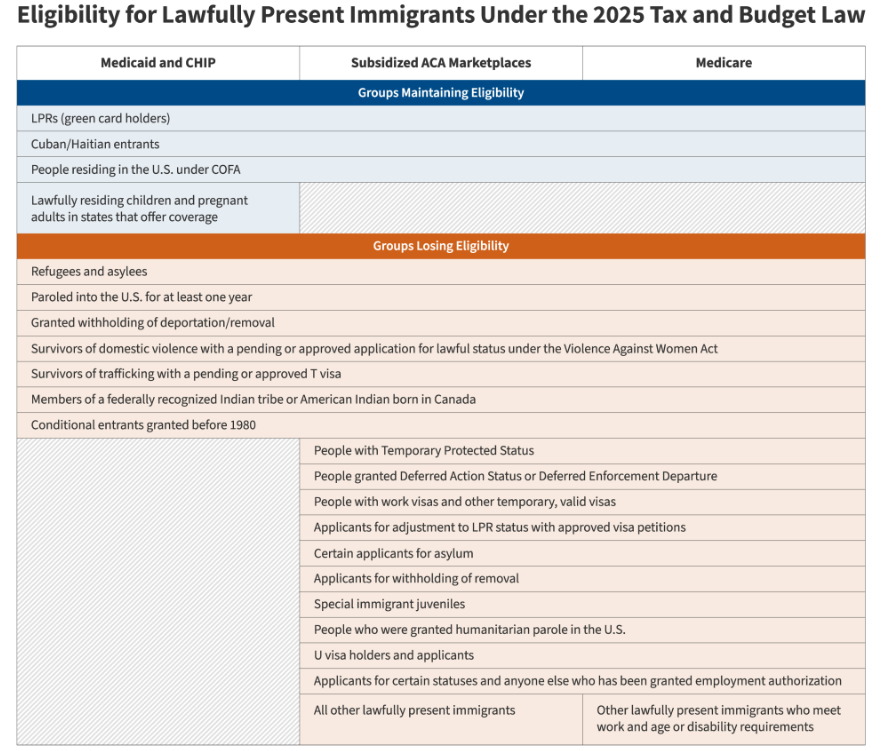
    On July 4, President Trump signed the budget reconciliation bill, previously known as the “One Big Beautiful Bill Act,” into law. This summary provides background, description, budgetary impact and related information on the health care provisions of the law in four categories: Medicaid, the Affordable Care Act, Medicare and Health Savings Accounts (HSAs).