Racial Equity and Health Policy

the Essentials
  • How Experiencing Racial Discrimination Impacts Health

    This brief highlights research examining mechanisms underlying health outcomes linked to self-reported experiences of racial discrimination, including biological changes, chronic stress, mental health, substance use, pregnancy-related outcomes, and sleep.
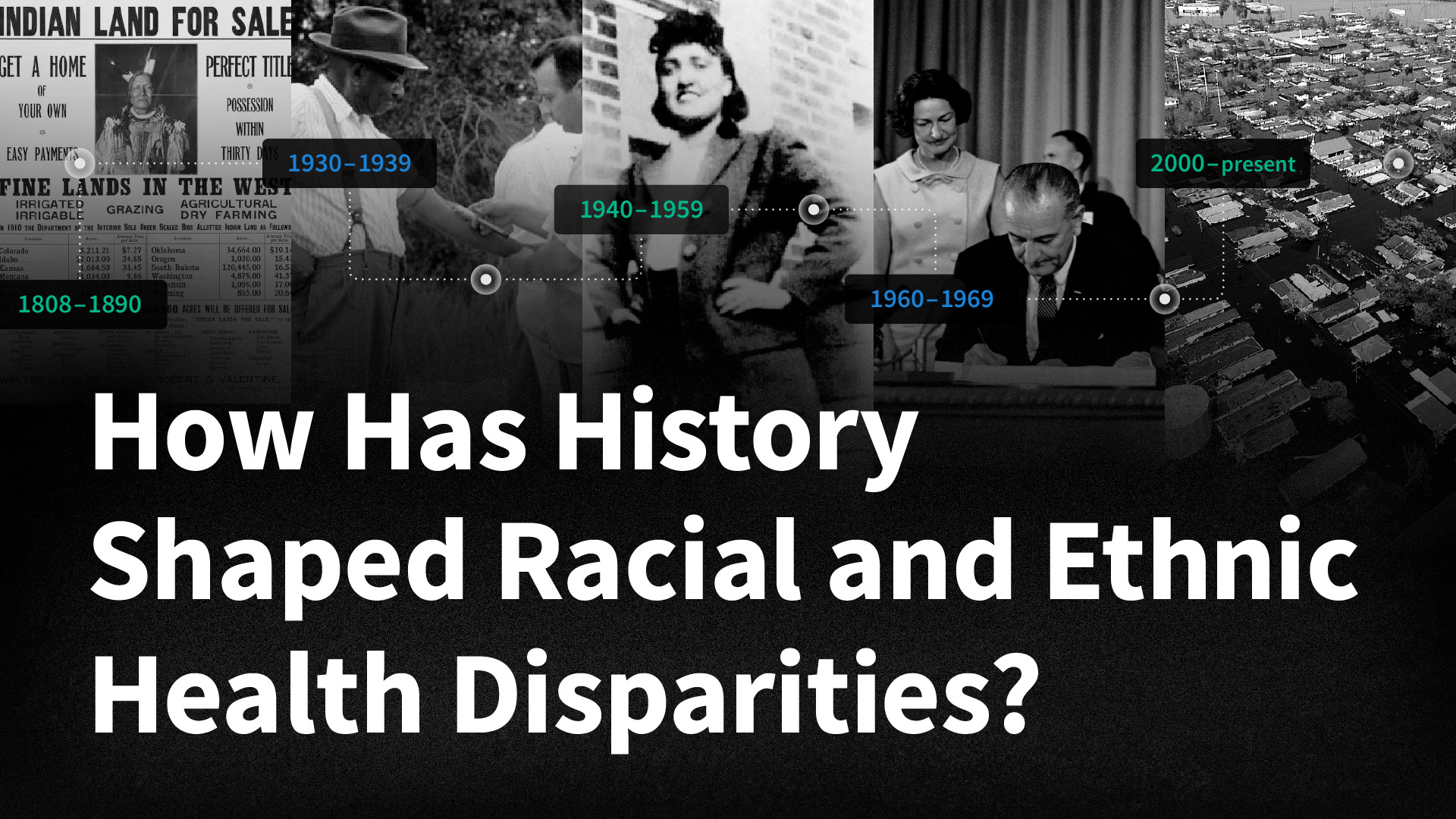
  • Timeline: How History Has Shaped Racial and Ethnic Health Disparities

    This timeline offers a historical view of significant U.S. federal policies and events spanning the early 1800s to today that have influenced present-day health disparities.
  • Health Policy 101: Chapter on Race, Inequality and Health

    Addressing persistent racial and ethnic disparities in health and health care is important for improving the nation’s health and economic prosperity. KFF explains such disparities and the factors that drive them, examines the actions to address them, and outlines future considerations.
  • Key Data on Health and Health Care by Race and Ethnicity

    Racial and ethnic disparities in health and health care remain a persistent challenge in the United States. An updated KFF resource examines how people of color fare compared to White people across 64 measures of health, health care, and social determinants of health.

Survey of Immigrants

KFF-New York Times Survey: Immigrants Report Rising Fear, Negative Economic and Health Impacts, and Changing Political Views During the First Year of President Trump’s Second Term

The 2025 Survey of Immigrants, a partnership between KFF and The New York Times, takes an in-depth look at the experiences of immigrants during the first year of President Trump’s second term, including their worries related to increased immigration enforcement, their health and economic wellbeing, and the political views and preferences of immigrant voters. The survey paints a portrait of families under strain — where fear of detention and economic instability are negatively impacting immigrants’ health and reshaping immigrant families’ daily lives and views of U.S. political parties.

Read the News Release | Explore The New York Times’ Reporting
Stay informed.

Stay informed.

Filter

581 - 590 of 602 Results

  • The Medicare Program: Panorama General De Medicare

    Fact Sheet

    Que Es El Medicare Y Como Se Financia? Medicare es un programa de seguro medico nacional que atiende a 39 millones de ancianos y discapacitados. Antes de la existencia del Medicare, menos de la mitad de todos los norteamericanos de edad avanzada contaban con un seguro medico. Hoy en dia, practicamente todos los adultos de 65 anos de edad mayores se encuentran asegurados bajo Medicare. Medicare cubre a 34 millones de beneficiarios ancianos y a…

  • Racial/Ethnic Differences in Cardiac Care: The Weight of the Evidence

    Report

    Numerous studies over the past two decades have documented racial and ethnic differences in care for heart conditions. To assess the quality of the evidence and to summarize the information for a physician audience, the Henry J. Kaiser Family Foundation collaborated with the American College of Cardiology Foundation to review the body of research on racial/ethnic differences in cardiac care. There is credible evidence that minority patients are less likely than white patients to receive…

  • Hurricane Harvey: The Experiences of Immigrants Living in the Texas Gulf Coast

    Report

    In order to better understand the particular needs of immigrants both in recovering from and preparing for future storms, this analysis from the Kaiser Family Foundation and the Episcopal Health Foundation highlights the views and experiences of foreign-born residents who were living in 24 coastal Texas counties hard-hit by Hurricane Harvey. Specifically, the brief explores the financial circumstances of immigrants following the storm, as well as their health care access, social support, and top priorities…

  • Analysis: Immigrants Living along the Texas Gulf Coast Hit Hard Financially Following Hurricane Harvey

    News Release

    Immigrants living along the Texas Gulf Coast were more likely than their U.S.-born neighbors to suffer employment and income losses as a result of Hurricane Harvey (64% vs. 39%), a new Kaiser Family Foundation/Episcopal Health Foundation analysis finds. The analysis examines differences between immigrants and U.S.-born families based on a fall KFF/EHF survey of residents in 24 Texas counties hit hard by Hurricane Harvey in August 2017. Other findings include: Immigrants were more likely to…

  • Potential Effects of Public Charge Changes on Health Coverage for Citizen Children

    Issue Brief

    The Trump Administration is pursuing changes that, for the first time, would allow the federal government to take into account use of Medicaid, CHIP, subsidies for Marketplace coverage and other health, nutrition, and non-cash programs when making public charge determinations. These changes would likely lead to decreased participation in Medicaid, CHIP, Marketplace coverage, and other programs among legal immigrants and their citizen children, even though they would remain eligible.

  • New Brief Examines Potential Effects of Public Charge Changes on Health Coverage for Citizen Children 

    News Release

      The Trump Administration is pursuing changes that, for the first time, would allow the federal government to take into account the use of federal health, nutrition, and other non-cash public programs, including Medicaid and the Children’s Health Insurance Program (CHIP), when making a determination about whether someone is likely to be a “public charge.” Under these changes, use of these programs by an individual or a family member, including a citizen child, could result…

  • When a Family Member is Detained or Deported, Immigrant Families Often Face Financial Hardship, Physical and Emotional Health Consequences and New Fears of Engaging with Public Programs

    News Release

    As the Trump Administration pursues enhanced enforcement of the nation’s immigration laws, a new issue brief from the Kaiser Family Foundation documents how the detention or deportation of an individual can have major effects on families and communities. They include sudden and severe financial hardship and emotional trauma that can trigger long-term effects on mental and physical health, especially for children. At the same time as families are facing these increased needs, their fears of…

  • One Year after Hurricanes Irma and Maria, Recovery Has Progressed Slowly in Puerto Rico and the U.S. Virgin Islands and Health Care Challenges Remain, Particularly in Mental Health

    News Release

    One year after Hurricanes Irma and Maria made landfall, recovery has progressed slowly and unevenly in Puerto Rico and the U.S. Virgin Islands. The territories’ health care systems continue to face capacity, infrastructure and financial challenges even as health needs have increased, especially in mental health, according to two new reports from the Kaiser Family Foundation. The reports, drawing upon interviews with government and health officials from both territories, public documents and data, and an…

  • Voices from Puerto Rico: Reflections Two Months After Maria (Video)

    Video

    Residents of Puerto Rico discuss their daily lives and their views on recovery efforts two months after Hurricane Maria. In this video, they describe job loss and continuing economic disruption, a lack of basic services such as electricity and a rising toll on the population's mental and physical health.