Racial Equity and Health Policy

Survey of Immigrants

KFF-New York Times Survey: Immigrants Report Rising Fear, Negative Economic and Health Impacts, and Changing Political Views During the First Year of President Trump’s Second Term

The 2025 Survey of Immigrants, a partnership between KFF and The New York Times, takes an in-depth look at the experiences of immigrants during the first year of President Trump’s second term, including their worries related to increased immigration enforcement, their health and economic wellbeing, and the political views and preferences of immigrant voters. The survey paints a portrait of families under strain — where fear of detention and economic instability are negatively impacting immigrants’ health and reshaping immigrant families’ daily lives and views of U.S. political parties.

Read the News Release | Explore The New York Times’ Reporting
the Essentials
  • Disparities in Health and Health Care: 5 Key Questions and Answers

    This brief provides an introduction to what health and health care disparities are, why it is important to address them, what the status of disparities is today, recent federal actions to address disparities, and key issues related to addressing disparities in the future.
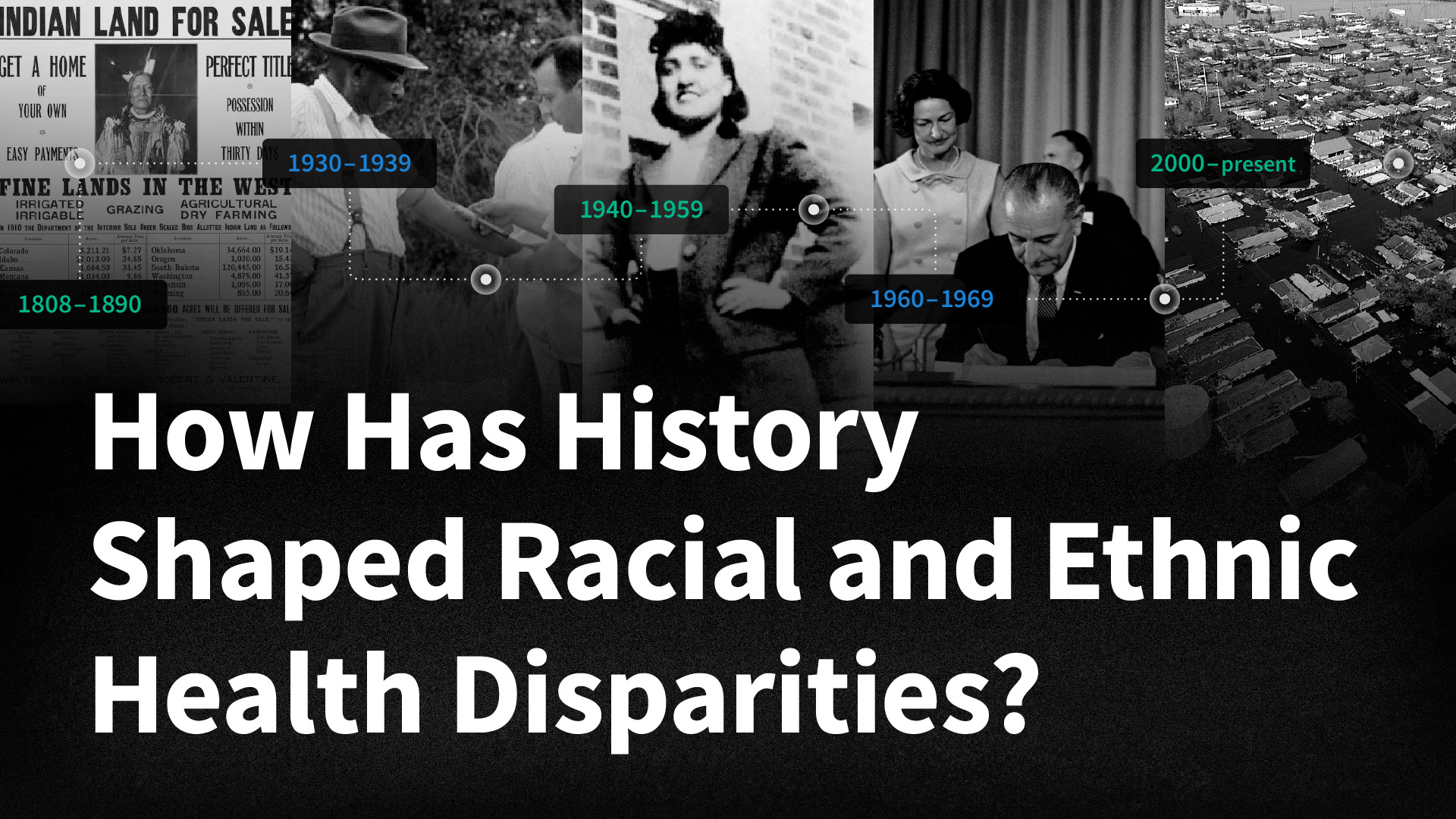
  • Timeline: How History Has Shaped Racial and Ethnic Health Disparities

    This timeline offers a historical view of significant U.S. federal policies and events spanning the early 1800s to today that have influenced present-day health disparities.
  • Health Policy 101: Chapter on Race, Inequality and Health

    Addressing persistent racial and ethnic disparities in health and health care is important for improving the nation’s health and economic prosperity. KFF explains such disparities and the factors that drive them, examines the actions to address them, and outlines future considerations.
  • Key Data on Health and Health Care by Race and Ethnicity

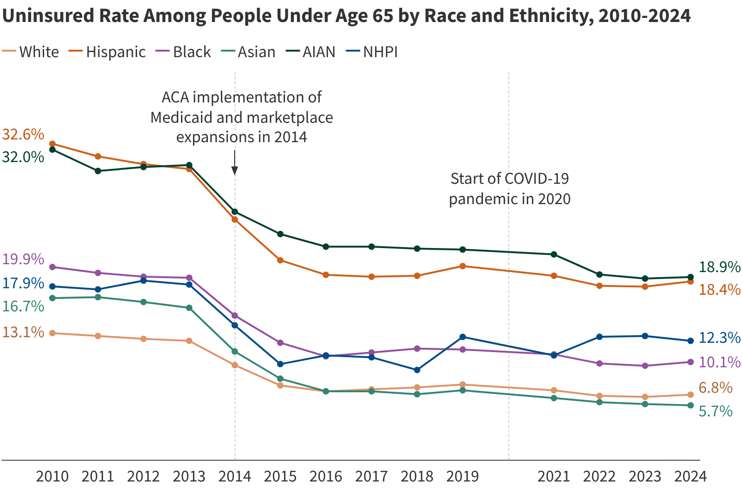
    Racial and ethnic disparities in health and health care remain a persistent challenge in the United States. An updated KFF resource examines how people of color fare compared to White people across 64 measures of health, health care, and social determinants of health.

Latest News

No Posts to Show

Subscribe to KFF Emails

Choose which emails are best for you.
Sign up here

Filter

581 - 590 of 599 Results

  • Five Facts About Black Women’s Experiences in Health Care

    Issue Brief

    This brief examines Black women's experiences in health care, including unfair treatment by providers due to race and their health outcomes as a result of this treatment. The brief also explores the association between racially concordant providers and positive health care experiences among Black women.

  • Language Barriers in Health Care: Findings from the KFF Survey on Racism, Discrimination, and Health

    Poll Finding

    In the U.S., 26 million people have limited English proficiency, representing about 8% of people ages 5 and older. Those with limited English proficiency report worse overall health status than those who are English proficient, but data suggests that having access to providers who speak their preferred language may help these disparities and can improve health care experiences.

  • Mitigating Childhood Lead Exposure and Disparities: Medicaid and Other Federal Initiatives

    Issue Brief

    Exposure to lead can seriously harm a child’s health, including damage to the brain and nervous system, slowed growth and development, learning and behavior problems, and hearing and speech problems. The effects of lead on the nervous system can cause lower IQ, decreased ability to pay attention, and under performance in school.

  • Climate Change and Health Equity: Key Questions and Answers

    Issue Brief

    While climate change poses health threats for everyone, people of color, low-income people, and other marginalized or high-need groups face disproportionate risks due to underlying inequities and structural racism and discrimination.

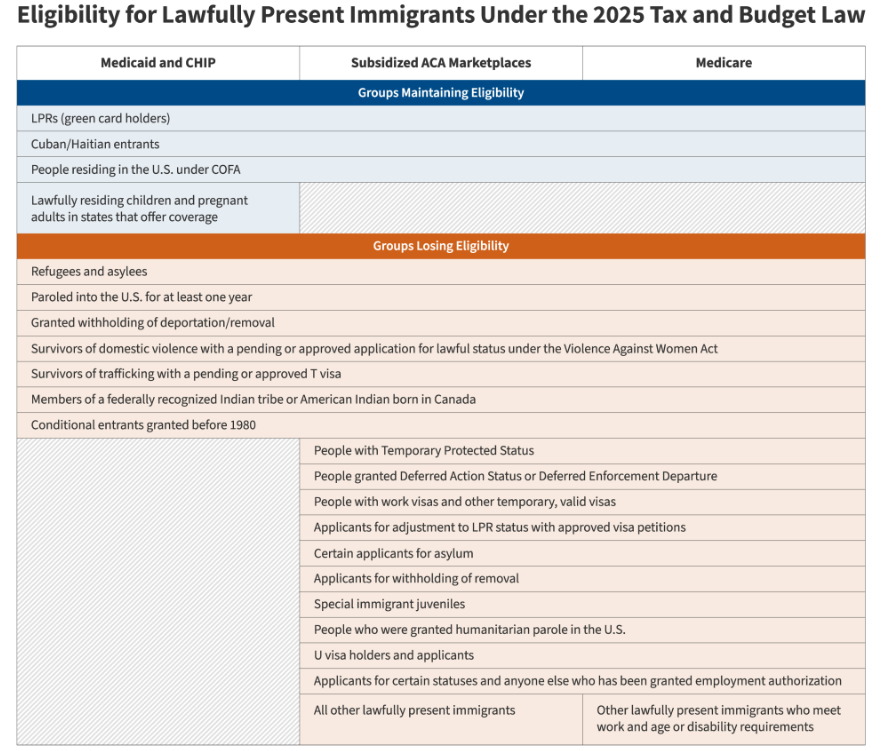
  • Immigrants in the U.S. Continue to Face Health Care Challenges

    Feature

    June marks National Immigrant Heritage Month, which honors the contributions of immigrants to the U.S. As of 2020, there were close to 45 million immigrants residing in the U.S., accounting for 14% of the total U.S. population.

  • How Equitable is Access to COVID-19 Treatments?

    Issue Brief

    This issue brief assesses the availability of oral antiviral treatments by county and certain county characteristics, including metro vs. non-metro status, poverty rate, and majority Black, Hispanic, or American Indian or Alaska Native (AIAN).

  • State Reported Efforts to Address Health Disparities: A 50 State Review

    Issue Brief

    This analysis focuses on current state efforts, many of which were implemented during or after 2020, to address health disparities and advance health equity based on a review of publicly available materials from all 50 states and DC. In addition, case study interviews were conducted with 14 stakeholders in three states (California, North Dakota, and Michigan) to increase understanding of the factors contributing to success of these state initiatives, lessons learned, and potential implications for other states.