Racial Equity and Health Policy

Survey of Immigrants

KFF-New York Times Survey: Immigrants Report Rising Fear, Negative Economic and Health Impacts, and Changing Political Views During the First Year of President Trump’s Second Term

The 2025 Survey of Immigrants, a partnership between KFF and The New York Times, takes an in-depth look at the experiences of immigrants during the first year of President Trump’s second term, including their worries related to increased immigration enforcement, their health and economic wellbeing, and the political views and preferences of immigrant voters. The survey paints a portrait of families under strain — where fear of detention and economic instability are negatively impacting immigrants’ health and reshaping immigrant families’ daily lives and views of U.S. political parties.

Read the News Release | Explore The New York Times’ Reporting
the Essentials
  • Disparities in Health and Health Care: 5 Key Questions and Answers

    This brief provides an introduction to what health and health care disparities are, why it is important to address them, what the status of disparities is today, recent federal actions to address disparities, and key issues related to addressing disparities in the future.
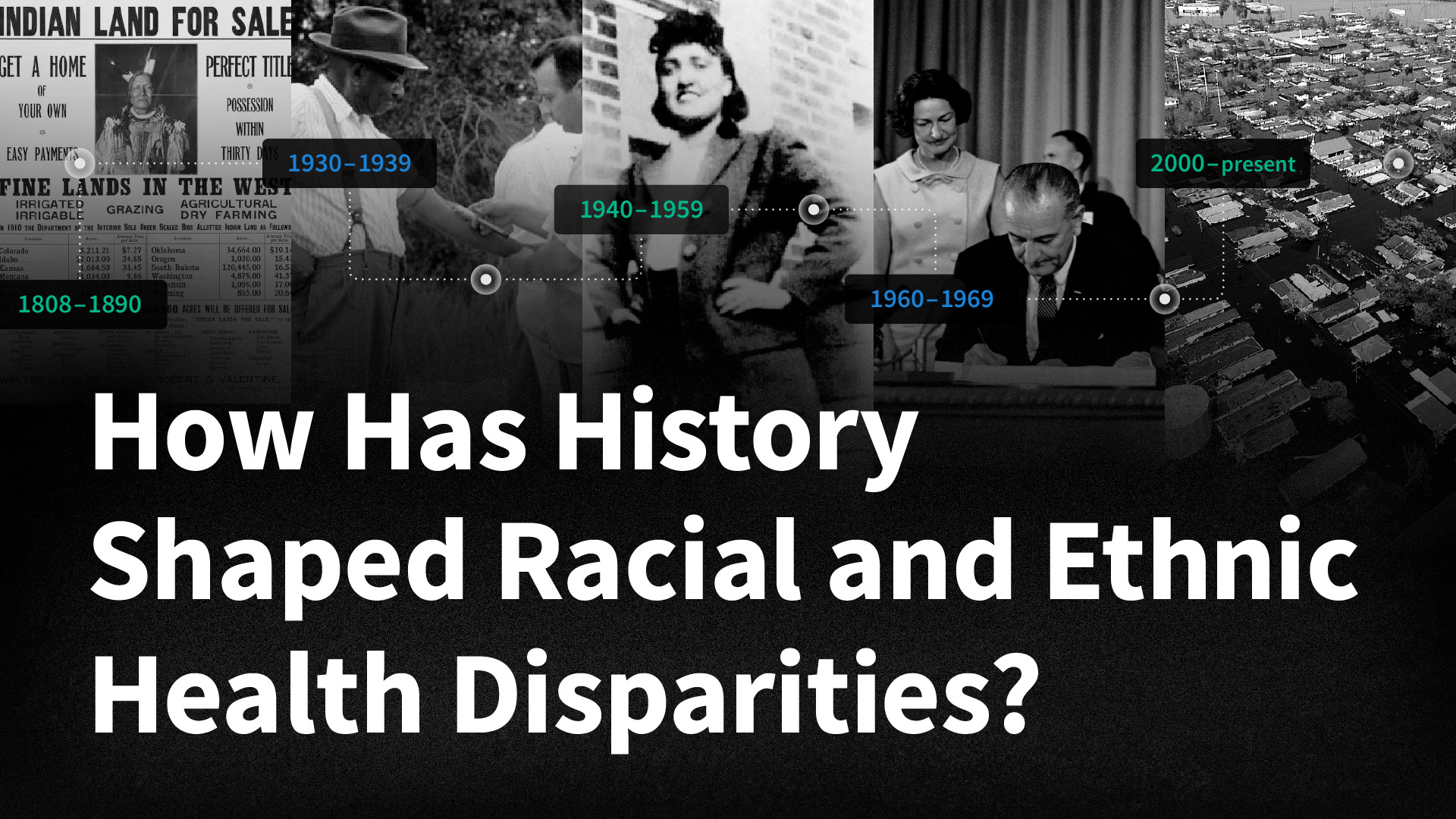
  • Timeline: How History Has Shaped Racial and Ethnic Health Disparities

    This timeline offers a historical view of significant U.S. federal policies and events spanning the early 1800s to today that have influenced present-day health disparities.
  • Health Policy 101: Chapter on Race, Inequality and Health

    Addressing persistent racial and ethnic disparities in health and health care is important for improving the nation’s health and economic prosperity. KFF explains such disparities and the factors that drive them, examines the actions to address them, and outlines future considerations.
  • Key Data on Health and Health Care by Race and Ethnicity

    Racial and ethnic disparities in health and health care remain a persistent challenge in the United States. An updated KFF resource examines how people of color fare compared to White people across 64 measures of health, health care, and social determinants of health.

Subscribe to KFF Emails

Choose which emails are best for you.
Sign up here

Filter

561 - 570 of 597 Results

  • Indian Health Care in the 21st Century: A Case Study in Disparities

    Report

    The Kaiser Family Foundation, in conjunction with the Morris K. Udall Foundation and the American Public Health Association hosted an event on May 9, 2005 which focused on key Indian health issues, including the availability of mental health services, the adequacy of federal funding, and priorities for Indian health. Agenda (.pdf)Speaker Biographies (.

  • Black Women in America

    Poll Finding

    The Washington Post and the Kaiser Family Foundation partnered to conduct a survey examining the opinions of black women around the nation on a wide range of issues including health care. The survey included a large oversample of African Americans to enable accurate analysis of subgroups of this population.

  • What’s the Diagnosis? Latinos, Media & Health

    Report

    Three reports examining how health issues are handled by the Latino-oriented media today and how Latinos use the media as an information source on health issues. The three new studies were released at the National Association of Hispanic Journalists (NAHJ) conference.

  • Medicare’s Role for Latinos – (Spanish version)

    Other Post

    Medicare's Role for Latinos - (Spanish version) Note: This publication is no longer in circulation. However, a few copies may still exist in the Foundation's internal library that could be xeroxed. Please email order@kff.

  • Native Americans and Medicaid: Coverage and Financing Issues

    Other Post

    Native Americans and Medicaid:Coverage and Financing Issues Prepared by Andy Schneider and JoAnn Martinez, The Center on Budget and Policy Priorities for The Kaiser Commission on the Future of Medicaid December 1997 Table 1: Medicaid Eligibility Thresholds Pregnant Women, Infants and Children (Effective October 1997) Other Eligibility Categories State Pregnant Women and Infants Children Under…

  • Racial and Ethnic Health Disparities: Potential Implications of the Election

    Issue Brief

    Former President Trump and Vice President Harris have taken widely different stances and approaches on recognizing and addressing racial and ethnic disparities. These differences can be seen across areas of health care, including health coverage, reproductive and maternal health, and immigrant health and well-being and are likely to have important implications for future efforts to address health disparities.

  • Section 1115 Waiver Watch: Medicaid Services for Traditional American Indian and Alaska Native Health Care Practices

    Issue Brief

    In October 2024, the Centers for Medicare and Medicaid Services (CMS) approved the first ever Section 1115 waiver demonstration amendments that would allow Medicaid and CHIP coverage of traditional health care practices for American Indian or Alaska Native (AIAN) people in Arizona, California, New Mexico, and Oregon. This Waiver Watch reviews disparities in health and health care for AIAN people and summarizes the key features of the approved waivers.

  • How Has History Shaped Racial and Ethnic Health Disparities?  

    News Release

    KFF’s new interactive timeline explores how history has shaped racial and ethnic health disparities and the lasting effects that persist to this day. The timeline describes major U.S. federal policies and events since the early 1800s that are linked to present-day health disparities.