Racial Equity and Health Policy

Survey of Immigrants

KFF-New York Times Survey: Immigrants Report Rising Fear, Negative Economic and Health Impacts, and Changing Political Views During the First Year of President Trump’s Second Term

The 2025 Survey of Immigrants, a partnership between KFF and The New York Times, takes an in-depth look at the experiences of immigrants during the first year of President Trump’s second term, including their worries related to increased immigration enforcement, their health and economic wellbeing, and the political views and preferences of immigrant voters. The survey paints a portrait of families under strain — where fear of detention and economic instability are negatively impacting immigrants’ health and reshaping immigrant families’ daily lives and views of U.S. political parties.

Read the News Release | Explore The New York Times’ Reporting
the Essentials
  • Disparities in Health and Health Care: 5 Key Questions and Answers

    This brief provides an introduction to what health and health care disparities are, why it is important to address them, what the status of disparities is today, recent federal actions to address disparities, and key issues related to addressing disparities in the future.
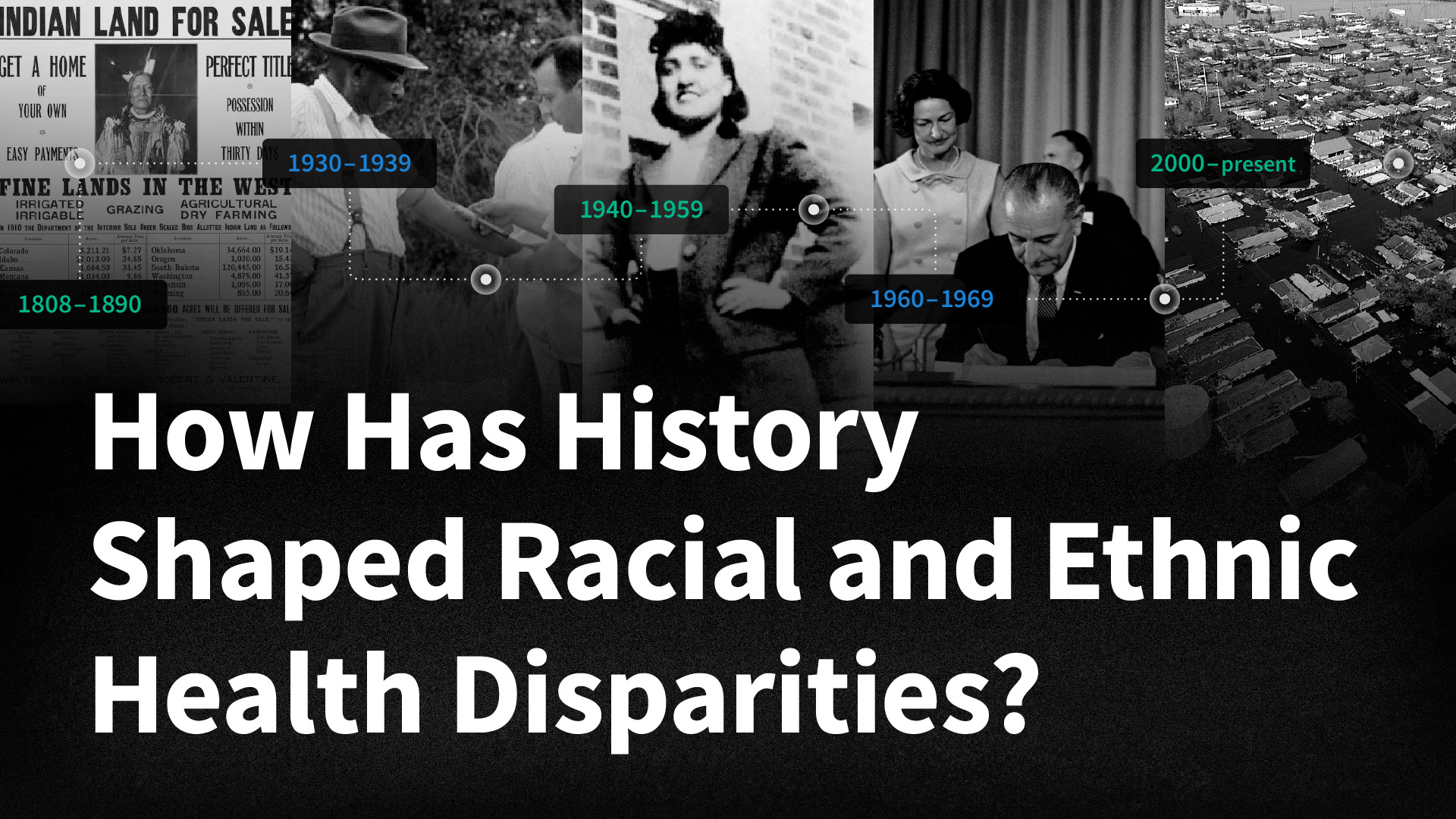
  • Timeline: How History Has Shaped Racial and Ethnic Health Disparities

    This timeline offers a historical view of significant U.S. federal policies and events spanning the early 1800s to today that have influenced present-day health disparities.
  • Health Policy 101: Chapter on Race, Inequality and Health

    Addressing persistent racial and ethnic disparities in health and health care is important for improving the nation’s health and economic prosperity. KFF explains such disparities and the factors that drive them, examines the actions to address them, and outlines future considerations.
  • Key Data on Health and Health Care by Race and Ethnicity

    Racial and ethnic disparities in health and health care remain a persistent challenge in the United States. An updated KFF resource examines how people of color fare compared to White people across 64 measures of health, health care, and social determinants of health.

Subscribe to KFF Emails

Choose which emails are best for you.
Sign up here

Filter

551 - 560 of 591 Results

  • Health Provisions in the 2025 Federal Budget Reconciliation Law

    Issue Brief

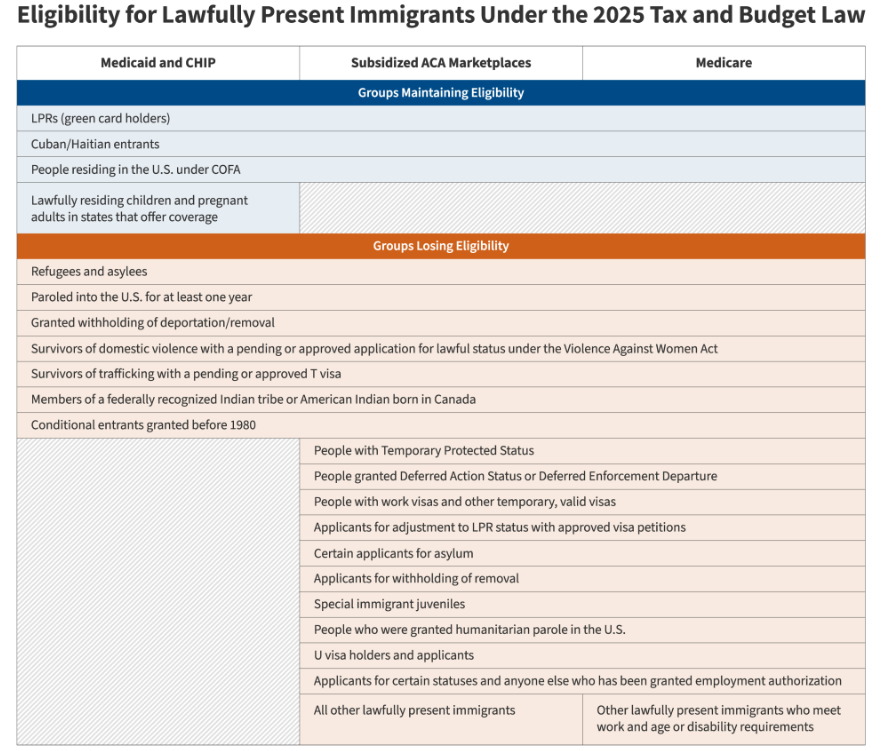
    On July 4, President Trump signed the budget reconciliation bill, previously known as the “One Big Beautiful Bill Act,” into law. This summary provides background, description, budgetary impact and related information on the health care provisions of the law in four categories: Medicaid, the Affordable Care Act, Medicare and Health Savings Accounts (HSAs).

  • Impacts of Federal Actions on Extreme Heat and Health

    Issue Brief

    Between 1999 and 2023, the number of heat-related deaths in the U.S. increased by 117%. KFF analysis of data from the Centers for Disease Control and Prevention shows that American Indian or Alaska Native and Black people are at higher risk of experiencing a heat-related death compared to their White counterparts. Estimates suggest that heat events in the U.S result in approximately $1 billion in excess health care costs each year. If left unaddressed, climate change could cost the U.S. economy approximately $14.5 trillion over the next fifty years.

  • Potential “Chilling Effects” of Public Charge and Other Immigration Policies on Medicaid and CHIP Enrollment

    Issue Brief

    This issue brief reviews the Department of Homeland Security (DHS) proposed rule that would rescind 2022 Biden-era public charge determination regulations. The proposed public charge changes along with other Trump administration policy changes will likely lead to decreased participation in public programs, including Medicaid, among a broad group of immigrant families, including citizen children in those families.

  • What Role Do Immigrants Play in the Hospital Workforce?

    Issue Brief

    This issue brief analyzes the role that immigrants play in the hospital workforce, overall and by occupation and state. Immigrants account for about one in six hospital workers, including among clinical and nonclinical workers.

  • How Pending Health-Related Lawsuits Could be Impacted by the Incoming Trump Administration

    Issue Brief

    This brief provides an overview of current lawsuits in health policy including preventive services, abortion care, gender affirming care, Medicare drug price negotiations, nursing home staffing rules, private coverage consumer protections, and protections and health coverage for Deferred Action for Childhood Arrivals (DACA) recipients; how they may be affected by the incoming Trump administration; and the implications of their potential outcomes.

  • Key Data on Health and Health Care for Native Hawaiian or Pacific Islander People

    Issue Brief

    Among NHPI people, there is significant variation in key factors that influence health, including health coverage, income, and homeownership, with Marshallese people faring the worst across all examined measures. Data gaps prevent the ability to fully identify and understand health disparities for NHPI people. Among available data, NHPI people fare worse than White people for the majority of measures.

  • A Look at Federal Health Data Taken Offline

    Policy Watch

    This post looks at federal government databases with key health data that went offline on Jan. 31, 2025, including several related to HIV, some of which had returned by Feb. 2, 2025. It briefly describing the affected databases, which include widely used, large-scale national health surveys, indices, and data dashboards, that inform research, policy making, and media coverage about health care and public health.