Racial Equity and Health Policy

the Essentials
  • Health Coverage by Race and Ethnicity, 2010-2024

    There have been longstanding racial and ethnic disparities in health coverage that contribute to disparities in health. This brief examines trends in health coverage by race and ethnicity from 2010 through 2024 and discusses the implications for such disparities.
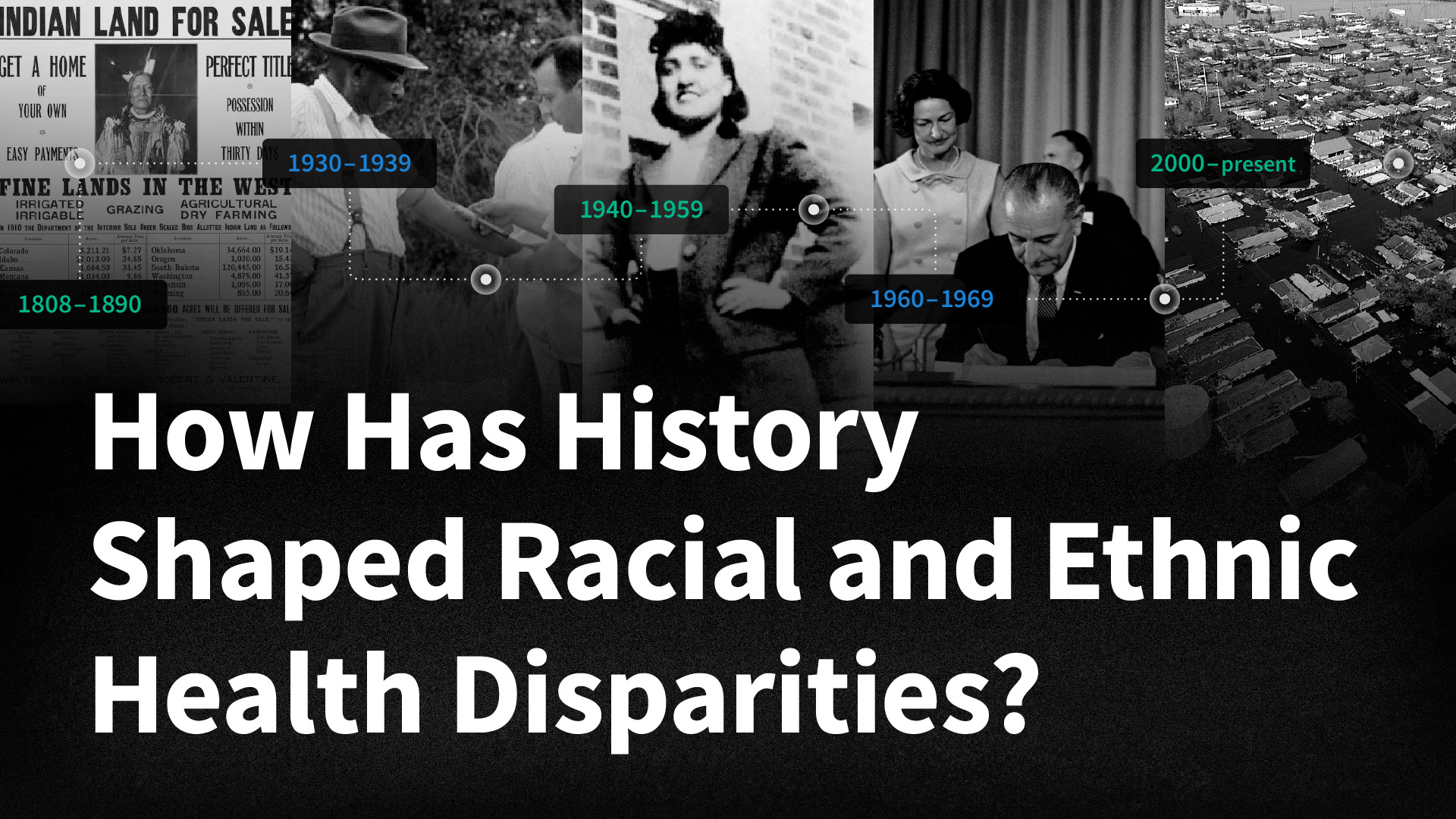
  • Timeline: How History Has Shaped Racial and Ethnic Health Disparities

    This timeline offers a historical view of significant U.S. federal policies and events spanning the early 1800s to today that have influenced present-day health disparities.
  • Health Policy 101: Chapter on Race, Inequality and Health

    Addressing persistent racial and ethnic disparities in health and health care is important for improving the nation’s health and economic prosperity. KFF explains such disparities and the factors that drive them, examines the actions to address them, and outlines future considerations.
  • Key Data on Health and Health Care by Race and Ethnicity

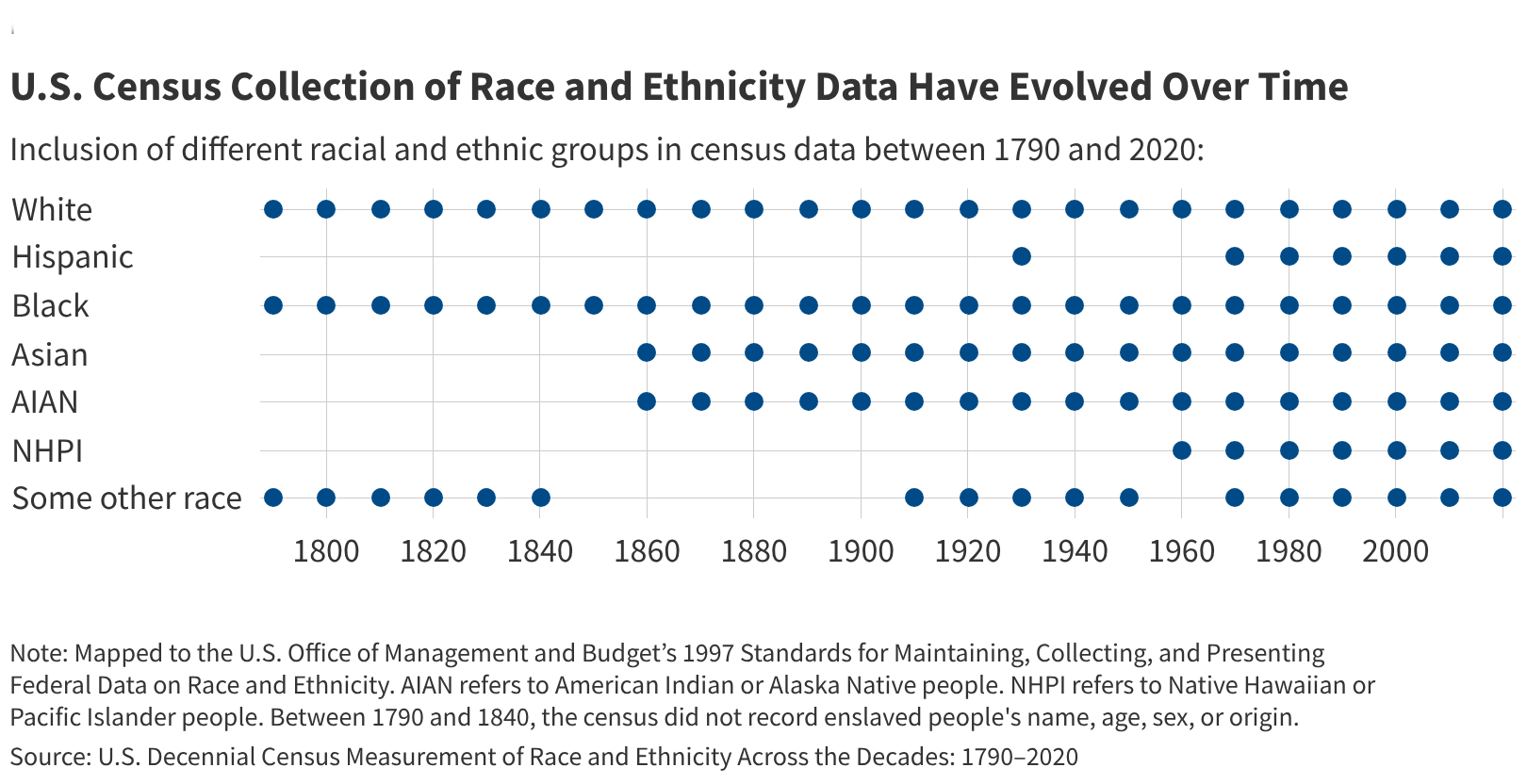
    Racial and ethnic disparities in health and health care remain a persistent challenge in the United States. An updated KFF resource examines how people of color fare compared to White people across 64 measures of health, health care, and social determinants of health.

Survey of Immigrants

KFF-New York Times Survey: Immigrants Report Rising Fear, Negative Economic and Health Impacts, and Changing Political Views During the First Year of President Trump’s Second Term

The 2025 Survey of Immigrants, a partnership between KFF and The New York Times, takes an in-depth look at the experiences of immigrants during the first year of President Trump’s second term, including their worries related to increased immigration enforcement, their health and economic wellbeing, and the political views and preferences of immigrant voters. The survey paints a portrait of families under strain — where fear of detention and economic instability are negatively impacting immigrants’ health and reshaping immigrant families’ daily lives and views of U.S. political parties.

Read the News Release | Explore The New York Times’ Reporting
Subscribe to KFF Emails

Choose which emails are best for you.
Sign up here

Filter

551 - 560 of 602 Results

  • Vaccine Hesitancy Among Hispanic Adults

    Poll Finding

    Based on data from the KFF COVID-19 Vaccine Monitor, this poll finding explores attitudes among Hispanic Americans toward the coronavirus and a generational gap in willingness to get a potential vaccine.

  • Vaccine Monitor: Nearly Half of the Public Wants to Get a COVID-19 Vaccine as Soon as They Can or Has Already Been Vaccinated, Up across Racial and Ethnic Groups Since December

    News Release

    Most Convincing Messages to Promote Vaccination Highlight Effectiveness at Preventing Illness and a Return to Normal Life; Hearing about Rare Allergic Reactions and Side Effects May Discourage Some New KFF Dashboard Features Key Data and Insights from the Vaccine Monitor With millions of Americans getting their first COVID-19 vaccinations, the public’s eagerness to get a vaccine is rising across racial and ethnic groups, though Republicans and rural residents remain the most reluctant groups, the latest…

  • The Role of Language in Health Care Access and Utilization for Insured Hispanic Adults

    Issue Brief

    The ACA coverage expansions may help mitigate some barriers people with limited English proficiency (LEP) face in accessing coverage and care. However, individuals with LEP may still face increased barriers to care with coverage. This analysis examines differences in health care experiences between English- and Spanish-speaking Hispanic adults with insurance using data from the 2014 Kaiser Survey of Low-Income Americans and the ACA.

  • Health Care in Puerto Rico and the U.S. Virgin Islands: A Six-Month Check-Up After the Storms (Report)

    Issue Brief

    Puerto Rico and the U.S. Virgin Islands suffered significant damage to their infrastructure and health care systems from Hurricanes Irma and Maria in September 2017. Drawing on interviews with residents and key stakeholders as well as public reports, this brief provides an overview of the status of the recovery efforts six months after the storms, with a focus on the health care systems.

  • Atención de salud en Puerto Rico y las Islas Vírgenes de los Estados Unidos: una revisión, a seis meses de las tormentas (Informe)

    Issue Brief

    Puerto Rico y las Islas Vírgenes de los Estados Unidos (USVI) sufrieron daños significativos en su infraestructura y sistemas de salud a causa del impacto de los huracanes Irma y María en septiembre de 2017. Basándose en entrevistas con residentes, partes interesadas clave, y en informes públicos, este informe proporciona una visión general del estado de los esfuerzos de recuperación, a seis meses de las tormentas, con un enfoque en los sistemas de atención médica.

  • One Year after the Storms: Recovery and Health Care in Puerto Rico and the U.S. Virgin Islands

    Issue Brief

    One year after Hurricanes Irma and Maria made landfall, Puerto Rico and the U.S. Virgin Islands (USVI) are still feeling the storms’ effects. Drawing on key stakeholder interviews and public reports, this brief provides an overview of recovery status and preparation efforts for the current hurricane season one year after the storms, with a focus on the territories’ health care systems.

  • One Year after Hurricanes Irma and Maria, Recovery Has Progressed Slowly in Puerto Rico and the U.S. Virgin Islands and Health Care Challenges Remain, Particularly in Mental Health

    News Release

    One year after Hurricanes Irma and Maria made landfall, recovery has progressed slowly and unevenly in Puerto Rico and the U.S. Virgin Islands. The territories’ health care systems continue to face capacity, infrastructure and financial challenges even as health needs have increased, especially in mental health, according to two new reports from the Kaiser Family Foundation. The reports, drawing upon interviews with government and health officials from both territories, public documents and data, and an…

  • Key Facts: African Americans and HIV/AIDS

    Report

    provides comprehensive data on the impact of HIV/AIDS epidemic on African Americans. Based on the most recent data and research on the epidemiology of HIV/AIDS among African Americans, the report includes an overview and epidemic profile, as well as data on major trends, access to and use of health services, and perceptions of HIV/AIDS. Chartbook (.pdf)

  • African American and HIV/AIDS Survey – News Release

    Other Post

    Despite Widespread Concern About AIDS, Few African Americans See 'A Lot' of Action From Community Groups and Government in Fight Against Disease African Americans Want Practical Help on HIV/AIDS:How to Talk with Children and Partners, More Information About Testing and Treatment Media Named As Most Important Resource on HIV/AIDS Embargoed for release until: 9:00 am, ET, Tuesday, March 17, 1998 Boston, MA -- As African Americans make up a growing percent of new AIDS cases…