Racial Equity and Health Policy

the Essentials
  • How Experiencing Racial Discrimination Impacts Health

    This brief highlights research examining mechanisms underlying health outcomes linked to self-reported experiences of racial discrimination, including biological changes, chronic stress, mental health, substance use, pregnancy-related outcomes, and sleep.
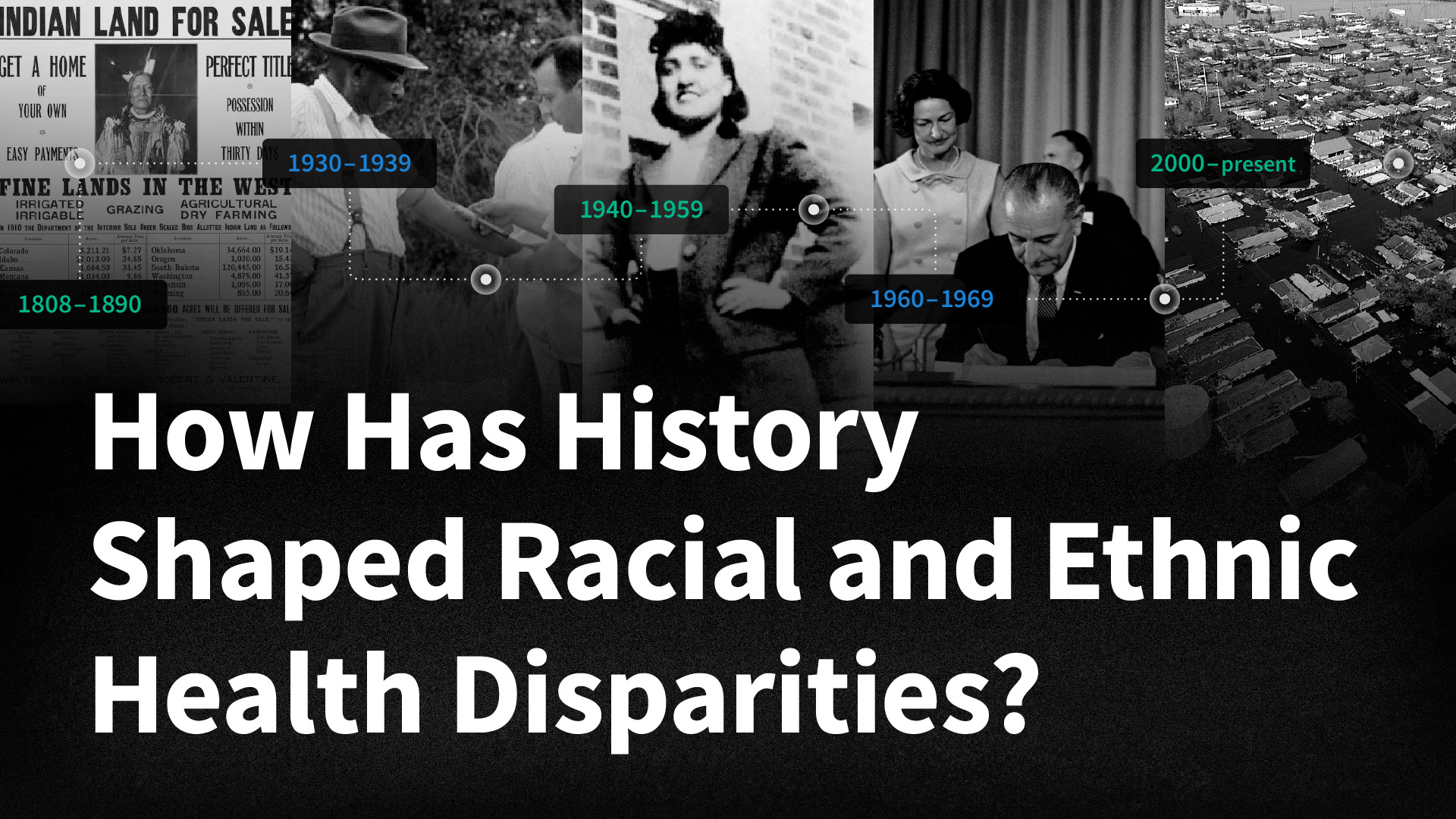
  • Timeline: How History Has Shaped Racial and Ethnic Health Disparities

    This timeline offers a historical view of significant U.S. federal policies and events spanning the early 1800s to today that have influenced present-day health disparities.
  • Health Policy 101: Chapter on Race, Inequality and Health

    Addressing persistent racial and ethnic disparities in health and health care is important for improving the nation’s health and economic prosperity. KFF explains such disparities and the factors that drive them, examines the actions to address them, and outlines future considerations.
  • Key Data on Health and Health Care by Race and Ethnicity

    Racial and ethnic disparities in health and health care remain a persistent challenge in the United States. An updated KFF resource examines how people of color fare compared to White people across 64 measures of health, health care, and social determinants of health.

Survey of Immigrants

KFF-New York Times Survey: Immigrants Report Rising Fear, Negative Economic and Health Impacts, and Changing Political Views During the First Year of President Trump’s Second Term

The 2025 Survey of Immigrants, a partnership between KFF and The New York Times, takes an in-depth look at the experiences of immigrants during the first year of President Trump’s second term, including their worries related to increased immigration enforcement, their health and economic wellbeing, and the political views and preferences of immigrant voters. The survey paints a portrait of families under strain — where fear of detention and economic instability are negatively impacting immigrants’ health and reshaping immigrant families’ daily lives and views of U.S. political parties.

Read the News Release | Explore The New York Times’ Reporting
Stay informed.

Stay informed.

Filter

531 - 540 of 602 Results

  • Year in Review: 10 Health Policy Issues for 2023

    Fact Sheet

    This fact sheet offers a look back at 10 issues that KFF tracked closely during 2023 in its polling, policy analysis and journalism, including summaries of major findings and news stories.

  • Five Facts About Black Women’s Experiences in Health Care

    Issue Brief

    This brief examines Black women's experiences in health care, including unfair treatment by providers due to race and their health outcomes as a result of this treatment. The brief also explores the association between racially concordant providers and positive health care experiences among Black women.

  • What the Data Show: Black Women Report More Pervasive Negative Experiences in Health Care Compared to Other Groups

    News Release

    A new analysis of data from KFF’s Survey on Racism, Discrimination, and Health shows Black women are more likely than other groups to report being treated unfairly by a health care provider in recent years because of their race and ethnicity and that these experiences have health consequences. For example, among Black women who used health care in the past three years, 34% report at least one of three consequences because of a negative experience…

  • Medicaid Efforts to Address Racial Health Disparities

    Issue Brief

    Medicaid programs are a major source of coverage for people of color and a potential mechanism to address racial health disparities. This issue brief provides insight into ways Medicaid can mitigate racial health disparities, how coverage may vary by race and ethnicity, and other Medicaid initiatives states pursuing to address racial disparities in health and health care.

  • Puerto Rico: Datos Básicos

    Fact Sheet

    Puerto Rico: Datos Básicos provee una descripción general del las características demográficas, y estadísticas de salud y la economía. También se da alguna informacion del gobierno, reglas federales de Medicaid, y asuntos corrientes que estan afectando el territorio, incluyendo a Zika.

  • Among Non-Elderly Adults, Low-Income, American Indian/Alaska Native and Black Adults Have Higher Risk of Developing Serious Illness if Infected With Coronavirus

    News Release

    Among non-elderly adults, American Indian/Alaska Native and Black adults are more likely than Whites to be at higher risk of serious illness if infected with the new coronavirus -- chiefly due to a higher prevalence of underlying health conditions and longstanding disparities in health care and other socio-economic factors, according to a new KFF analysis. People in lower-income households are also at higher risk. The analysis finds that the share of non-elderly adults at higher…

  • As the COVID-19 Pandemic Shifts to the South and West, the Disparate Impact on Communities of Color Will Follow

    News Release

    The geographic shift of the nation’s worst COVID-19 outbreaks to states in the South and West is expected to intensify the well-documented disparities in the health and economic impacts of the pandemic on people of color -- especially Hispanics, according to a new KFF analysis. Twenty-three of the 33 states identified as coronavirus hotspots as of July 8 are in the South and West. The 23 states account for just over half (51%) of the nation’s overall population,…

  • Millions of Seniors Live In Households with School-Age Children

    Issue Brief

    About 3.3 million adults age 65 or older live in a household with school-age children, a factor that state and local officials may want to take into account when deciding when and how fully to re-open schools this fall, a new KFF analysis finds. These older adults, who represent roughly 6 percent of all seniors in the U.S., live with 4.1 million school age children, who comprise about seven percent of all kids ages 5…

  • Loss of the Affordable Care Act Would Widen Racial Disparities in Health Coverage

    Policy Watch

    In November, the Supreme Court is scheduled to hear arguments on a legal challenge that seeks to overturn the Affordable Care Act (ACA). This analysis shows that new coverage options under the ACA have contributed to large gains in coverage, particularly among people of color, helping to narrow longstanding racial disparities in health coverage.