Racial Equity and Health Policy

the Essentials
  • How Experiencing Racial Discrimination Impacts Health

    This brief highlights research examining mechanisms underlying health outcomes linked to self-reported experiences of racial discrimination, including biological changes, chronic stress, mental health, substance use, pregnancy-related outcomes, and sleep.
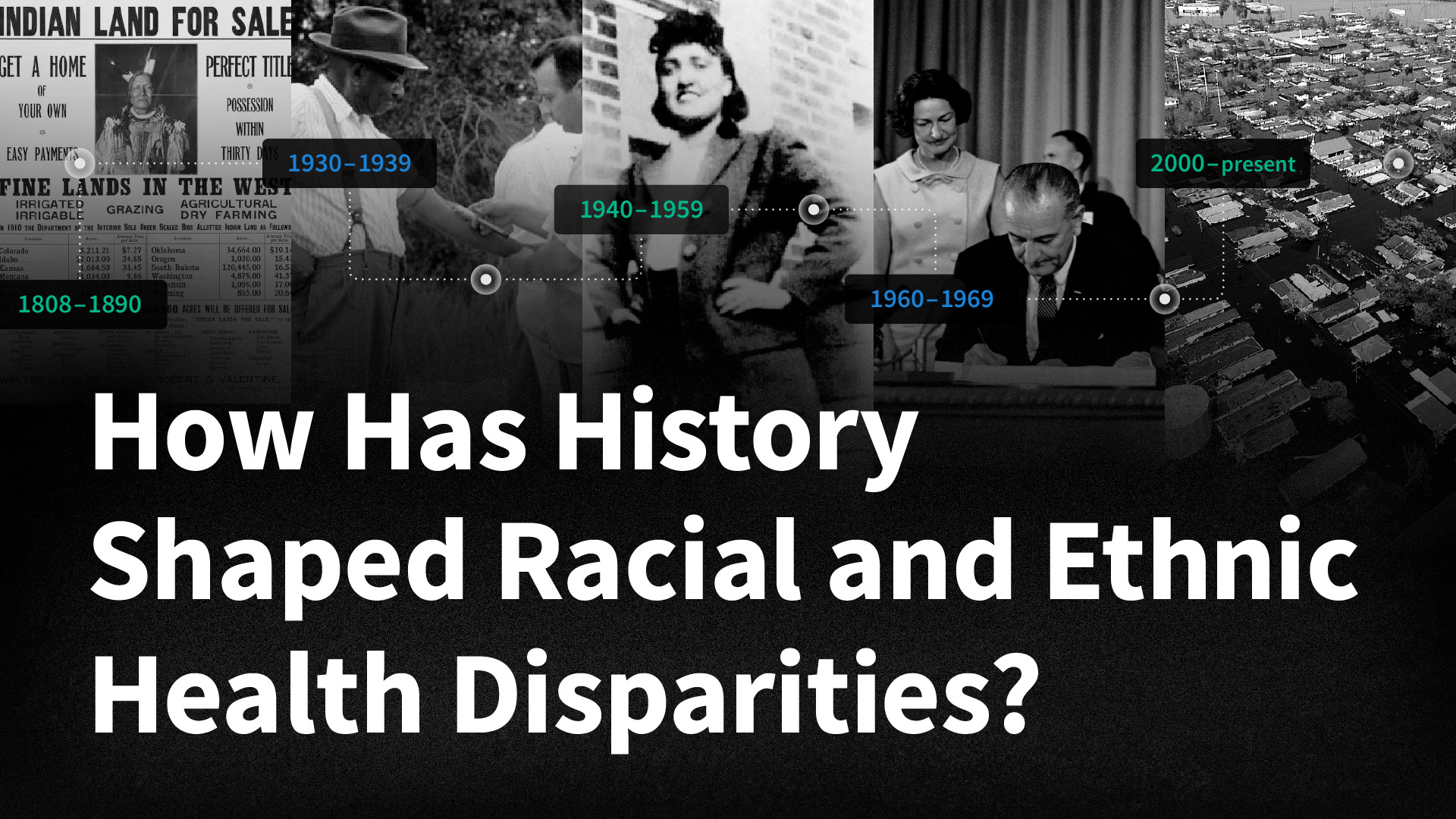
  • Timeline: How History Has Shaped Racial and Ethnic Health Disparities

    This timeline offers a historical view of significant U.S. federal policies and events spanning the early 1800s to today that have influenced present-day health disparities.
  • Health Policy 101: Chapter on Race, Inequality and Health

    Addressing persistent racial and ethnic disparities in health and health care is important for improving the nation’s health and economic prosperity. KFF explains such disparities and the factors that drive them, examines the actions to address them, and outlines future considerations.
  • Key Data on Health and Health Care by Race and Ethnicity

    Racial and ethnic disparities in health and health care remain a persistent challenge in the United States. An updated KFF resource examines how people of color fare compared to White people across 64 measures of health, health care, and social determinants of health.

Survey of Immigrants

KFF-New York Times Survey: Immigrants Report Rising Fear, Negative Economic and Health Impacts, and Changing Political Views During the First Year of President Trump’s Second Term

The 2025 Survey of Immigrants, a partnership between KFF and The New York Times, takes an in-depth look at the experiences of immigrants during the first year of President Trump’s second term, including their worries related to increased immigration enforcement, their health and economic wellbeing, and the political views and preferences of immigrant voters. The survey paints a portrait of families under strain — where fear of detention and economic instability are negatively impacting immigrants’ health and reshaping immigrant families’ daily lives and views of U.S. political parties.

Read the News Release | Explore The New York Times’ Reporting
Stay informed.

Stay informed.

Filter

521 - 530 of 602 Results

  • Nonelderly Uninsured by Race/ Ethnicity, 2011

    Feature

    Nonelderly Uninsured by Race/ Ethnicity, 2011 Download Source Urban Institute and KCMU estimates based on the Census Bureau's March 2012 Current Population Survey  Annual Social and Economic Supplement.  

  • Minority Graduates of U.S. Medical Schools: Trends, 1950-1998

    Other Post

    While significant efforts have been made to increase minority representation in the medical profession, very little information about minority medical school graduates and minority physicians has been available to evaluate progress towards this goal. This report, prepared by the Association of American Medical Colleges, provides both trend information in minority medical graduates, as well as the current practice characteristics of minority physicians. It is the first product from a unique database developed from the archives…

  • Medical Care Research and Review

    Other Post

    Journal Supplement This special supplement of includes: original research tracking trends in disparities in health coverage and access to care over two decades; literature syntheses focused on medical treatment and the decision-making process; legal analysis of civil rights laws in the context of managed care; and findings from a national survey of public awareness of racial inequities in care. The supplement is comprised of work commissioned by the Foundation for its 1999 national policy roundtable,…

  • States Sustain and Expand Coverage For Low-Income Children and Families Despite Recession, But Gains Are Threatened By Impending End of Federal Assistance

    News Release

    New 50-State Survey Illustrates Key Role of CHIP Reauthorization and the Federal Stimulus Law in Safeguarding Coverage    WASHINGTON  – Despite the deep recession, most states have managed to safeguard and, in some cases, expand health coverage for children and parents in their Medicaid and Children's Health Insurance Programs in 2009, according to a new survey from the Kaiser Family Foundation's Commission on Medicaid and the Uninsured.  But the gains, which could serve as a…

  • Health and Access to Care and Coverage for Lesbian, Gay, Bisexual, and Transgender (LGBT) Individuals in the U.S.

    Issue Brief

    Lesbian, gay, bisexual, and transgender (LGBT) individuals often face challenges and barriers to accessing needed health services and, as a result, can experience worse health outcomes. These challenges can include stigma, discrimination, violence, and rejection by families and communities, as well as other barriers, such as inequality in the workplace and health insurance sectors, the provision of substandard care, and outright denial of care because of an individual’s sexual orientation or gender identity. This issue…

  • Puerto Rico: Datos Básicos

    Fact Sheet

    Puerto Rico: Datos Básicos provee una descripción general del las características demográficas, y estadísticas de salud y la economía. También se da alguna informacion del gobierno, reglas federales de Medicaid, y asuntos corrientes que estan afectando el territorio, incluyendo a Zika.

  • What Do We Know about Social Determinants of Health in the U.S. and Comparable Countries?

    Feature

    Social determinants, such as individual and community behaviors, economic circumstances, and environmental factors, can influence health costs and outcomes, despite being outside the control of the health system in some respects. This slideshow explores social determinants and health outcomes in the United States and similar countries. The collection looks at income inequality, obesity, educational attainment, and rates of insurance, as well as behaviors such as cigarette and alcohol consumption. Health outcomes, such as disease burden…