Racial Equity and Health Policy

the Essentials
  • How Experiencing Racial Discrimination Impacts Health

    This brief highlights research examining mechanisms underlying health outcomes linked to self-reported experiences of racial discrimination, including biological changes, chronic stress, mental health, substance use, pregnancy-related outcomes, and sleep.
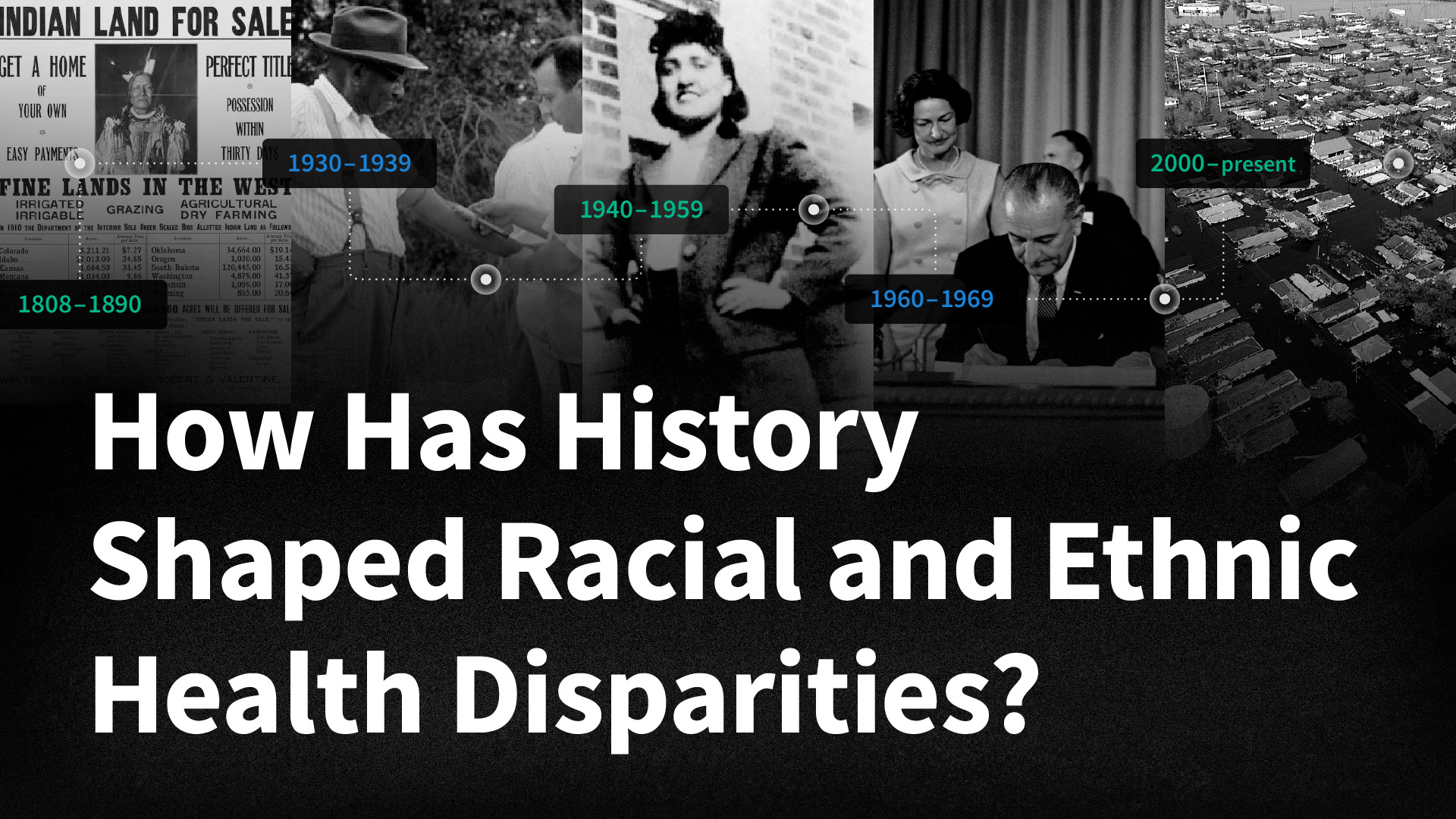
  • Timeline: How History Has Shaped Racial and Ethnic Health Disparities

    This timeline offers a historical view of significant U.S. federal policies and events spanning the early 1800s to today that have influenced present-day health disparities.
  • Health Policy 101: Chapter on Race, Inequality and Health

    Addressing persistent racial and ethnic disparities in health and health care is important for improving the nation’s health and economic prosperity. KFF explains such disparities and the factors that drive them, examines the actions to address them, and outlines future considerations.
  • Key Data on Health and Health Care by Race and Ethnicity

    Racial and ethnic disparities in health and health care remain a persistent challenge in the United States. An updated KFF resource examines how people of color fare compared to White people across 64 measures of health, health care, and social determinants of health.

Survey of Immigrants

KFF-New York Times Survey: Immigrants Report Rising Fear, Negative Economic and Health Impacts, and Changing Political Views During the First Year of President Trump’s Second Term

The 2025 Survey of Immigrants, a partnership between KFF and The New York Times, takes an in-depth look at the experiences of immigrants during the first year of President Trump’s second term, including their worries related to increased immigration enforcement, their health and economic wellbeing, and the political views and preferences of immigrant voters. The survey paints a portrait of families under strain — where fear of detention and economic instability are negatively impacting immigrants’ health and reshaping immigrant families’ daily lives and views of U.S. political parties.

Read the News Release | Explore The New York Times’ Reporting
Stay informed.

Stay informed.

Filter

511 - 520 of 602 Results

  • Medicaid Enrollees by Race/ Ethnicity, 2011

    Feature

    Medicaid Enrollees by Race/ Ethnicity, 2011 Download Source Urban Institute and KCMU estimates based on the Census Bureau's March 2012 Current Population Survey  Annual Social and Economic Supplement.  

  • Nonelderly Population by Race/Ethnicity, 2011

    Feature

    Nonelderly Population by Race/Ethnicity, 2011 Download Source Urban Institute and KCMU estimates based on the Census Bureau's March 2012 Current Population Survey  Annual Social and Economic Supplement.  

  • Nonelderly Uninsured by Race/ Ethnicity, 2011

    Feature

    Nonelderly Uninsured by Race/ Ethnicity, 2011 Download Source Urban Institute and KCMU estimates based on the Census Bureau's March 2012 Current Population Survey  Annual Social and Economic Supplement.  

  • Native Americans and Medicaid: Coverage and Financing Issues

    Other Post

    Native Americans and Medicaid:Coverage and Financing Issues Medicaid and Welfare Until 1996, families with children who received cash assistance under the Aid to Families with Dependent Children (AFDC) program were automatically entitled to Medicaid coverage. The welfare law enacted that year, Public Law 104-193, repealed the AFDC program and created a Temporary Assistance for Needy Families (TANF) block grant to the states. The 1996 welfare law also severed the automatic eligibility linkage between welfare and…

  • States Sustain and Expand Coverage For Low-Income Children and Families Despite Recession, But Gains Are Threatened By Impending End of Federal Assistance

    News Release

    New 50-State Survey Illustrates Key Role of CHIP Reauthorization and the Federal Stimulus Law in Safeguarding Coverage    WASHINGTON  – Despite the deep recession, most states have managed to safeguard and, in some cases, expand health coverage for children and parents in their Medicaid and Children's Health Insurance Programs in 2009, according to a new survey from the Kaiser Family Foundation's Commission on Medicaid and the Uninsured.  But the gains, which could serve as a…

  • Climate-Related Health Risks Among Workers: Who is at Increased Risk?

    Issue Brief

    Adults of color, noncitizens, and adults with lower educational attainment and incomes are disproportionately employed in occupations with increased climate-related health risks. Moreover, workers in occupations with increased climate-related health risks are more likely to be uninsured, contributing to challenges accessing health care.