Racial Equity and Health Policy

Survey of Immigrants

KFF-New York Times Survey: Immigrants Report Rising Fear, Negative Economic and Health Impacts, and Changing Political Views During the First Year of President Trump’s Second Term

The 2025 Survey of Immigrants, a partnership between KFF and The New York Times, takes an in-depth look at the experiences of immigrants during the first year of President Trump’s second term, including their worries related to increased immigration enforcement, their health and economic wellbeing, and the political views and preferences of immigrant voters. The survey paints a portrait of families under strain — where fear of detention and economic instability are negatively impacting immigrants’ health and reshaping immigrant families’ daily lives and views of U.S. political parties.

Read the News Release | Explore The New York Times’ Reporting
the Essentials
  • Disparities in Health and Health Care: 5 Key Questions and Answers

    This brief provides an introduction to what health and health care disparities are, why it is important to address them, what the status of disparities is today, recent federal actions to address disparities, and key issues related to addressing disparities in the future.
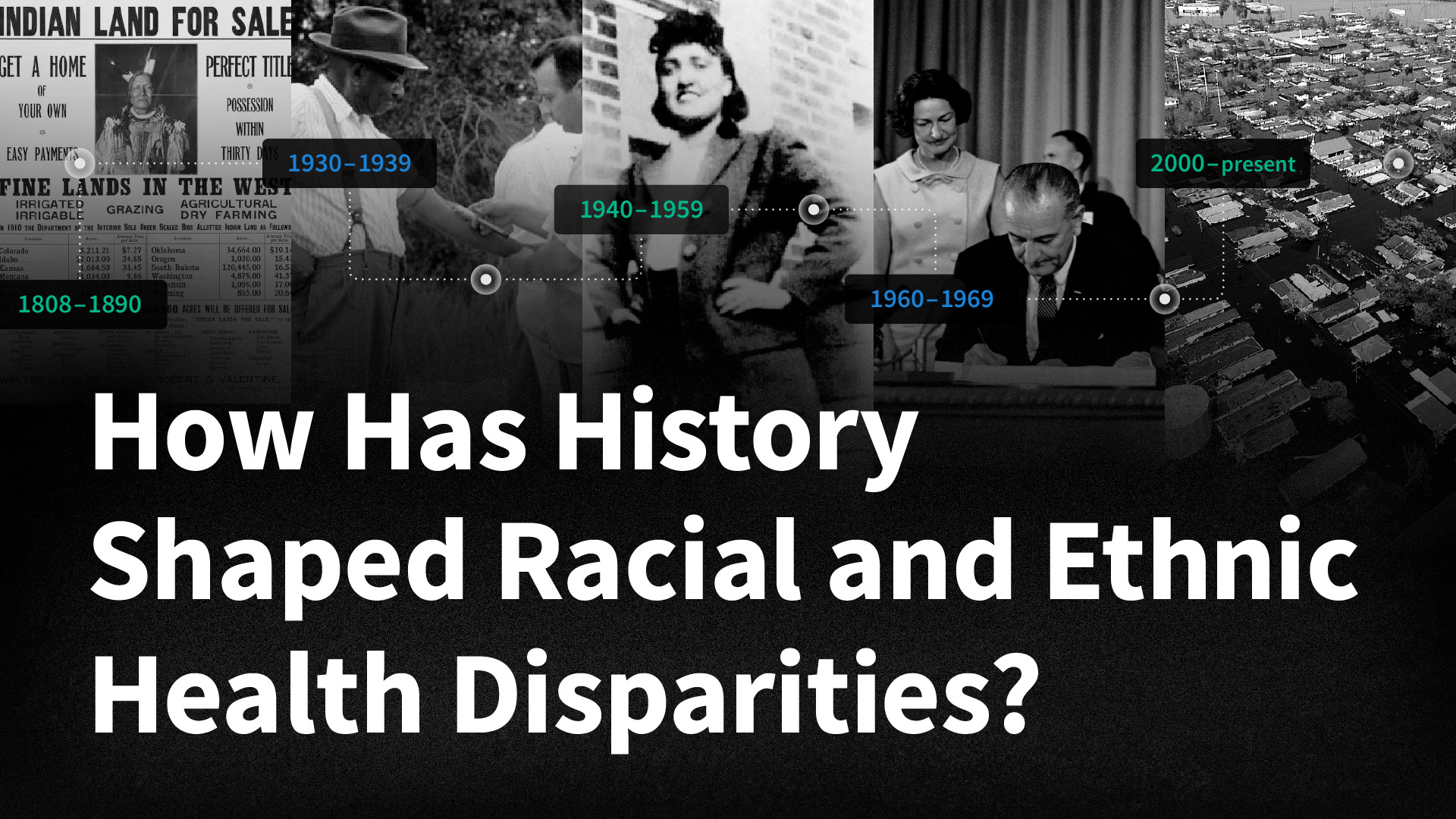
  • Timeline: How History Has Shaped Racial and Ethnic Health Disparities

    This timeline offers a historical view of significant U.S. federal policies and events spanning the early 1800s to today that have influenced present-day health disparities.
  • Health Policy 101: Chapter on Race, Inequality and Health

    Addressing persistent racial and ethnic disparities in health and health care is important for improving the nation’s health and economic prosperity. KFF explains such disparities and the factors that drive them, examines the actions to address them, and outlines future considerations.
  • Key Data on Health and Health Care by Race and Ethnicity

    Racial and ethnic disparities in health and health care remain a persistent challenge in the United States. An updated KFF resource examines how people of color fare compared to White people across 64 measures of health, health care, and social determinants of health.

Subscribe to KFF Emails

Choose which emails are best for you.
Sign up here

Filter

491 - 500 of 601 Results

  • A Profile of African Americans, Latinos, and Whites with Medicare:

    Report

    This chartpack highlights demographic data about African Americans, Hispanics and whites with Medicare to highlight potential implications for outreach efforts under the new Medicare drug benefit. The information is being used in a series of November 2005 briefings at the start of the first open-enrollment period for the new benefit. Chartpack (.pdf)

  • Health Coverage by Race and Ethnicity: The Potential Impact of the Affordable Care Act

    Issue Brief

    Executive Summary One of the key goals of the Affordable Care Act (ACA) is to reduce the number of uninsured through a Medicaid expansion and the creation of health insurance exchange marketplaces with advance premium tax credits to help moderate-income individuals pay for this coverage. Given that people of color are at disproportionate risk of being uninsured and having low incomes, the ACA coverage expansions could particularly benefit communities of color and advance efforts to…

  • Profile of Medicare Beneficiaries by Race and Ethnicity: A Chartpack

    Report

    This chartpack draws on data and analysis from a variety of sources to profile the Medicare population through the lens of race and ethnicity, describing life expectancy, demographic characteristics, income and savings, health status and chronic conditions, supplemental coverage, selected measures of access to care, and service utilization.

  • Putting Men’s Health Care Disparities On The Map: Examining Racial and Ethnic Disparities at the State Level

    Report

    This report documents the persistence of disparities between white men and men of color -- and among different groups within men of color -- on 22 indicators of health and well-being, including rates of diseases such as AIDS, cancer, heart disease and diabetes, as well as insurance coverage and health screenings. It also catalogues disparities in factors that influence health and access to care such as income and education, and other social determinants of health.

  • The Impact of the Coverage Gap for Adults in States not Expanding Medicaid by Race and Ethnicity

    Issue Brief

    The Affordable Care Act (ACA) expansion of Medicaid to adults with incomes at or below 138% of the federal poverty level (FPL) effectively became a state option following the Supreme Court decision, creating a “coverage gap” for many poor uninsured adults in states that do not expand Medicaid. This brief examines the coverage gap by race and ethnicity.

  • The Role of Language in Health Care Access and Utilization for Insured Hispanic Adults

    Issue Brief

    The ACA coverage expansions may help mitigate some barriers people with limited English proficiency (LEP) face in accessing coverage and care. However, individuals with LEP may still face increased barriers to care with coverage. This analysis examines differences in health care experiences between English- and Spanish-speaking Hispanic adults with insurance using data from the 2014 Kaiser Survey of Low-Income Americans and the ACA.

  • Michigan’s Medicaid Section 1115 Waiver to Address Effects of Lead Exposure in Flint

    Fact Sheet

    On February 13, 2016, Governor Rick Snyder submitted a Medicaid Section 1115 Waiver proposal to the Centers for Medicare and Medicaid Services (CMS) to address issues related to lead exposure in Flint, Michigan. This fact sheet provides some insight into the situation in Flint, Michigan, the history of Medicaid disaster relief waivers and the details of the Medicaid waiver request.

  • The Role of Medicare and the Indian Health Service for American Indians and Alaska Natives: Health, Access and Coverage

    Report

    This report examines the role of both Medicare and the Indian Health Service (IHS) in providing access to health care for about 650,000 American Indians and Alaska Natives who are age 65 and older or who have permanent disabilities. While Medicare provides important health care coverage for most in this group, its relatively high cost-sharing and gaps in benefits can be problematic for American Indians and Alaska Native Medicare beneficiaries who do not have additional…