Racial Equity and Health Policy

the Essentials
  • How Experiencing Racial Discrimination Impacts Health

    This brief highlights research examining mechanisms underlying health outcomes linked to self-reported experiences of racial discrimination, including biological changes, chronic stress, mental health, substance use, pregnancy-related outcomes, and sleep.
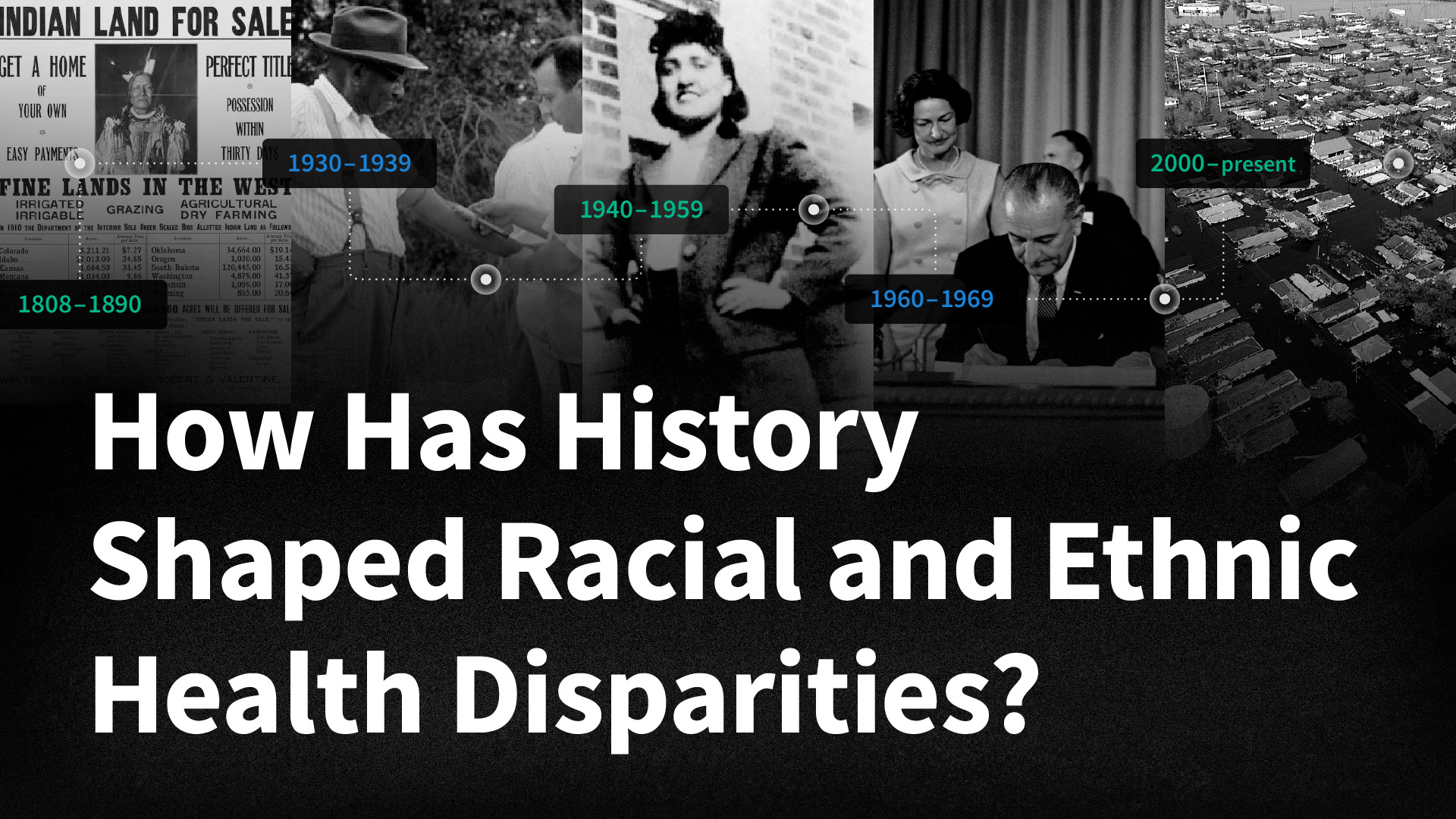
  • Timeline: How History Has Shaped Racial and Ethnic Health Disparities

    This timeline offers a historical view of significant U.S. federal policies and events spanning the early 1800s to today that have influenced present-day health disparities.
  • Health Policy 101: Chapter on Race, Inequality and Health

    Addressing persistent racial and ethnic disparities in health and health care is important for improving the nation’s health and economic prosperity. KFF explains such disparities and the factors that drive them, examines the actions to address them, and outlines future considerations.
  • Key Data on Health and Health Care by Race and Ethnicity

    Racial and ethnic disparities in health and health care remain a persistent challenge in the United States. An updated KFF resource examines how people of color fare compared to White people across 64 measures of health, health care, and social determinants of health.

Survey of Immigrants

KFF-New York Times Survey: Immigrants Report Rising Fear, Negative Economic and Health Impacts, and Changing Political Views During the First Year of President Trump’s Second Term

The 2025 Survey of Immigrants, a partnership between KFF and The New York Times, takes an in-depth look at the experiences of immigrants during the first year of President Trump’s second term, including their worries related to increased immigration enforcement, their health and economic wellbeing, and the political views and preferences of immigrant voters. The survey paints a portrait of families under strain — where fear of detention and economic instability are negatively impacting immigrants’ health and reshaping immigrant families’ daily lives and views of U.S. political parties.

Read the News Release | Explore The New York Times’ Reporting
Stay informed.

Stay informed.

Filter

481 - 490 of 602 Results

  • Racial and Ethnic Disparities in Access to and Utilization of Care among Insured Adults

    Issue Brief

    This analysis based on data from the 2014 Kaiser Survey of Low-Income Americans examines differences in access to and utilization of care for Black and Hispanic adults compared to White adults among those who are uninsured, enrolled in Medicaid, and privately insured. The findings suggest that gains in health coverage under the ACA will lead to improvements in access to care and utilization for White, Black, and Hispanic adults. They also highlight the importance of…

  • Key Health Disparities-Focused Legislation Introduced in the 110th Congress

    Other Post

    This compendium summarizes about a dozen federal legislative initiatives introduced in the 110th Congress to address racial and ethnic disparities in health and health care. Although the 110th Congress's session is half complete, the number of bills introduced that include some attention to “health disparities” is about the same as introduced in the entire 109th Congress. While a number of bills introduced this year may have an impact on health disparities and/or affect minority health,…

  • Eliminating Racial/Ethnic Disparities in Health Care: What are the Options?

    Issue Brief

     Download PDF Racial and ethnic disparities in health care – whether in insurance coverage, access, or quality of care – are one of many factors producing inequalities in health status in the United States.1  Eliminating these disparities is politically sensitive and challenging in part because their causes are intertwined with a contentious history of race relations in America. Nonetheless, assuring greater equity and accountability of the health care system is important to a growing constituency…

  • Daily Media Use Among Children and Teens Up Dramatically From Five Years Ago

    News Release

    Most Youth Say They Have No Rules About How Much Time They Can Spend With TV, Video Games, or Computers WASHINGTON – With technology allowing nearly 24-hour media access as children and teens go about their daily lives, the amount of time young people spend with entertainment media has risen dramatically, especially among minority youth, according to a study released today by the Kaiser Family Foundation.  Today, 8-18 year-olds devote an average of 7 hours and 38…

  • Disparities in Access to Air Conditioning And Implications for Heat-Related Health Risks

    Issue Brief

    This analysis examines disparities in access to air condition and their implications. It shows Asian-, Black-, and Hispanic-led households are more likely to report not having an air conditioning unit in their home compared to White households. Lower income households also are more likely than higher-income households to report this and other challenges.

  • Medicaid Efforts to Address Racial Health Disparities

    Issue Brief

    Medicaid programs are a major source of coverage for people of color and a potential mechanism to address racial health disparities. This issue brief provides insight into ways Medicaid can mitigate racial health disparities, how coverage may vary by race and ethnicity, and other Medicaid initiatives states pursuing to address racial disparities in health and health care.

  • A Third of the Public View Racism as a Major Problem in Health Care; Larger Shares See Racism as a Major Problem in Politics, Criminal Justice, and Other Areas

    News Release

    About a third (32%) of the public view racism as a major problem in health care, fewer than say the same about politics (56%), the criminal justice system (54%), and policing (51%), a new KFF report on the public’s views of racism finds. The lower levels of perceived racism in health care may reflect high levels of trust in doctors and health care providers across racial and ethnic groups. Overall, Black adults are much more…

  • Racial and Ethnic Health Disparities: Potential Implications of the Election

    Issue Brief

    Former President Trump and Vice President Harris have taken widely different stances and approaches on recognizing and addressing racial and ethnic disparities. These differences can be seen across areas of health care, including health coverage, reproductive and maternal health, and immigrant health and well-being and are likely to have important implications for future efforts to address health disparities.