Racial Equity and Health Policy

Survey of Immigrants

KFF-New York Times Survey: Immigrants Report Rising Fear, Negative Economic and Health Impacts, and Changing Political Views During the First Year of President Trump’s Second Term

The 2025 Survey of Immigrants, a partnership between KFF and The New York Times, takes an in-depth look at the experiences of immigrants during the first year of President Trump’s second term, including their worries related to increased immigration enforcement, their health and economic wellbeing, and the political views and preferences of immigrant voters. The survey paints a portrait of families under strain — where fear of detention and economic instability are negatively impacting immigrants’ health and reshaping immigrant families’ daily lives and views of U.S. political parties.

Read the News Release | Explore The New York Times’ Reporting
the Essentials
  • Disparities in Health and Health Care: 5 Key Questions and Answers

    This brief provides an introduction to what health and health care disparities are, why it is important to address them, what the status of disparities is today, recent federal actions to address disparities, and key issues related to addressing disparities in the future.
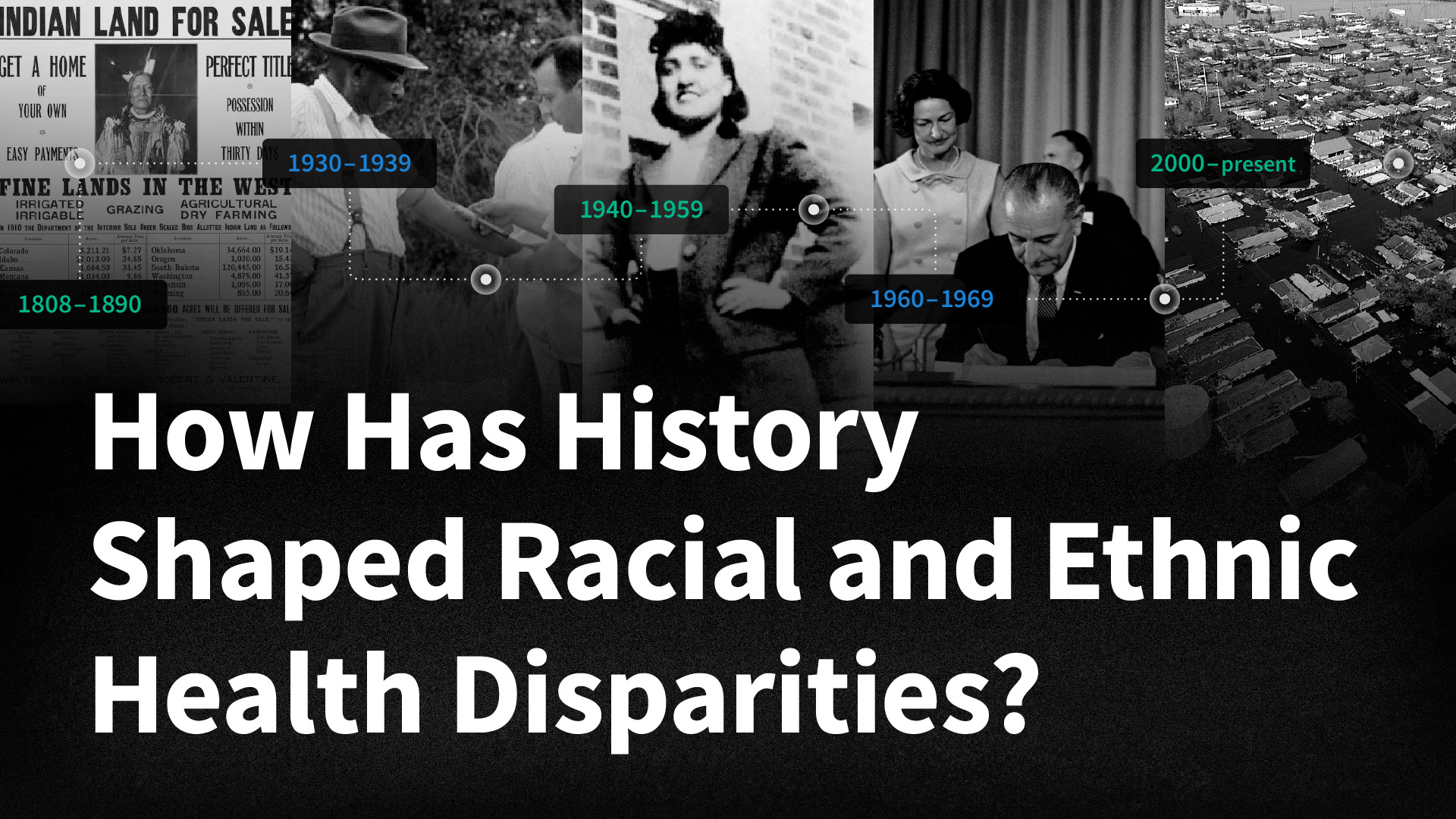
  • Timeline: How History Has Shaped Racial and Ethnic Health Disparities

    This timeline offers a historical view of significant U.S. federal policies and events spanning the early 1800s to today that have influenced present-day health disparities.
  • Health Policy 101: Chapter on Race, Inequality and Health

    Addressing persistent racial and ethnic disparities in health and health care is important for improving the nation’s health and economic prosperity. KFF explains such disparities and the factors that drive them, examines the actions to address them, and outlines future considerations.
  • Key Data on Health and Health Care by Race and Ethnicity

    Racial and ethnic disparities in health and health care remain a persistent challenge in the United States. An updated KFF resource examines how people of color fare compared to White people across 64 measures of health, health care, and social determinants of health.

Subscribe to KFF Emails

Choose which emails are best for you.
Sign up here

Filter

461 - 470 of 601 Results

  • Racial/Ethnic Disparities in Access to Care Among Children: How Does Medicaid do in Closing the Gaps?

    Other Post

    While Medicaid and the Children's Health Insurance Program (CHIP) have become increasingly important sources of health coverage for low-income children in all racial and ethnic groups, the program plays an especially large role for children of color, who are more likely than white children to be low-income. In 2007, Medicaid and CHIP covered nearly one in five white children, but roughly two in five African American and Hispanic children. As policymakers engaged in health reform…

  • Immigrants’ Health Coverage and Health Reform: Key Questions and Answers

    Issue Brief

    As health reform discussions continue, there has been some focus on health coverage for immigrants and how immigrants will be treated under reform plans being considered on Capitol Hill. This issue brief provides an overview of key questions related to immigrants' health coverage and health reform, addressing subjects such as how immigrants receive health coverage, how many of the uninsured are non-citizen immigrants and what would happen to coverage for non-citizen immigrants under current health…

  • The Role of Health Coverage for Communities of Color

    Issue Brief

    The current health reform debate in this country focuses heavily on providing access to affordable health coverage for the millions of people who are uninsured. Any effort to expand coverage, alter current public programs, and/or create new public programs will have important consequences for the health of communities of color, who are more likely than Whites to be enrolled in public programs or be uninsured. This issue brief highlights variations in coverage by race and…

  • Today’s Topics In Health Disparities: Is the Health Care System Ready for Health Reform?

    Event Date:
    Event

    On Wednesday, November 4, at 1 p.m. ET, this Today's Topics In Health Disparities live webcast examined how ready the health care system is for the influx of newly covered individuals that health reform aims to deliver. In the health care proposals being considered by Congress, changes to Medicaid alone could mean as many as 15 million people would become newly eligible for the program and many live in medically underserved areas. The program will…

  • A Profile of American Indians and Alaska Natives and Their Health Coverage

    Issue Brief

    A Profile of American Indians and Alaska Natives and Their Health Coverage This brief examines the health coverage, access to care and health status of American Indians and Alaska Natives across the country. Although the U.S. government has an established responsibility through tribal agreements to provide health care services to members of federally recognized Indian tribes, many American Indians and Alaska Natives lack access to health care. The brief gives an overview of the some…

  • The Effects of the Economic Recession on Communities of Color

    Issue Brief

    This issue brief examines some of the challenges associated with employment, daily life and access to health care among racial minorities, who tend to be disproportionately affected by many of the consequences of economic hard times. High unemployment rates, coupled with vast differences in savings and wealth, have left many individuals struggling to afford such basic necessities as housing and food, and have resulted in lapses in health coverage and difficulties paying for needed medical…

  • CHIP TIPS: New Federal Funding Available to Cover Immigrant Children and Pregnant Women

    Issue Brief

    This brief examines a new option under the Children's Health Insurance Program Reauthorization Act of 2009 that allows states to receive federal funds for providing Medicaid and CHIP coverage to lawfully residing immigrant children and pregnant women regardless of when they entered the country. Previously, states had been prohibited from using federal Medicaid or CHIP funds to cover legal immigrants who had been in the country fewer than five years. The brief, the fifth installment…

  • Examining Racial and Ethnic Disparities Among Women at the State Level

    Event Date:
    Event

    A decade after U.S. Surgeon General David Satcher called for the elimination of racial disparities in health, women of color in every state continue to fare worse than white women on a variety of measures of health and health care access. The Foundation has created a package of resources, including a comprehensive report, state fact sheets, and interactive data tables, that illuminate and document the persistence of disparities on 25 indicators between white women and…

  • Survey Brief: Views and Experiences with HIV Testing Among African Americans in the U.S.

    Issue Brief

    This survey brief, based on the 2009 Survey of Americans on HIV/AIDS, examines African Americans' reported views and experiences with HIV testing. The U.S. AIDS epidemic has disproportionately affected African Americans, who account for nearly half of new infections, while representing just 12 percent of the U.S. population. The brief highlights trends and differences among African Americans by age and gender when noteworthy. Survey Brief (.pdf)

  • Putting Women’s Health Care Disparities On The Map: Examining Racial and Ethnic Disparities at the State Level

    Report

    This Kaiser Family Foundation report documents the persistence of disparities between white women and women of color across the country. It provides a rare and comprehensive state-level look at disparities among women of different races and ethnicities on a broad range of indicators of health and well-being, including rates of diseases such as diabetes, heart disease, AIDS and cancer, and access to health insurance and health screenings.