Racial Equity and Health Policy

Survey of Immigrants

KFF-New York Times Survey: Immigrants Report Rising Fear, Negative Economic and Health Impacts, and Changing Political Views During the First Year of President Trump’s Second Term

The 2025 Survey of Immigrants, a partnership between KFF and The New York Times, takes an in-depth look at the experiences of immigrants during the first year of President Trump’s second term, including their worries related to increased immigration enforcement, their health and economic wellbeing, and the political views and preferences of immigrant voters. The survey paints a portrait of families under strain — where fear of detention and economic instability are negatively impacting immigrants’ health and reshaping immigrant families’ daily lives and views of U.S. political parties.

Read the News Release | Explore The New York Times’ Reporting
the Essentials
  • Disparities in Health and Health Care: 5 Key Questions and Answers

    This brief provides an introduction to what health and health care disparities are, why it is important to address them, what the status of disparities is today, recent federal actions to address disparities, and key issues related to addressing disparities in the future.
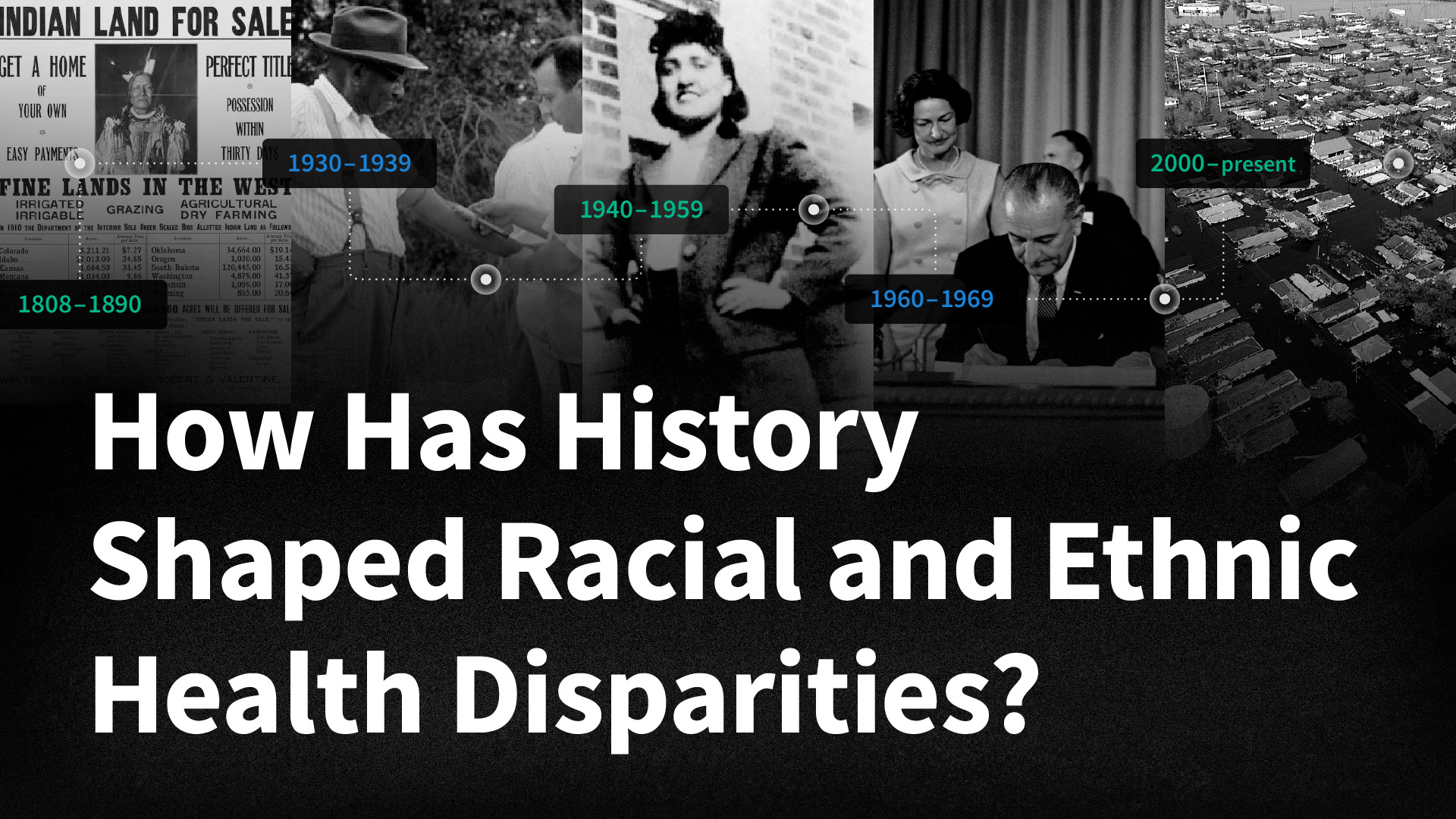
  • Timeline: How History Has Shaped Racial and Ethnic Health Disparities

    This timeline offers a historical view of significant U.S. federal policies and events spanning the early 1800s to today that have influenced present-day health disparities.
  • Health Policy 101: Chapter on Race, Inequality and Health

    Addressing persistent racial and ethnic disparities in health and health care is important for improving the nation’s health and economic prosperity. KFF explains such disparities and the factors that drive them, examines the actions to address them, and outlines future considerations.
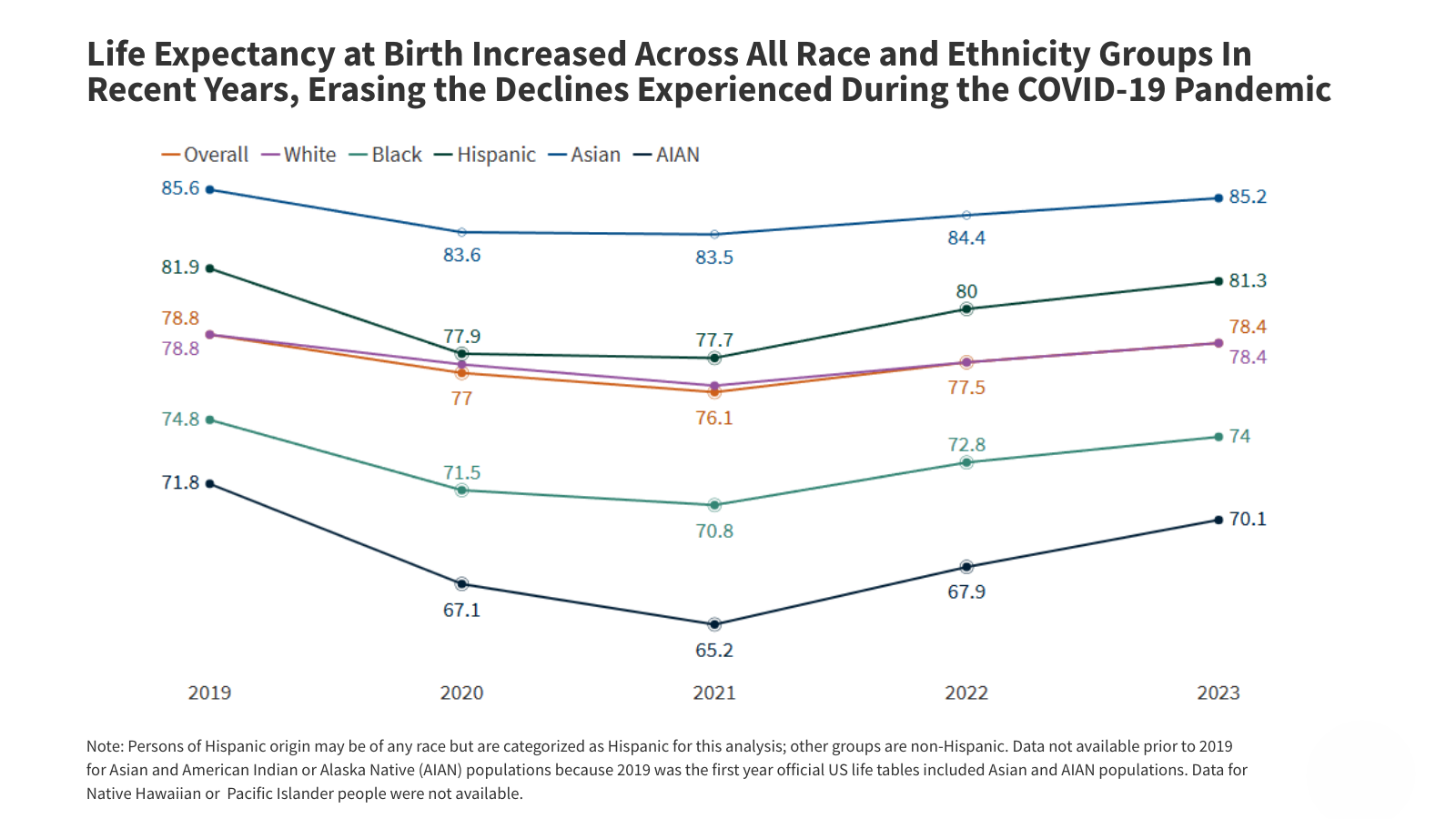
  • Key Data on Health and Health Care by Race and Ethnicity

    Racial and ethnic disparities in health and health care remain a persistent challenge in the United States. An updated KFF resource examines how people of color fare compared to White people across 64 measures of health, health care, and social determinants of health.

Subscribe to KFF Emails

Choose which emails are best for you.
Sign up here

Filter

441 - 450 of 600 Results

  • Kaiser Health Security Watch

    Feature

    The Kaiser Health Security Watch uses Kaiser Health Tracking Poll data to measure the public's health care-related problems and worries, including problems paying medical bills, skipping or delaying health care due to cost, and worrying about their future ability to pay for care and keep insurance. The Health Security Watch describes the overall numbers, and examines which types of people are most likely to report these problems and worries. The May 2012 update to the Health…

  • Oral Health in the U.S.: Key Facts

    Fact Sheet

    This fact sheet provides data on oral health care coverage and access for children, nonelderly adults and Medicaid beneficiaries, including state-by-state data on measures such as the share of adults who have had a dental visit within the past year. Fact Sheet (.pdf)

  • Children and Oral Health: Assessing Needs, Coverage and Access

    Issue Brief

    This policy brief highlights the prevalence of dental problems among children and examines gaps in oral health coverage and access to dental care, as well as disparities by income and race/ethnicity. It also looks at out-of-pocket costs for dental care, explains the role of Medicaid and CHIP in dental care, coverage and access for children and describes the expansion of oral health coverage for children under the Affordable Care Act. Issue Brief (.pdf)

  • Black Women in America

    Poll Finding

    The Washington Post and the Kaiser Family Foundation partnered to conduct a survey examining the opinions of black women around the nation on a wide range of issues including health care. The survey included a large oversample of African Americans to enable accurate analysis of subgroups of this population. This survey is the 23rd in a series of surveys dating back to 1995 that have been conducted as part of The Washington Post/Kaiser Family Foundation…

  • Connecting Eligible Immigrant Families to Health Coverage and Care: Key Lessons from Outreach and Enrollment Workers

    Issue Brief

    Beginning in 2014, health coverage options will significantly expand under health reform through an expansion in Medicaid eligibility and by making tax credits available to help individuals purchase coverage through new Health Benefit Exchanges. Given their high uninsured rate and limited access to private and public coverage, one group who could significantly benefit from this coverage expansion is lawfully residing immigrant families. However, it will be important to address barriers eligible immigrant families often face…

  • Black Residents' Views on HIV/AIDS in the District of Columbia

    Poll Finding

    This data note examines public opinion among Washington, D.C.’s black residents about HIV/AIDS through a new analysis of the findings of the May 2011 Washington Post/Kaiser Family Foundation 2011 Survey of District of Columbia Residents. The District of Columbia has one of the highest AIDS rates in the nation, and black residents have been especially hard hit by the epidemic, accounting for about three-quarters of people living with HIV/AIDS in the city. Yet experiences and…

  • 2011 Survey of DC Residents

    Poll Finding

    The Washington Post and the Kaiser Family Foundation partnered to conduct a survey examining the opinions of Washington, D.C., residents on a wide range of issues including health care. This survey is the 22nd in a series of surveys dating back to 1995 that have been conducted as part of The Washington Post/Kaiser Family Foundation Survey Project. Toplines (.pdf) Data Note: Black Residents' Views on HIV/AIDS in the District of Columbia Read The Washington Post…

  • Medicaid’s Role for Hispanic Americans

    Fact Sheet

    This fact sheet examines Medicaid's role for Hispanic Americans. It includes data on Medicaid's coverage of Hispanic Americans and the program's impact on their access to care, as well as the impacts of the recent recession and the coming expansion of Medicaid under health reform on enrollment in Medicaid among Hispanic Americans. The fact sheet also has a chart showing state-by-state data on health insurance coverage of Hispanic Americans. Fact Sheet (.pdf)

  • Medicaid’s Role for Black Americans

    Fact Sheet

    This fact sheet examines Medicaid's role for black Americans. It includes data on Medicaid's coverage of black Americans and the program's impact on their access to care, as well as the impacts of the recent recession and the coming expansion of Medicaid under health reform on enrollment in Medicaid among black Americans. The fact sheet also has a chart showing state-by-state data on health insurance coverage of black Americans. Fact Sheet (.pdf)

  • Today’s Topics In Health Disparities: HHS’ Action Plan to Reduce Health Disparities

    Event Date:
    Event

    Today's Topics in Health Disparities webcast examined the new Department of Health and Human Services’ Action Plan to Reduce Racial and Ethnic Health Disparities. The program addressed the contents of the strategy and its timeline for implementation as well as its implications for providers. The panelists also discussed how the new strategy relates to other recently released HHS strategies including the National Strategy for Quality Improvement in Health Care, the National Prevention and Health Promotion…