Racial Equity and Health Policy

Survey of Immigrants

KFF-New York Times Survey: Immigrants Report Rising Fear, Negative Economic and Health Impacts, and Changing Political Views During the First Year of President Trump’s Second Term

The 2025 Survey of Immigrants, a partnership between KFF and The New York Times, takes an in-depth look at the experiences of immigrants during the first year of President Trump’s second term, including their worries related to increased immigration enforcement, their health and economic wellbeing, and the political views and preferences of immigrant voters. The survey paints a portrait of families under strain — where fear of detention and economic instability are negatively impacting immigrants’ health and reshaping immigrant families’ daily lives and views of U.S. political parties.

Read the News Release | Explore The New York Times’ Reporting
the Essentials
  • Disparities in Health and Health Care: 5 Key Questions and Answers

    This brief provides an introduction to what health and health care disparities are, why it is important to address them, what the status of disparities is today, recent federal actions to address disparities, and key issues related to addressing disparities in the future.
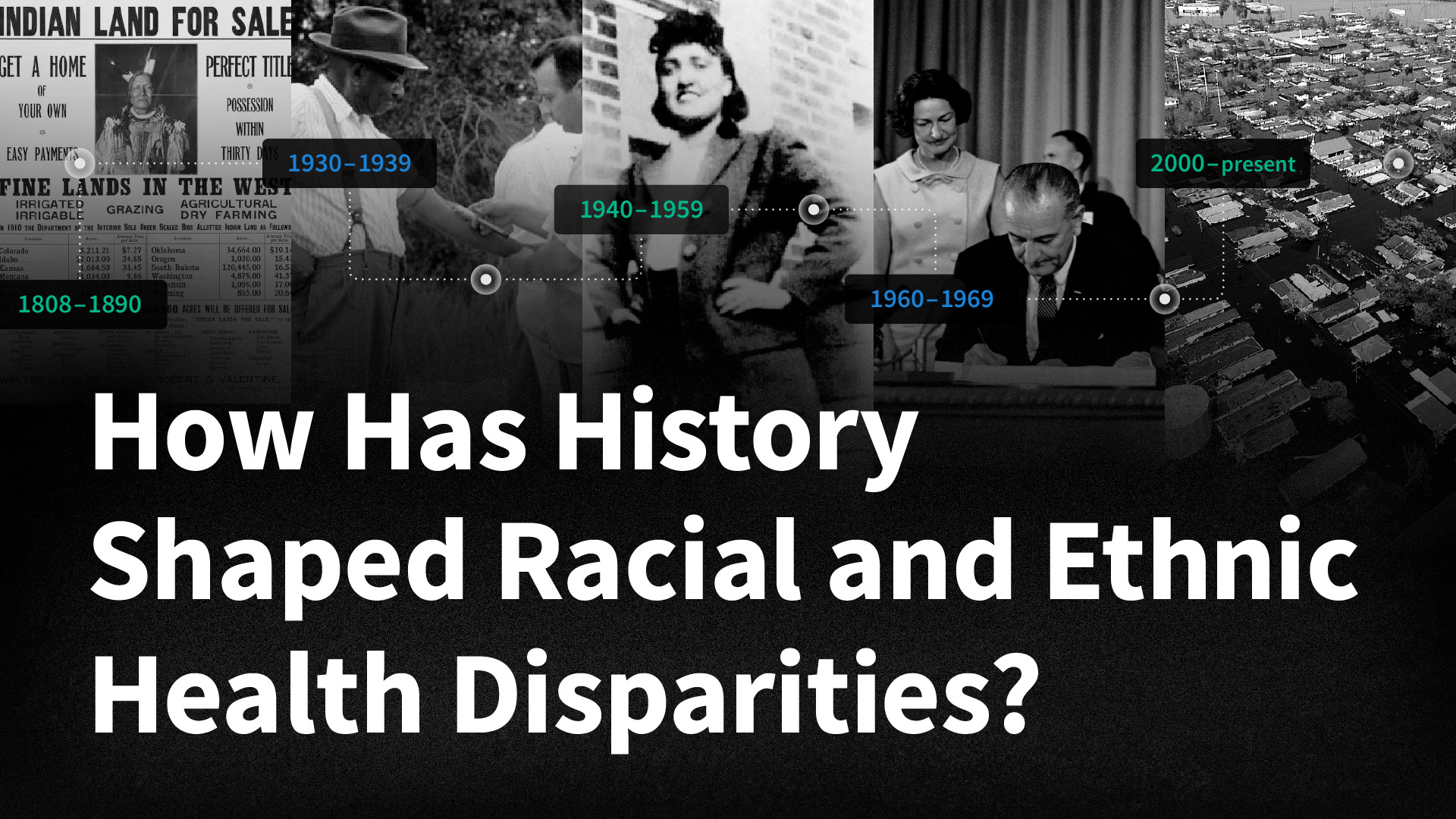
  • Timeline: How History Has Shaped Racial and Ethnic Health Disparities

    This timeline offers a historical view of significant U.S. federal policies and events spanning the early 1800s to today that have influenced present-day health disparities.
  • Health Policy 101: Chapter on Race, Inequality and Health

    Addressing persistent racial and ethnic disparities in health and health care is important for improving the nation’s health and economic prosperity. KFF explains such disparities and the factors that drive them, examines the actions to address them, and outlines future considerations.
  • Key Data on Health and Health Care by Race and Ethnicity

    Racial and ethnic disparities in health and health care remain a persistent challenge in the United States. An updated KFF resource examines how people of color fare compared to White people across 64 measures of health, health care, and social determinants of health.

Subscribe to KFF Emails

Choose which emails are best for you.
Sign up here

Filter

421 - 430 of 595 Results

  • Kaiser Family Foundation National Survey of Latinos on HIV/AIDS

    Poll Finding

    A random-sample national survey of 802 Latino adults, 18 years and older. The survey, designed by staff at the Foundation and conducted by telephone in both English and Spanish by Princeton Survey Research Associates (PSRA), examines Latino's knowledge, values and beliefs with respect to HIV and AIDS.

  • Reauthorization of the Indian Health Care Improvement Act: Background and Issues

    Report

    An analysis of issues affecting reauthorization of the Indian Health Care Improvement Act. The study examines the historical impact and effectiveness of the current law, its relevance in the context of the contemporary health environment and the issues pertinent to discussions about reauthorization of the Act.

  • Race, Ethnicity and Medical Care: Improving Access in a Diverse Society

    Report

    In an effort to address the racial inequities in health care that exist today, the Kaiser Family Foundation brought together leading public and private sector policymakers -- including health professionals, educators, civil rights leaders, and consumer organizations -- to review the evidence and race and medical care and discuss what can be done to address inequities in care.

  • Potential “Chilling Effects” of Public Charge and Other Immigration Policies on Medicaid and CHIP Enrollment

    Issue Brief

    This issue brief reviews the Department of Homeland Security (DHS) proposed rule that would rescind 2022 Biden-era public charge determination regulations. The proposed public charge changes along with other Trump administration policy changes will likely lead to decreased participation in public programs, including Medicaid, among a broad group of immigrant families, including citizen children in those families.

  • The Role of Medicare and the Indian Health Service for American Indians and Alaska Natives: Health, Access and Coverage

    Report

    This report examines the role of both Medicare and the Indian Health Service (IHS) in providing access to health care for about 650,000 American Indians and Alaska Natives who are age 65 and older or who have permanent disabilities. While Medicare provides important health care coverage for most in this group, its relatively high cost-sharing and gaps in benefits can be problematic for American Indians and Alaska Native Medicare beneficiaries who do not have additional supplemental coverage or who cannot access IHS providers.

  • How Do Health Expenditures Vary Across the Population?

    Feature

    This slideshow explores the variation in health spending across the population through an analysis of the 2019 Medical Expenditure Panel Survey (MEPS) data. It finds that 5% of the population with the highest health expenditures accounted for nearly half of total health spending in the United States. It also examines spending variation by age, gender, race, insurance status and presence of certain health conditions.