Racial Equity and Health Policy

Survey of Immigrants

KFF-New York Times Survey: Immigrants Report Rising Fear, Negative Economic and Health Impacts, and Changing Political Views During the First Year of President Trump’s Second Term

The 2025 Survey of Immigrants, a partnership between KFF and The New York Times, takes an in-depth look at the experiences of immigrants during the first year of President Trump’s second term, including their worries related to increased immigration enforcement, their health and economic wellbeing, and the political views and preferences of immigrant voters. The survey paints a portrait of families under strain — where fear of detention and economic instability are negatively impacting immigrants’ health and reshaping immigrant families’ daily lives and views of U.S. political parties.

Read the News Release | Explore The New York Times’ Reporting
the Essentials
  • Disparities in Health and Health Care: 5 Key Questions and Answers

    This brief provides an introduction to what health and health care disparities are, why it is important to address them, what the status of disparities is today, recent federal actions to address disparities, and key issues related to addressing disparities in the future.
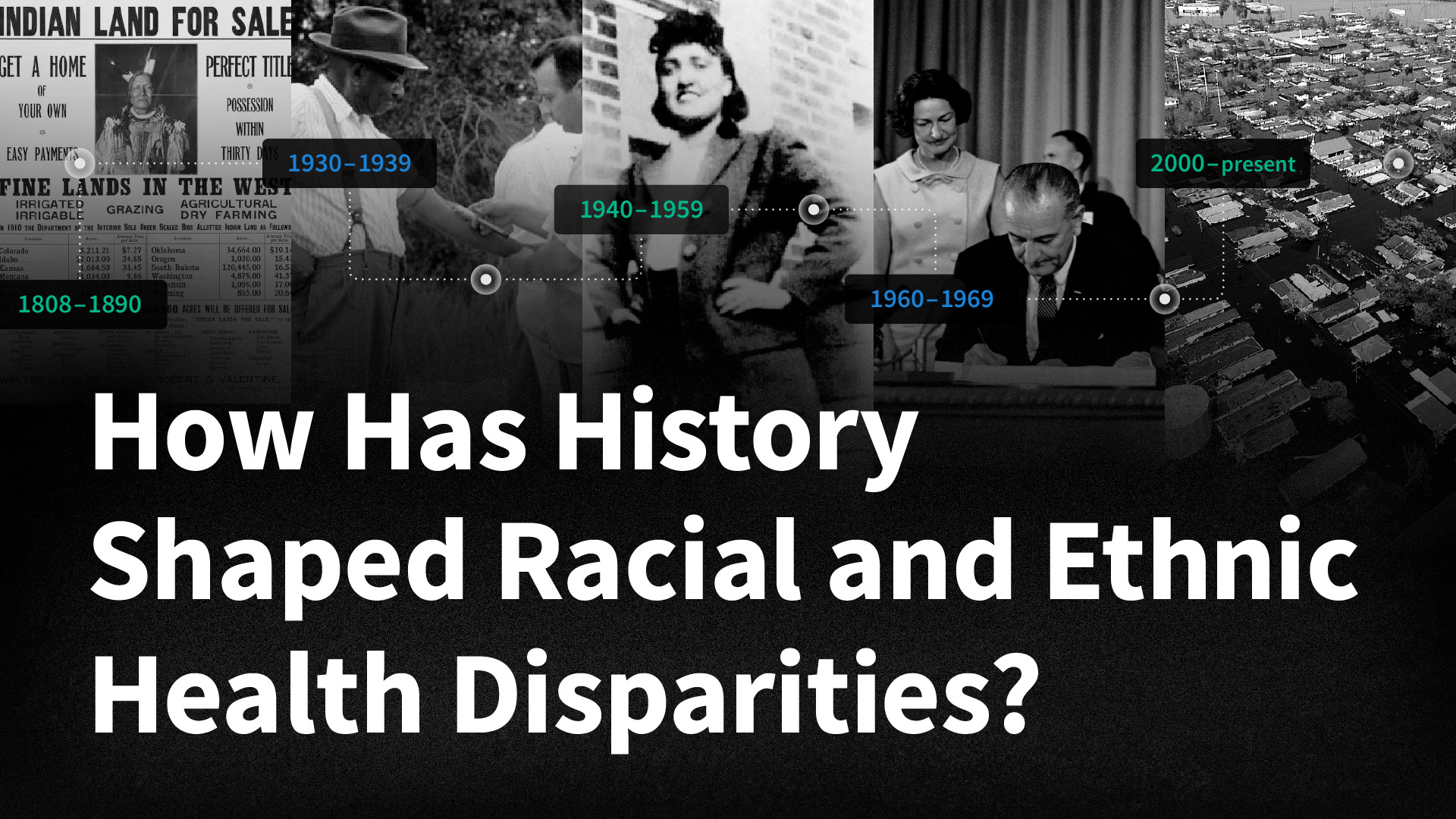
  • Timeline: How History Has Shaped Racial and Ethnic Health Disparities

    This timeline offers a historical view of significant U.S. federal policies and events spanning the early 1800s to today that have influenced present-day health disparities.
  • Health Policy 101: Chapter on Race, Inequality and Health

    Addressing persistent racial and ethnic disparities in health and health care is important for improving the nation’s health and economic prosperity. KFF explains such disparities and the factors that drive them, examines the actions to address them, and outlines future considerations.
  • Key Data on Health and Health Care by Race and Ethnicity

    Racial and ethnic disparities in health and health care remain a persistent challenge in the United States. An updated KFF resource examines how people of color fare compared to White people across 64 measures of health, health care, and social determinants of health.

Subscribe to KFF Emails

Choose which emails are best for you.
Sign up here

Filter

411 - 420 of 591 Results

  • Women and Health Care: A National Profile

    Report

    A new national survey of women on their health finds that a substantial percentage of women cannot afford to go to the doctor or get prescriptions filled. Although a majority of women are in good health and satisfied with their health care, many have health problems and do not get adequate levels of preventive care.

  • Immigrants’ Access to Health Care

    Issue Brief

    Immigrants account for 20 percent of the uninsured. There are many reasons for immigrants' lack of coverage, but the welfare reform law of 1996 was significant in restricting Medicaid eligibility for certain immigrant populations.

  • The Medicare Program: Panorama General De Medicare

    Fact Sheet

    Que Es El Medicare Y Como Se Financia? Medicare es un programa de seguro medico nacional que atiende a 39 millones de ancianos y discapacitados. Antes de la existencia del Medicare, menos de la mitad de todos los norteamericanos de edad avanzada contaban con un seguro medico.

  • The AIDS Epidemic at 20 Years: THE VIEW FROM AMERICA Survey

    Report

    Twenty years into the AIDS epidemic, the Kaiser Family Foundation conducted its most recent survey of Americans about HIV/AIDS. This report summarizes the key findings from the survey, including analysis of trends over time and across race/ethnicity, age, and gender. It describes Americans' concerns about HIV/AIDS as a personal, national, and global issue.

  • Sources of Financing and the Level of Health Spending for Native Americans

    Report

    This study of Native Americans health care funding and expenditures includes the following: An analysis of all sources of financing and the level of total health expenditures by and on behalf of Native Americans, a detailed analysis of the same data for each of the 12 Indian Health Service areas across the country, an estimate…

  • Perceptions of How Race & Ethnic Background Affect Medical Care

    Report

    This document is a summary of the findings from twelve separate focus groups conducted to better understand how race and ethnic background affect medical care. Seven of the focus groups were minority American health care consumers and the other five focus groups were largely white health care professionals and hospital administrators.