Racial Equity and Health Policy

Survey of Immigrants

KFF-New York Times Survey: Immigrants Report Rising Fear, Negative Economic and Health Impacts, and Changing Political Views During the First Year of President Trump’s Second Term

The 2025 Survey of Immigrants, a partnership between KFF and The New York Times, takes an in-depth look at the experiences of immigrants during the first year of President Trump’s second term, including their worries related to increased immigration enforcement, their health and economic wellbeing, and the political views and preferences of immigrant voters. The survey paints a portrait of families under strain — where fear of detention and economic instability are negatively impacting immigrants’ health and reshaping immigrant families’ daily lives and views of U.S. political parties.

Read the News Release | Explore The New York Times’ Reporting
the Essentials
  • Disparities in Health and Health Care: 5 Key Questions and Answers

    This brief provides an introduction to what health and health care disparities are, why it is important to address them, what the status of disparities is today, recent federal actions to address disparities, and key issues related to addressing disparities in the future.
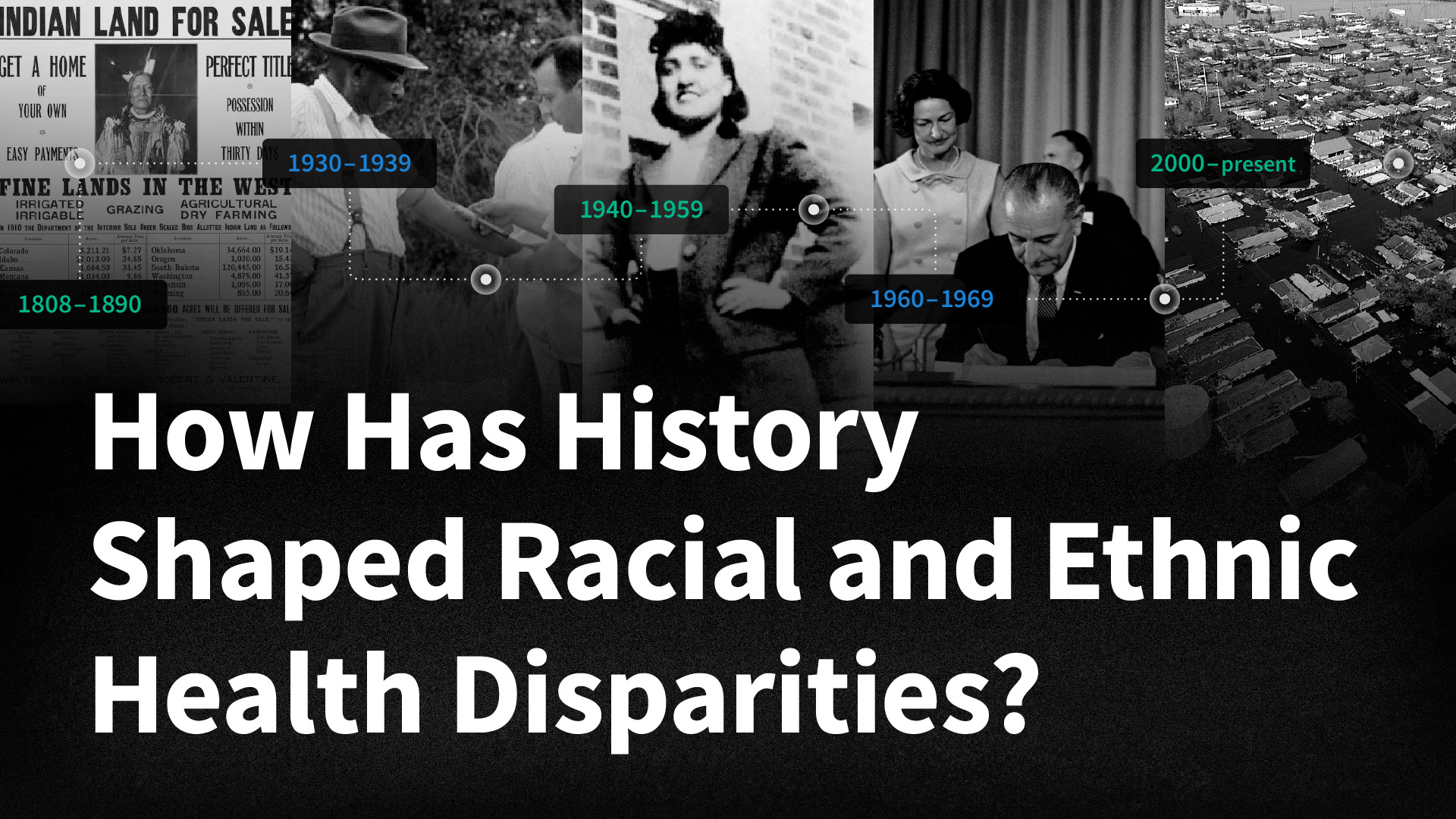
  • Timeline: How History Has Shaped Racial and Ethnic Health Disparities

    This timeline offers a historical view of significant U.S. federal policies and events spanning the early 1800s to today that have influenced present-day health disparities.
  • Health Policy 101: Chapter on Race, Inequality and Health

    Addressing persistent racial and ethnic disparities in health and health care is important for improving the nation’s health and economic prosperity. KFF explains such disparities and the factors that drive them, examines the actions to address them, and outlines future considerations.
  • Key Data on Health and Health Care by Race and Ethnicity

    Racial and ethnic disparities in health and health care remain a persistent challenge in the United States. An updated KFF resource examines how people of color fare compared to White people across 64 measures of health, health care, and social determinants of health.

Subscribe to KFF Emails

Choose which emails are best for you.
Sign up here

Filter

401 - 410 of 597 Results

  • Impacts of Federal Actions on Extreme Heat and Health

    Issue Brief

    Between 1999 and 2023, the number of heat-related deaths in the U.S. increased by 117%. KFF analysis of data from the Centers for Disease Control and Prevention shows that American Indian or Alaska Native and Black people are at higher risk of experiencing a heat-related death compared to their White counterparts. Estimates suggest that heat events in the U.S result in approximately $1 billion in excess health care costs each year. If left unaddressed, climate change could cost the U.S. economy approximately $14.5 trillion over the next fifty years.

  • Native American Health Policy Fellowship Program, 1999 – 2003

    Other Post

    Established in 1999, the Henry J. Kaiser Family Foundation Native American Health Policy Fellowships were awarded to outstanding American Indian/Alaska Natives who made their career in health-related fields and were interested in health policy.

  • American Indians and Alaska Natives: Health Coverage and Access to Care

    Fact Sheet

    American Indians and Alaska Natives: Health Coverage Access to Care, Fact Sheet A fact sheet examining health coverage and access to care among American Indians and Alaska Natives. This fact sheet is an update to a KCMU fact on the subject issued in June 2000 (#2198). Fact Sheet (.

  • Potential “Chilling Effects” of Public Charge and Other Immigration Policies on Medicaid and CHIP Enrollment

    Issue Brief

    This issue brief reviews the Department of Homeland Security (DHS) proposed rule that would rescind 2022 Biden-era public charge determination regulations. The proposed public charge changes along with other Trump administration policy changes will likely lead to decreased participation in public programs, including Medicaid, among a broad group of immigrant families, including citizen children in those families.

  • What Do We Know about Social Determinants of Health in the U.S. and Comparable Countries?

    Feature

    Social determinants, such as individual and community behaviors, economic circumstances, and environmental factors, can influence health costs and outcomes, despite being outside the control of the health system in some respects. This slideshow explores social determinants and health outcomes in the United States and similar countries. The collection looks at income inequality, obesity, educational attainment, and rates of insurance, as well as behaviors such as cigarette and alcohol consumption. Health outcomes, such as disease burden from drug abuse disorders and motor vehicle road injuries, also are examined, along with measures such as years of life lost due to firearms assaults and death rates from accidental poisonings.

  • The Role of Language in Health Care Access and Utilization for Insured Hispanic Adults

    Issue Brief

    The ACA coverage expansions may help mitigate some barriers people with limited English proficiency (LEP) face in accessing coverage and care. However, individuals with LEP may still face increased barriers to care with coverage. This analysis examines differences in health care experiences between English- and Spanish-speaking Hispanic adults with insurance using data from the 2014 Kaiser Survey of Low-Income Americans and the ACA.

  • Medicaid and American Indians and Alaska Natives

    Issue Brief

    This brief provides an overview of the American Indian and Alaska Native population, describes the role of the Indian Health Service and Medicaid for this population, and discusses the impact of the Medicaid expansion for this population.