Racial Equity and Health Policy

the Essentials
  • How Experiencing Racial Discrimination Impacts Health

    This brief highlights research examining mechanisms underlying health outcomes linked to self-reported experiences of racial discrimination, including biological changes, chronic stress, mental health, substance use, pregnancy-related outcomes, and sleep.
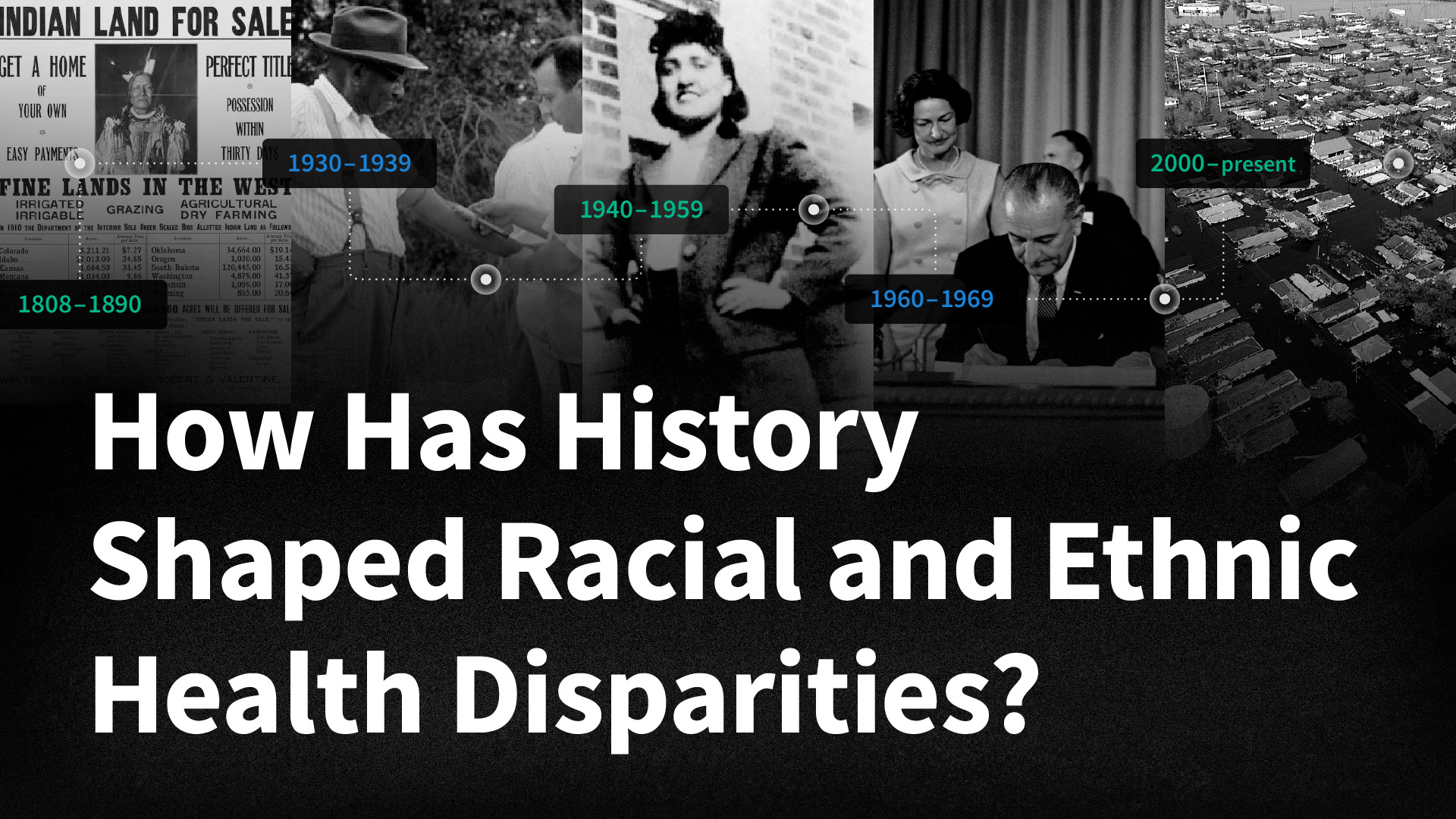
  • Timeline: How History Has Shaped Racial and Ethnic Health Disparities

    This timeline offers a historical view of significant U.S. federal policies and events spanning the early 1800s to today that have influenced present-day health disparities.
  • Health Policy 101: Chapter on Race, Inequality and Health

    Addressing persistent racial and ethnic disparities in health and health care is important for improving the nation’s health and economic prosperity. KFF explains such disparities and the factors that drive them, examines the actions to address them, and outlines future considerations.
  • Key Data on Health and Health Care by Race and Ethnicity

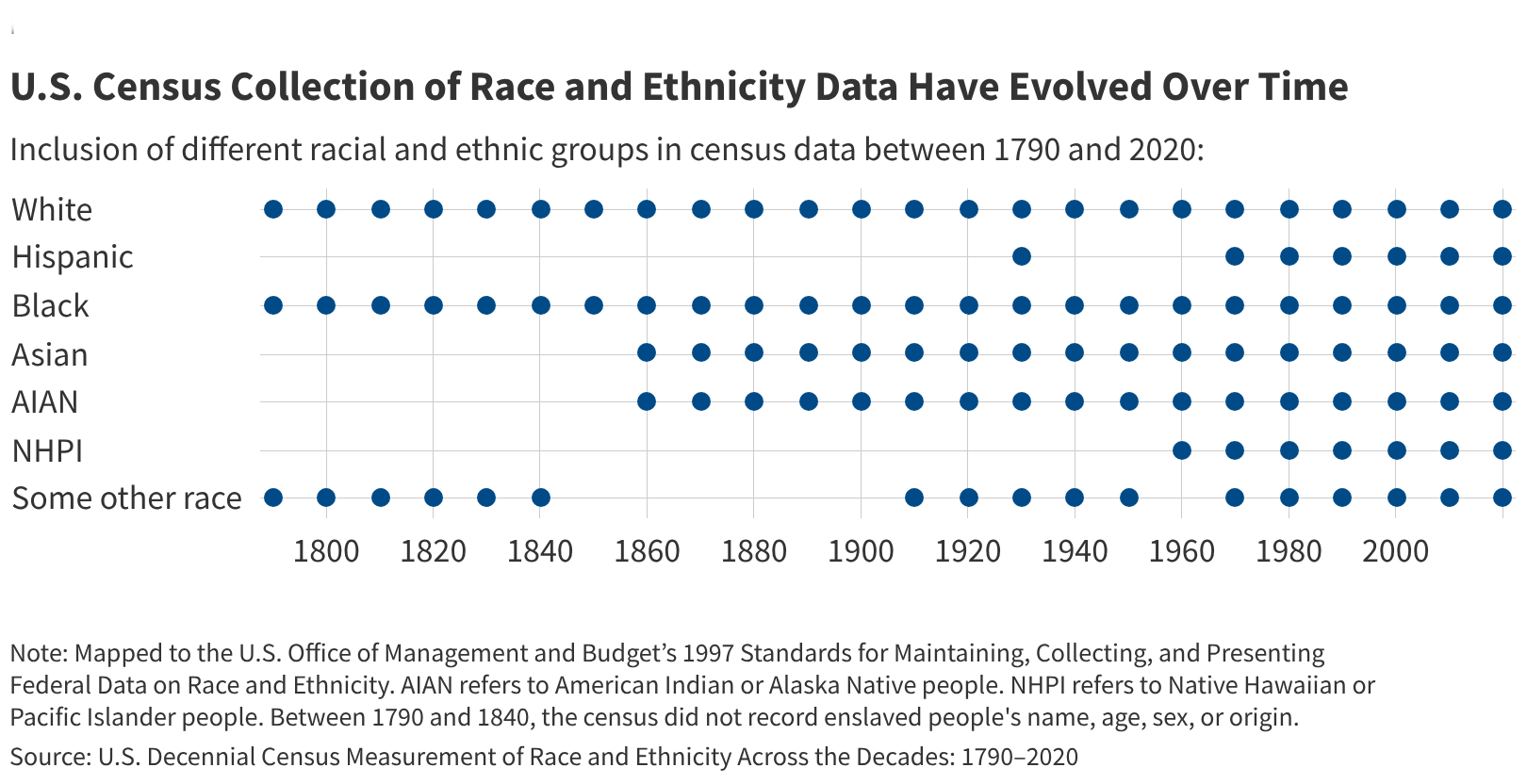
    Racial and ethnic disparities in health and health care remain a persistent challenge in the United States. An updated KFF resource examines how people of color fare compared to White people across 64 measures of health, health care, and social determinants of health.

Survey of Immigrants

KFF-New York Times Survey: Immigrants Report Rising Fear, Negative Economic and Health Impacts, and Changing Political Views During the First Year of President Trump’s Second Term

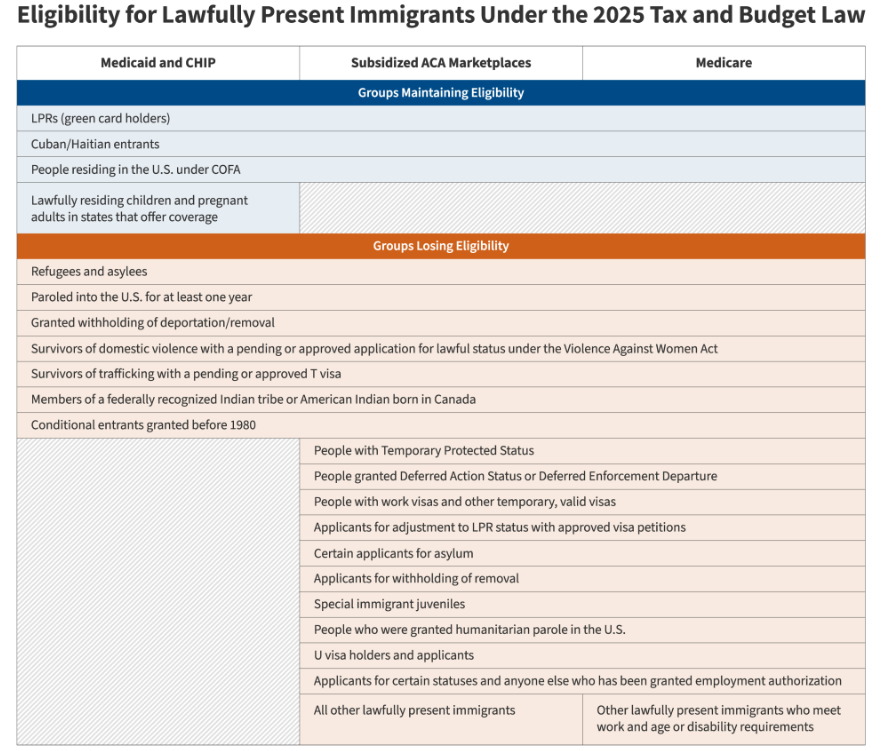
The 2025 Survey of Immigrants, a partnership between KFF and The New York Times, takes an in-depth look at the experiences of immigrants during the first year of President Trump’s second term, including their worries related to increased immigration enforcement, their health and economic wellbeing, and the political views and preferences of immigrant voters. The survey paints a portrait of families under strain — where fear of detention and economic instability are negatively impacting immigrants’ health and reshaping immigrant families’ daily lives and views of U.S. political parties.

Read the News Release | Explore The New York Times’ Reporting
Stay informed.

Stay informed.

Filter

391 - 400 of 603 Results

  • 2004 National Survey of Latinos: Politics and Civic Participation

    Poll Finding

    This comprehensive survey assesses Latino attitudes in the 2004 election year. The third annual survey of Latinos from the Pew Hispanic Center and the Kaiser Family Foundation, the new survey examines political issues and the presidential election campaign, the economy, health care, Iraq and immigration. News Release Chartpack/Summary of Findings Toplines Election Survey (.pdf) The survey was released at a July 22, 2004 briefing. Agenda (.pdf) Speaker Biographies (.pdf) Event Transcript (.pdf)

  • Health Coverage for the Black Population Today and Under the Affordable Care Act

    Fact Sheet

    The Affordable Care Act (ACA) could help many uninsured Blacks through the law’s expansion of Medicaid and the creation of new health insurance exchange marketplaces with tax credits to help moderate-income people purchase coverage. This brief provides an overview of the Black population in the U.S., their health coverage today and the potential impact of the ACA coverage expansions.

  • The Impact of the Coverage Gap for Adults in States not Expanding Medicaid by Race and Ethnicity

    Issue Brief

    The Affordable Care Act (ACA) expansion of Medicaid to adults with incomes at or below 138% of the federal poverty level (FPL) effectively became a state option following the Supreme Court decision, creating a “coverage gap” for many poor uninsured adults in states that do not expand Medicaid. This brief examines the coverage gap by race and ethnicity.

  • Women at Risk: A View from the Safety Net

    Video

    This video provides a snapshot of the Arlington (Va.) Free Clinic where, four times a month, medical personnel provide care and screenings exclusively to women. The video explores the hurdles that uninsured women face in accessing health care and the social issues, including work and family responsibilities, that create challenges for them. It is a companion to the report, “Putting Women’s Health Care Disparities On The Map: Examining Racial and Ethnic Disparities at the State…

  • Visualizing Income and Assets Among Medicare Beneficiaries: Now and in the Future

    Interactive

    This interactive tool describes the income, savings and home equity of people on Medicare in 2013, and in 2030. It allows users to break out the data by age, gender, race/ethnicity, marital status and education level, providing insight into the disparities within and across categories of beneficiaries.

  • Advancing Opportunities, Assessing Challenges: Key Themes from a Roundtable Discussion of Health Care and Health Equity in the South

    Issue Brief

    This brief summarizes the primary themes expressed by participants of a roundtable discussion of current and future opportunities and challenges for advancing health care and health equity in the South organized by Kaiser Family Foundation’s Commission on Medicaid and the Uninsured and the Satcher Health Leadership Institute at Morehouse School of Medicine in Atlanta, Georgia.

  • Survey Brief: Views and Experiences with HIV Testing Among African Americans in the U.S.

    Issue Brief

    This survey brief, based on the 2009 Survey of Americans on HIV/AIDS, examines African Americans' reported views and experiences with HIV testing. The U.S. AIDS epidemic has disproportionately affected African Americans, who account for nearly half of new infections, while representing just 12 percent of the U.S. population. The brief highlights trends and differences among African Americans by age and gender when noteworthy. Survey Brief (.pdf)

  • Medicaid and SCHIP Eligibility for Immigrants

    Fact Sheet

    Immigrants in the U.S. face increasing challenges securing health care coverage. They have less access to employer-sponsored insurance than native citizens and face tighter restrictions on their eligibility for Medicaid and SCHIP, the nation’s major public health coverage programs for low-income children and families. This fact sheet provides an overview of the current rules on immigrants' eligibility for Medicaid and the State Children's Health Insurance Program. Fact Sheet (.pdf)

  • CHIP TIPS: New Federal Funding Available to Cover Immigrant Children and Pregnant Women

    Issue Brief

    This brief examines a new option under the Children's Health Insurance Program Reauthorization Act of 2009 that allows states to receive federal funds for providing Medicaid and CHIP coverage to lawfully residing immigrant children and pregnant women regardless of when they entered the country. Previously, states had been prohibited from using federal Medicaid or CHIP funds to cover legal immigrants who had been in the country fewer than five years. The brief, the fifth installment…

  • The Effects of the Economic Recession on Communities of Color

    Issue Brief

    This issue brief examines some of the challenges associated with employment, daily life and access to health care among racial minorities, who tend to be disproportionately affected by many of the consequences of economic hard times. High unemployment rates, coupled with vast differences in savings and wealth, have left many individuals struggling to afford such basic necessities as housing and food, and have resulted in lapses in health coverage and difficulties paying for needed medical…