Racial Equity and Health Policy

the Essentials
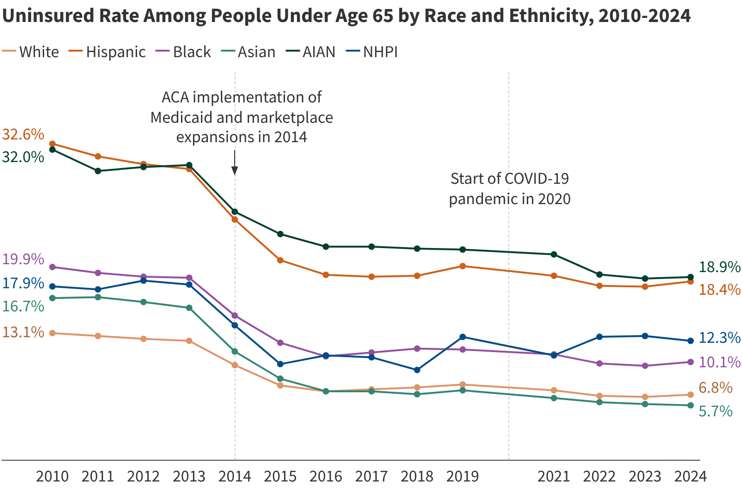
  • Health Coverage by Race and Ethnicity, 2010-2024

    There have been longstanding racial and ethnic disparities in health coverage that contribute to disparities in health. This brief examines trends in health coverage by race and ethnicity from 2010 through 2024 and discusses the implications for such disparities.
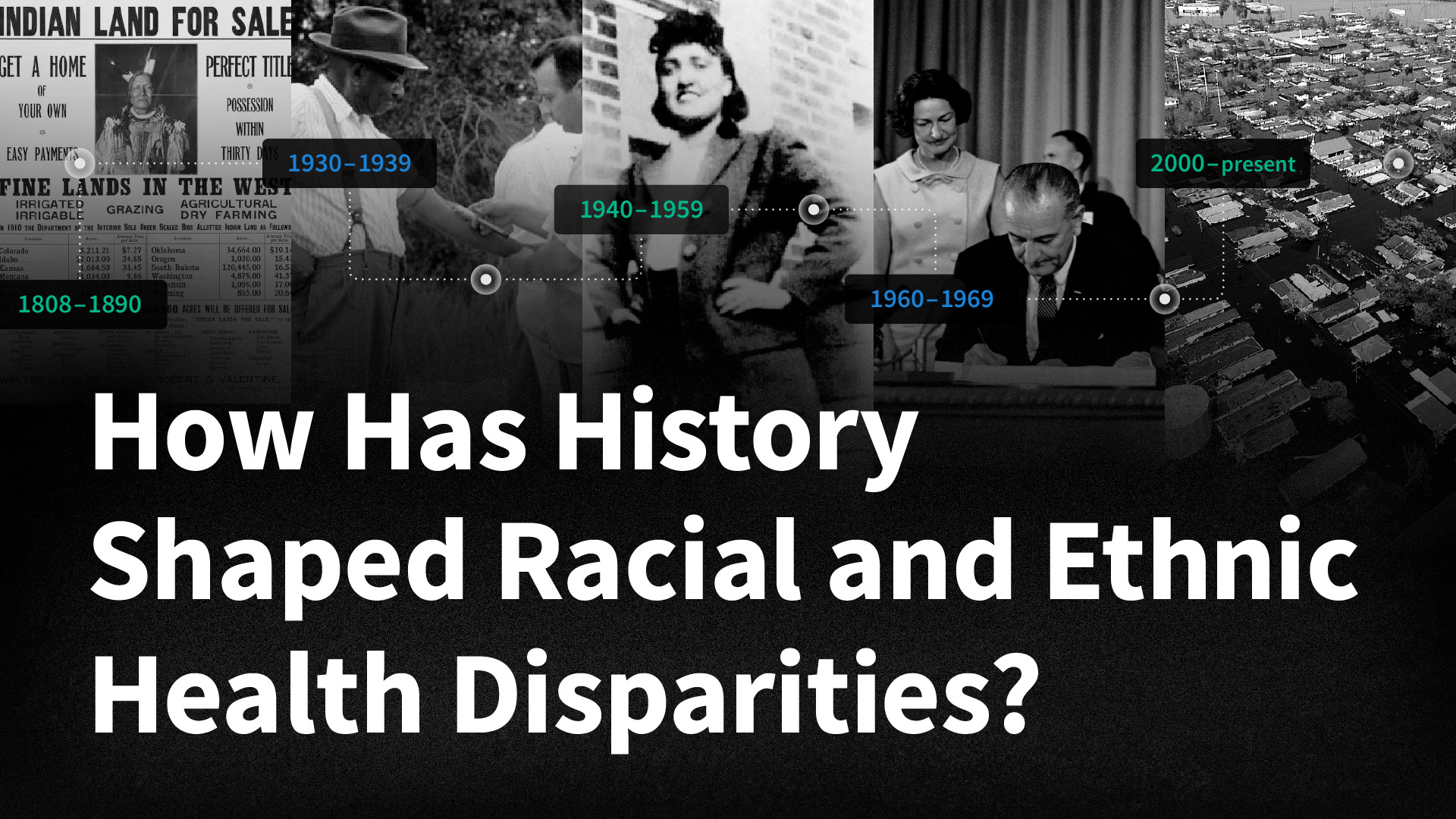
  • Timeline: How History Has Shaped Racial and Ethnic Health Disparities

    This timeline offers a historical view of significant U.S. federal policies and events spanning the early 1800s to today that have influenced present-day health disparities.
  • Health Policy 101: Chapter on Race, Inequality and Health

    Addressing persistent racial and ethnic disparities in health and health care is important for improving the nation’s health and economic prosperity. KFF explains such disparities and the factors that drive them, examines the actions to address them, and outlines future considerations.
  • Key Data on Health and Health Care by Race and Ethnicity

    Racial and ethnic disparities in health and health care remain a persistent challenge in the United States. An updated KFF resource examines how people of color fare compared to White people across 64 measures of health, health care, and social determinants of health.

Survey of Immigrants

KFF-New York Times Survey: Immigrants Report Rising Fear, Negative Economic and Health Impacts, and Changing Political Views During the First Year of President Trump’s Second Term

The 2025 Survey of Immigrants, a partnership between KFF and The New York Times, takes an in-depth look at the experiences of immigrants during the first year of President Trump’s second term, including their worries related to increased immigration enforcement, their health and economic wellbeing, and the political views and preferences of immigrant voters. The survey paints a portrait of families under strain — where fear of detention and economic instability are negatively impacting immigrants’ health and reshaping immigrant families’ daily lives and views of U.S. political parties.

Read the News Release | Explore The New York Times’ Reporting
Subscribe to KFF Emails

Choose which emails are best for you.
Sign up here

Filter

391 - 400 of 602 Results

  • Infant Mortality by Race/Ethnicity, 2007

    Feature

    Infant Mortality by Race/Ethnicity, 2007 Download Source Centers for Disease Control and Prevention. National Center for Health Statistics. June 2011. http://www.cdc.gov/nchs/data/nvsr/nvsr59/nvsr59_06.pdf   

  • Medicaid in the Territories: Program Features, Challenges, and Changes

    Issue Brief

    This brief draws on a survey of and interviews with Medicaid officials in U.S. Territories, as well as other research, to examine key issues and trends in their Medicaid programs. Territories differ from the states on key demographic, economic, and health status indicators. Unlike in the states, where federal Medicaid funding is not capped, and the federal share varies based on states’ per capita income, Medicaid in the territories is subject to a statutory cap…

  • Potential Implications of Immigration Restrictions on the U.S. Agricultural Workforce

    Issue Brief

    Using data from the 2022 National Agricultural Workers Survey (NAWS), this issue brief examines key characteristics of agricultural workers, including their citizenship status, health coverage, and access to health care. The Trump administration’s restrictive immigration policies may compound health challenges and risks this groups faces and have negative impacts on the cost and availability of food.

  • Children in Immigrant Families: Key Facts on Health Coverage and Care

    Issue Brief

    This brief provides key data on socioeconomic characteristics and health coverage among children (aged 18 and under) of immigrants based on KFF analysis of 2024 American Community Survey data. It also examines potential implications of recent policies and actions on the health and well-being of children in immigrant families drawing on KFF survey data from Fall 2025.

  • Health Care Coverage and Access for Hispanics: How Does It Differ Across America

    Event Date:
    Event

    A new report from the Foundation's Kaiser Commission on Medicaid and the Uninsured finds that as the Hispanic population grows and moves beyond urban centers, Hispanics in "new growth communities" face greater barriers to health care than those in cities considered "major Hispanic centers." By 2003, the uninsured rate for Hispanics in new growth communities rose to a level equal to that of Hispanics in major centers. However, less than half (43%) of the Hispanic…