Racial Equity and Health Policy

Survey of Immigrants

KFF-New York Times Survey: Immigrants Report Rising Fear, Negative Economic and Health Impacts, and Changing Political Views During the First Year of President Trump’s Second Term

The 2025 Survey of Immigrants, a partnership between KFF and The New York Times, takes an in-depth look at the experiences of immigrants during the first year of President Trump’s second term, including their worries related to increased immigration enforcement, their health and economic wellbeing, and the political views and preferences of immigrant voters. The survey paints a portrait of families under strain — where fear of detention and economic instability are negatively impacting immigrants’ health and reshaping immigrant families’ daily lives and views of U.S. political parties.

Read the News Release | Explore The New York Times’ Reporting
the Essentials
  • Disparities in Health and Health Care: 5 Key Questions and Answers

    This brief provides an introduction to what health and health care disparities are, why it is important to address them, what the status of disparities is today, recent federal actions to address disparities, and key issues related to addressing disparities in the future.
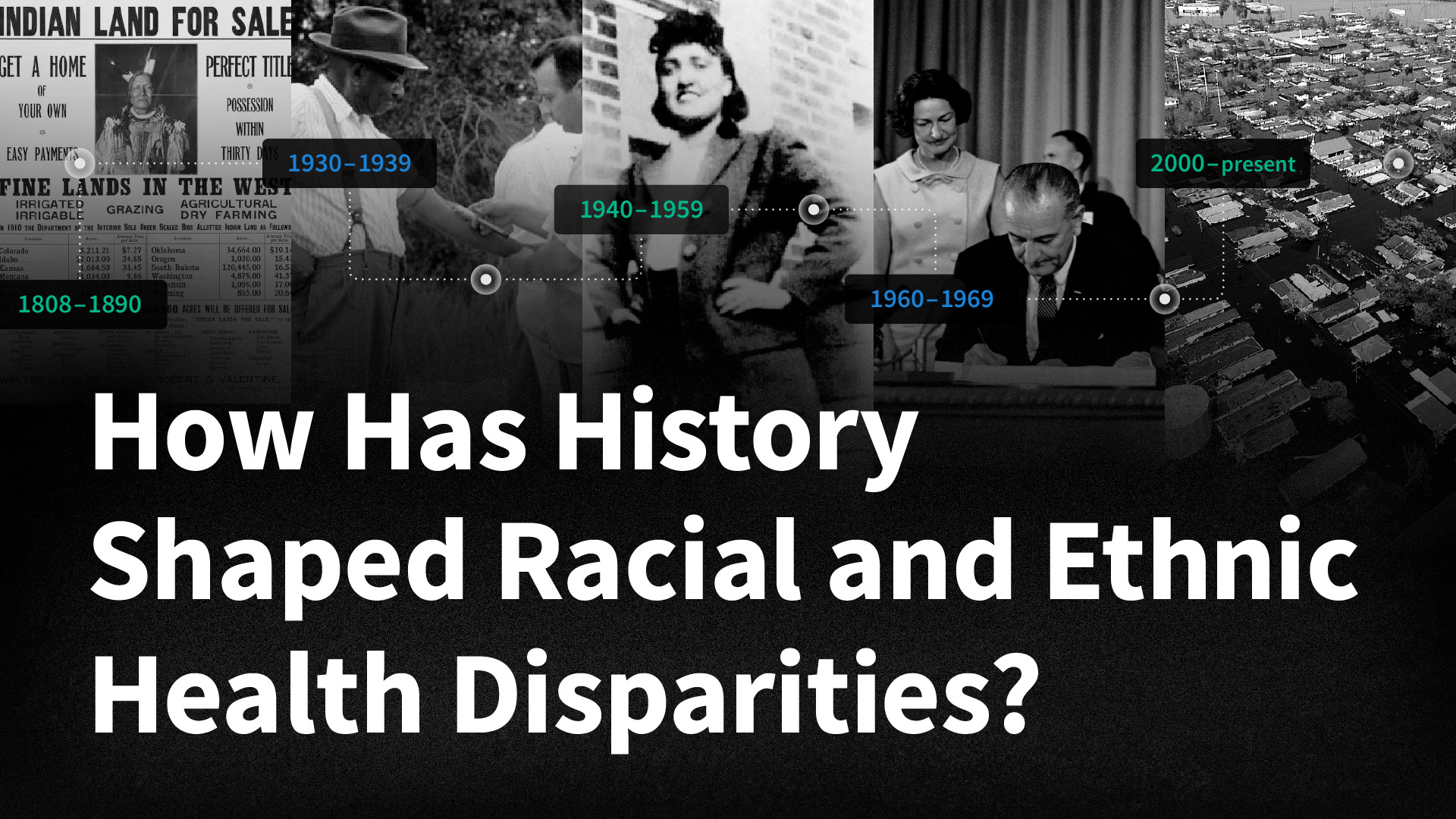
  • Timeline: How History Has Shaped Racial and Ethnic Health Disparities

    This timeline offers a historical view of significant U.S. federal policies and events spanning the early 1800s to today that have influenced present-day health disparities.
  • Health Policy 101: Chapter on Race, Inequality and Health

    Addressing persistent racial and ethnic disparities in health and health care is important for improving the nation’s health and economic prosperity. KFF explains such disparities and the factors that drive them, examines the actions to address them, and outlines future considerations.
  • Key Data on Health and Health Care by Race and Ethnicity

    Racial and ethnic disparities in health and health care remain a persistent challenge in the United States. An updated KFF resource examines how people of color fare compared to White people across 64 measures of health, health care, and social determinants of health.

Subscribe to KFF Emails

Choose which emails are best for you.
Sign up here

Filter

381 - 390 of 599 Results

  • Health Care Experiences of Native Hawaiian or Pacific Islander Adults

    Issue Brief

    A new issue brief based on focus groups conducted by KFF among NHPI adults living in Hawaii and the continental U.S. highlights barriers NHPI people face when accessing health care, including geographic isolation, limited system capacity, and language access. In their own words, participants describe both positive and negative experiences in health care settings and discuss concerns about mental health in their communities.

  • A First Look at North Carolina’s Section 1115 Medicaid Waiver’s Healthy Opportunities Pilots

    Issue Brief

    Medicaid funds typically cannot be used to pay for non-medical interventions that target the social determinants of health. However, in October 2018, CMS approved North Carolina’s Section 1115 waiver which provides financing for a new pilot program, called “Healthy Opportunities Pilots,” to cover evidence-based non-medical services that address specific social needs linked to health/health outcomes. The pilots will address housing instability, transportation insecurity, food insecurity, and interpersonal violence and toxic stress for a limited number of high-need Medicaid enrollees. This brief summarizes key features of the pilots.

  • Coronavirus’ Unequal Economic Toll

    From Drew Altman

    In this column by Drew Altman in Axios, he finds almost half of African Americans and Latinos are struggling to pay their bills because of coronavirus. "This pain would surely be worse without Washington’s relief efforts. Even so, the hardship is real, and that strengthens the case for more aid and better targeting to the families that need it most.”

  • KFF Health Tracking Poll – June 2020

    Report

    This month's tracking poll examines public attitudes toward and experiences with institutional racism and police violence, whether they have participated in recent protests, and perceptions related to health disparities, specifically with regard to coronavirus.

  • Racial and Ethnic Disparities in Access to and Utilization of Care among Insured Adults

    Issue Brief

    This analysis based on data from the 2014 Kaiser Survey of Low-Income Americans examines differences in access to and utilization of care for Black and Hispanic adults compared to White adults among those who are uninsured, enrolled in Medicaid, and privately insured. The findings suggest that gains in health coverage under the ACA will lead to improvements in access to care and utilization for White, Black, and Hispanic adults. They also highlight the importance of increased attention to addressing racial and ethnic disparities in access to and utilization of care among privately insured adults, particularly as the privately insured population becomes more diverse as a result of greater enrollment of people of color into private plans through the ACA Marketplaces.

  • Testimony: The Status of Health and Health Care Disparities in the United States

    Issue Brief

    On March 8, 2017, Kaiser Family Foundation Director of the Disparities Policy Project Samantha Artiga testified before the House Subcommittee on Labor, Health and Human Services, Education and Related Agencies. She presented on the status of health and health care disparities in the United States.

  • Two Studies Draw Different Conclusions on State of Black America

    From Drew Altman

    In this column for The Wall Street Journal's Think Tank, Drew Altman discusses how studies with conflicting views of progress and problems for African Americans can both be true, and why African Americans may feel the problems more than the progress.

  • Puerto Rico: Fast Facts

    Fact Sheet

    Puerto Rico: Fast Facts provides a quick snapshot of the island's demographic, health, and economic characteristics. It also provides some information on federal Medicaid rules, infrastructure, and fiscal challenges ahead.