Racial Equity and Health Policy

the Essentials
  • How Experiencing Racial Discrimination Impacts Health

    This brief highlights research examining mechanisms underlying health outcomes linked to self-reported experiences of racial discrimination, including biological changes, chronic stress, mental health, substance use, pregnancy-related outcomes, and sleep.
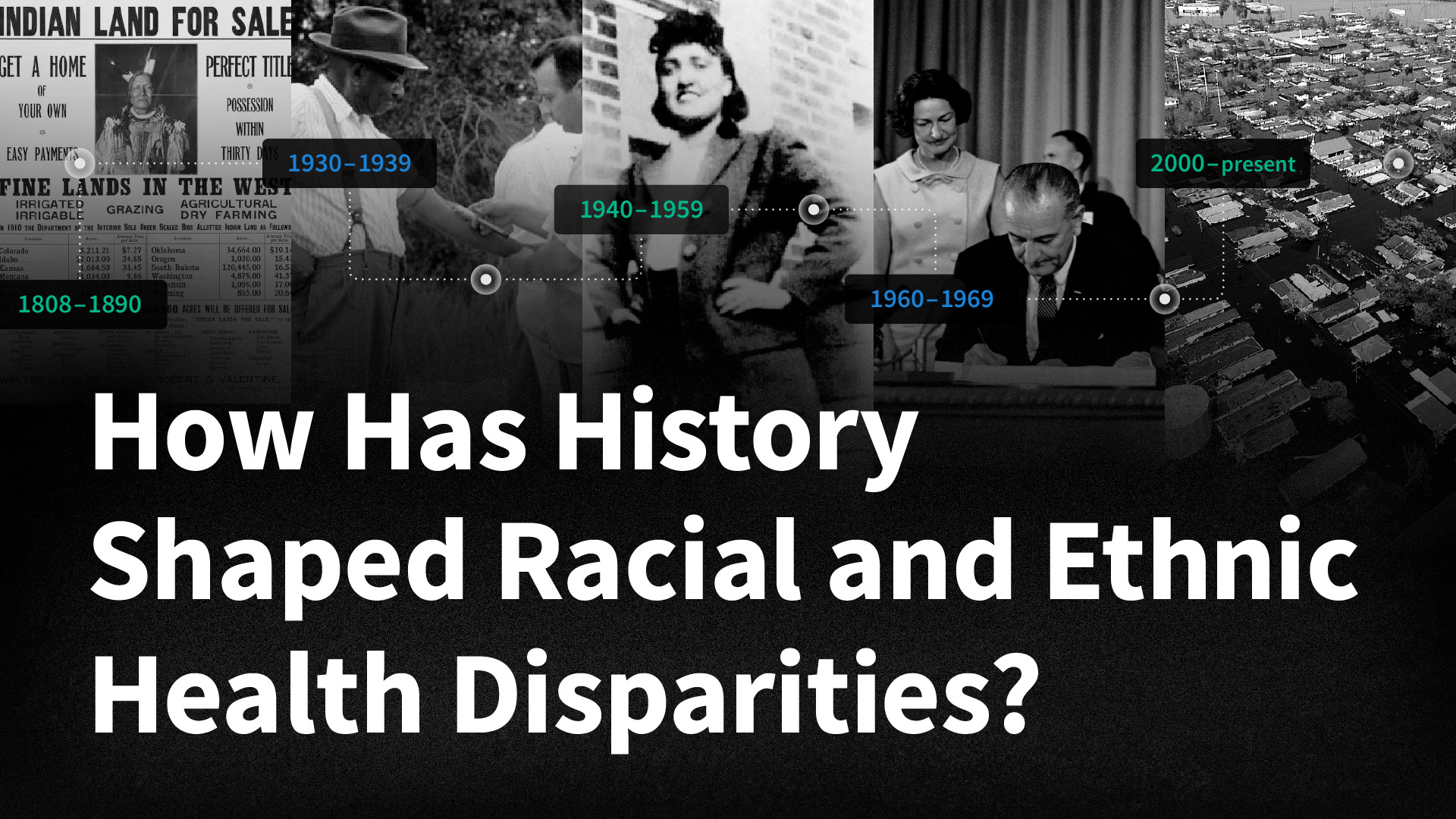
  • Timeline: How History Has Shaped Racial and Ethnic Health Disparities

    This timeline offers a historical view of significant U.S. federal policies and events spanning the early 1800s to today that have influenced present-day health disparities.
  • Health Policy 101: Chapter on Race, Inequality and Health

    Addressing persistent racial and ethnic disparities in health and health care is important for improving the nation’s health and economic prosperity. KFF explains such disparities and the factors that drive them, examines the actions to address them, and outlines future considerations.
  • Key Data on Health and Health Care by Race and Ethnicity

    Racial and ethnic disparities in health and health care remain a persistent challenge in the United States. An updated KFF resource examines how people of color fare compared to White people across 64 measures of health, health care, and social determinants of health.

Survey of Immigrants

KFF-New York Times Survey: Immigrants Report Rising Fear, Negative Economic and Health Impacts, and Changing Political Views During the First Year of President Trump’s Second Term

The 2025 Survey of Immigrants, a partnership between KFF and The New York Times, takes an in-depth look at the experiences of immigrants during the first year of President Trump’s second term, including their worries related to increased immigration enforcement, their health and economic wellbeing, and the political views and preferences of immigrant voters. The survey paints a portrait of families under strain — where fear of detention and economic instability are negatively impacting immigrants’ health and reshaping immigrant families’ daily lives and views of U.S. political parties.

Read the News Release | Explore The New York Times’ Reporting
Stay informed.

Stay informed.

Filter

371 - 380 of 602 Results

  • Health Policy Resources for Covering the 2020 Elections

    News Release

    As the 2020 Election Day approaches, many candidates continue to focus on health care issues, including on the public health and economic response to COVID-19, the future of the Affordable Care Act, health care costs and abortion. To help reporters understand and cover these issues, KFF offers independent, non-partisan policy analysis, polling and other research and has experts who can provide context, explain trade-offs and provide key data points on health care issues that may arise…

  • Web Briefing: Racism and Discrimination in Health Care – Experiences Today and Actions to Address Going Forward

    Event Date:
    Event

    Approaching the end of 2020, two of the most pressing concerns facing the country are the long-standing issue of racial discrimination and the ongoing coronavirus pandemic. The issues have merged with the pandemic taking a disproportionate health and economic toll on people of color. As vaccines become available, prioritizing racial equity will become increasingly important for mitigating these disparities and preventing further widening of the going forward, especially as early polling indicates that people of…

  • Native Americans and Medicaid: Coverage and Financing Issues

    Other Post

    Native Americans and Medicaid:Coverage and Financing Issues Prepared by Andy Schneider and JoAnn Martinez, The Center on Budget and Policy Priorities for The Kaiser Commission on the Future of Medicaid December 1997 Table 1: Medicaid Eligibility Thresholds Pregnant Women, Infants and Children (Effective October 1997) Other Eligibility Categories State Pregnant Women and Infants Children Under Age Six Children Ages Six and Older Upper Age Limit Asset Test Required Supplemental Security Income, 1996 Max. AFDC Payments…

  • Health Coverage for the Black Population Today and Under the Affordable Care Act

    Fact Sheet

    The Affordable Care Act (ACA) could help many uninsured Blacks through the law’s expansion of Medicaid and the creation of new health insurance exchange marketplaces with tax credits to help moderate-income people purchase coverage. This brief provides an overview of the Black population in the U.S., their health coverage today and the potential impact of the ACA coverage expansions.

  • Testimony: The Status of Health and Health Care Disparities in the United States

    Issue Brief

    On March 8, 2017, Kaiser Family Foundation Director of the Disparities Policy Project Samantha Artiga testified before the House Subcommittee on Labor, Health and Human Services, Education and Related Agencies. She presented on the status of health and health care disparities in the United States.

  • Climate-Related Health Risks Among Workers: Who is at Increased Risk?

    Issue Brief

    Adults of color, noncitizens, and adults with lower educational attainment and incomes are disproportionately employed in occupations with increased climate-related health risks. Moreover, workers in occupations with increased climate-related health risks are more likely to be uninsured, contributing to challenges accessing health care.