Racial Equity and Health Policy

the Essentials
  • How Experiencing Racial Discrimination Impacts Health

    This brief highlights research examining mechanisms underlying health outcomes linked to self-reported experiences of racial discrimination, including biological changes, chronic stress, mental health, substance use, pregnancy-related outcomes, and sleep.
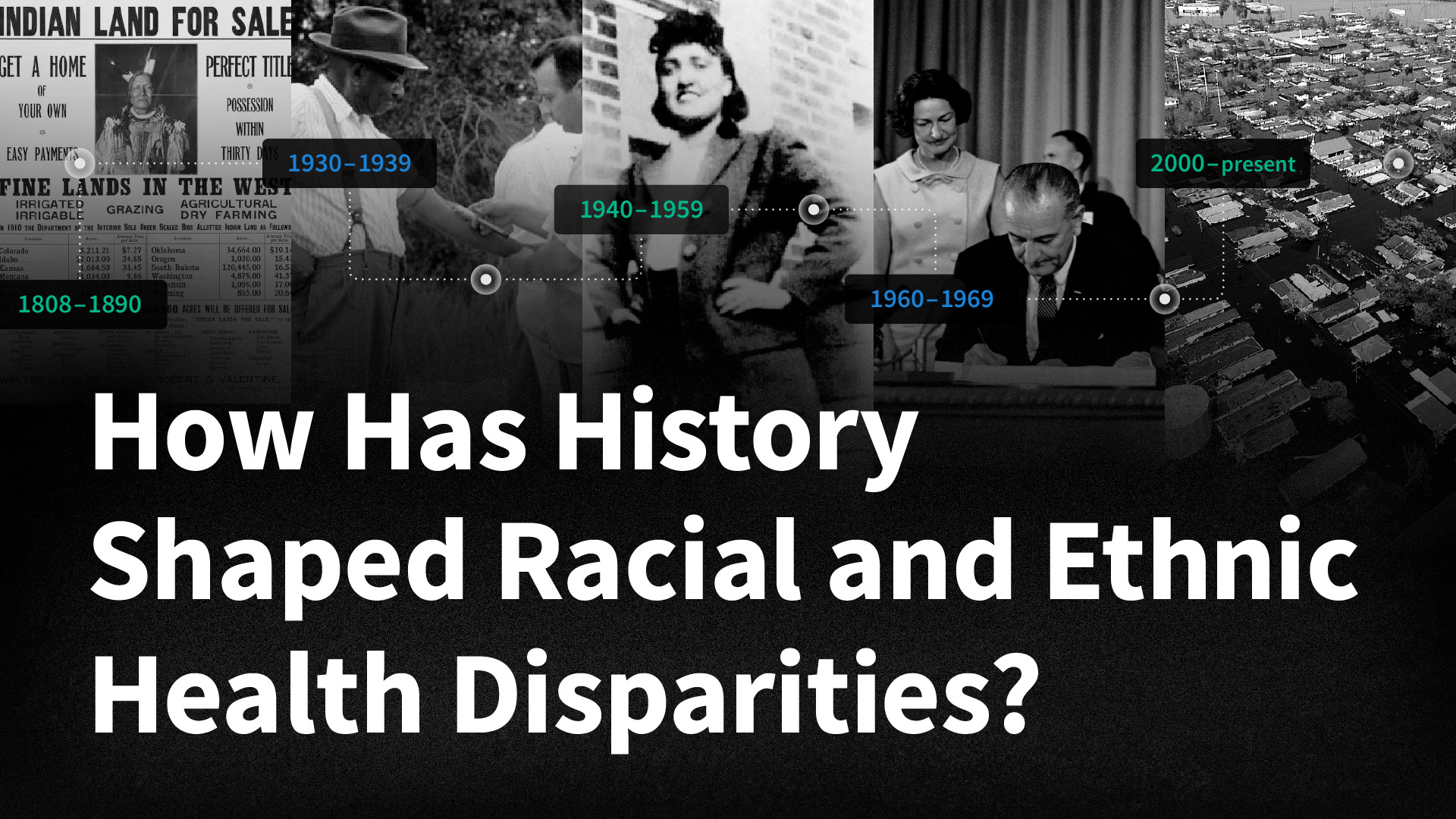
  • Timeline: How History Has Shaped Racial and Ethnic Health Disparities

    This timeline offers a historical view of significant U.S. federal policies and events spanning the early 1800s to today that have influenced present-day health disparities.
  • Health Policy 101: Chapter on Race, Inequality and Health

    Addressing persistent racial and ethnic disparities in health and health care is important for improving the nation’s health and economic prosperity. KFF explains such disparities and the factors that drive them, examines the actions to address them, and outlines future considerations.
  • Key Data on Health and Health Care by Race and Ethnicity

    Racial and ethnic disparities in health and health care remain a persistent challenge in the United States. An updated KFF resource examines how people of color fare compared to White people across 64 measures of health, health care, and social determinants of health.

Survey of Immigrants

KFF-New York Times Survey: Immigrants Report Rising Fear, Negative Economic and Health Impacts, and Changing Political Views During the First Year of President Trump’s Second Term

The 2025 Survey of Immigrants, a partnership between KFF and The New York Times, takes an in-depth look at the experiences of immigrants during the first year of President Trump’s second term, including their worries related to increased immigration enforcement, their health and economic wellbeing, and the political views and preferences of immigrant voters. The survey paints a portrait of families under strain — where fear of detention and economic instability are negatively impacting immigrants’ health and reshaping immigrant families’ daily lives and views of U.S. political parties.

Read the News Release | Explore The New York Times’ Reporting
Stay informed.

Stay informed.

Filter

361 - 370 of 602 Results

  • 2023 Update on Key Federal Immigration Policies and Implications for Health

    Issue Brief

    This issue brief provides the latest update on some key evolving immigration policies, including Title 42 as it applies to border enforcement, the Deferred Action for Childhood Arrivals (DACA) program, and the public charge rule and discusses the implications of these policies for the health and well-being of immigrants.

  • Health and Access to Care and Coverage for Lesbian, Gay, Bisexual, and Transgender (LGBT) Individuals in the U.S.

    Issue Brief

    Lesbian, gay, bisexual, and transgender (LGBT) individuals often face challenges and barriers to accessing needed health services and, as a result, can experience worse health outcomes. These challenges can include stigma, discrimination, violence, and rejection by families and communities, as well as other barriers, such as inequality in the workplace and health insurance sectors, the provision of substandard care, and outright denial of care because of an individual’s sexual orientation or gender identity. This issue…

  • Health Coverage for the Hispanic Population Today and Under the Affordable Care Act

    Report

    The more than 50 million Hispanics living in the United States make up 17 percent of the total population and are the nation's fastest growing racial or ethnic group. Many Hispanics continue to face disparities in health coverage and care, and they have the highest uninsured rate among racial/ethnic groups, with nearly one in three lacking coverage. This brief provides an overview of the Hispanic population in the U.S., their health coverage today and the…

  • Health Coverage by Race and Ethnicity: The Potential Impact of the Affordable Care Act

    Issue Brief

    Executive Summary One of the key goals of the Affordable Care Act (ACA) is to reduce the number of uninsured through a Medicaid expansion and the creation of health insurance exchange marketplaces with advance premium tax credits to help moderate-income individuals pay for this coverage. Given that people of color are at disproportionate risk of being uninsured and having low incomes, the ACA coverage expansions could particularly benefit communities of color and advance efforts to…

  • What Do We Know about Social Determinants of Health in the U.S. and Comparable Countries?

    Feature

    Social determinants, such as individual and community behaviors, economic circumstances, and environmental factors, can influence health costs and outcomes, despite being outside the control of the health system in some respects. This slideshow explores social determinants and health outcomes in the United States and similar countries. The collection looks at income inequality, obesity, educational attainment, and rates of insurance, as well as behaviors such as cigarette and alcohol consumption. Health outcomes, such as disease burden…

  • Michigan’s Medicaid Section 1115 Waiver to Address Effects of Lead Exposure in Flint

    Fact Sheet

    On February 13, 2016, Governor Rick Snyder submitted a Medicaid Section 1115 Waiver proposal to the Centers for Medicare and Medicaid Services (CMS) to address issues related to lead exposure in Flint, Michigan. This fact sheet provides some insight into the situation in Flint, Michigan, the history of Medicaid disaster relief waivers and the details of the Medicaid waiver request.

  • Millions of Seniors Live In Households with School-Age Children

    Issue Brief

    About 3.3 million adults age 65 or older live in a household with school-age children, a factor that state and local officials may want to take into account when deciding when and how fully to re-open schools this fall, a new KFF analysis finds. These older adults, who represent roughly 6 percent of all seniors in the U.S., live with 4.1 million school age children, who comprise about seven percent of all kids ages 5…

  • Poll: 7 in 10 Black Americans Say They Have Experienced Incidents of Discrimination or Police Mistreatment in Their Lifetime, Including Nearly Half Who Felt Their Lives Were in Danger

    News Release

    Most of the Public Favor a Range of Police Reforms to Curb Excessive Force, though Partisan Gaps Exist on Some Key Proposals Amid nationwide protests against racial bias in law enforcement and beyond, a new KFF poll finds that the vast majority (71%) of Black Americans say they’ve experienced some form of racial discrimination or mistreatment during their lifetimes – including nearly half (48%) who say at one point that they felt their life was…