Racial Equity and Health Policy

the Essentials
  • How Experiencing Racial Discrimination Impacts Health

    This brief highlights research examining mechanisms underlying health outcomes linked to self-reported experiences of racial discrimination, including biological changes, chronic stress, mental health, substance use, pregnancy-related outcomes, and sleep.
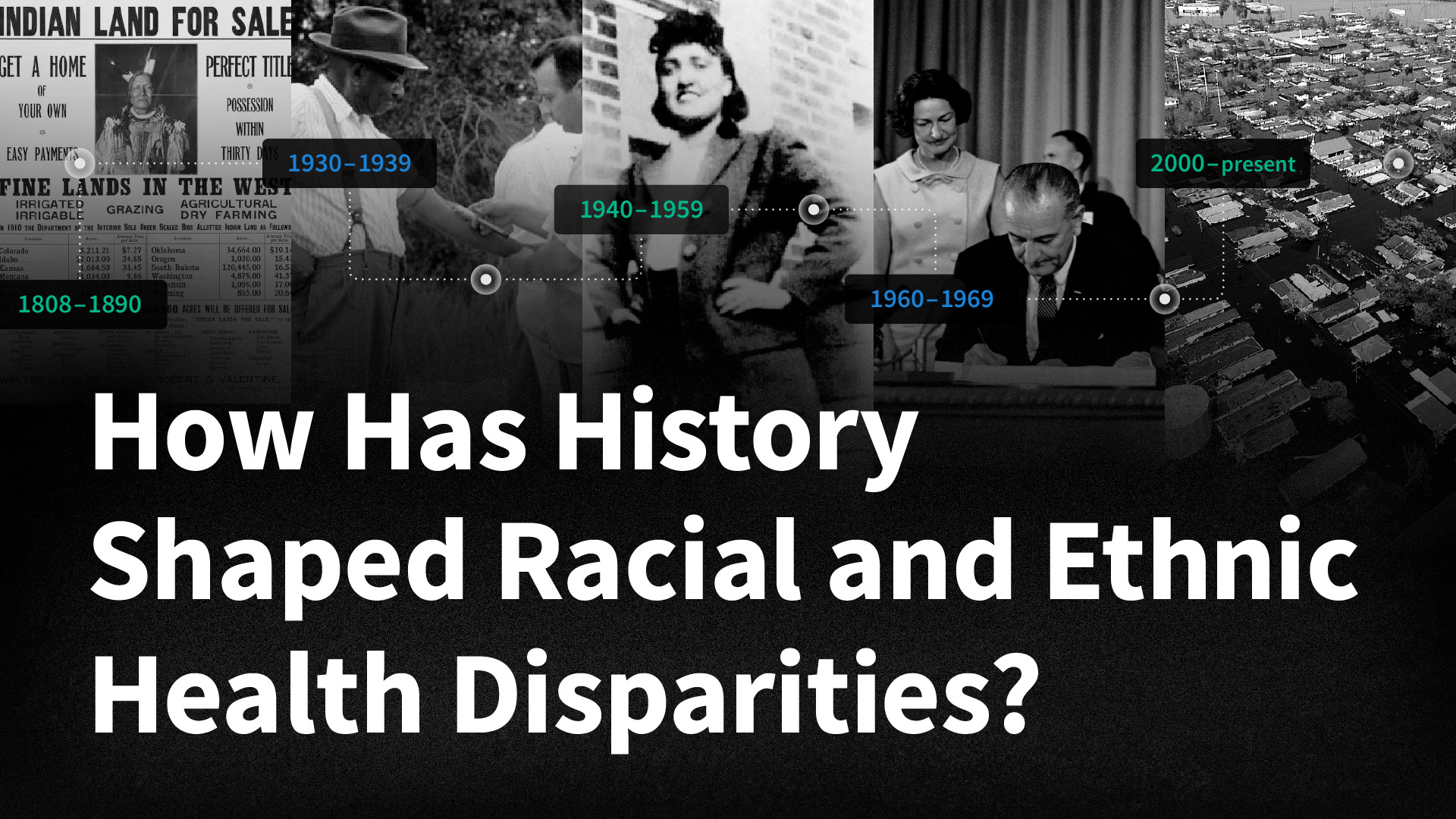
  • Timeline: How History Has Shaped Racial and Ethnic Health Disparities

    This timeline offers a historical view of significant U.S. federal policies and events spanning the early 1800s to today that have influenced present-day health disparities.
  • Health Policy 101: Chapter on Race, Inequality and Health

    Addressing persistent racial and ethnic disparities in health and health care is important for improving the nation’s health and economic prosperity. KFF explains such disparities and the factors that drive them, examines the actions to address them, and outlines future considerations.
  • Key Data on Health and Health Care by Race and Ethnicity

    Racial and ethnic disparities in health and health care remain a persistent challenge in the United States. An updated KFF resource examines how people of color fare compared to White people across 64 measures of health, health care, and social determinants of health.

Survey of Immigrants

KFF-New York Times Survey: Immigrants Report Rising Fear, Negative Economic and Health Impacts, and Changing Political Views During the First Year of President Trump’s Second Term

The 2025 Survey of Immigrants, a partnership between KFF and The New York Times, takes an in-depth look at the experiences of immigrants during the first year of President Trump’s second term, including their worries related to increased immigration enforcement, their health and economic wellbeing, and the political views and preferences of immigrant voters. The survey paints a portrait of families under strain — where fear of detention and economic instability are negatively impacting immigrants’ health and reshaping immigrant families’ daily lives and views of U.S. political parties.

Read the News Release | Explore The New York Times’ Reporting
Stay informed.

Stay informed.

Filter

341 - 350 of 602 Results

  • Estimates of Eligibility for ACA Coverage among the Uninsured by Race and Ethnicity

    Issue Brief

    This analysis provides national estimates of eligibility for ACA coverage options by race/ethnicity, including Whites, Blacks, and Hispanics. We estimate coverage and eligibility as of early 2015, which is prior to the end of the 2015 Marketplace open enrollment period. Overall, this analysis finds that more than half (55%) of the total 32.3 million nonelderly uninsured are people of color, including 34% who identify as Hispanic, 14% who identify as Black, and 8% who identify…

  • The Role of Language in Health Care Access and Utilization for Insured Hispanic Adults

    Issue Brief

    The ACA coverage expansions may help mitigate some barriers people with limited English proficiency (LEP) face in accessing coverage and care. However, individuals with LEP may still face increased barriers to care with coverage. This analysis examines differences in health care experiences between English- and Spanish-speaking Hispanic adults with insurance using data from the 2014 Kaiser Survey of Low-Income Americans and the ACA.

  • Health Care Access and Coverage for the Lesbian, Gay, Bisexual, and Transgender (LGBT) Community in the United States: Opportunities and Challenges in a New Era

    Perspective

    This Policy Insight looks at the challenges and questions surrounding recent policy changes that are expected to increase health insurance coverage and access to care for lesbian, gay, bisexual and transgender (LGBT) individuals and their families, including the impact of the Affordable Care Act (ACA) and the Supreme Court's DOMA decision.

  • Analysis: Immigrants Living along the Texas Gulf Coast Hit Hard Financially Following Hurricane Harvey

    News Release

    Immigrants living along the Texas Gulf Coast were more likely than their U.S.-born neighbors to suffer employment and income losses as a result of Hurricane Harvey (64% vs. 39%), a new Kaiser Family Foundation/Episcopal Health Foundation analysis finds. The analysis examines differences between immigrants and U.S.-born families based on a fall KFF/EHF survey of residents in 24 Texas counties hit hard by Hurricane Harvey in August 2017. Other findings include: Immigrants were more likely to…

  • Health Care in Puerto Rico and the U.S. Virgin Islands: A Six-Month Check-Up After the Storms (Report)

    Issue Brief

    Puerto Rico and the U.S. Virgin Islands suffered significant damage to their infrastructure and health care systems from Hurricanes Irma and Maria in September 2017. Drawing on interviews with residents and key stakeholders as well as public reports, this brief provides an overview of the status of the recovery efforts six months after the storms, with a focus on the health care systems.

  • Serious Illness in Late Life: The Public’s Views and Experiences

    Report

    In context of the rapidly growing number of older adults in the U.S. and increasing challenges that this population faces, the Kaiser Family Foundation conducted a large scale, nationally representative telephone survey to better understand people’s expectations about later life and efforts they’ve taken to plan for if they become seriously ill. To learn more about the experiences of those with serious illness specifically, this survey also included interviews with adults who are either personally…

  • Report and Video Highlight Challenges Facing Hurricane Maria’s Survivors in Puerto Rico

    News Release

    A new Kaiser Family Foundation report and video find residents across Puerto Rico facing a wide range of daily and long-term challenges as they struggle to rebuild their lives after Hurricane Maria swept across the island Sept. 20 as a powerful category 4 storm. Based on focus-group and individual interviews with 40 Puerto Ricans from 10 different regions of the island conducted in San Juan and Ponce in November 2017, the Voices from Puerto Rico:…

  • Racial Disparities in Coronavirus

    COVID-19 Crisis Will Likely Disproportionately Affect the Health and Finances of Communities of Color

    News Release

    The COVID-19 outbreak will likely disproportionately affect communities of color in both their health and their pocketbooks, compounding longstanding racial disparities in health and economic conditions, according to a new KFF analysis. While comprehensive data about how the COVID-19 crisis is unfolding are not yet available, early data from some areas suggest groups of color are experiencing disproportionate health and economic impacts. As of April 6, to cite a few examples: In Illinois, groups of…