Racial Equity and Health Policy

Survey of Immigrants

KFF-New York Times Survey: Immigrants Report Rising Fear, Negative Economic and Health Impacts, and Changing Political Views During the First Year of President Trump’s Second Term

The 2025 Survey of Immigrants, a partnership between KFF and The New York Times, takes an in-depth look at the experiences of immigrants during the first year of President Trump’s second term, including their worries related to increased immigration enforcement, their health and economic wellbeing, and the political views and preferences of immigrant voters. The survey paints a portrait of families under strain — where fear of detention and economic instability are negatively impacting immigrants’ health and reshaping immigrant families’ daily lives and views of U.S. political parties.

Read the News Release | Explore The New York Times’ Reporting
the Essentials
  • Disparities in Health and Health Care: 5 Key Questions and Answers

    This brief provides an introduction to what health and health care disparities are, why it is important to address them, what the status of disparities is today, recent federal actions to address disparities, and key issues related to addressing disparities in the future.
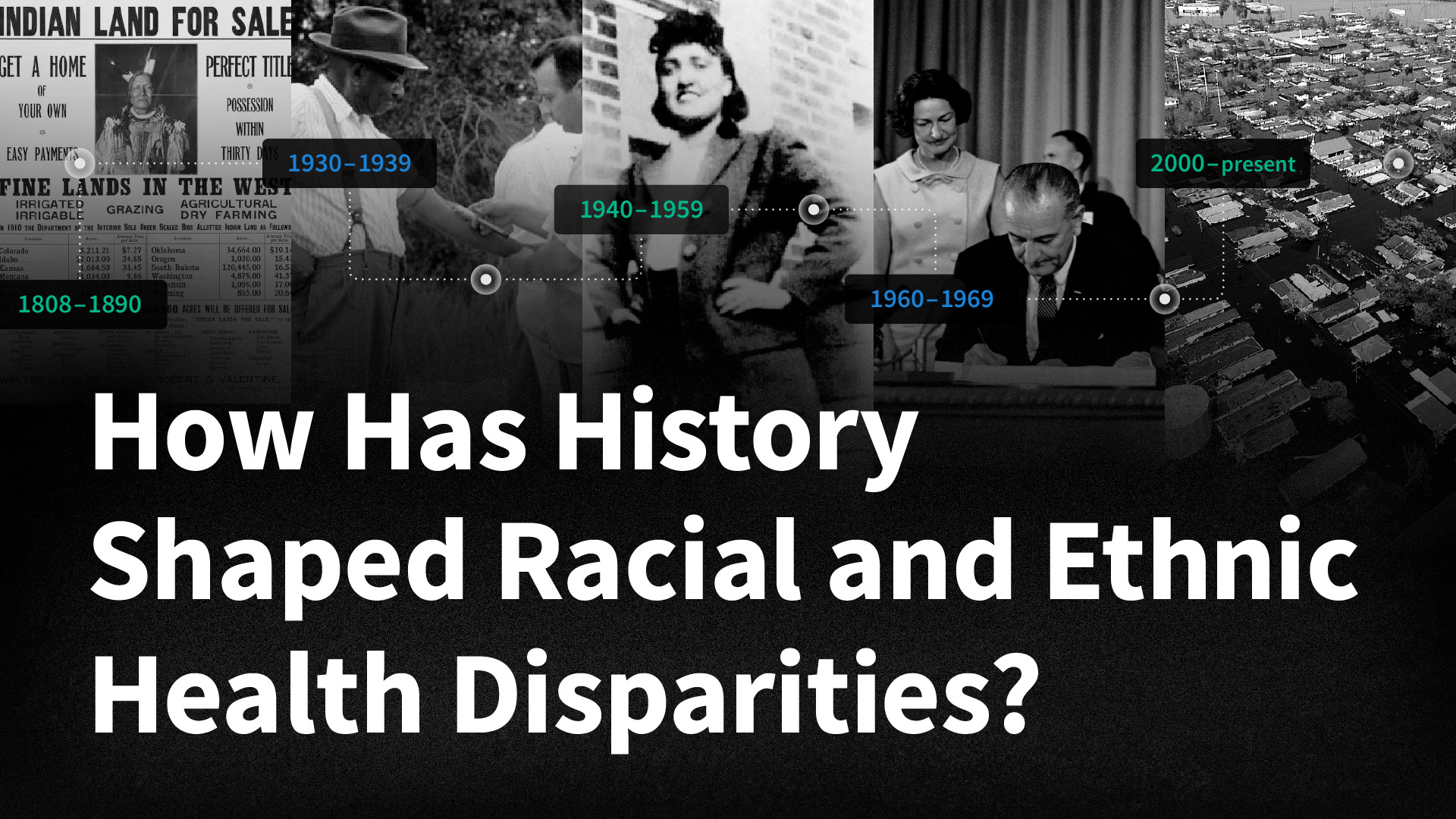
  • Timeline: How History Has Shaped Racial and Ethnic Health Disparities

    This timeline offers a historical view of significant U.S. federal policies and events spanning the early 1800s to today that have influenced present-day health disparities.
  • Health Policy 101: Chapter on Race, Inequality and Health

    Addressing persistent racial and ethnic disparities in health and health care is important for improving the nation’s health and economic prosperity. KFF explains such disparities and the factors that drive them, examines the actions to address them, and outlines future considerations.
  • Key Data on Health and Health Care by Race and Ethnicity

    Racial and ethnic disparities in health and health care remain a persistent challenge in the United States. An updated KFF resource examines how people of color fare compared to White people across 64 measures of health, health care, and social determinants of health.

Subscribe to KFF Emails

Choose which emails are best for you.
Sign up here

Filter

301 - 310 of 596 Results

  • Puerto Rico: Datos Básicos

    Fact Sheet

    Puerto Rico: Datos Básicos provee una descripción general del las características demográficas, y estadísticas de salud y la economía. También se da alguna informacion del gobierno, reglas federales de Medicaid, y asuntos corrientes que estan afectando el territorio, incluyendo a Zika.

  • What Do We Know about Social Determinants of Health in the U.S. and Comparable Countries?

    Feature

    Social determinants, such as individual and community behaviors, economic circumstances, and environmental factors, can influence health costs and outcomes, despite being outside the control of the health system in some respects. This slideshow explores social determinants and health outcomes in the United States and similar countries. The collection looks at income inequality, obesity, educational attainment, and rates of insurance, as well as behaviors such as cigarette and alcohol consumption. Health outcomes, such as disease burden from drug abuse disorders and motor vehicle road injuries, also are examined, along with measures such as years of life lost due to firearms assaults and death rates from accidental poisonings.

  • President Trump’s Record on Health Care

    Issue Brief

    This issue brief provides a detailed overview of the Trump Administration’s record on health care issues relating to: the Administration’s response to the COVID-19 pandemic, the ACA and private insurance markets, Medicaid, Medicare, reducing prescription drug and other health care costs, sexual and reproductive health, mental health and substance use, immigration and health, long-term care, HIV/AIDS policy, and LGBTQ health.

  • Vaccine Hesitancy Among Hispanic Adults

    Poll Finding

    Based on data from the KFF COVID-19 Vaccine Monitor, this poll finding explores attitudes among Hispanic Americans toward the coronavirus and a generational gap in willingness to get a potential vaccine.

  • Does Education Narrow the Gap in Wealth Among Older Adults, by Race and Ethnicity?

    Issue Brief

    This analysis of per capita income and assets among older adults in 2019 shows that differences in median per capita income among White, Black, and Hispanic adults ages 65 and older are narrower when comparing people with similar levels of education, although among college graduates, the gap in income continues to be wide between Hispanic and White seniors. The gaps in savings and home equity remain wide, and are particularly striking among seniors with less than a high school education. The patterns are similar for men and women, as well as across different age groups of older adults.

  • Vaccine Monitor: Nearly Half of the Public Wants to Get a COVID-19 Vaccine as Soon as They Can or Has Already Been Vaccinated, Up across Racial and Ethnic Groups Since December

    News Release

    Most Convincing Messages to Promote Vaccination Highlight Effectiveness at Preventing Illness and a Return to Normal Life; Hearing about Rare Allergic Reactions and Side Effects May Discourage Some New KFF Dashboard Features Key Data and Insights from the Vaccine Monitor With millions of Americans getting their first COVID-19 vaccinations, the public’s eagerness to get a…

  • A Reconfigured U.S. Supreme Court: Implications for Health Policy

    Issue Brief

    U.S. Supreme Court decisions shape health policy in important ways. The nomination of Judge Amy Coney Barrett, if confirmed, is expected to establish a solid 6:3 conservative majority that could affect case outcomes in several areas. This issue brief considers the potential implications of a reconfigured Court for health policy issues, including those already on the Court’s docket for the coming term and those that the Court may choose to consider in this term or in the future.

  • Black Americans Are More Skeptical of a Coronavirus Vaccine

    From Drew Altman

    Drew Altman discusses how systemic racism has led to striking levels of reluctance to get a COVID-19 vaccine among Black Americans, including those at highest risk, and the challenge it presents for ending the pandemic.