Racial Equity and Health Policy

the Essentials
  • Health Coverage by Race and Ethnicity, 2010-2024

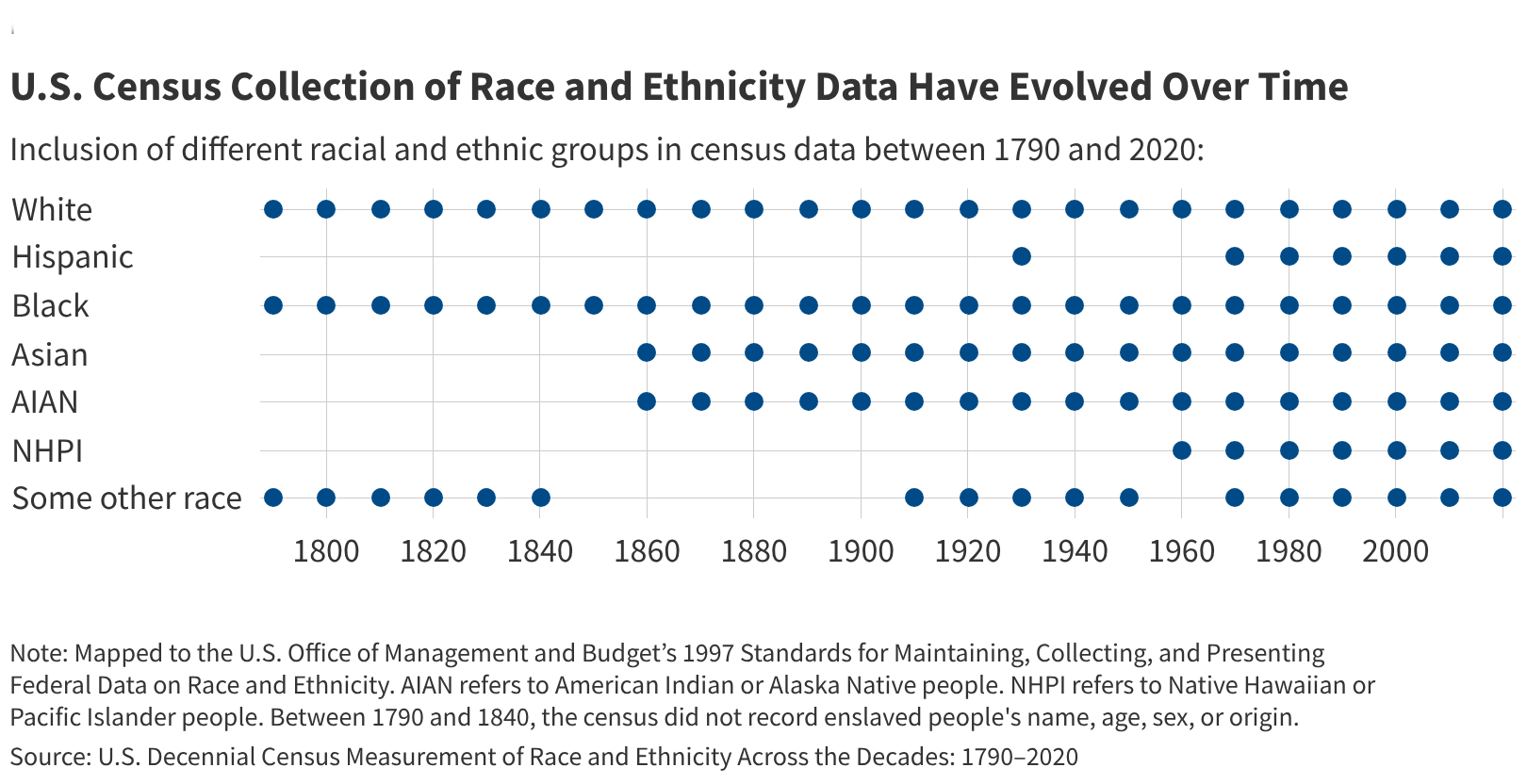
    There have been longstanding racial and ethnic disparities in health coverage that contribute to disparities in health. This brief examines trends in health coverage by race and ethnicity from 2010 through 2024 and discusses the implications for such disparities.
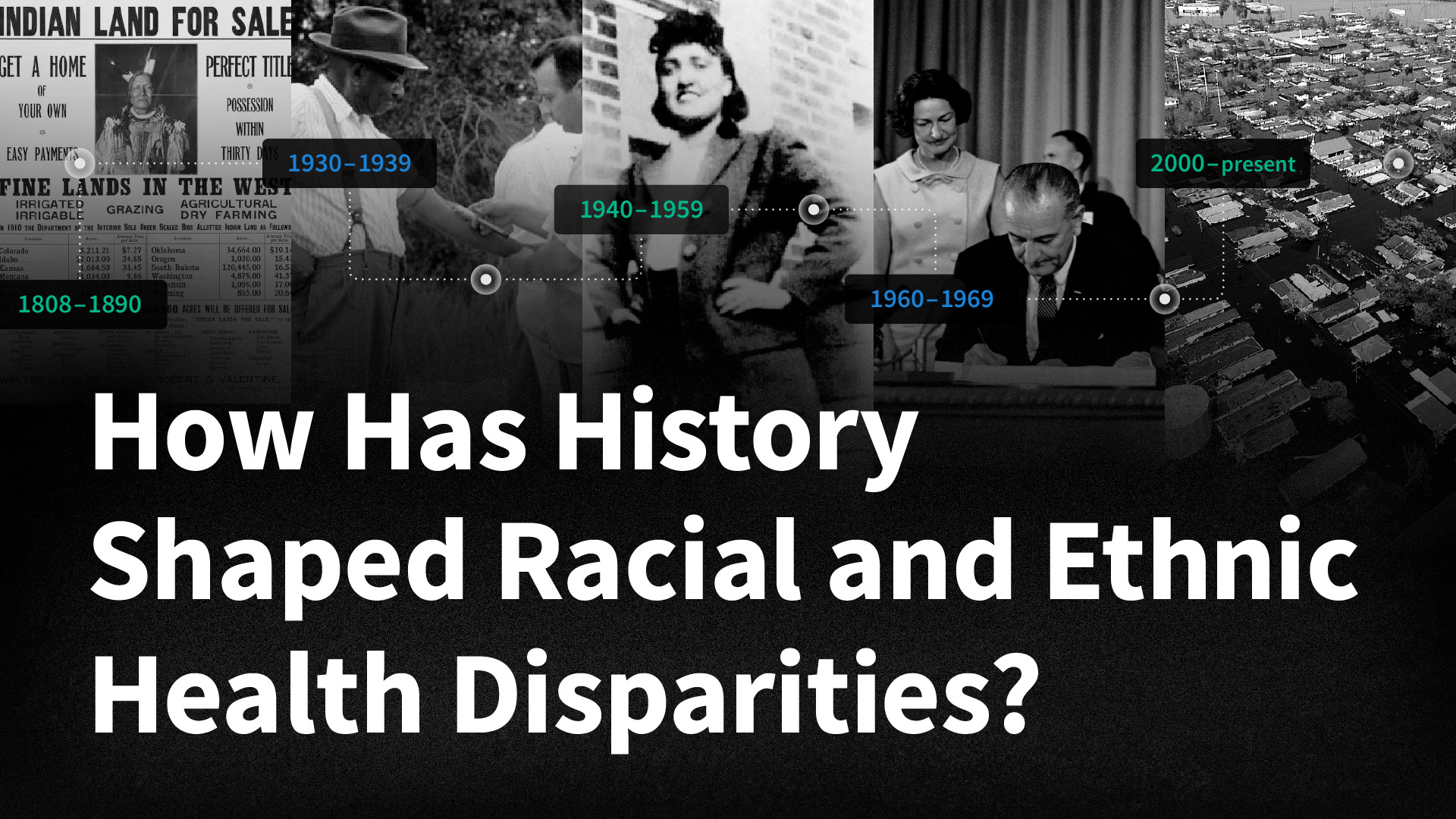
  • Timeline: How History Has Shaped Racial and Ethnic Health Disparities

    This timeline offers a historical view of significant U.S. federal policies and events spanning the early 1800s to today that have influenced present-day health disparities.
  • Health Policy 101: Chapter on Race, Inequality and Health

    Addressing persistent racial and ethnic disparities in health and health care is important for improving the nation’s health and economic prosperity. KFF explains such disparities and the factors that drive them, examines the actions to address them, and outlines future considerations.
  • Key Data on Health and Health Care by Race and Ethnicity

    Racial and ethnic disparities in health and health care remain a persistent challenge in the United States. An updated KFF resource examines how people of color fare compared to White people across 64 measures of health, health care, and social determinants of health.

Survey of Immigrants

KFF-New York Times Survey: Immigrants Report Rising Fear, Negative Economic and Health Impacts, and Changing Political Views During the First Year of President Trump’s Second Term

The 2025 Survey of Immigrants, a partnership between KFF and The New York Times, takes an in-depth look at the experiences of immigrants during the first year of President Trump’s second term, including their worries related to increased immigration enforcement, their health and economic wellbeing, and the political views and preferences of immigrant voters. The survey paints a portrait of families under strain — where fear of detention and economic instability are negatively impacting immigrants’ health and reshaping immigrant families’ daily lives and views of U.S. political parties.

Read the News Release | Explore The New York Times’ Reporting
Subscribe to KFF Emails

Choose which emails are best for you.
Sign up here

Filter

291 - 300 of 602 Results

  • New Campaign from THE CONVERSATION / LA CONVERSACIÓN Responds to Information Needs about COVID-19 Vaccines Among Latinos and Spanish-speaking People in U.S.

    News Release

    News Release May 20, 2021 – THE CONVERSATION / LA CONVERSACIÓN expands to address information needs about the COVID-19 vaccines in the Latinx community with new videos featuring doctors, nurses and promotoras (community health workers) in English and Spanish. This installment of the campaign is produced by KFF (Kaiser Family Foundation) under its Greater Than COVID public information response and presented with UnidosUS. “THE CONVERSATION / LA CONVERSACIÓN campaign—and our efforts with the UnidosUS Esperanza Hope for…

  • New Analysis: In Pursuit of a National Vaccination Benchmark, Hispanic and Black People’s Rates Projected to Lag Behind

    News Release

    Much attention has focused on President Biden’s stated goal of vaccinating 70% of U.S. adults by July 4th. While achieving a high overall vaccination rate is important for recovery from the COVID-19 pandemic, a new analysis of people ages 12 and older—a different population than President Biden’s goal, but one that is currently eligible for vaccination—projects that 65% will have received at least one dose by July 4th, but 63% of Hispanic people and only…

  • Most Hispanic Adults Lean Towards Getting a COVID-19 Vaccine, But Many Younger Adults are Hesitant

    News Release

    A new analysis of KFF COVID-19 Vaccine Monitor survey data finds that most Hispanic adults across the country want to get a COVID-19 vaccine at some point though younger adults are more hesitant, in part because of lower confidence that it is safe and effective. Overall a quarter (26%) of Hispanic adults say they will get a COVID-19 vaccine “as soon as possible” and an additional 43% say they will “wait until it has been…

  • Medicaid Authorities and Options to Address Social Determinants of Health

    Issue Brief

    Social determinants of health (SDOH) are the conditions in which people are born, grow, live, work and age. While there are limits, states can use Medicaid – which, by design, serves a primarily low-income population with greater social needs – to address social determinants of health. This brief outlines the range of Medicaid authorities and flexibilities that can be used to add benefits and design programs to address the social determinants of health.

  • KFF COVID-19 Vaccine Monitor: December 2020

    Report

    This initial survey for the KFF COVID-19 Vaccine Monitor tracks the public’s attitudes and experiences with COVID-19 vaccinations, with a focus on sub-groups of Americans. It explores confidence in vaccines, assesses trust in messengers, and highlights key challenges for vaccination efforts.

  • Medical Care Research and Review

    Other Post

    Journal Supplement This special supplement of includes: original research tracking trends in disparities in health coverage and access to care over two decades; literature syntheses focused on medical treatment and the decision-making process; legal analysis of civil rights laws in the context of managed care; and findings from a national survey of public awareness of racial inequities in care. The supplement is comprised of work commissioned by the Foundation for its 1999 national policy roundtable,…

  • AIDS… A Crisis Among African-American Youth

    Fact Sheet

    A fact sheet on HIV, how it is transmitted, how to protect yourself against HIV, and information on testing and treatments for HIV. This fact sheet is available as part of a partnership with BET Teen Summit Town Hall specials. Fact Sheet

  • Compendium of Cultural Competence Initiatives in Health Care

    Report

    Public and private sector organizations are involved in a number of activities that seek to reduce cultural and communication barriers to health care. These activities are often described as cultural competency and/or cross-cultural education. A recent Institute of Medicine report recommended that the health care system pursue several of these techniques as part of a multi-level strategy to reduce racial and ethnic disparities in medical care. To address this need, the Henry J. Kaiser Family…