Racial Equity and Health Policy

the Essentials
  • How Experiencing Racial Discrimination Impacts Health

    This brief highlights research examining mechanisms underlying health outcomes linked to self-reported experiences of racial discrimination, including biological changes, chronic stress, mental health, substance use, pregnancy-related outcomes, and sleep.
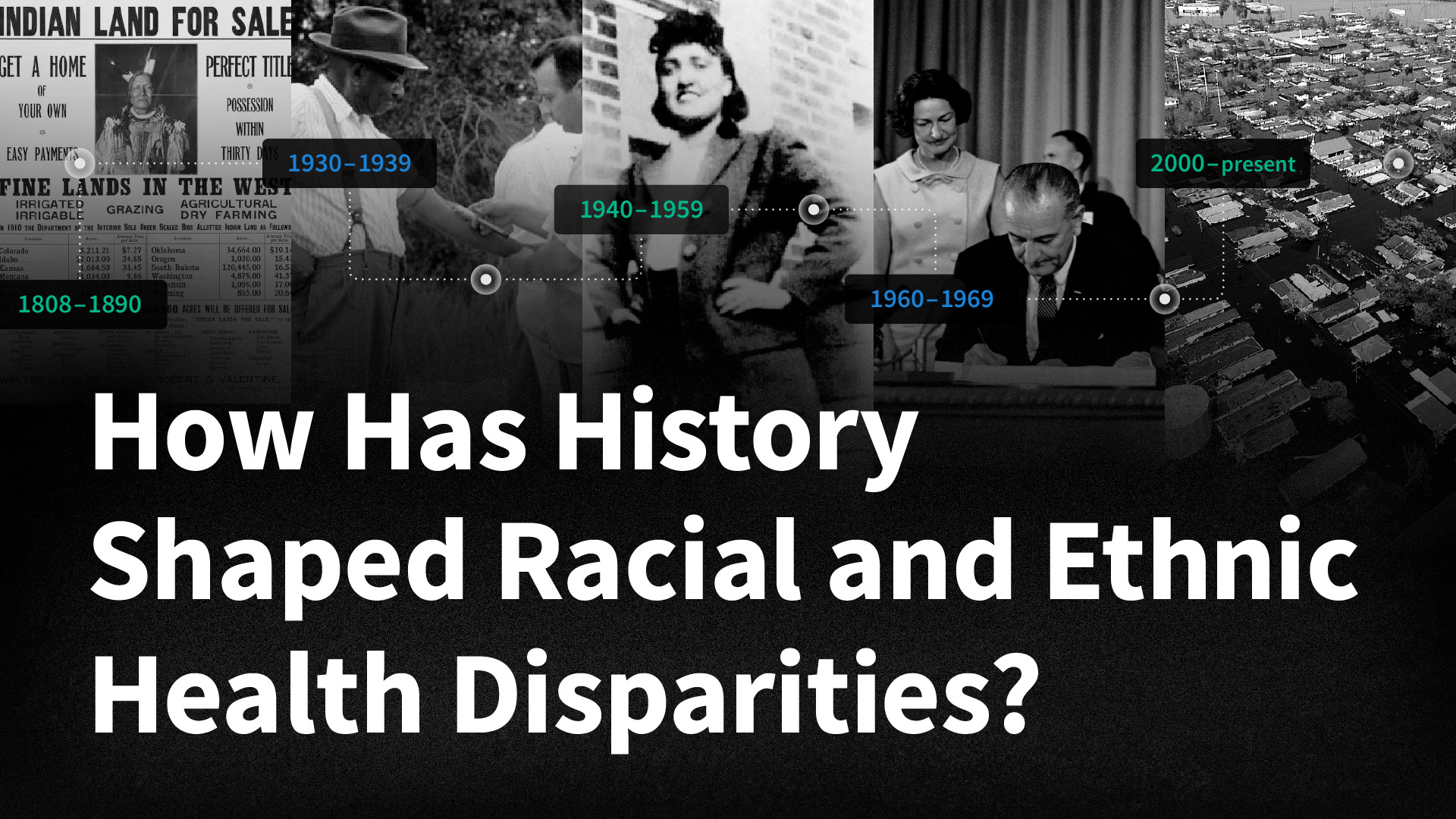
  • Timeline: How History Has Shaped Racial and Ethnic Health Disparities

    This timeline offers a historical view of significant U.S. federal policies and events spanning the early 1800s to today that have influenced present-day health disparities.
  • Health Policy 101: Chapter on Race, Inequality and Health

    Addressing persistent racial and ethnic disparities in health and health care is important for improving the nation’s health and economic prosperity. KFF explains such disparities and the factors that drive them, examines the actions to address them, and outlines future considerations.
  • Key Data on Health and Health Care by Race and Ethnicity

    Racial and ethnic disparities in health and health care remain a persistent challenge in the United States. An updated KFF resource examines how people of color fare compared to White people across 64 measures of health, health care, and social determinants of health.

Survey of Immigrants

KFF-New York Times Survey: Immigrants Report Rising Fear, Negative Economic and Health Impacts, and Changing Political Views During the First Year of President Trump’s Second Term

The 2025 Survey of Immigrants, a partnership between KFF and The New York Times, takes an in-depth look at the experiences of immigrants during the first year of President Trump’s second term, including their worries related to increased immigration enforcement, their health and economic wellbeing, and the political views and preferences of immigrant voters. The survey paints a portrait of families under strain — where fear of detention and economic instability are negatively impacting immigrants’ health and reshaping immigrant families’ daily lives and views of U.S. political parties.

Read the News Release | Explore The New York Times’ Reporting
Stay informed.

Stay informed.

Filter

291-300 of 606 results

  • President Obama’s Campaign Position on Health Reform and Other Health Care Issues

    Issue Brief

    During the 2008 Presidential campaign now President Barack Obama announced a comprehensive health care reform proposal and laid out his positions on a number of other key health care issues. The two documents below summarize these campaign policies and positions. They were prepared by the Kaiser Family Foundation with the assistance of Health Policy Alternatives, Inc., and are based on information compiled from Obama's campaign Web site, speeches, campaign debates and news reports. They are…

  • African American and HIV/AIDS Survey – News Release

    Other Post

    Despite Widespread Concern About AIDS, Few African Americans See 'A Lot' of Action From Community Groups and Government in Fight Against Disease African Americans Want Practical Help on HIV/AIDS:How to Talk with Children and Partners, More Information About Testing and Treatment Media Named As Most Important Resource on HIV/AIDS Embargoed for release until: 9:00 am, ET, Tuesday, March 17, 1998 Boston, MA -- As African Americans make up a growing percent of new AIDS cases…

  • Health Care Access and Coverage for the Lesbian, Gay, Bisexual, and Transgender (LGBT) Community in the United States: Opportunities and Challenges in a New Era

    Perspective

    This Policy Insight looks at the challenges and questions surrounding recent policy changes that are expected to increase health insurance coverage and access to care for lesbian, gay, bisexual and transgender (LGBT) individuals and their families, including the impact of the Affordable Care Act (ACA) and the Supreme Court's DOMA decision.

  • The Role of Language in Health Care Access and Utilization for Insured Hispanic Adults

    Issue Brief

    The ACA coverage expansions may help mitigate some barriers people with limited English proficiency (LEP) face in accessing coverage and care. However, individuals with LEP may still face increased barriers to care with coverage. This analysis examines differences in health care experiences between English- and Spanish-speaking Hispanic adults with insurance using data from the 2014 Kaiser Survey of Low-Income Americans and the ACA.

  • Distribution of U.S. Population by Race/Ethnicity, 2010 and 2050

    Feature

    Distribution of U.S. Population by Race/Ethnicity, 2010 and 2050 Download Source U.S. Census Bureau, 2008, Projected Population by Single Year of Age, Sex, Race, and Hispanic Origin for the United States: July 1, 2000 to July 1, 2050.  http://www.census.gov/population/www/projections/downloadablefiles.html.