Racial Equity and Health Policy

Survey of Immigrants

KFF-New York Times Survey: Immigrants Report Rising Fear, Negative Economic and Health Impacts, and Changing Political Views During the First Year of President Trump’s Second Term

The 2025 Survey of Immigrants, a partnership between KFF and The New York Times, takes an in-depth look at the experiences of immigrants during the first year of President Trump’s second term, including their worries related to increased immigration enforcement, their health and economic wellbeing, and the political views and preferences of immigrant voters. The survey paints a portrait of families under strain — where fear of detention and economic instability are negatively impacting immigrants’ health and reshaping immigrant families’ daily lives and views of U.S. political parties.

Read the News Release | Explore The New York Times’ Reporting
the Essentials
  • Disparities in Health and Health Care: 5 Key Questions and Answers

    This brief provides an introduction to what health and health care disparities are, why it is important to address them, what the status of disparities is today, recent federal actions to address disparities, and key issues related to addressing disparities in the future.
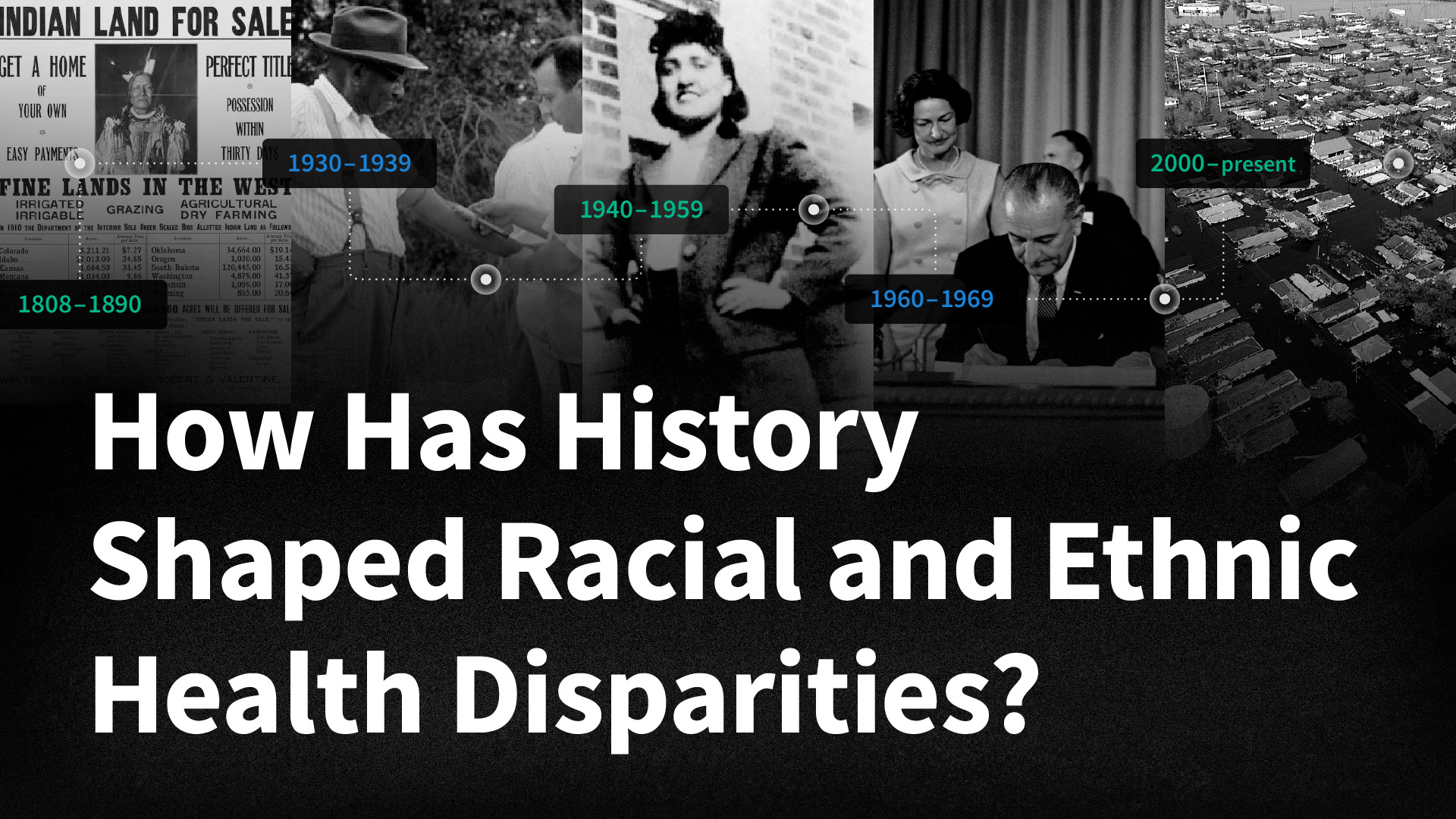
  • Timeline: How History Has Shaped Racial and Ethnic Health Disparities

    This timeline offers a historical view of significant U.S. federal policies and events spanning the early 1800s to today that have influenced present-day health disparities.
  • Health Policy 101: Chapter on Race, Inequality and Health

    Addressing persistent racial and ethnic disparities in health and health care is important for improving the nation’s health and economic prosperity. KFF explains such disparities and the factors that drive them, examines the actions to address them, and outlines future considerations.
  • Key Data on Health and Health Care by Race and Ethnicity

    Racial and ethnic disparities in health and health care remain a persistent challenge in the United States. An updated KFF resource examines how people of color fare compared to White people across 64 measures of health, health care, and social determinants of health.

Subscribe to KFF Emails

Choose which emails are best for you.
Sign up here

Filter

291 - 300 of 600 Results

  • Health Disparities are a Symptom of Broader Social and Economic Inequities

    Policy Watch

    Health disparities are symptoms of broader social and economic challenges that are rooted in structural and systemic barriers across sectors. the increased recognition and understanding of disparities could provide a catalyst for the challenging work required to address them.

  • Coronavirus’ Unequal Economic Toll

    From Drew Altman

    In this column by Drew Altman in Axios, he finds almost half of African Americans and Latinos are struggling to pay their bills because of coronavirus. "This pain would surely be worse without Washington’s relief efforts. Even so, the hardship is real, and that strengthens the case for more aid and better targeting to the families that need it most.”

  • Among Non-Elderly Adults, Low-Income, American Indian/Alaska Native and Black Adults Have Higher Risk of Developing Serious Illness if Infected With Coronavirus

    News Release

    Among non-elderly adults, American Indian/Alaska Native and Black adults are more likely than Whites to be at higher risk of serious illness if infected with the new coronavirus -- chiefly due to a higher prevalence of underlying health conditions and longstanding disparities in health care and other socio-economic factors, according to a new KFF analysis. People in lower-income households are also at higher risk. The analysis finds that the share of non-elderly adults at higher…

  • Addressing the Justice-Involved Population in Coronavirus Response Efforts

    Issue Brief

    Addressing health care needs of people moving into and out of the criminal justice system and staff who work them is an important component of coronavirus response efforts and protecting and promoting public health within the communities in which correctional facilities are located. This brief provides data on spread of coronavirus within correctional facilities, discusses the health risks for the justice-involved population and the staff who work with them, identifies the role Medicaid can play…

  • COVID-19 Crisis Will Likely Disproportionately Affect the Health and Finances of Communities of Color

    News Release

    The COVID-19 outbreak will likely disproportionately affect communities of color in both their health and their pocketbooks, compounding longstanding racial disparities in health and economic conditions, according to a new KFF analysis. While comprehensive data about how the COVID-19 crisis is unfolding are not yet available, early data from some areas suggest groups of color are experiencing disproportionate health and economic impacts. As of April 6, to cite a few examples: In Illinois, groups of…