Racial Equity and Health Policy

the Essentials
  • Health Coverage by Race and Ethnicity, 2010-2024

    There have been longstanding racial and ethnic disparities in health coverage that contribute to disparities in health. This brief examines trends in health coverage by race and ethnicity from 2010 through 2024 and discusses the implications for such disparities.
  • Timeline: How History Has Shaped Racial and Ethnic Health Disparities

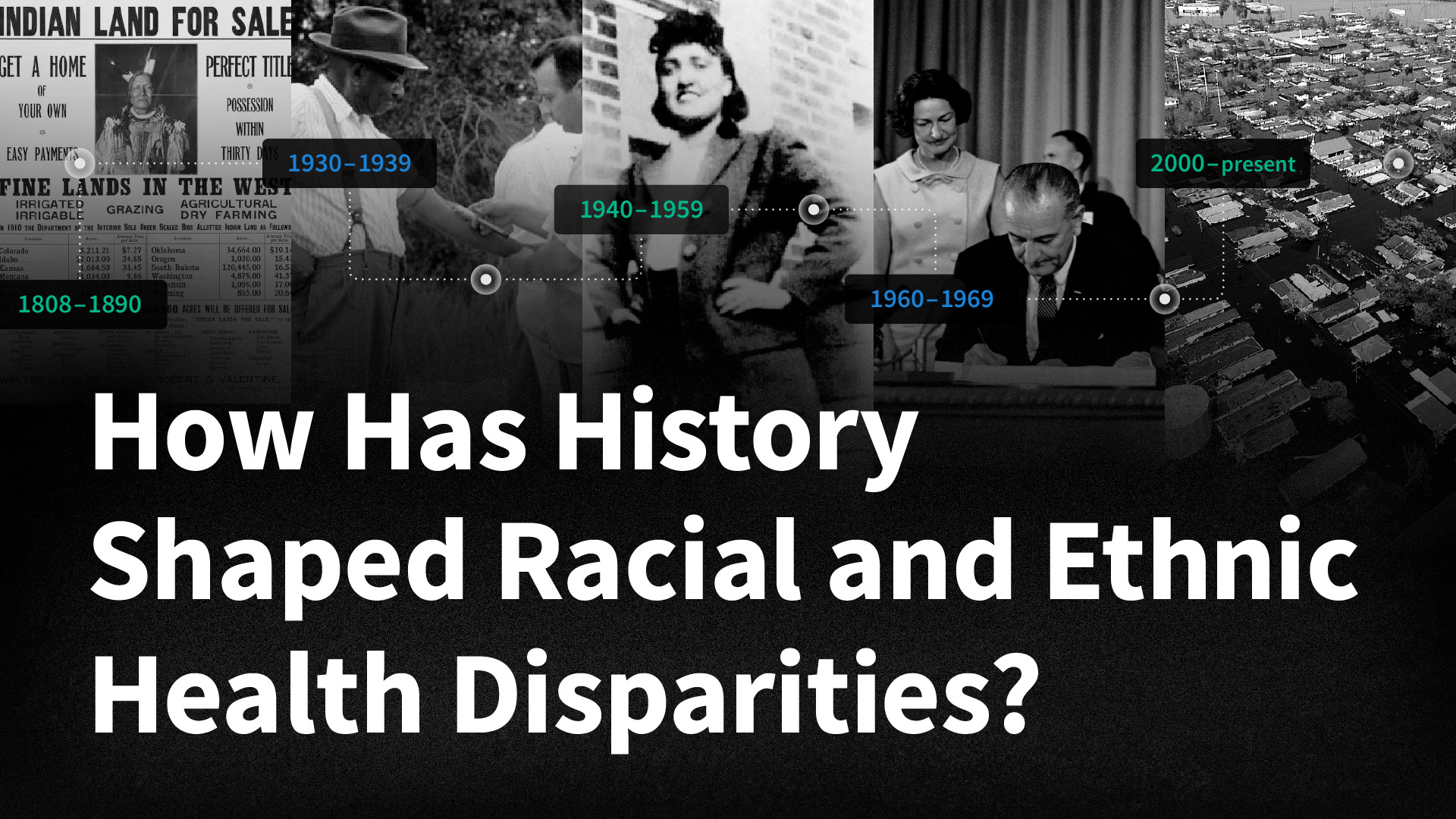
    This timeline offers a historical view of significant U.S. federal policies and events spanning the early 1800s to today that have influenced present-day health disparities.
  • Health Policy 101: Chapter on Race, Inequality and Health

    Addressing persistent racial and ethnic disparities in health and health care is important for improving the nation’s health and economic prosperity. KFF explains such disparities and the factors that drive them, examines the actions to address them, and outlines future considerations.
  • Key Data on Health and Health Care by Race and Ethnicity

    Racial and ethnic disparities in health and health care remain a persistent challenge in the United States. An updated KFF resource examines how people of color fare compared to White people across 64 measures of health, health care, and social determinants of health.

Survey of Immigrants

KFF-New York Times Survey: Immigrants Report Rising Fear, Negative Economic and Health Impacts, and Changing Political Views During the First Year of President Trump’s Second Term

The 2025 Survey of Immigrants, a partnership between KFF and The New York Times, takes an in-depth look at the experiences of immigrants during the first year of President Trump’s second term, including their worries related to increased immigration enforcement, their health and economic wellbeing, and the political views and preferences of immigrant voters. The survey paints a portrait of families under strain — where fear of detention and economic instability are negatively impacting immigrants’ health and reshaping immigrant families’ daily lives and views of U.S. political parties.

Read the News Release | Explore The New York Times’ Reporting
Stay informed.

Stay informed.

Filter

271 - 280 of 602 Results

  • A Reconfigured U.S. Supreme Court: Implications for Health Policy

    Issue Brief

    U.S. Supreme Court decisions shape health policy in important ways. The nomination of Judge Amy Coney Barrett, if confirmed, is expected to establish a solid 6:3 conservative majority that could affect case outcomes in several areas. This issue brief considers the potential implications of a reconfigured Court for health policy issues, including those already on the Court’s docket for the coming term and those that the Court may choose to consider in this term or…

  • Poll: Family Members of Older Adults with Serious Illness Are More Confident That They Know Their Medical Wishes When They Have Written Documents

    News Release

    Most Seriously Ill Seniors Struggle with Cognitive and Mental Health Challenges; Nearly Half Reportedly Have Problems Understanding Drug and Medical Instructions Seniors with serious illness and their families are more likely to feel their wishes for medical care are being followed when they have written them down, finds a new Kaiser Family Foundation survey on the public’s views and experiences with illness in late life. As America grows older and more people face serious illness…

  • A Profile of African Americans, Latinos, and Whites with Medicare:

    Report

    This chartpack highlights demographic data about African Americans, Hispanics and whites with Medicare to highlight potential implications for outreach efforts under the new Medicare drug benefit. The information is being used in a series of November 2005 briefings at the start of the first open-enrollment period for the new benefit. Chartpack (.pdf)

  • Putting Men’s Health Care Disparities On The Map: Examining Racial and Ethnic Disparities at the State Level

    Report

    This report documents the persistence of disparities between white men and men of color -- and among different groups within men of color -- on 22 indicators of health and well-being, including rates of diseases such as AIDS, cancer, heart disease and diabetes, as well as insurance coverage and health screenings. It also catalogues disparities in factors that influence health and access to care such as income and education, and other social determinants of health.

  • Distribution of U.S. Population by Race/Ethnicity, 2010 and 2050

    Feature

    Distribution of U.S. Population by Race/Ethnicity, 2010 and 2050 Download Source U.S. Census Bureau, 2008, Projected Population by Single Year of Age, Sex, Race, and Hispanic Origin for the United States: July 1, 2000 to July 1, 2050.  http://www.census.gov/population/www/projections/downloadablefiles.html.   

  • Gaps Between Average Income of the Richest and Poorest Households in the United States

    Feature

    Gaps Between Average Income of the Richest and Poorest Households in the United States Download Source Economic Policy Institute/Center on Budget and Policy Priorities analysis of U.S. Census Bureau Data. Income is post-federal. tax and includes the value of the EITC, food stamps, and housing subsidies. Income is adjusted for inflation (to 2009 dollars) and for household size. Pulling Apart, A State-by-State Analysis of Income Trends, November 15, 2012, http://www.cbpp.org/cms/index.cfm?fa=view&id=3860