Racial Equity and Health Policy

the Essentials
  • How Experiencing Racial Discrimination Impacts Health

    This brief highlights research examining mechanisms underlying health outcomes linked to self-reported experiences of racial discrimination, including biological changes, chronic stress, mental health, substance use, pregnancy-related outcomes, and sleep.
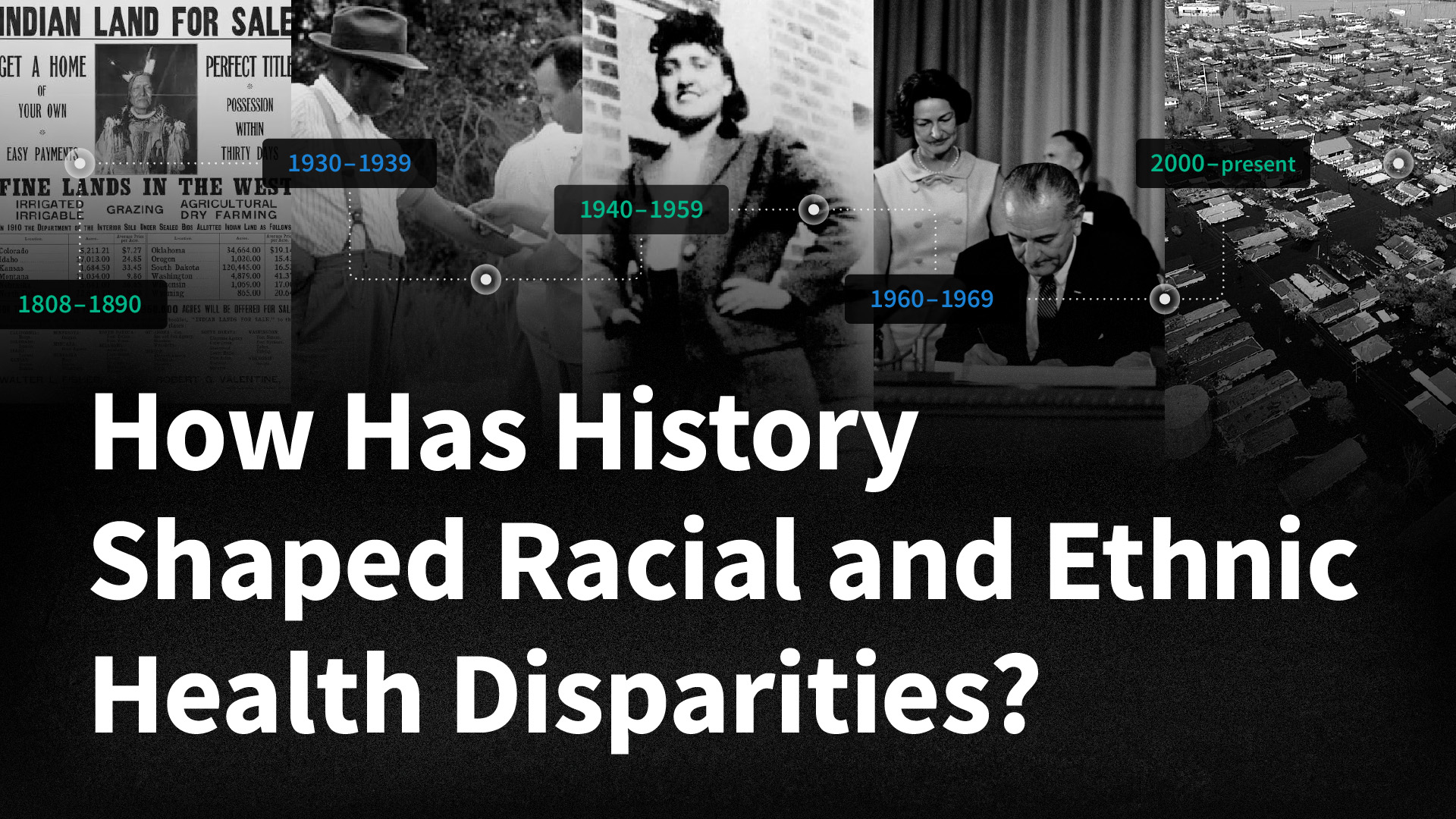
  • Timeline: How History Has Shaped Racial and Ethnic Health Disparities

    This timeline offers a historical view of significant U.S. federal policies and events spanning the early 1800s to today that have influenced present-day health disparities.
  • Health Policy 101: Chapter on Race, Inequality and Health

    Addressing persistent racial and ethnic disparities in health and health care is important for improving the nation’s health and economic prosperity. KFF explains such disparities and the factors that drive them, examines the actions to address them, and outlines future considerations.
  • Key Data on Health and Health Care by Race and Ethnicity

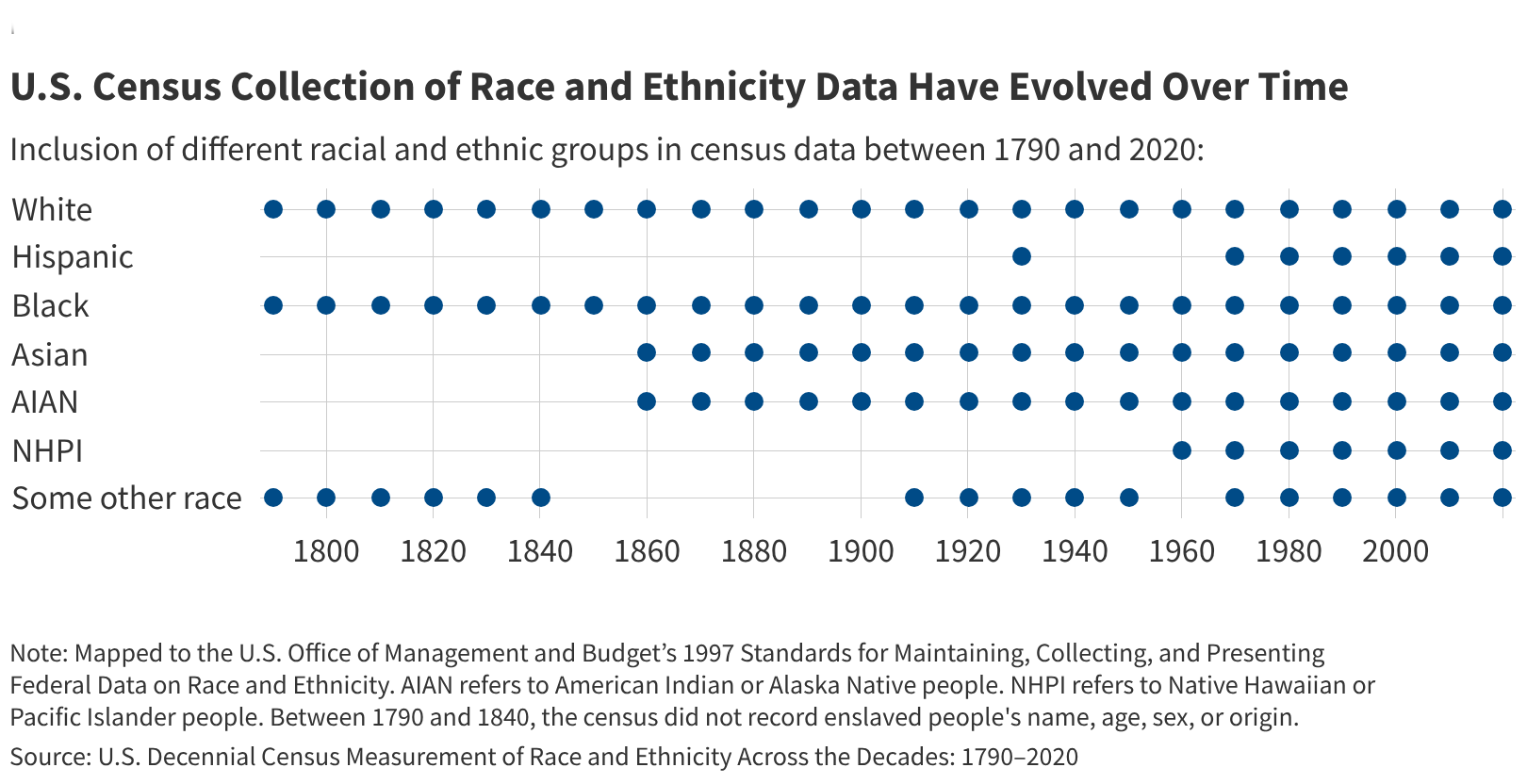
    Racial and ethnic disparities in health and health care remain a persistent challenge in the United States. An updated KFF resource examines how people of color fare compared to White people across 64 measures of health, health care, and social determinants of health.

Survey of Immigrants

KFF-New York Times Survey: Immigrants Report Rising Fear, Negative Economic and Health Impacts, and Changing Political Views During the First Year of President Trump’s Second Term

The 2025 Survey of Immigrants, a partnership between KFF and The New York Times, takes an in-depth look at the experiences of immigrants during the first year of President Trump’s second term, including their worries related to increased immigration enforcement, their health and economic wellbeing, and the political views and preferences of immigrant voters. The survey paints a portrait of families under strain — where fear of detention and economic instability are negatively impacting immigrants’ health and reshaping immigrant families’ daily lives and views of U.S. political parties.

Read the News Release | Explore The New York Times’ Reporting
Stay informed.

Stay informed.

Filter

251-260 of 611 results

  • Native Americans and Medicaid: Coverage and Financing Issues

    Other Post

    Native Americans and Medicaid:Coverage and Financing Issues Medicaid and Welfare Until 1996, families with children who received cash assistance under the Aid to Families with Dependent Children (AFDC) program were automatically entitled to Medicaid coverage. The welfare law enacted that year, Public Law 104-193, repealed the AFDC program and created a Temporary Assistance for Needy Families (TANF) block grant to the states. The 1996 welfare law also severed the automatic eligibility linkage between welfare and…

  • Pulling It Together: A Recovery Raises Expectations Too

    Perspective

    New Orleans is a city still struggling with the aftermath of Katrina and the levee breaks. The people of New Orleans feel that the nation and the federal government have largely forgotten them. Those are the results of our 2008 survey of the people of New Orleans, the second in a series we are doing to track progress in the recovery from the perspective of the residents of the city themselves. As the head of a…

  • HIV/AIDS in Georgia

    Report

    Two reports - "Survey of Georgia Residents on HIV/AIDS" and "Georgia's Minority Health and Health Disparities Report - Facing a Crisis" - show the disproportionate impact HIV is having on minorities in Georgia, and important differences in how minorities view HIV/AIDS compared to whites. The reports were released at a November 30, 2004 briefing held by the National Center for Primary Care (NCPC) at the Morehouse School of Medicine in partnership with the Kaiser Family…

  • Native American Health Policy Fellowship Program, 1999 – 2003

    Other Post

    Established in 1999, the Henry J. Kaiser Family Foundation Native American Health Policy Fellowships were awarded to outstanding American Indian/Alaska Natives who made their career in health-related fields and were interested in health policy. The purpose of the fellowship was to give American Indian/Alaska Native community leaders an opportunity to learn more about national health policy issues and the policymaking process. Fellows were given the opportunity to work full-time for one year in a Congressional…

  • The Role of Health Coverage for Communities of Color

    Issue Brief

    The current health reform debate in this country focuses heavily on providing access to affordable health coverage for the millions of people who are uninsured. Any effort to expand coverage, alter current public programs, and/or create new public programs will have important consequences for the health of communities of color, who are more likely than Whites to be enrolled in public programs or be uninsured. This issue brief highlights variations in coverage by race and…

  • May 20 Web Event: Latinos and the Nation’s COVID-19 Vaccine Rollout

    Event Date:
    Event

    New Campaign from THE CONVERSATION / LA CONVERSACIÓN to Address Information Needs in the Community KFF and UnidosUS presented an interactive web event on Thursday, May 20th on the latest insights on what is working and what barriers must be overcome in ensuring equitable access to the COVID-19 vaccines for Latinos in the U.S., including new KFF survey findings from the community. KFF analysis of state-reported data shows Hispanic and Black people have received smaller…

  • U.S. Virgin Islands: Fast Facts

    Fact Sheet

    This fact sheet presents demographic, economic, and health indicators of the U.S. Virgin Islands and briefly discusses some of the territory's short and long-term challenges facing the territory after Hurricanes Irma and Maria struck the island in September 2017.

  • Health Coverage for the Hispanic Population Today and Under the Affordable Care Act

    Report

    The more than 50 million Hispanics living in the United States make up 17 percent of the total population and are the nation's fastest growing racial or ethnic group. Many Hispanics continue to face disparities in health coverage and care, and they have the highest uninsured rate among racial/ethnic groups, with nearly one in three lacking coverage. This brief provides an overview of the Hispanic population in the U.S., their health coverage today and the…

  • Advancing Health Equity Requires More and Better Data

    Policy Watch

    Increasing availability of high-quality comprehensive data disaggregated by race/ethnicity is a prerequisite for efforts to advance health equity, not only related to COVID-19 but in health and health care more broadly.