Racial Equity and Health Policy

the Essentials
  • How Experiencing Racial Discrimination Impacts Health

    This brief highlights research examining mechanisms underlying health outcomes linked to self-reported experiences of racial discrimination, including biological changes, chronic stress, mental health, substance use, pregnancy-related outcomes, and sleep.
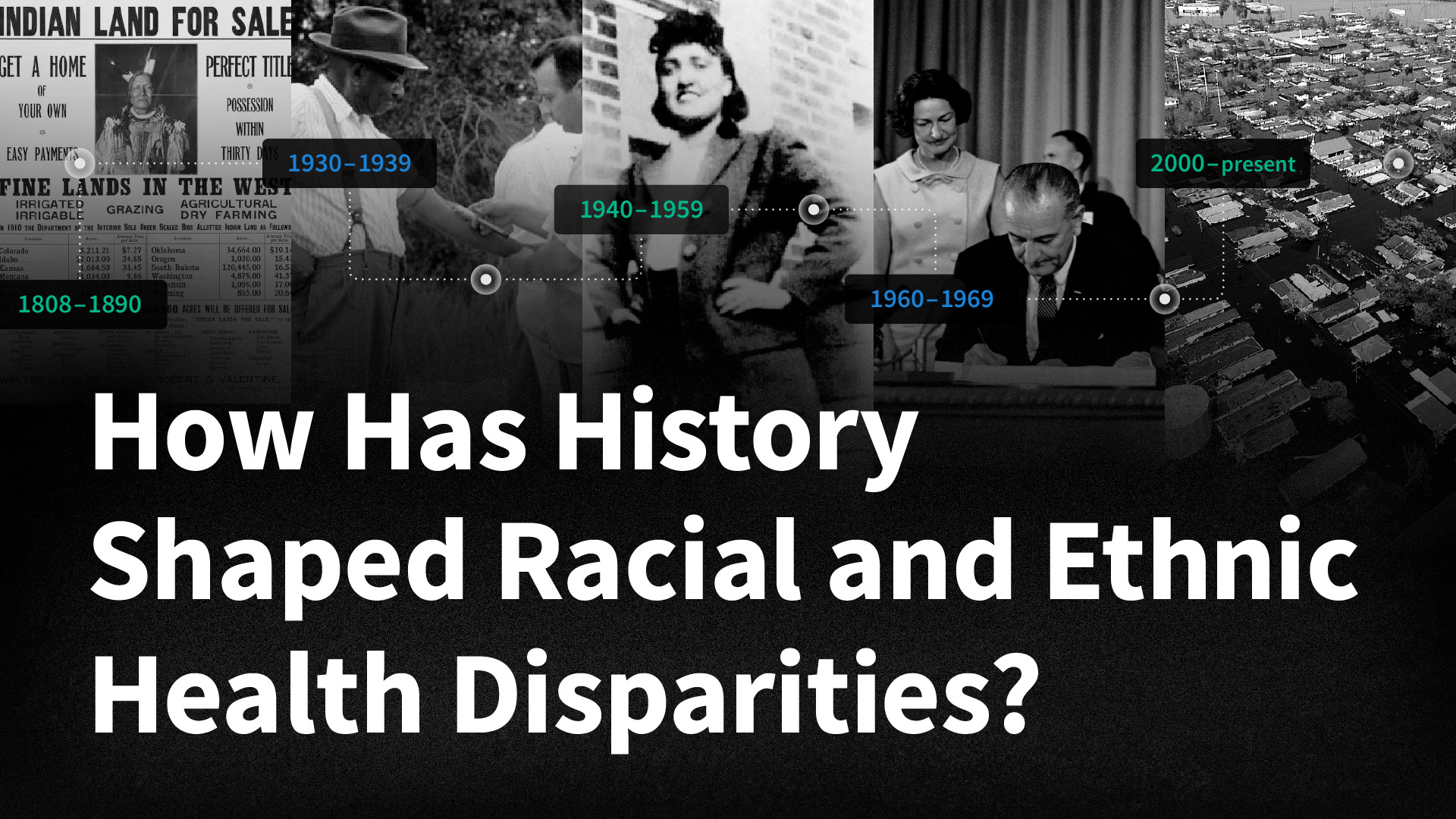
  • Timeline: How History Has Shaped Racial and Ethnic Health Disparities

    This timeline offers a historical view of significant U.S. federal policies and events spanning the early 1800s to today that have influenced present-day health disparities.
  • Health Policy 101: Chapter on Race, Inequality and Health

    Addressing persistent racial and ethnic disparities in health and health care is important for improving the nation’s health and economic prosperity. KFF explains such disparities and the factors that drive them, examines the actions to address them, and outlines future considerations.
  • Key Data on Health and Health Care by Race and Ethnicity

    Racial and ethnic disparities in health and health care remain a persistent challenge in the United States. An updated KFF resource examines how people of color fare compared to White people across 64 measures of health, health care, and social determinants of health.

Survey of Immigrants

KFF-New York Times Survey: Immigrants Report Rising Fear, Negative Economic and Health Impacts, and Changing Political Views During the First Year of President Trump’s Second Term

The 2025 Survey of Immigrants, a partnership between KFF and The New York Times, takes an in-depth look at the experiences of immigrants during the first year of President Trump’s second term, including their worries related to increased immigration enforcement, their health and economic wellbeing, and the political views and preferences of immigrant voters. The survey paints a portrait of families under strain — where fear of detention and economic instability are negatively impacting immigrants’ health and reshaping immigrant families’ daily lives and views of U.S. political parties.

Read the News Release | Explore The New York Times’ Reporting
Stay informed.

Stay informed.

Filter

241 - 250 of 603 Results

  • Medicaid Administrative Data: Challenges with Race, Ethnicity, and Other Demographic Variables

    Issue Brief

    There are persistent disparities in health and health care for people of color, which reflect structural and systemic inequities rooted in racism and discrimination. High-quality comprehensive data are key to enabling policymakers, community leaders, and other key stakeholders to identify and address these inequities and measure progress over time. Medicaid/CHIP administrative data, also known as Transformed Medicaid Statistical Information System (T-MSIS) or TAF (T-MSIS Analytic File), hold the potential to inform disparities research through detailed…

  • State Policies for Expanding Medicaid Coverage of Community Health Worker (CHW) Services

    Issue Brief

    Community Health Workers (CHWs) are frontline workers who have close relationships with the communities they serve, allowing them to better liaise and connect community members to health care systems. States may authorize Medicaid payment for certain CHW services under state plan or Section 1115 demonstration authority. States may allow or require managed care organizations (MCOs) to provide CHW services or include CHWs in care teams. Many states use CHW services to address the health needs…

  • 2023 Update on Key Federal Immigration Policies and Implications for Health

    Issue Brief

    This issue brief provides the latest update on some key evolving immigration policies, including Title 42 as it applies to border enforcement, the Deferred Action for Childhood Arrivals (DACA) program, and the public charge rule and discusses the implications of these policies for the health and well-being of immigrants.

  • Poll: 7 in 10 Black Americans Say They Have Experienced Incidents of Discrimination or Police Mistreatment in Their Lifetime, Including Nearly Half Who Felt Their Lives Were in Danger

    News Release

    Most of the Public Favor a Range of Police Reforms to Curb Excessive Force, though Partisan Gaps Exist on Some Key Proposals Amid nationwide protests against racial bias in law enforcement and beyond, a new KFF poll finds that the vast majority (71%) of Black Americans say they’ve experienced some form of racial discrimination or mistreatment during their lifetimes – including nearly half (48%) who say at one point that they felt their life was…

  • Web Briefing: Racism and Discrimination in Health Care – Experiences Today and Actions to Address Going Forward

    Event Date:
    Event

    Approaching the end of 2020, two of the most pressing concerns facing the country are the long-standing issue of racial discrimination and the ongoing coronavirus pandemic. The issues have merged with the pandemic taking a disproportionate health and economic toll on people of color. As vaccines become available, prioritizing racial equity will become increasingly important for mitigating these disparities and preventing further widening of the going forward, especially as early polling indicates that people of…

  • Race Is a Social Category, Not a Biological One

    Quick Insights

    Sen. Angela Alsobrooks questioned [Kennedy] about earlier statements he has made suggesting that Black people should not adhere to the same vaccine schedule as White people because “their immune system is better than ours.” … Race is a poor proxy for genetic ancestry and large genetic studies have demonstrated more variation within defined racial groups (intra-racially) than there are between different racial groups (inter-racially).

  • Medicaid Financing Cliff: Implications for the Health Care Systems in Puerto Rico and USVI

    Issue Brief

    This brief provides an overview of the status of the health care systems and Medicaid programs in Puerto Rico and the U.S. Virgin Islands (USVI) about one and a half years after Hurricanes Irma and Maria struck the islands in September 2017. The hurricanes exacerbated the territories’ existing economic and health care challenges by accelerating outmigration of residents and health care providers and destroying homes, schools, health care facilities, and other infrastructure. After the storms,…