Racial Equity and Health Policy

Survey of Immigrants

KFF-New York Times Survey: Immigrants Report Rising Fear, Negative Economic and Health Impacts, and Changing Political Views During the First Year of President Trump’s Second Term

The 2025 Survey of Immigrants, a partnership between KFF and The New York Times, takes an in-depth look at the experiences of immigrants during the first year of President Trump’s second term, including their worries related to increased immigration enforcement, their health and economic wellbeing, and the political views and preferences of immigrant voters. The survey paints a portrait of families under strain — where fear of detention and economic instability are negatively impacting immigrants’ health and reshaping immigrant families’ daily lives and views of U.S. political parties.

Read the News Release | Explore The New York Times’ Reporting
the Essentials
  • Disparities in Health and Health Care: 5 Key Questions and Answers

    This brief provides an introduction to what health and health care disparities are, why it is important to address them, what the status of disparities is today, recent federal actions to address disparities, and key issues related to addressing disparities in the future.
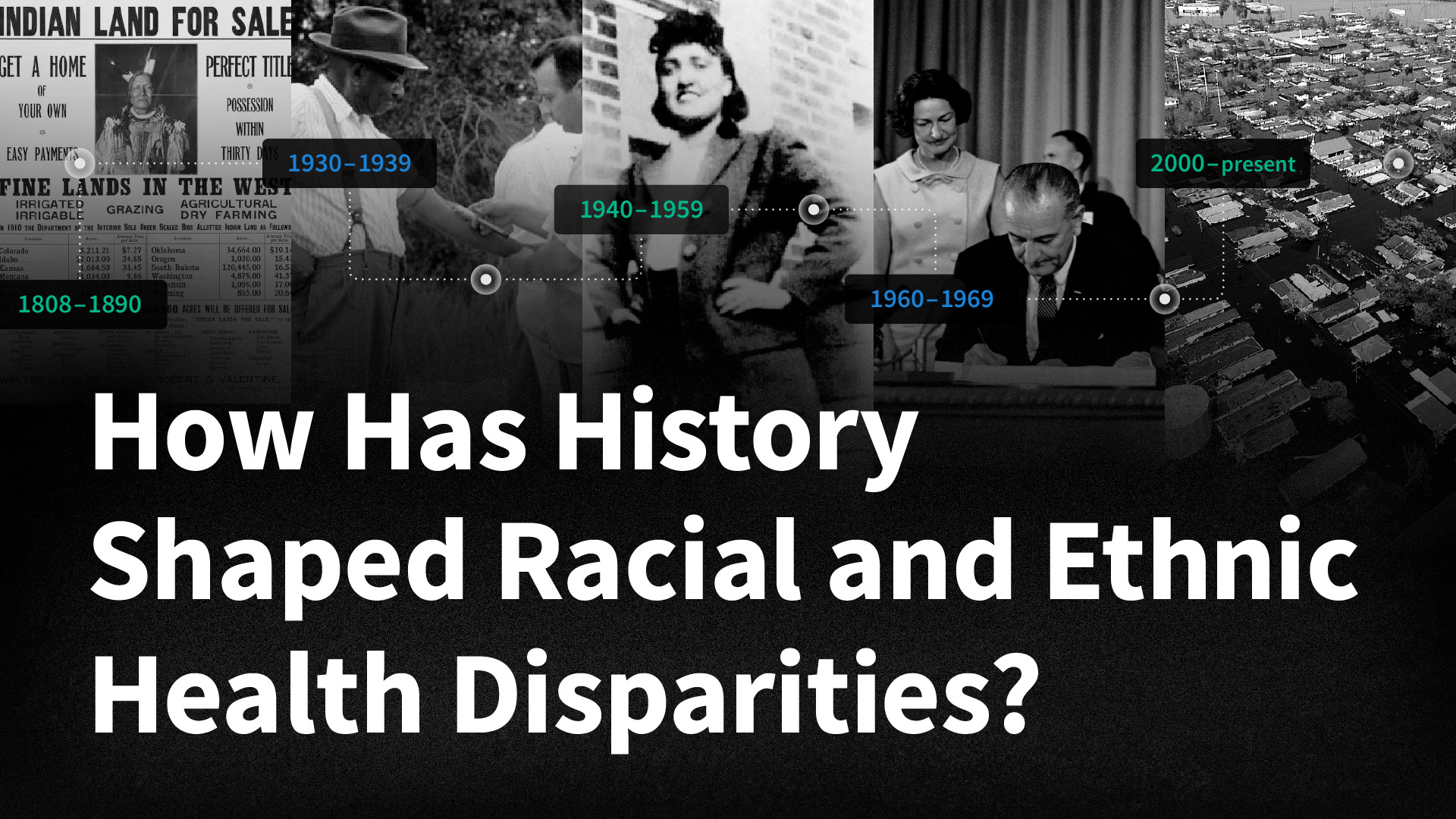
  • Timeline: How History Has Shaped Racial and Ethnic Health Disparities

    This timeline offers a historical view of significant U.S. federal policies and events spanning the early 1800s to today that have influenced present-day health disparities.
  • Health Policy 101: Chapter on Race, Inequality and Health

    Addressing persistent racial and ethnic disparities in health and health care is important for improving the nation’s health and economic prosperity. KFF explains such disparities and the factors that drive them, examines the actions to address them, and outlines future considerations.
  • Key Data on Health and Health Care by Race and Ethnicity

    Racial and ethnic disparities in health and health care remain a persistent challenge in the United States. An updated KFF resource examines how people of color fare compared to White people across 64 measures of health, health care, and social determinants of health.

Subscribe to KFF Emails

Choose which emails are best for you.
Sign up here

Filter

221 - 230 of 596 Results

  • Survey Briefs From the 2002 National Survey of Latinos

    Poll Finding

    In 2002 the Pew Hispanic Center and the Kaiser Family Foundation conducted a national survey of Latinos, which explored the attitudes and experiences of the Hispanic population in the United States on topics such as identity, assimilation, discrimination, and health care.

  • Native American Health Policy Fellowship Program, 1999 – 2003

    Other Post

    Established in 1999, the Henry J. Kaiser Family Foundation Native American Health Policy Fellowships were awarded to outstanding American Indian/Alaska Natives who made their career in health-related fields and were interested in health policy.

  • National Survey of Latinos: Politics and Civic Participation, Summary and Chartpack

    Poll Finding

    The chartpack and summary of findings from a comprehensive survey that assesses Latino attitudes in the 2004 election year. The third annual survey of Latinos from the Pew Hispanic Center and the Kaiser Family Foundation, the new survey examines political issues and the presidential election campaign, the economy, health care, Iraq and immigration.

  • Nonelderly Uninsured by Race/ Ethnicity, 2011

    Feature

    Nonelderly Uninsured by Race/ Ethnicity, 2011 Download Source Urban Institute and KCMU estimates based on the Census Bureau's March 2012 Current Population Survey  Annual Social and Economic Supplement.

  • Understanding Racial and Ethnic Identity in Federal Data and Impacts for Health Disparities

    Issue Brief

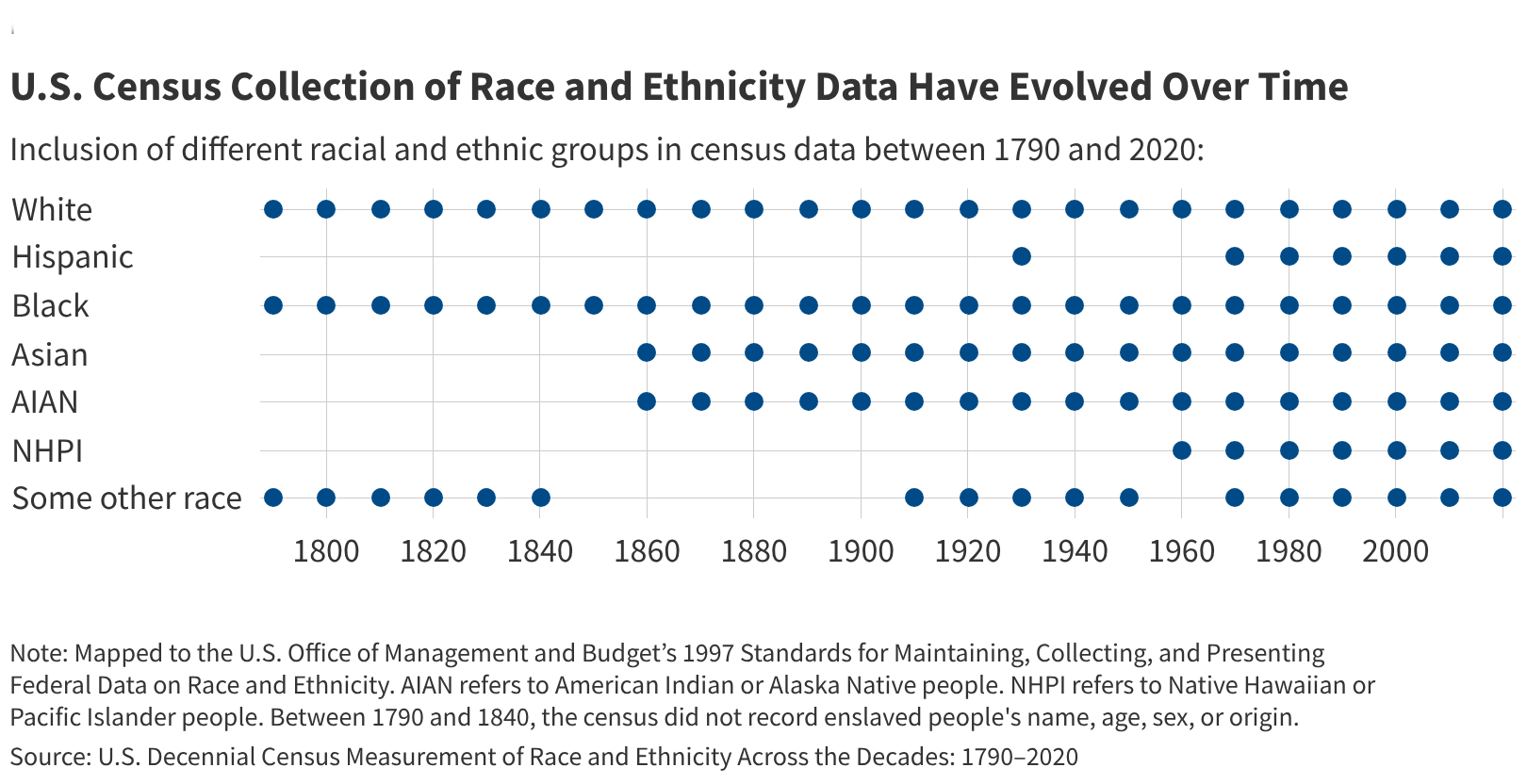
    How race, ethnicity, and nationality have been defined and measured has important implications for health disparities, affecting who can access health, social, and economic resources. While narrow and inconsistent race and ethnicity categories have obscured inequities and limited the ability to address the diverse needs of different populations, data on race and ethnicity have also been used to address disparities by informing policies and interventions.

  • Understanding the Inequitable Impacts of Hurricanes and Other Natural Disasters in the Wake of Hurricanes Helene and Milton

    Policy Watch

    The Southeast region of the U.S. is particularly vulnerable to severe tropical storms due to climate change, and its persistently high poverty rates inhibit residents’ ability to prepare for and recover from storms. Many of the states in the Southeast have not implemented the ACA Medicaid expansion, leaving lower income residents with more limited access to health care, which may lead to challenges addressing their health needs.

  • Puerto Rico: Datos Básicos

    Fact Sheet

    Puerto Rico: Datos Básicos provee una descripción general del las características demográficas, y estadísticas de salud y la economía. También se da alguna informacion del gobierno, reglas federales de Medicaid, y asuntos corrientes que estan afectando el territorio, incluyendo a Zika.

  • President Trump’s Record on Health Care

    Issue Brief

    This issue brief provides a detailed overview of the Trump Administration’s record on health care issues relating to: the Administration’s response to the COVID-19 pandemic, the ACA and private insurance markets, Medicaid, Medicare, reducing prescription drug and other health care costs, sexual and reproductive health, mental health and substance use, immigration and health, long-term care, HIV/AIDS policy, and LGBTQ health.