Racial Equity and Health Policy

the Essentials
  • How Experiencing Racial Discrimination Impacts Health

    This brief highlights research examining mechanisms underlying health outcomes linked to self-reported experiences of racial discrimination, including biological changes, chronic stress, mental health, substance use, pregnancy-related outcomes, and sleep.
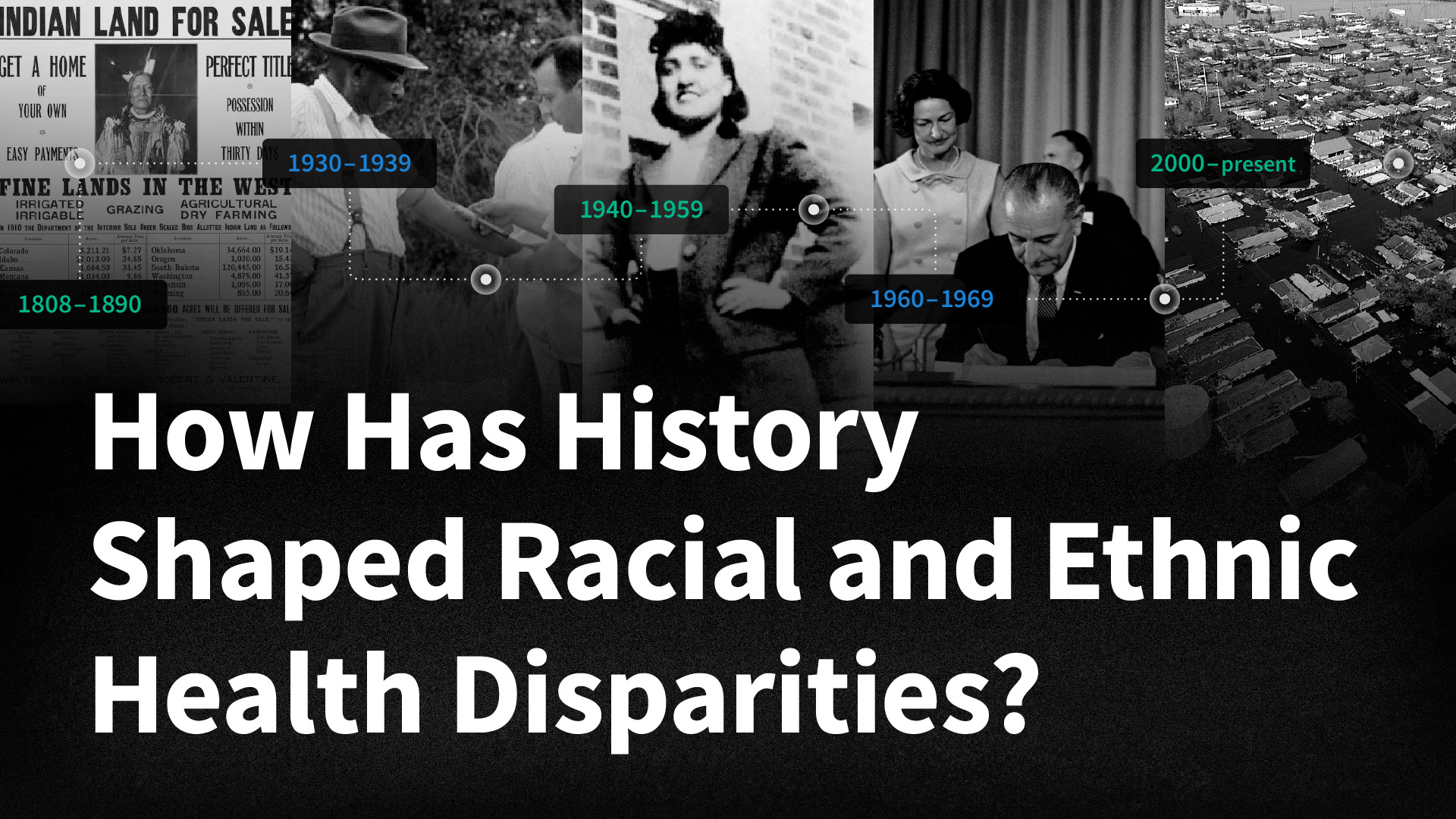
  • Timeline: How History Has Shaped Racial and Ethnic Health Disparities

    This timeline offers a historical view of significant U.S. federal policies and events spanning the early 1800s to today that have influenced present-day health disparities.
  • Health Policy 101: Chapter on Race, Inequality and Health

    Addressing persistent racial and ethnic disparities in health and health care is important for improving the nation’s health and economic prosperity. KFF explains such disparities and the factors that drive them, examines the actions to address them, and outlines future considerations.
  • Key Data on Health and Health Care by Race and Ethnicity

    Racial and ethnic disparities in health and health care remain a persistent challenge in the United States. An updated KFF resource examines how people of color fare compared to White people across 64 measures of health, health care, and social determinants of health.

Survey of Immigrants

KFF-New York Times Survey: Immigrants Report Rising Fear, Negative Economic and Health Impacts, and Changing Political Views During the First Year of President Trump’s Second Term

The 2025 Survey of Immigrants, a partnership between KFF and The New York Times, takes an in-depth look at the experiences of immigrants during the first year of President Trump’s second term, including their worries related to increased immigration enforcement, their health and economic wellbeing, and the political views and preferences of immigrant voters. The survey paints a portrait of families under strain — where fear of detention and economic instability are negatively impacting immigrants’ health and reshaping immigrant families’ daily lives and views of U.S. political parties.

Read the News Release | Explore The New York Times’ Reporting
Stay informed.

Stay informed.

Filter

221-230 of 606 results

  • Continued Rises in Extreme Heat and Implications for Health Disparities

    Issue Brief

    Recent literature shows that within the U.S., some communities of color have higher risks of heat-related mortality than White people. Consistent with trends in earlier years, between 2018-2021, AIAN people were most likely to die due to heat compared to all other racial and ethnic groups, and Black people had a higher rate of heat-related deaths compared to White people.

  • Most Hispanic Adults Lean Towards Getting a COVID-19 Vaccine, But Many Younger Adults are Hesitant

    News Release

    A new analysis of KFF COVID-19 Vaccine Monitor survey data finds that most Hispanic adults across the country want to get a COVID-19 vaccine at some point though younger adults are more hesitant, in part because of lower confidence that it is safe and effective. Overall a quarter (26%) of Hispanic adults say they will get a COVID-19 vaccine “as soon as possible” and an additional 43% say they will “wait until it has been…

  • The COVID-19 Pandemic Has Hit People of Color the Hardest, Including Among People With Medicare

    News Release

    The COVID-19 pandemic has underscored the stark racial and ethnic health inequities in the U.S., including among Medicare beneficiaries. Among this group, people of color, including older adults and others on Medicare, account for disproportionate shares of COVID-19 cases, hospitalizations and deaths, according to data presented in a new KFF report about racial and ethnic disparities in health among people with Medicare. Older Black, Hispanic, and American Indian/Alaska Native adults were nearly twice as likely…

  • Survey of Americans on HIV/AIDS – Part Three: Experiences and Opinions by Race/Ethnicity and Age Summary and Chartpack

    Poll Finding

    These findings are the third part of a national survey of Americans’ views on HIV/AIDS, “Survey of Americans on HIV/AIDS,” conducted in spring 2004. It explores the views and experiences of, as well as the key differences among, African Americans, Latinos, Whites, and young people. The first part of the survey, on global HIV/AIDS, was released on June 2, 2004. The second part of the survey, on HIV Testing, was released on June 15, 2004.…

  • Health Care and the 2004 Elections: Race, Ethnicity and Health Care

    Issue Brief

    Race, Ethnicity and Health Care Download a printable .pdf of Health Care and the 2004 Elections: Race, Ethnicity and Health Care. IssueBackgroundRaising Public and Provider Awareness Expanding Health CoverageImproving the Number and Capacity of Providers in Underserved CommunitiesIncreasing the Knowledge BaseAssessing Candidate PositionsIssue Racial and ethnic disparities in health care – whether in insurance coverage, access, or quality of care – are one of many factors producing inequalities in health status in the United States.1…

  • How Does Health Coverage and Access to Care for Immigrants Vary by Length of Time in the U.S.?

    Issue Brief

    This analysis, based on data from the 2007 Health Tracking Household Survey, examines how health coverage and access to care for non-elderly adults vary based on immigrants’ length of time in the U.S. and between immigrants, second generation Americans and third generation and higher Americans. It also identifies the primary factors contributing to lower health coverage rates and greater access barriers among immigrants. While, overall, immigrants have a high uninsured rate and face greater access…

  • Poll: Family Members of Older Adults with Serious Illness Are More Confident That They Know Their Medical Wishes When They Have Written Documents

    News Release

    Most Seriously Ill Seniors Struggle with Cognitive and Mental Health Challenges; Nearly Half Reportedly Have Problems Understanding Drug and Medical Instructions Seniors with serious illness and their families are more likely to feel their wishes for medical care are being followed when they have written them down, finds a new Kaiser Family Foundation survey on the public’s views and experiences with illness in late life. As America grows older and more people face serious illness…