Racial Equity and Health Policy

the Essentials
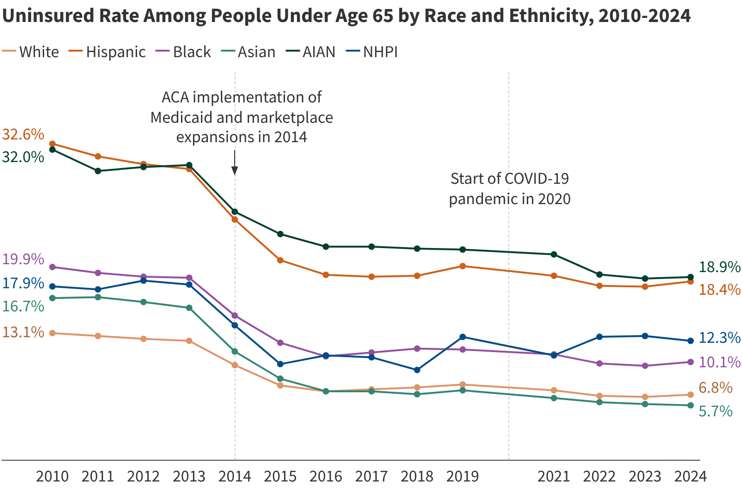
  • Health Coverage by Race and Ethnicity, 2010-2024

    There have been longstanding racial and ethnic disparities in health coverage that contribute to disparities in health. This brief examines trends in health coverage by race and ethnicity from 2010 through 2024 and discusses the implications for such disparities.
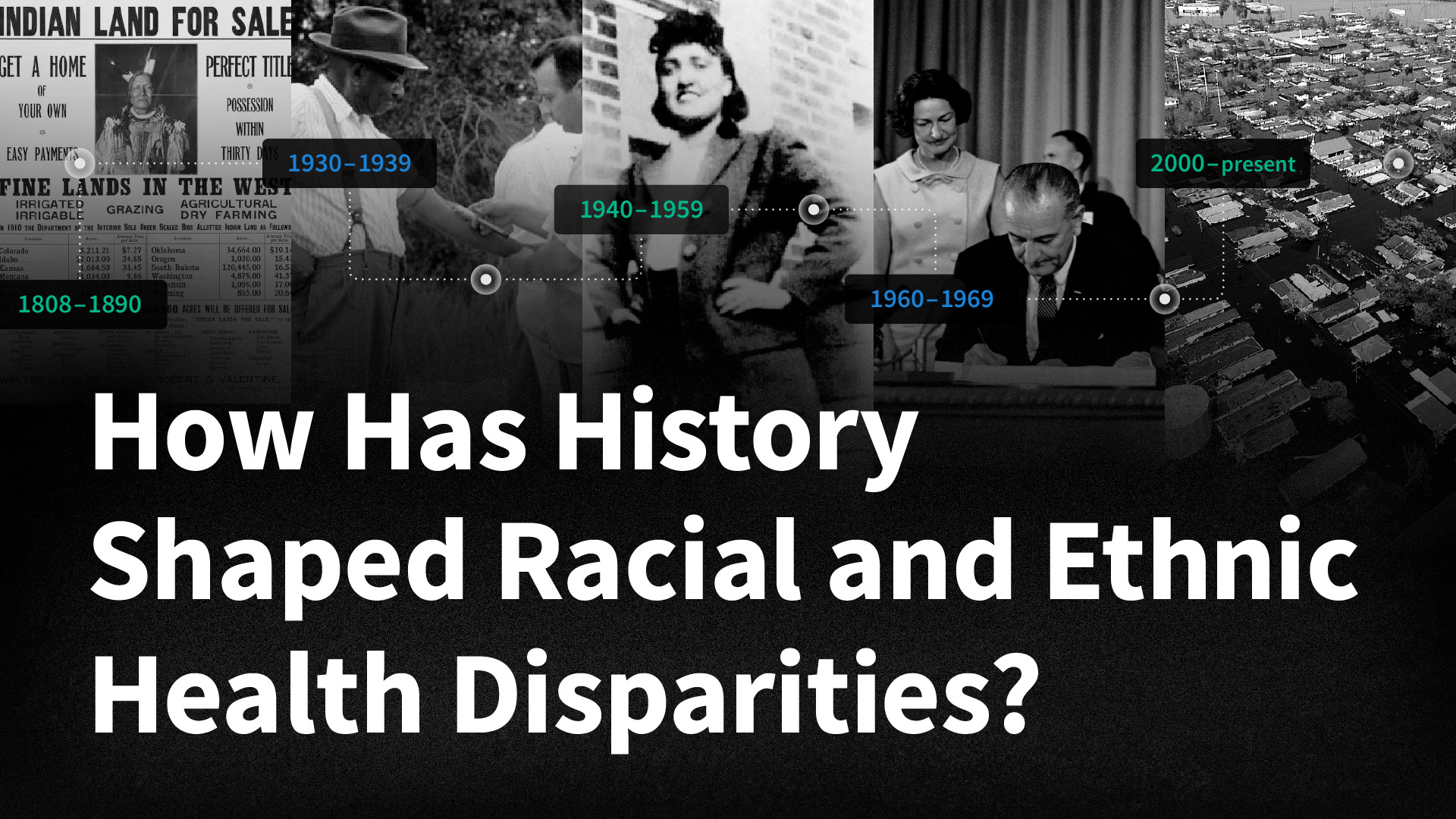
  • Timeline: How History Has Shaped Racial and Ethnic Health Disparities

    This timeline offers a historical view of significant U.S. federal policies and events spanning the early 1800s to today that have influenced present-day health disparities.
  • Health Policy 101: Chapter on Race, Inequality and Health

    Addressing persistent racial and ethnic disparities in health and health care is important for improving the nation’s health and economic prosperity. KFF explains such disparities and the factors that drive them, examines the actions to address them, and outlines future considerations.
  • Key Data on Health and Health Care by Race and Ethnicity

    Racial and ethnic disparities in health and health care remain a persistent challenge in the United States. An updated KFF resource examines how people of color fare compared to White people across 64 measures of health, health care, and social determinants of health.

Survey of Immigrants

KFF-New York Times Survey: Immigrants Report Rising Fear, Negative Economic and Health Impacts, and Changing Political Views During the First Year of President Trump’s Second Term

The 2025 Survey of Immigrants, a partnership between KFF and The New York Times, takes an in-depth look at the experiences of immigrants during the first year of President Trump’s second term, including their worries related to increased immigration enforcement, their health and economic wellbeing, and the political views and preferences of immigrant voters. The survey paints a portrait of families under strain — where fear of detention and economic instability are negatively impacting immigrants’ health and reshaping immigrant families’ daily lives and views of U.S. political parties.

Read the News Release | Explore The New York Times’ Reporting
Stay informed.

Stay informed.

Filter

221 - 230 of 602 Results

  • Understanding the Diversity in the Asian Immigrant Experience in the U.S.

    Poll Finding

    Asian immigrants represent an important significant and growing share of the U.S. population, as well as a diverse body of experiences. Increased data on Asian immigrant experiences is important for understanding their diversity of experiences and focusing initiatives, policies, and resources to address the challenges they face.

  • Health and Access to Care and Coverage for Lesbian, Gay, Bisexual, and Transgender (LGBT) Individuals in the U.S.

    Issue Brief

    Lesbian, gay, bisexual, and transgender (LGBT) individuals often face challenges and barriers to accessing needed health services and, as a result, can experience worse health outcomes. These challenges can include stigma, discrimination, violence, and rejection by families and communities, as well as other barriers, such as inequality in the workplace and health insurance sectors, the provision of substandard care, and outright denial of care because of an individual’s sexual orientation or gender identity. This issue…

  • Health Coverage and Care of Undocumented Immigrants

    Issue Brief

    Recently, many of the Democratic presidential candidates indicated support for expanding health coverage to undocumented immigrants. To help inform the implications of such an expansion, this brief provides an overview of current health coverage and care for undocumented immigrants

  • Analysis: Immigrants Living along the Texas Gulf Coast Hit Hard Financially Following Hurricane Harvey

    News Release

    Immigrants living along the Texas Gulf Coast were more likely than their U.S.-born neighbors to suffer employment and income losses as a result of Hurricane Harvey (64% vs. 39%), a new Kaiser Family Foundation/Episcopal Health Foundation analysis finds. The analysis examines differences between immigrants and U.S.-born families based on a fall KFF/EHF survey of residents in 24 Texas counties hit hard by Hurricane Harvey in August 2017. Other findings include: Immigrants were more likely to…

  • Advancing Opportunities, Assessing Challenges: Key Themes from a Roundtable Discussion of Health Care and Health Equity in the South

    Issue Brief

    This brief summarizes the primary themes expressed by participants of a roundtable discussion of current and future opportunities and challenges for advancing health care and health equity in the South organized by Kaiser Family Foundation’s Commission on Medicaid and the Uninsured and the Satcher Health Leadership Institute at Morehouse School of Medicine in Atlanta, Georgia.

  • May 20 Web Event: Latinos and the Nation’s COVID-19 Vaccine Rollout

    Event Date:
    Event

    New Campaign from THE CONVERSATION / LA CONVERSACIÓN to Address Information Needs in the Community KFF and UnidosUS presented an interactive web event on Thursday, May 20th on the latest insights on what is working and what barriers must be overcome in ensuring equitable access to the COVID-19 vaccines for Latinos in the U.S., including new KFF survey findings from the community. KFF analysis of state-reported data shows Hispanic and Black people have received smaller…