Racial Equity and Health Policy

the Essentials
  • How Experiencing Racial Discrimination Impacts Health

    This brief highlights research examining mechanisms underlying health outcomes linked to self-reported experiences of racial discrimination, including biological changes, chronic stress, mental health, substance use, pregnancy-related outcomes, and sleep.
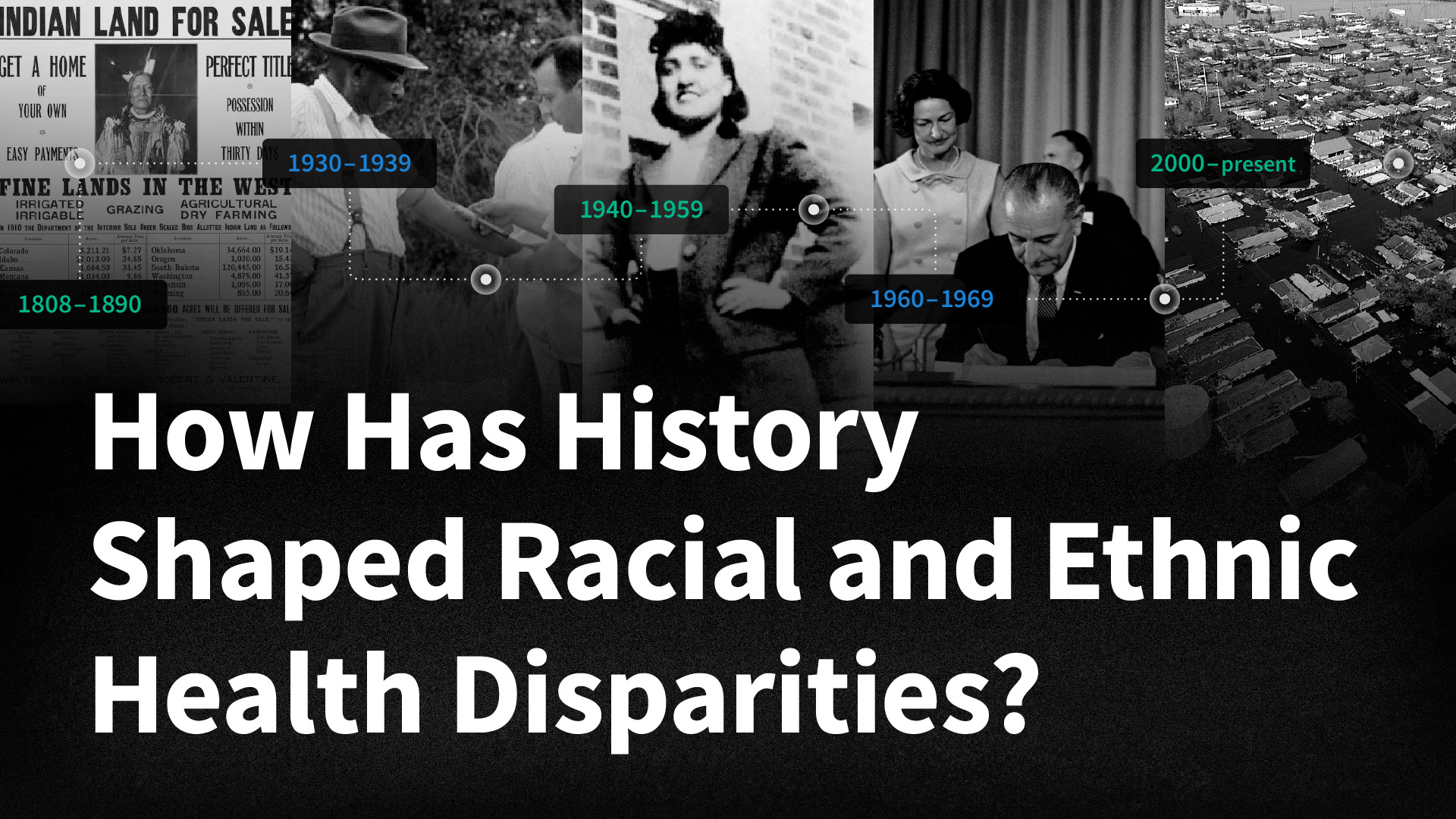
  • Timeline: How History Has Shaped Racial and Ethnic Health Disparities

    This timeline offers a historical view of significant U.S. federal policies and events spanning the early 1800s to today that have influenced present-day health disparities.
  • Health Policy 101: Chapter on Race, Inequality and Health

    Addressing persistent racial and ethnic disparities in health and health care is important for improving the nation’s health and economic prosperity. KFF explains such disparities and the factors that drive them, examines the actions to address them, and outlines future considerations.
  • Key Data on Health and Health Care by Race and Ethnicity

    Racial and ethnic disparities in health and health care remain a persistent challenge in the United States. An updated KFF resource examines how people of color fare compared to White people across 64 measures of health, health care, and social determinants of health.

Survey of Immigrants

KFF-New York Times Survey: Immigrants Report Rising Fear, Negative Economic and Health Impacts, and Changing Political Views During the First Year of President Trump’s Second Term

The 2025 Survey of Immigrants, a partnership between KFF and The New York Times, takes an in-depth look at the experiences of immigrants during the first year of President Trump’s second term, including their worries related to increased immigration enforcement, their health and economic wellbeing, and the political views and preferences of immigrant voters. The survey paints a portrait of families under strain — where fear of detention and economic instability are negatively impacting immigrants’ health and reshaping immigrant families’ daily lives and views of U.S. political parties.

Read the News Release | Explore The New York Times’ Reporting
Stay informed.

Stay informed.

Filter

211-220 of 606 results

  • Kaiser’s Monthly Update on Health Disparities

    Other Post

    Kaiser's Disparities Research Roundup This Kaiser Disparities Research Roundup is a regularly updated summary of new research on health care disparities. It includes selected academic research and policy papers that focus on a broad range of disparities in health care, including disparities in health insurance coverage, access to care, utilization of care, quality of care, and health status. .header {FONT-WEIGHT: bold;FONT-SIZE: 12px;COLOR: #000000;FONT-FAMILY: Verdana, Arial, Helvetica, sans-serif;text-transform: uppercase;}.text {FONT-WEIGHT: normal;FONT-SIZE: 12px;COLOR: #000000;FONT-FAMILY: Verdana, Arial, Helvetica,…

  • Putting Men’s Health Care Disparities on the Map: Health Status Highlights

    Report

    This fact sheet provides a brief overview of racial disparities in health status among men of different races in the United States. It draws findings from the report, Putting Men’s Health Care Disparities On the Map, which uses national data sources from multiple years to generate state-level estimates on a range of indicators of health status, access, and well-being for men of different racial and ethnic backgrounds. Women and men of different races and ethnicities…

  • A Forum on the Implications of Changes in the Health Care Environment for Native American Health Care

    Report

    With the assistance of the First Nations Development Institute, the Henry J. Kaiser Family Foundation commissioned several studies of critical issues in Native-American health care. These studies examined the trends shaping the future of Native-American health care; the existing health systems and planning capacity in the Native-American health care system; the changes occurring in the IHS; the role of Medicaid in Native-American health care; the attitudes and preferences of Native American health care consumers; and…

  • Today’s Topics In Health Disparities: Is the Health Care System Ready for Health Reform?

    Event Date:
    Event

    On Wednesday, November 4, at 1 p.m. ET, this Today's Topics In Health Disparities live webcast examined how ready the health care system is for the influx of newly covered individuals that health reform aims to deliver. In the health care proposals being considered by Congress, changes to Medicaid alone could mean as many as 15 million people would become newly eligible for the program and many live in medically underserved areas. The program will…

  • Advancing Opportunities, Assessing Challenges: Key Themes from a Roundtable Discussion of Health Care and Health Equity in the South

    Issue Brief

    This brief summarizes the primary themes expressed by participants of a roundtable discussion of current and future opportunities and challenges for advancing health care and health equity in the South organized by Kaiser Family Foundation’s Commission on Medicaid and the Uninsured and the Satcher Health Leadership Institute at Morehouse School of Medicine in Atlanta, Georgia.

  • Millions of Seniors Live In Households with School-Age Children

    Issue Brief

    About 3.3 million adults age 65 or older live in a household with school-age children, a factor that state and local officials may want to take into account when deciding when and how fully to re-open schools this fall, a new KFF analysis finds. These older adults, who represent roughly 6 percent of all seniors in the U.S., live with 4.1 million school age children, who comprise about seven percent of all kids ages 5…

  • More Than 3 Million People Age 65 or Older Live with School-Age Children, and Could Be at Heightened Risk of COVID-19 Infection if Children Bring the Virus Home from School

    News Release

    About 3.3 million adults age 65 or older live in a household with school-age children, a factor that state and local officials may want to take into account when deciding when and how fully to re-open schools this fall, a new KFF analysis finds. These older adults, who represent roughly six percent of all seniors in the U.S., live with 4.1 million school age children, who comprise about seven percent of all kids ages 5…

  • COVID-19 Crisis Will Likely Disproportionately Affect the Health and Finances of Communities of Color

    News Release

    The COVID-19 outbreak will likely disproportionately affect communities of color in both their health and their pocketbooks, compounding longstanding racial disparities in health and economic conditions, according to a new KFF analysis. While comprehensive data about how the COVID-19 crisis is unfolding are not yet available, early data from some areas suggest groups of color are experiencing disproportionate health and economic impacts. As of April 6, to cite a few examples: In Illinois, groups of…

  • Addressing Health and Social Needs of Immigrant Families: Lessons from Local Communities

    Issue Brief

    This brief presents findings from discussions with service providers across sectors (including health, legal, and education), local officials, and parents in immigrant families in the San Francisco Bay Area and San Diego about issues facing immigrant families and providers in the current environment, how the local communities have responded to growing needs, and key priorities and opportunities identified for serving immigrant communities.