Racial Equity and Health Policy

Survey of Immigrants

KFF-New York Times Survey: Immigrants Report Rising Fear, Negative Economic and Health Impacts, and Changing Political Views During the First Year of President Trump’s Second Term

The 2025 Survey of Immigrants, a partnership between KFF and The New York Times, takes an in-depth look at the experiences of immigrants during the first year of President Trump’s second term, including their worries related to increased immigration enforcement, their health and economic wellbeing, and the political views and preferences of immigrant voters. The survey paints a portrait of families under strain — where fear of detention and economic instability are negatively impacting immigrants’ health and reshaping immigrant families’ daily lives and views of U.S. political parties.

Read the News Release | Explore The New York Times’ Reporting
the Essentials
  • Disparities in Health and Health Care: 5 Key Questions and Answers

    This brief provides an introduction to what health and health care disparities are, why it is important to address them, what the status of disparities is today, recent federal actions to address disparities, and key issues related to addressing disparities in the future.
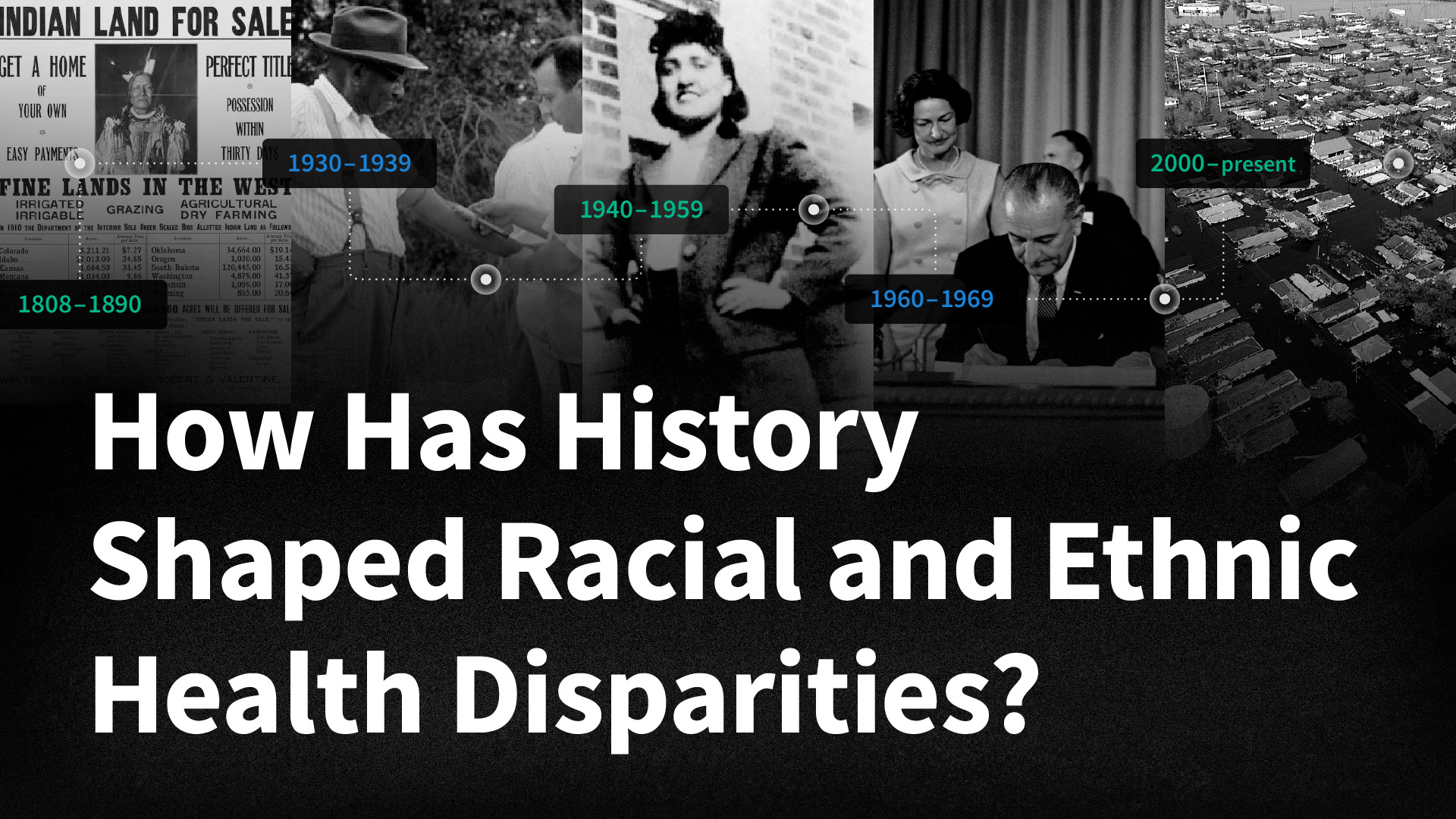
  • Timeline: How History Has Shaped Racial and Ethnic Health Disparities

    This timeline offers a historical view of significant U.S. federal policies and events spanning the early 1800s to today that have influenced present-day health disparities.
  • Health Policy 101: Chapter on Race, Inequality and Health

    Addressing persistent racial and ethnic disparities in health and health care is important for improving the nation’s health and economic prosperity. KFF explains such disparities and the factors that drive them, examines the actions to address them, and outlines future considerations.
  • Key Data on Health and Health Care by Race and Ethnicity

    Racial and ethnic disparities in health and health care remain a persistent challenge in the United States. An updated KFF resource examines how people of color fare compared to White people across 64 measures of health, health care, and social determinants of health.

Subscribe to KFF Emails

Choose which emails are best for you.
Sign up here

Filter

211 - 220 of 599 Results

  • Navigating Recovery: Health Care Financing and Delivery Systems in Puerto Rico and US Virgin Islands

    Issue Brief

    This brief identifies key issues and short and long-term options for recovery around the health care financing and delivery systems in Puerto Rico and the U.S. Virgin Islands following Hurricanes Irma and Maria, which caused significant physical damage to the territories. It draws on insights from a Nov. 30 roundtable discussion with leaders and experts representing a variety of perspectives on Medicaid policy, health insurance and care delivery systems, and disaster recovery.

  • African Americans and the New Medicare Drug Benefit

    Poll Finding

    In a few short weeks, Medicare will undergo big changes that will have a major impact on nearly 4 million African American seniors and younger people with permanent disabilities who rely on Medicare for their health coverage.

  • Health News Index – March/April 2002

    Poll Finding

    Health News Index March/April, 2002 The March/April edition of the Kaiser Family Foundation/Harvard School of Public Health Health News Index includes questions about major health stories covered in the news, including the recent coverage of mammogram efficacy, the Institute of Medicine report on racial disparities in the health care system, and prescription drug discount cards.

  • The Truth About Those ‘Greedy’ Seniors

    From Drew Altman

    In The Wall Street Journal’s Think Tank, Drew Altman asks, "what’s your image of America’s seniors?" and provides some facts on the income and assets of Medicare enrollees.

  • Latinos and HIV/AIDS in the United States

    Other Post

    Capitol Hill Briefing HIV remains a leading cause of death among Latinos in the United States, and Latinos with HIV are less likely than whites to receive early care. The rate of AIDS cases among Latinos is almost four times the rate among whites.