Racial Equity and Health Policy

the Essentials
  • How Experiencing Racial Discrimination Impacts Health

    This brief highlights research examining mechanisms underlying health outcomes linked to self-reported experiences of racial discrimination, including biological changes, chronic stress, mental health, substance use, pregnancy-related outcomes, and sleep.
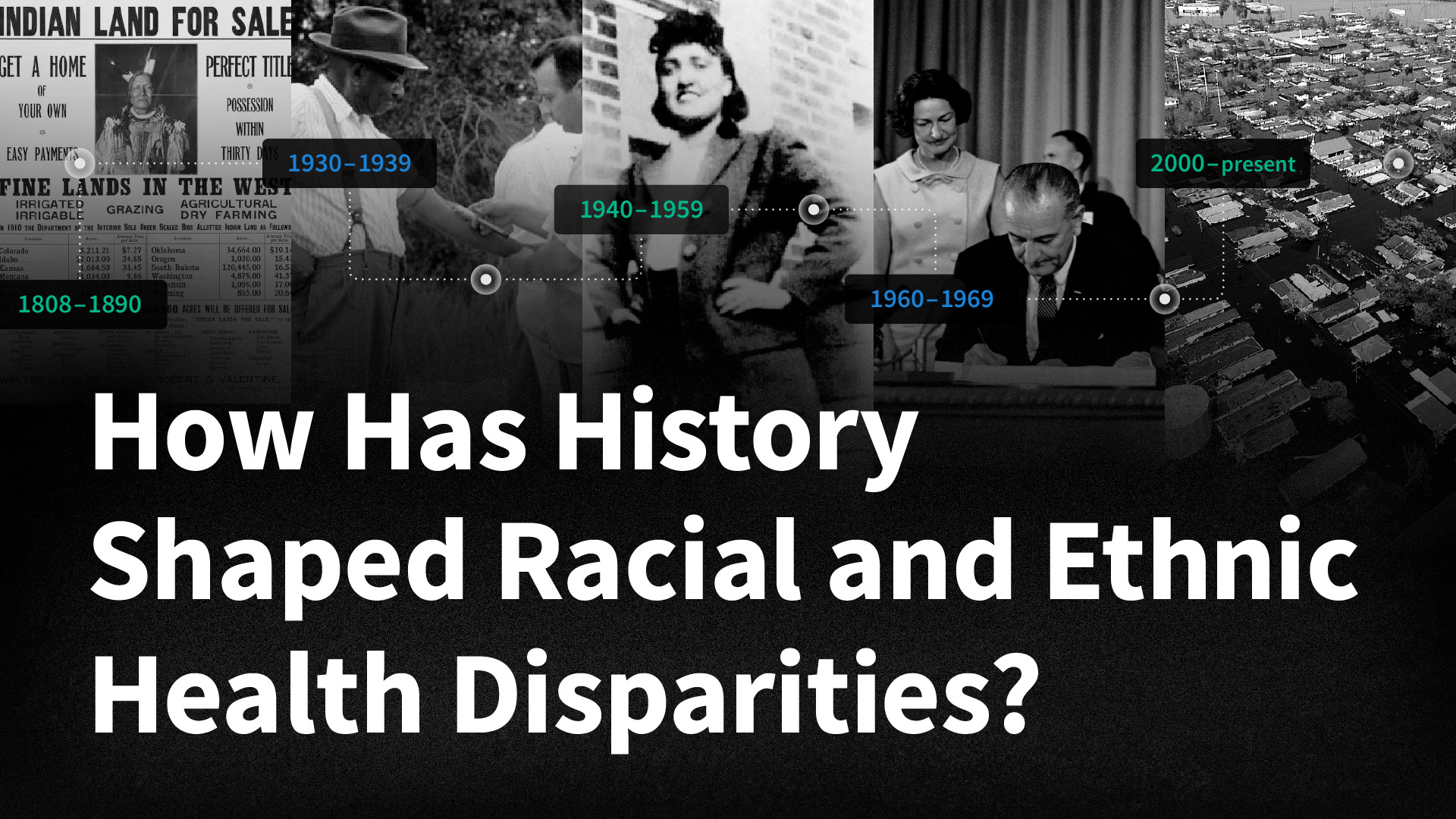
  • Timeline: How History Has Shaped Racial and Ethnic Health Disparities

    This timeline offers a historical view of significant U.S. federal policies and events spanning the early 1800s to today that have influenced present-day health disparities.
  • Health Policy 101: Chapter on Race, Inequality and Health

    Addressing persistent racial and ethnic disparities in health and health care is important for improving the nation’s health and economic prosperity. KFF explains such disparities and the factors that drive them, examines the actions to address them, and outlines future considerations.
  • Key Data on Health and Health Care by Race and Ethnicity

    Racial and ethnic disparities in health and health care remain a persistent challenge in the United States. An updated KFF resource examines how people of color fare compared to White people across 64 measures of health, health care, and social determinants of health.

Survey of Immigrants

KFF-New York Times Survey: Immigrants Report Rising Fear, Negative Economic and Health Impacts, and Changing Political Views During the First Year of President Trump’s Second Term

The 2025 Survey of Immigrants, a partnership between KFF and The New York Times, takes an in-depth look at the experiences of immigrants during the first year of President Trump’s second term, including their worries related to increased immigration enforcement, their health and economic wellbeing, and the political views and preferences of immigrant voters. The survey paints a portrait of families under strain — where fear of detention and economic instability are negatively impacting immigrants’ health and reshaping immigrant families’ daily lives and views of U.S. political parties.

Read the News Release | Explore The New York Times’ Reporting
Stay informed.

Stay informed.

Filter

211 - 220 of 603 Results

  • Atención de salud en Puerto Rico y las Islas Vírgenes de los Estados Unidos: una revisión, a seis meses de las tormentas (Informe)

    Issue Brief

    Puerto Rico y las Islas Vírgenes de los Estados Unidos (USVI) sufrieron daños significativos en su infraestructura y sistemas de salud a causa del impacto de los huracanes Irma y María en septiembre de 2017. Basándose en entrevistas con residentes, partes interesadas clave, y en informes públicos, este informe proporciona una visión general del estado de los esfuerzos de recuperación, a seis meses de las tormentas, con un enfoque en los sistemas de atención médica.

  • Putting Men’s Health Care Disparities on the Map: Examining Racial and Ethnic Disparities at the State Level

    Report

    This Kaiser Family Foundation report finds that men of color in almost every state continue to fare worse than white men on a variety of measures of health, health care access and other social determinants of health. It documents the persistence of such disparities between white men and men of color -- and among different groups within men of color -- on 22 indicators of health and well-being, including rates of diseases such as AIDS,…

  • Health Care and the 2004 Elections

    Other Post

    ** Update: For information on health care and the 2008 election, visit www.health08.org. ** Health care issues continue to be important for many Americans and a vital part of the policy debates in Washington and around the country. During an election season, candidates propose and debate their solutions for the pressing policy issues facing their constituents. The 2004 election season is no different and the Kaiser Family Foundation is issuing informational materials on some of…

  • Filling the Gaps: Dental Care, Coverage and Access

    Event Date:
    Event

    While the Affordable Care Act is expected to expand public and private coverage for children when it takes effect in 2014, significant gaps will remain, especially for low-income adults age 21 and older. This June 19, 2012, a public forum at the Foundation's Washington, D.C. offices examined the gaps and disparities in dental coverage and care in the United States today; the health, social, and other consequences of these systemic deficiencies; and promising strategies for…

  • Key Facts on Health Coverage of Immigrants

    Fact Sheet

    This fact sheet provides an overview of health coverage for immigrants based on data from the 2023 KFF/LA Times Survey of Immigrants, the largest nationally representative survey focused on immigrants and discusses potential implications of incoming Trump administration policies for coverage of immigrants.

  • State Health Coverage for Immigrants and Implications for Health Coverage and Care

    Issue Brief

    Noncitizen immigrants, particularly those who are undocumented, face significant barriers to accessing health coverage and care and are significantly more likely than citizens to be uninsured. This brief provides an overview of state health coverage programs for immigrants, including among states that have taken up options in Medicaid and the Children’s Health Insurance Program (CHIP) to expand coverage for lawfully present immigrants and/or established fully state-funded programs to fill gaps in coverage for immigrants.

  • Recent Research on How Experiencing Racial Discrimination Impacts Health

    Issue Brief

    This brief provides an overview of the relationship between racial discrimination and health and highlights research examining mechanisms underlying health outcomes linked to experiences of racial discrimination, including biological changes, chronic stress, mental health, substance use, pregnancy-related outcomes, and sleep.

  • Health Care Experiences of Native Hawaiian or Pacific Islander Adults

    Issue Brief

    A new issue brief based on focus groups conducted by KFF among NHPI adults living in Hawaii and the continental U.S. highlights barriers NHPI people face when accessing health care, including geographic isolation, limited system capacity, and language access. In their own words, participants describe both positive and negative experiences in health care settings and discuss concerns about mental health in their communities.