Racial Equity and Health Policy

the Essentials
  • How Experiencing Racial Discrimination Impacts Health

    This brief highlights research examining mechanisms underlying health outcomes linked to self-reported experiences of racial discrimination, including biological changes, chronic stress, mental health, substance use, pregnancy-related outcomes, and sleep.
  • Timeline: How History Has Shaped Racial and Ethnic Health Disparities

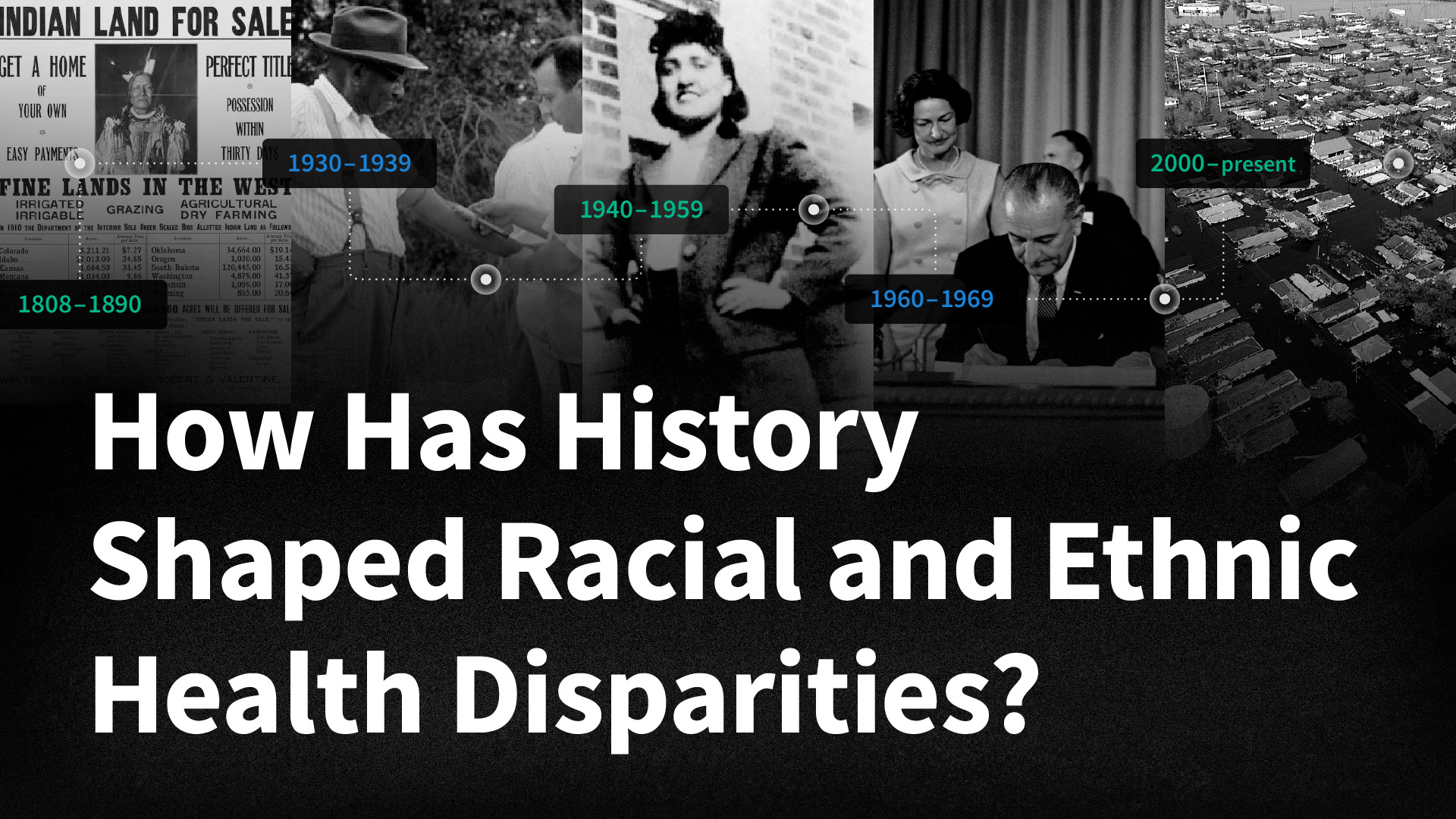
    This timeline offers a historical view of significant U.S. federal policies and events spanning the early 1800s to today that have influenced present-day health disparities.
  • Health Policy 101: Chapter on Race, Inequality and Health

    Addressing persistent racial and ethnic disparities in health and health care is important for improving the nation’s health and economic prosperity. KFF explains such disparities and the factors that drive them, examines the actions to address them, and outlines future considerations.
  • Key Data on Health and Health Care by Race and Ethnicity

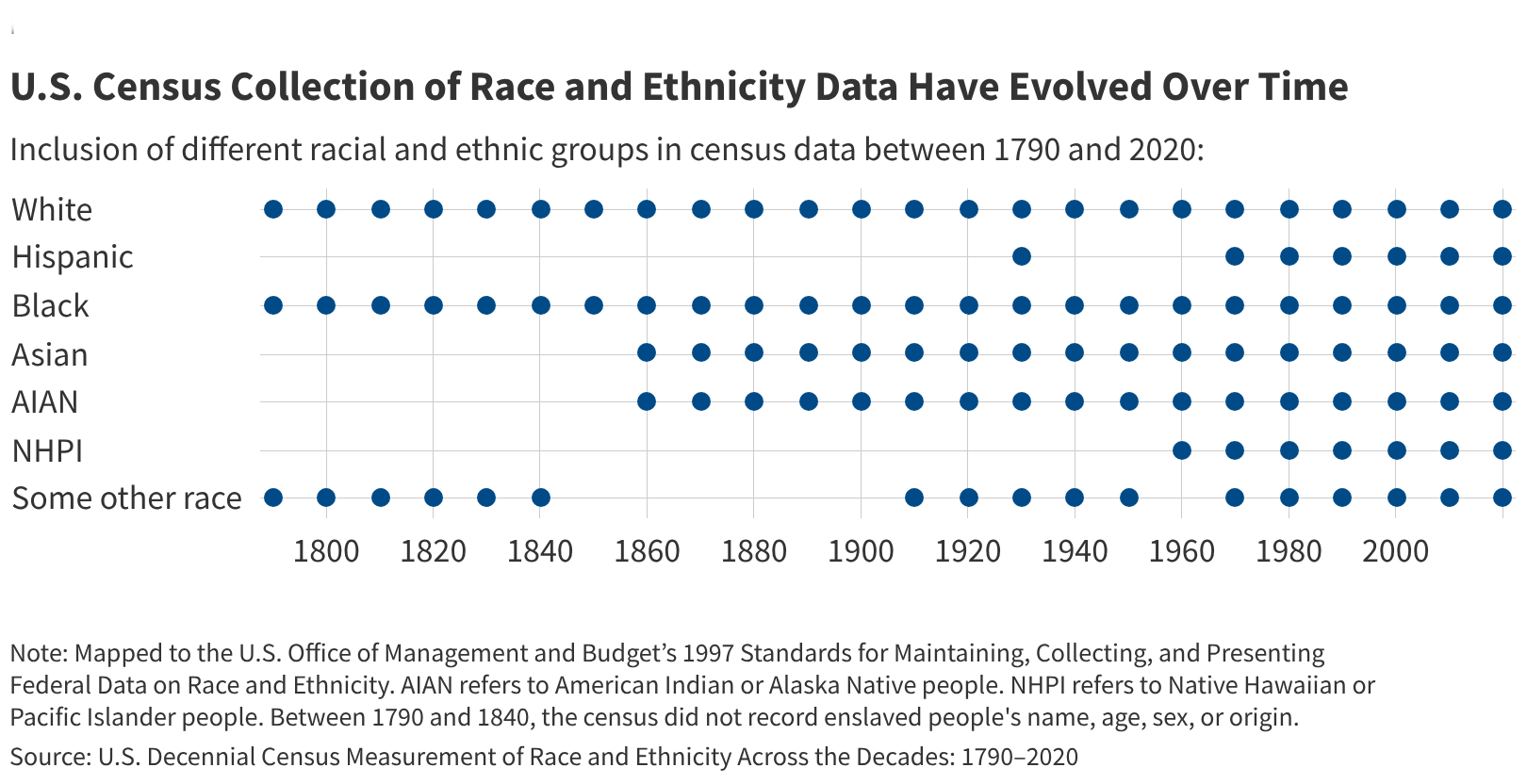
    Racial and ethnic disparities in health and health care remain a persistent challenge in the United States. An updated KFF resource examines how people of color fare compared to White people across 64 measures of health, health care, and social determinants of health.

Survey of Immigrants

KFF-New York Times Survey: Immigrants Report Rising Fear, Negative Economic and Health Impacts, and Changing Political Views During the First Year of President Trump’s Second Term

The 2025 Survey of Immigrants, a partnership between KFF and The New York Times, takes an in-depth look at the experiences of immigrants during the first year of President Trump’s second term, including their worries related to increased immigration enforcement, their health and economic wellbeing, and the political views and preferences of immigrant voters. The survey paints a portrait of families under strain — where fear of detention and economic instability are negatively impacting immigrants’ health and reshaping immigrant families’ daily lives and views of U.S. political parties.

Read the News Release | Explore The New York Times’ Reporting
Stay informed.

Stay informed.

Filter

191 - 200 of 602 Results

  • Two Studies Draw Different Conclusions on State of Black America

    From Drew Altman

    In this column for The Wall Street Journal's Think Tank, Drew Altman discusses how studies with conflicting views of progress and problems for African Americans can both be true, and why African Americans may feel the problems more than the progress.

  • Urban Indian Health

    Report

    More than half (57%) of the 2.5 million people who identify themselves solely as American Indian and Alaska Native in the 2000 Census live in metropolitan areas. This issue brief describes the large and growing urban Indian population, their health status, and the major federal health programs and federal-state programs that are available to improve Native Americans' access to needed health services. Report Introductory Letter  

  • Welfare Reform and American Indian Tribes

    Fact Sheet

    American Indian tribes have new options under the 1996 Welfare Reform legislation that created Temporary Assistance for Needy Families (TANF), a block grant enacted to replace the Aid to Families with Dependent Children (AFDC). TANF, which expires in September of this year, provides cash assistance to poor families with children, including poor American Indian Families, and gives tribes the option to design and administer their own family assistance programs following approval of the plan by…

  • Native Americans and Medicaid: Coverage and Financing Issues

    Other Post

    Native Americans and Medicaid:Coverage and Financing Issues Medicaid as Medicare Premium Assistance The Medicare program provides health insurance coverage for the nation's elderly and disabled.16 To enroll in Medicare Part B, which offers coverage for physician and other outpatient care, individuals must be 65 or older or must be disabled, and must pay a monthly premium. This monthly premium, which is generally deducted from an individual's Social Security check, is $43.80 per month in 1997.…

  • Racial Disparities in Flu Vaccination: Implications for COVID-19 Vaccination Efforts

    Policy Watch

    With planning beginning for an eventual COVID-19 vaccine, one important consideration is making sure that distribution processes and outreach and communication strategies reach people of color. Analysis of seasonal flu vaccination rates provides some insight into the potential barriers and issues to be addressed as part of COVID-19 vaccination efforts.

  • Los Latinos y el VIH/SIDA

    Fact Sheet

    Latinos and HIV/AIDS (Spanish version) This fact sheet provides an overview of the HIV/AIDS epidemic in the United States as it has affected Latinos, including information on the disproportionate impact of HIV/AIDS on the Latino community and a current case profile. It is available in English and Spanish. Fact Sheet:

  • Physician Willingness and Resources to Serve More Medicaid Patients: Perspectives from Primary Care Physicians

    Issue Brief

    This issue brief attempts to assess how primary care physicians will respond to the entry of 32 million newly insured people into the health care system under health reform. The increase in the number of people with health coverage is expected to intensify competition among patients and payers for primary care resources. The brief analyzes data from a nationally representative survey of physicians to assess which adult-care primary care physicians are most likely to respond…

  • The Impact of the Coverage Gap for Adults in States not Expanding Medicaid by Race and Ethnicity

    Issue Brief

    The Affordable Care Act (ACA) expansion of Medicaid to adults with incomes at or below 138% of the federal poverty level (FPL) effectively became a state option following the Supreme Court decision, creating a “coverage gap” for many poor uninsured adults in states that do not expand Medicaid. This brief examines the coverage gap by race and ethnicity.

  • Living in An Immigrant Family: How Fear and Toxic Stress Are Affecting Daily Life

    Living in an Immigrant Family in America: How Fear and Toxic Stress are Affecting Daily Life, Well-Being, & Health

    Issue Brief

    This brief examines the experiences of immigrant parents and children, including immigrants who are undocumented and those lawfully present, with the new restrictions on immigration and increased immigration enforcement being pursued by the Trump Administration that are reshaping U.S. immigration policy. Findings are based on focus groups in eight cities and four states with 100 parents in immigrant families from 15 countries, as well as telephone interviews with 13 pediatricians who serve immigrant communities.