Racial Equity and Health Policy

the Essentials
  • How Experiencing Racial Discrimination Impacts Health

    This brief highlights research examining mechanisms underlying health outcomes linked to self-reported experiences of racial discrimination, including biological changes, chronic stress, mental health, substance use, pregnancy-related outcomes, and sleep.
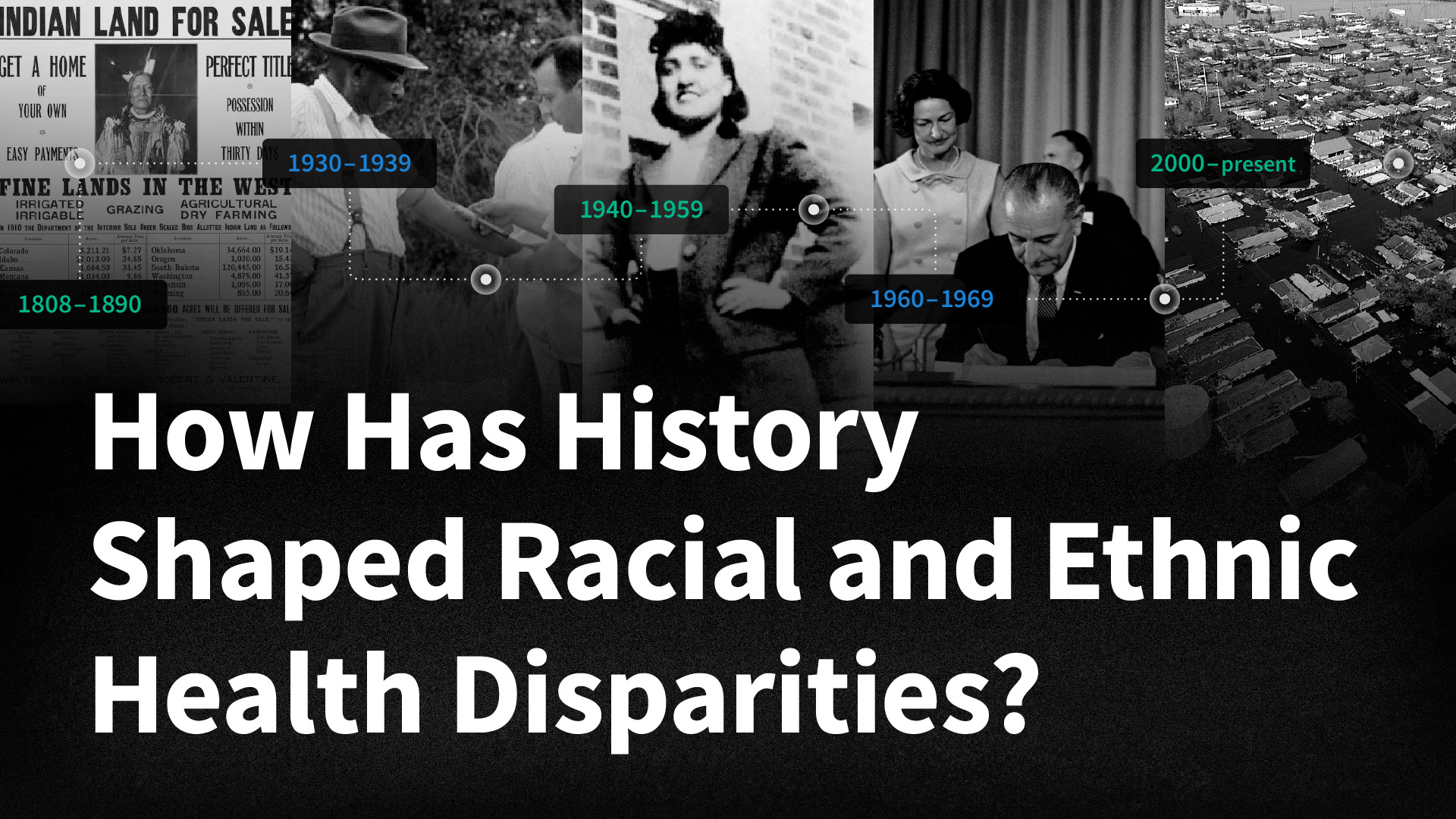
  • Timeline: How History Has Shaped Racial and Ethnic Health Disparities

    This timeline offers a historical view of significant U.S. federal policies and events spanning the early 1800s to today that have influenced present-day health disparities.
  • Health Policy 101: Chapter on Race, Inequality and Health

    Addressing persistent racial and ethnic disparities in health and health care is important for improving the nation’s health and economic prosperity. KFF explains such disparities and the factors that drive them, examines the actions to address them, and outlines future considerations.
  • Key Data on Health and Health Care by Race and Ethnicity

    Racial and ethnic disparities in health and health care remain a persistent challenge in the United States. An updated KFF resource examines how people of color fare compared to White people across 64 measures of health, health care, and social determinants of health.

Survey of Immigrants

KFF-New York Times Survey: Immigrants Report Rising Fear, Negative Economic and Health Impacts, and Changing Political Views During the First Year of President Trump’s Second Term

The 2025 Survey of Immigrants, a partnership between KFF and The New York Times, takes an in-depth look at the experiences of immigrants during the first year of President Trump’s second term, including their worries related to increased immigration enforcement, their health and economic wellbeing, and the political views and preferences of immigrant voters. The survey paints a portrait of families under strain — where fear of detention and economic instability are negatively impacting immigrants’ health and reshaping immigrant families’ daily lives and views of U.S. political parties.

Read the News Release | Explore The New York Times’ Reporting
Stay informed.

Stay informed.

Filter

191-200 of 606 results

  • Language Barriers in Health Care: Findings from the KFF Survey on Racism, Discrimination, and Health

    Poll Finding

    In the U.S., 26 million people have limited English proficiency, representing about 8% of people ages 5 and older. Those with limited English proficiency report worse overall health status than those who are English proficient, but data suggests that having access to providers who speak their preferred language may help these disparities and can improve health care experiences.

  • A First Look at North Carolina’s Section 1115 Medicaid Waiver’s Healthy Opportunities Pilots

    Issue Brief

    Medicaid funds typically cannot be used to pay for non-medical interventions that target the social determinants of health. However, in October 2018, CMS approved North Carolina’s Section 1115 waiver which provides financing for a new pilot program, called “Healthy Opportunities Pilots,” to cover evidence-based non-medical services that address specific social needs linked to health/health outcomes. The pilots will address housing instability, transportation insecurity, food insecurity, and interpersonal violence and toxic stress for a limited number…

  • New Brief Examines Potential Effects of Public Charge Changes on Health Coverage for Citizen Children 

    News Release

      The Trump Administration is pursuing changes that, for the first time, would allow the federal government to take into account the use of federal health, nutrition, and other non-cash public programs, including Medicaid and the Children’s Health Insurance Program (CHIP), when making a determination about whether someone is likely to be a “public charge.” Under these changes, use of these programs by an individual or a family member, including a citizen child, could result…

  • Racial Ethnic Difference in Cardiac Care:  The Weight of the Evidence

    Fact Sheet

    Racial Ethnic Difference in Cardiac Care: The Weight of the Evidence Numerous studies over the past two decades have documented racial and ethnic differences in care for heart conditions. To assess the quality of the evidence and to summarize the information for a physician audience, the Henry J. Kaiser Family Foundation collaborated with the American College of Cardiology Foundation to review the body of research on racial/ethnic differences in cardiac care. There is credible evidence…

  • The Digital Divide And Access To Health Information Online

    Poll Finding

    The Affordable Care Act (ACA) calls for a number of web-based initiatives, including development of the website healthcare.gov which provides a variety of health information and helps individuals find coverage options. Therefore, understanding the level and quality of Internet access among those groups most likely to benefit from reform, such as the uninsured, those with lower incomes, and members of racial and ethnic minority groups, is an important consideration as health reform is implemented. A…

  • Survey of Georgia Residents on HIV/AIDS: Summary and Chartpack

    Report

    The public in Georgia, and particularly African Americans, are concerned about HIV/AIDS as a problem facing the nation. Most believe that the U.S. is losing ground when it comes to HIV/AIDS, and most would like to see the government increase spending to fight the disease in the U.S. This statewide representative survey examines Georgians views on the HIV/AIDS epidemic in their state and local communities, their knowledge and misconceptions about HIV/AIDS, Georgia's HIV testing rates,…

  • Putting Men’s Health Care Disparities on the Map: Health Status Highlights

    Report

    This fact sheet provides a brief overview of racial disparities in health status among men of different races in the United States. It draws findings from the report, Putting Men’s Health Care Disparities On the Map, which uses national data sources from multiple years to generate state-level estimates on a range of indicators of health status, access, and well-being for men of different racial and ethnic backgrounds. Women and men of different races and ethnicities…

  • Report Examines the Role of Medicare and the Indian Health Service for American Indians and Alaska Natives

    News Release

    A new report from the Kaiser Family Foundation examines the role of both Medicare and the Indian Health Service (IHS) in providing access to health care for about 650,000 American Indians and Alaska Natives who are age 65 and older or who have permanent disabilities. While Medicare provides important health care coverage for most in this group, its relatively high cost-sharing and gaps in benefits can be problematic for American Indians and Alaska Native Medicare…