Racial Equity and Health Policy

the Essentials
  • How Experiencing Racial Discrimination Impacts Health

    This brief highlights research examining mechanisms underlying health outcomes linked to self-reported experiences of racial discrimination, including biological changes, chronic stress, mental health, substance use, pregnancy-related outcomes, and sleep.
  • Timeline: How History Has Shaped Racial and Ethnic Health Disparities

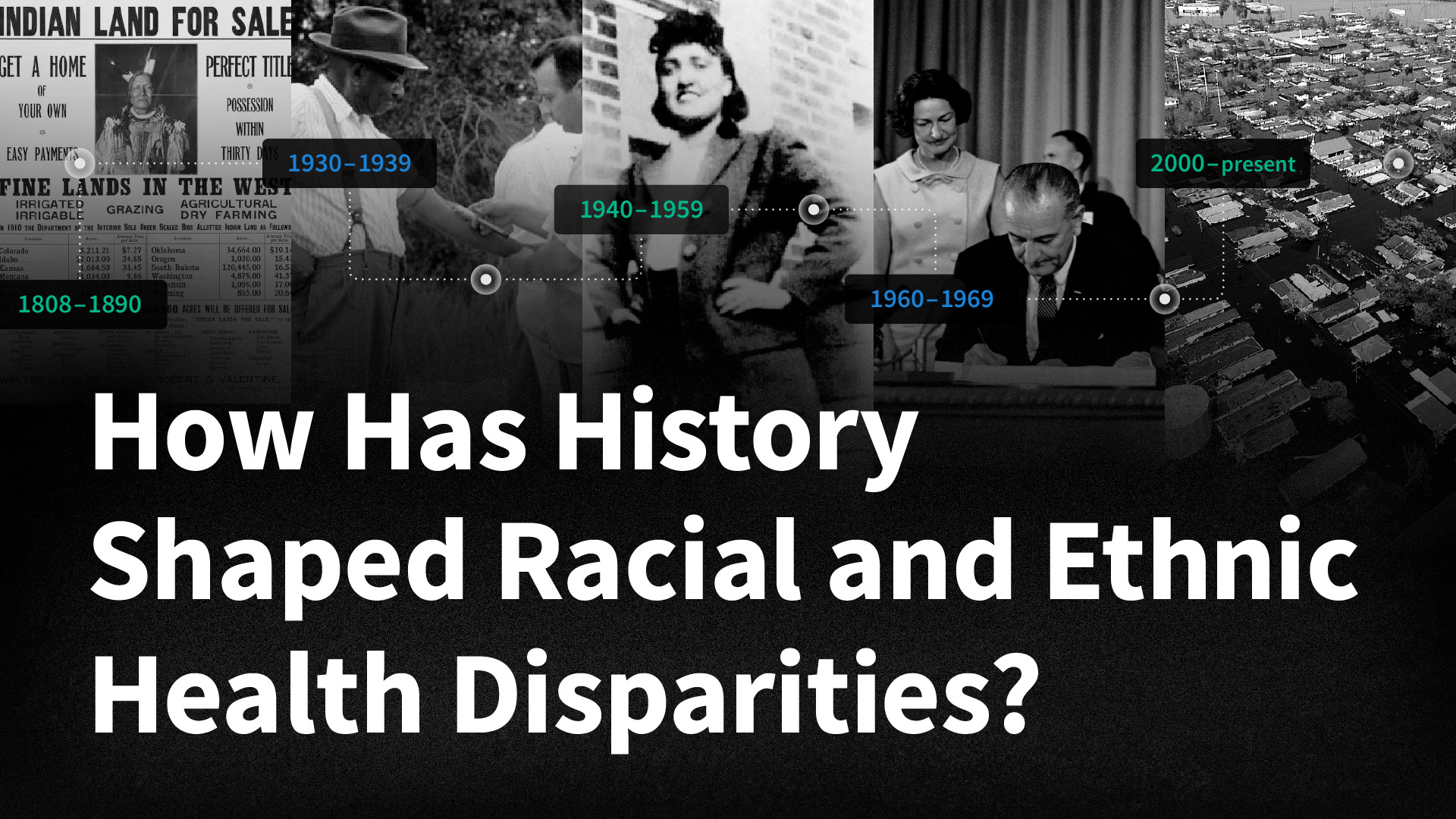
    This timeline offers a historical view of significant U.S. federal policies and events spanning the early 1800s to today that have influenced present-day health disparities.
  • Health Policy 101: Chapter on Race, Inequality and Health

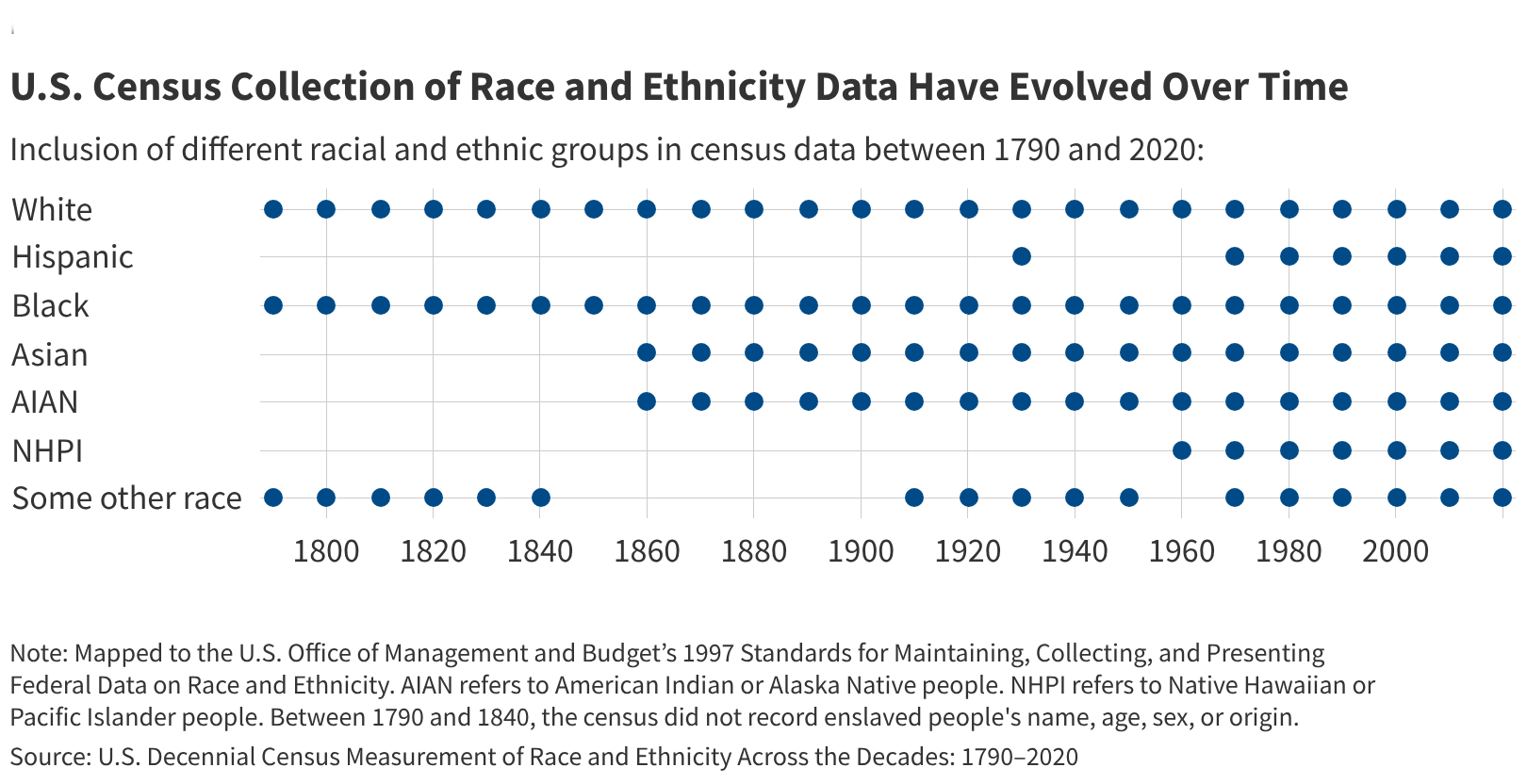
    Addressing persistent racial and ethnic disparities in health and health care is important for improving the nation’s health and economic prosperity. KFF explains such disparities and the factors that drive them, examines the actions to address them, and outlines future considerations.
  • Key Data on Health and Health Care by Race and Ethnicity

    Racial and ethnic disparities in health and health care remain a persistent challenge in the United States. An updated KFF resource examines how people of color fare compared to White people across 64 measures of health, health care, and social determinants of health.

Survey of Immigrants

KFF-New York Times Survey: Immigrants Report Rising Fear, Negative Economic and Health Impacts, and Changing Political Views During the First Year of President Trump’s Second Term

The 2025 Survey of Immigrants, a partnership between KFF and The New York Times, takes an in-depth look at the experiences of immigrants during the first year of President Trump’s second term, including their worries related to increased immigration enforcement, their health and economic wellbeing, and the political views and preferences of immigrant voters. The survey paints a portrait of families under strain — where fear of detention and economic instability are negatively impacting immigrants’ health and reshaping immigrant families’ daily lives and views of U.S. political parties.

Read the News Release | Explore The New York Times’ Reporting
Stay informed.

Stay informed.

Filter

181 - 190 of 603 Results

  • Survey of Americans on HIV/AIDs – Part Three: Experiences and Opinions by Race/Ethnicity and Age: Toplines

    Poll Finding

    These findings are the third part of a national survey of Americans’ views on HIV/AIDS, “Survey of Americans on HIV/AIDS,” conducted in spring 2004. It explores the views and experiences of, as well as the key differences among, African Americans, Latinos, Whites, and young people. The first part of the survey, on global HIV/AIDS, was released on June 2, 2004. The second part of the survey, on HIV Testing, was released on June 15, 2004.…

  • National Survey of Physicians Part I: Doctors on Disparities in Medical Care

    Other Post

    Selected findings from the Kaiser Family Foundation's forthcoming National Survey of Physicians reveal that most physicians are aware of racial disparities in medical treatment for specific conditions, but they don't believe it is a widespread problem. In sharp contrast, African American physicians disagree with their fellow physicians with nearly eight in ten (77%) believing race and ethnicity impact how people are treated at least somewhat often. Physicians see insurance status as a key determinate of…

  • 2011 Survey of DC Residents

    Poll Finding

    The Washington Post and the Kaiser Family Foundation partnered to conduct a survey examining the opinions of Washington, D.C., residents on a wide range of issues including health care. This survey is the 22nd in a series of surveys dating back to 1995 that have been conducted as part of The Washington Post/Kaiser Family Foundation Survey Project. Toplines (.pdf) Data Note: Black Residents' Views on HIV/AIDS in the District of Columbia Read The Washington Post…

  • Medicaid’s Role for Black Americans

    Fact Sheet

    This fact sheet examines Medicaid's role for black Americans. It includes data on Medicaid's coverage of black Americans and the program's impact on their access to care, as well as the impacts of the recent recession and the coming expansion of Medicaid under health reform on enrollment in Medicaid among black Americans. The fact sheet also has a chart showing state-by-state data on health insurance coverage of black Americans. Fact Sheet (.pdf)

  • Key Health Implications of Separation of Families at the Border (as of June 27, 2018)

    Fact Sheet

    This fact sheet examines key health implications of separating immigrant children from their parents at the border, as of June 27, 2018. The practice came to light after implementation of the Trump Administration's zero tolerance policy for individuals entering into the U.S. without authorization. Research shows that separating children from their parents exposes them to trauma and toxic stress that can have lifelong impacts on their health.

  • Family Consequences of Detention/Deportation: Effects on Finances, Health, and Well-Being

    Issue Brief

    This report examines the direct consequences to family finances, health, and well-being when a member of the household is detained or deported. It is based on 20 in-person interviews with families who recently had a family member detained or deported and 12 telephone interviews with health centers, legal services providers, educators, and community organizations serving immigrant families in California, Texas, and the Washington, DC area.

  • Women at Risk: A View from the Safety Net

    Video

    This video provides a snapshot of the Arlington (Va.) Free Clinic where, four times a month, medical personnel provide care and screenings exclusively to women. The video explores the hurdles that uninsured women face in accessing health care and the social issues, including work and family responsibilities, that create challenges for them. It is a companion to the report, “Putting Women’s Health Care Disparities On The Map: Examining Racial and Ethnic Disparities at the State…

  • Putting Men’s Health Care Disparities on the Map: Examining Racial and Ethnic Disparities at the State Level

    Report

    This Kaiser Family Foundation report finds that men of color in almost every state continue to fare worse than white men on a variety of measures of health, health care access and other social determinants of health. It documents the persistence of such disparities between white men and men of color -- and among different groups within men of color -- on 22 indicators of health and well-being, including rates of diseases such as AIDS,…

  • Health Care and the 2004 Elections

    Other Post

    ** Update: For information on health care and the 2008 election, visit www.health08.org. ** Health care issues continue to be important for many Americans and a vital part of the policy debates in Washington and around the country. During an election season, candidates propose and debate their solutions for the pressing policy issues facing their constituents. The 2004 election season is no different and the Kaiser Family Foundation is issuing informational materials on some of…