Racial Equity and Health Policy

the Essentials
  • How Experiencing Racial Discrimination Impacts Health

    This brief highlights research examining mechanisms underlying health outcomes linked to self-reported experiences of racial discrimination, including biological changes, chronic stress, mental health, substance use, pregnancy-related outcomes, and sleep.
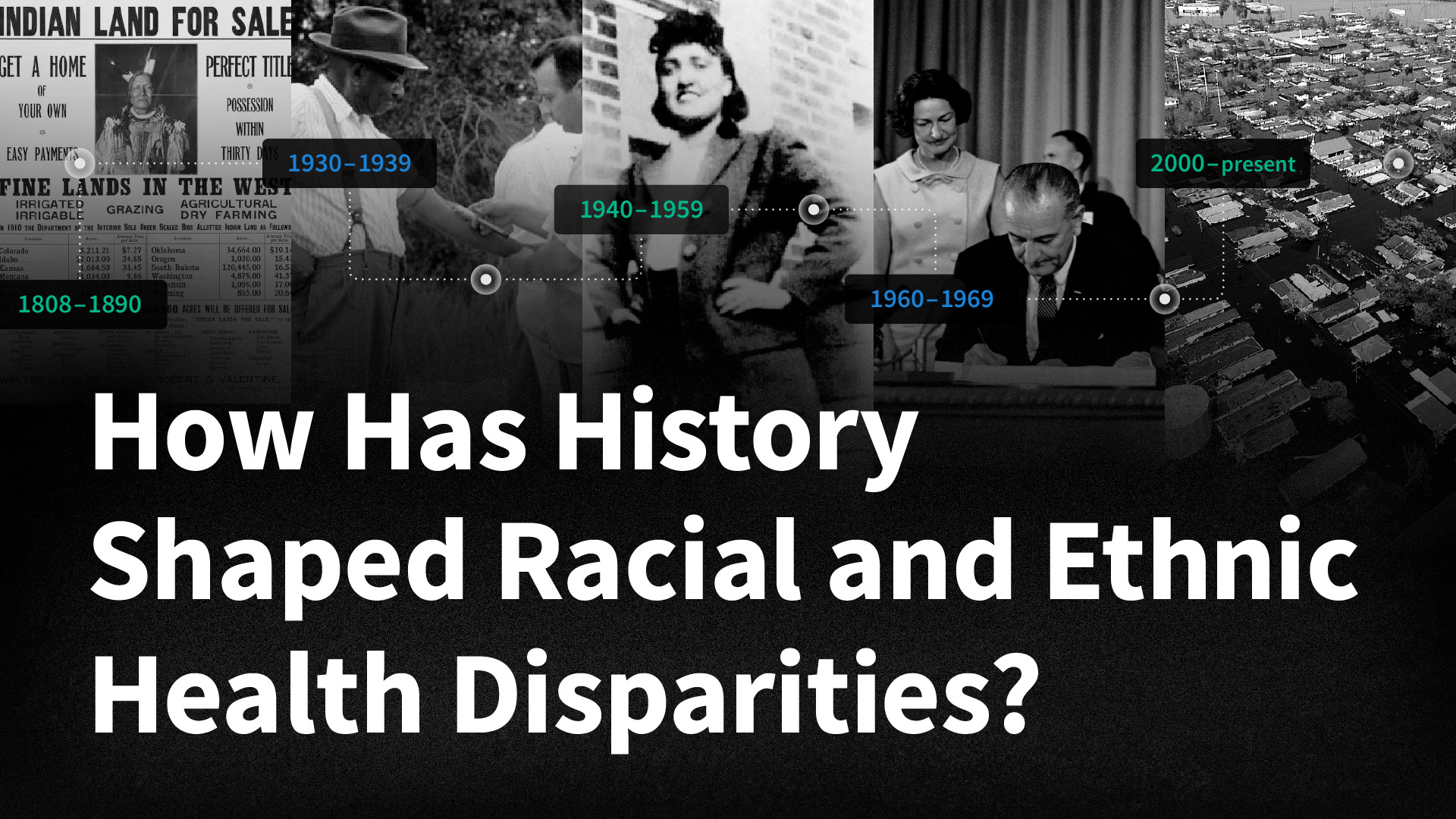
  • Timeline: How History Has Shaped Racial and Ethnic Health Disparities

    This timeline offers a historical view of significant U.S. federal policies and events spanning the early 1800s to today that have influenced present-day health disparities.
  • Health Policy 101: Chapter on Race, Inequality and Health

    Addressing persistent racial and ethnic disparities in health and health care is important for improving the nation’s health and economic prosperity. KFF explains such disparities and the factors that drive them, examines the actions to address them, and outlines future considerations.
  • Key Data on Health and Health Care by Race and Ethnicity

    Racial and ethnic disparities in health and health care remain a persistent challenge in the United States. An updated KFF resource examines how people of color fare compared to White people across 64 measures of health, health care, and social determinants of health.

Survey of Immigrants

KFF-New York Times Survey: Immigrants Report Rising Fear, Negative Economic and Health Impacts, and Changing Political Views During the First Year of President Trump’s Second Term

The 2025 Survey of Immigrants, a partnership between KFF and The New York Times, takes an in-depth look at the experiences of immigrants during the first year of President Trump’s second term, including their worries related to increased immigration enforcement, their health and economic wellbeing, and the political views and preferences of immigrant voters. The survey paints a portrait of families under strain — where fear of detention and economic instability are negatively impacting immigrants’ health and reshaping immigrant families’ daily lives and views of U.S. political parties.

Read the News Release | Explore The New York Times’ Reporting
Stay informed.

Stay informed.

Filter

171-180 of 606 results

  • Latest Data on COVID-19 Vaccinations by Race/Ethnicity

    Issue Brief

    KFF is collecting and analyzing data on COVID-19 vaccinations by race/ethnicity to gain increased insight who is receiving the vaccine and whether some groups are facing disparities in vaccination.

  • Immigrants’ Access to Health Care

    Issue Brief

    Immigrants account for 20 percent of the uninsured. There are many reasons for immigrants' lack of coverage, but the welfare reform law of 1996 was significant in restricting Medicaid eligibility for certain immigrant populations. The Kaiser Commission on Medicaid and the Uninsured has produced new reports on immigrant health care: a chart pack highlighting statistics and a policy brief discussing the legal status of Medicaid eligibility. An issue paper summarizing the findings of immigrant focus…

  • Key Health Disparities-Focused Legislation Introduced in the 110th Congress

    Other Post

    This compendium summarizes about a dozen federal legislative initiatives introduced in the 110th Congress to address racial and ethnic disparities in health and health care. Although the 110th Congress's session is half complete, the number of bills introduced that include some attention to “health disparities” is about the same as introduced in the entire 109th Congress. While a number of bills introduced this year may have an impact on health disparities and/or affect minority health,…

  • Wide Variations in Flu Vaccination Rates Across States Highlight Challenges as State and Local Authorities Plan to Distribute a COVID-19 Vaccine

    News Release

    When a COVID-19 vaccine becomes available, all or most people living in the country will need to get vaccinated in order to maximize its benefits and provide adequate immunity nationwide. That could present a daunting challenge for state and local health officials, as a new KFF analysis shows vaccination rates for the annual flu vaccine vary widely across states as well as by race and ethnicity, age, and other demographic characteristics. The flu vaccine provides…

  • KFF Launches New COVID-19 Vaccine Monitor to Track the Public’s Confidence in the Vaccine and Experiences for the Duration of the Pandemic

    News Release

    Republicans and Black Americans are More Likely to Be Hesitant but Even Among These Groups Reasons Vary KFF has launched a new COVID-19 Vaccine Monitor to dive deeply into the public’s views about the vaccine and experiences getting it for as long as the pandemic lasts. First results released today show that Americans’ enthusiasm for getting a COVID-19 vaccination varies substantially across groups, with Republicans and Black Americans among those most hesitant. Overall, 71% of…

  • Among Non-Elderly Adults, Low-Income, American Indian/Alaska Native and Black Adults Have Higher Risk of Developing Serious Illness if Infected With Coronavirus

    News Release

    Among non-elderly adults, American Indian/Alaska Native and Black adults are more likely than Whites to be at higher risk of serious illness if infected with the new coronavirus -- chiefly due to a higher prevalence of underlying health conditions and longstanding disparities in health care and other socio-economic factors, according to a new KFF analysis. People in lower-income households are also at higher risk. The analysis finds that the share of non-elderly adults at higher…

  • Hurricane Harvey: The Experiences of Immigrants Living in the Texas Gulf Coast

    Report

    In order to better understand the particular needs of immigrants both in recovering from and preparing for future storms, this analysis from the Kaiser Family Foundation and the Episcopal Health Foundation highlights the views and experiences of foreign-born residents who were living in 24 coastal Texas counties hard-hit by Hurricane Harvey. Specifically, the brief explores the financial circumstances of immigrants following the storm, as well as their health care access, social support, and top priorities…

  • Voces de Puerto Rico: Reflexiones Dos Meses Después de María (Informe)

    Issue Brief

    Dos meses después que el huracán María tocara tierra, la Kaiser Family Foundation viajó a Puerto Rico. Este informe presenta los resultados de grupos focales y entrevistas individuales con 40 personas de 10 diferentes regiones de la isla afectadas por la tormenta.

  • Potential Effects of Public Charge Changes on Health Coverage for Citizen Children

    Issue Brief

    The Trump Administration is pursuing changes that, for the first time, would allow the federal government to take into account use of Medicaid, CHIP, subsidies for Marketplace coverage and other health, nutrition, and non-cash programs when making public charge determinations. These changes would likely lead to decreased participation in Medicaid, CHIP, Marketplace coverage, and other programs among legal immigrants and their citizen children, even though they would remain eligible.