Racial Equity and Health Policy

Survey of Immigrants

KFF-New York Times Survey: Immigrants Report Rising Fear, Negative Economic and Health Impacts, and Changing Political Views During the First Year of President Trump’s Second Term

The 2025 Survey of Immigrants, a partnership between KFF and The New York Times, takes an in-depth look at the experiences of immigrants during the first year of President Trump’s second term, including their worries related to increased immigration enforcement, their health and economic wellbeing, and the political views and preferences of immigrant voters. The survey paints a portrait of families under strain — where fear of detention and economic instability are negatively impacting immigrants’ health and reshaping immigrant families’ daily lives and views of U.S. political parties.

Read the News Release | Explore The New York Times’ Reporting
the Essentials
  • Disparities in Health and Health Care: 5 Key Questions and Answers

    This brief provides an introduction to what health and health care disparities are, why it is important to address them, what the status of disparities is today, recent federal actions to address disparities, and key issues related to addressing disparities in the future.
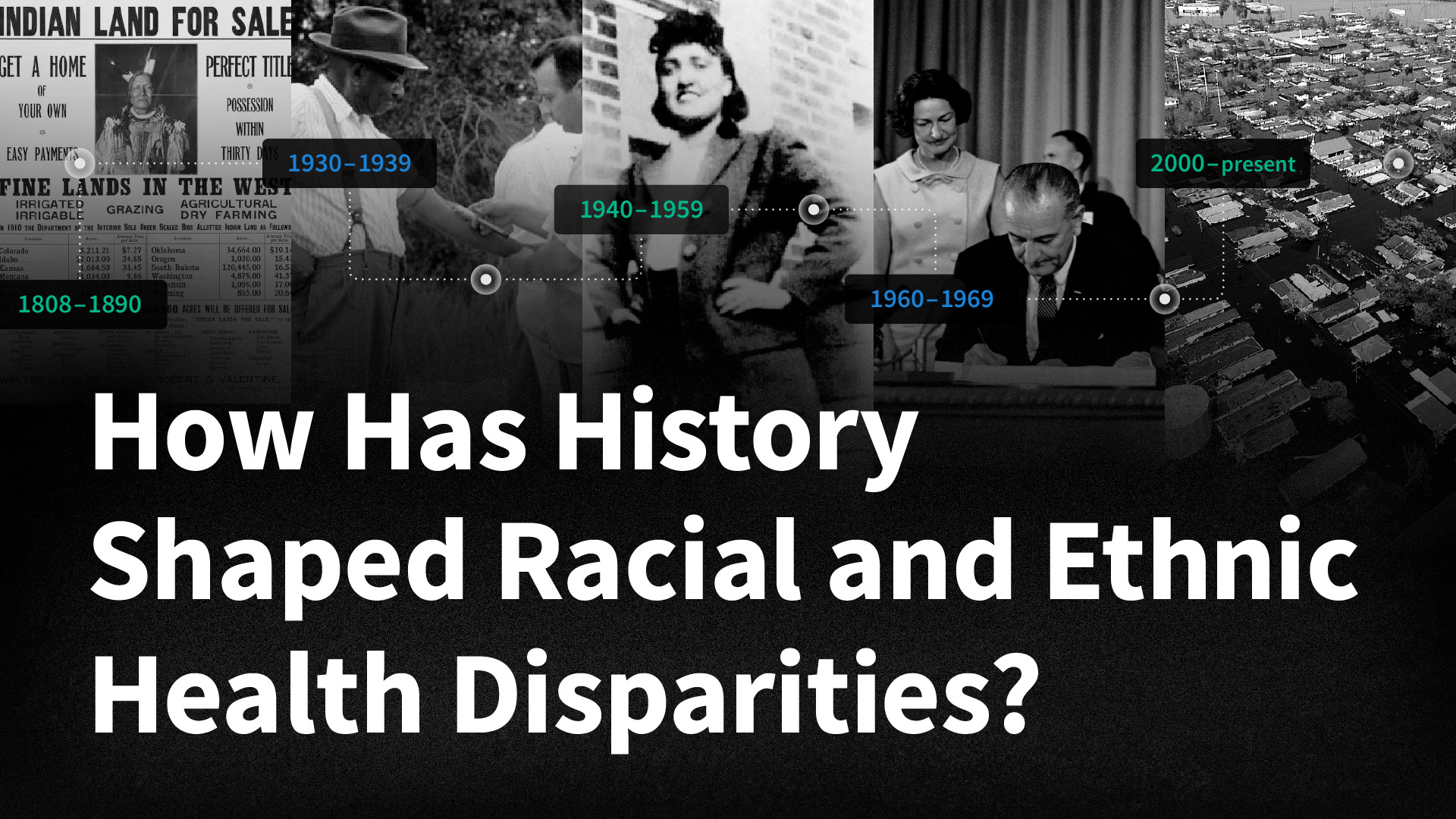
  • Timeline: How History Has Shaped Racial and Ethnic Health Disparities

    This timeline offers a historical view of significant U.S. federal policies and events spanning the early 1800s to today that have influenced present-day health disparities.
  • Health Policy 101: Chapter on Race, Inequality and Health

    Addressing persistent racial and ethnic disparities in health and health care is important for improving the nation’s health and economic prosperity. KFF explains such disparities and the factors that drive them, examines the actions to address them, and outlines future considerations.
  • Key Data on Health and Health Care by Race and Ethnicity

    Racial and ethnic disparities in health and health care remain a persistent challenge in the United States. An updated KFF resource examines how people of color fare compared to White people across 64 measures of health, health care, and social determinants of health.

Subscribe to KFF Emails

Choose which emails are best for you.
Sign up here

Filter

111 - 120 of 600 Results

  • What the Data Show: Black Women Report More Pervasive Negative Experiences in Health Care Compared to Other Groups

    News Release

    A new analysis of data from KFF’s Survey on Racism, Discrimination, and Health shows Black women are more likely than other groups to report being treated unfairly by a health care provider in recent years because of their race and ethnicity and that these experiences have health consequences. For example, among Black women who used health care in the past three years, 34% report at least one of three consequences because of a negative experience…

  • Five Facts About Black Women’s Experiences in Health Care

    Issue Brief

    This brief examines Black women's experiences in health care, including unfair treatment by providers due to race and their health outcomes as a result of this treatment. The brief also explores the association between racially concordant providers and positive health care experiences among Black women.

  • More States Are Providing Fully State-Funded Health Coverage to Some Individuals Regardless of Immigration Status

    News Release

    More states are providing fully state-funded health coverage to some individuals regardless of immigration status.  An updated KFF analysis shows that as of March 2024, 12 states and Washington D.C. provide fully state-funded coverage for income-eligible children regardless of immigration status. These states include California, Connecticut, Illinois, Maine, Massachusetts, New Jersey, New York, Oregon, Rhode Island, Utah, Vermont, and Washington.Six states -- California, Colorado, Illinois, New York, Oregon, and Washington, plus D.C. -- have also…

  • Revisions to Federal Standards for Collecting and Reporting Data on Race and Ethnicity: What are They and Why do They Matter?

    Issue Brief

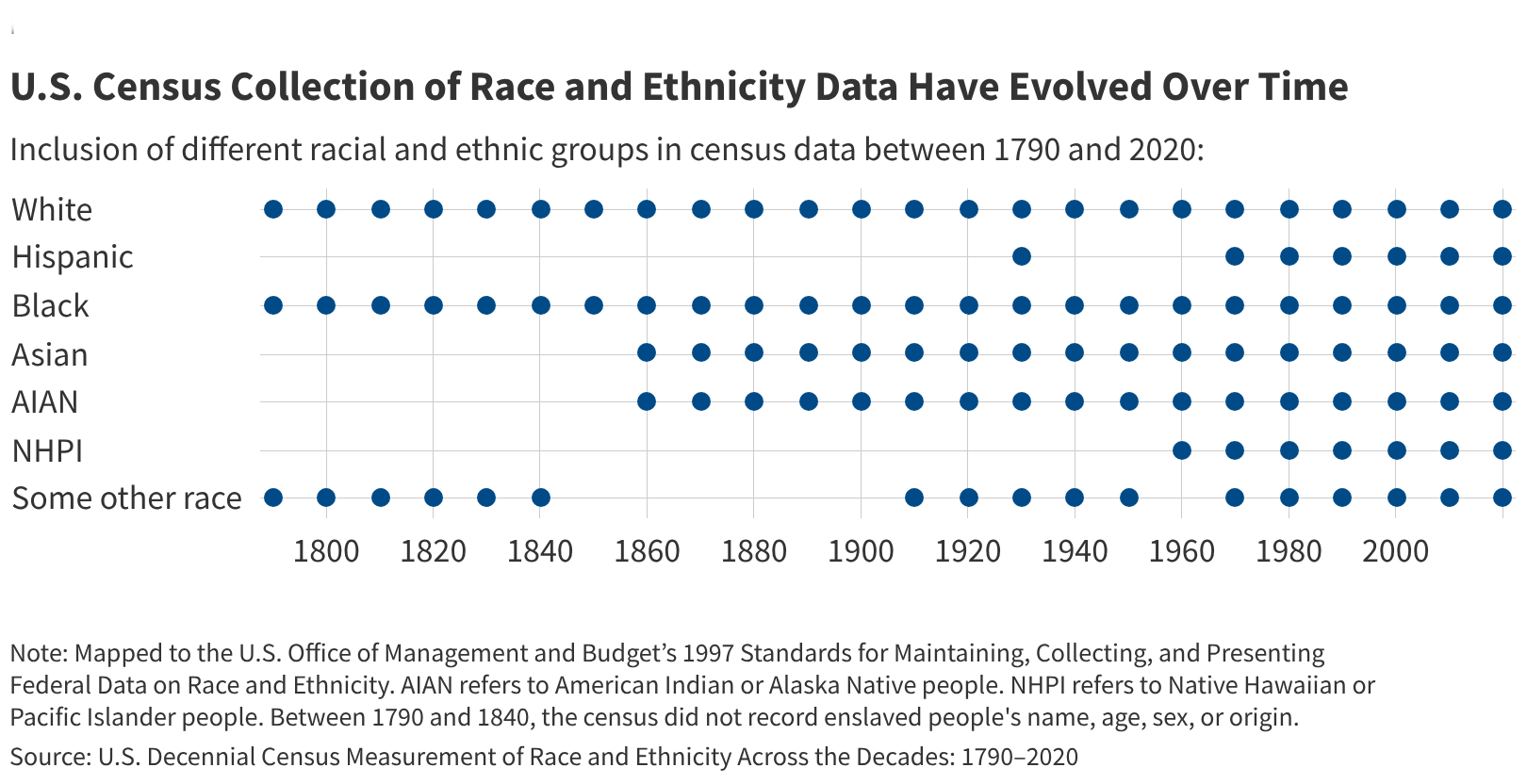
    This brief discusses why and how federal standards for collecting race and ethnicity data have been revised, highlights some of the key changes to data collection and reporting starting in 2024, and discusses the implications of these changes. The brief also includes analysis of how self-reported racial and ethnic classifications have changed among the U.S. population over time.

  • Florida’s Recent Heat Protection Preemption Law Could Disproportionately Affect Hispanic and Noncitizen Immigrant Workers

    Issue Brief

    The Florida legislation prevents city and county governments from requiring that employers, including government contractors, provide heat protections for outdoor workers outside of those required under state or federal law. These protections include requiring water breaks and other cooling measures for outdoor workers. The law could impact nearly 1.8 million nonelderly adult outdoor workers in Florida, who are disproportionately Hispanic and noncitizen immigrant workers.

  • Explainer: How States Are Using Medicaid Waivers to Help Incarcerated Individuals Get Care and Transition Back into Their Communities 

    News Release

    Compared to the general population, individuals who are incarcerated have higher rates of mental illness, substance use disorder, and chronic disease. However, the federal “inmate exclusion” policy prohibits Medicaid coverage for people who are incarcerated (except for limited inpatient hospital services). When people leave incarceration, they are at greater risk of overdose death and suicide, as well as hospitalization and emergency department use.  In a new explainer, KFF examines a new waiver opportunity that allows…

  • Five Key Facts About Black Immigrants’ Experiences in the United States

    Issue Brief

    Black immigrants come to the U.S. seeking more opportunities for themselves and their children, and most report improved educational opportunities and employment and financial situations as a result of moving to the U.S. However, Black immigrants report disproportionate levels of unfair treatment and discrimination in their workplaces, communities, and when seeking health care, reflecting the intersectional impacts of racism and anti-immigrant sentiment.

  • Survey: LGBT Adults Are Twice as Likely as Others to Say They’ve Been Treated Unfairly or with Disrespect by a Doctor or Other Health Care Provider

    News Release

    A third (33%) of LGBT adults say that a doctor or other health care provider treated them unfairly or with disrespect in the past three years – a rate twice as high as reported by people who don’t identify as LGBT (15%), a new KFF survey reveals.  The shares who report unfair or disrespectful treatment are similar among LGBT adults across racial and ethnic groups, though Black and Hispanic LGBT adults are more likely than…