Mental Health
New and noteworthy
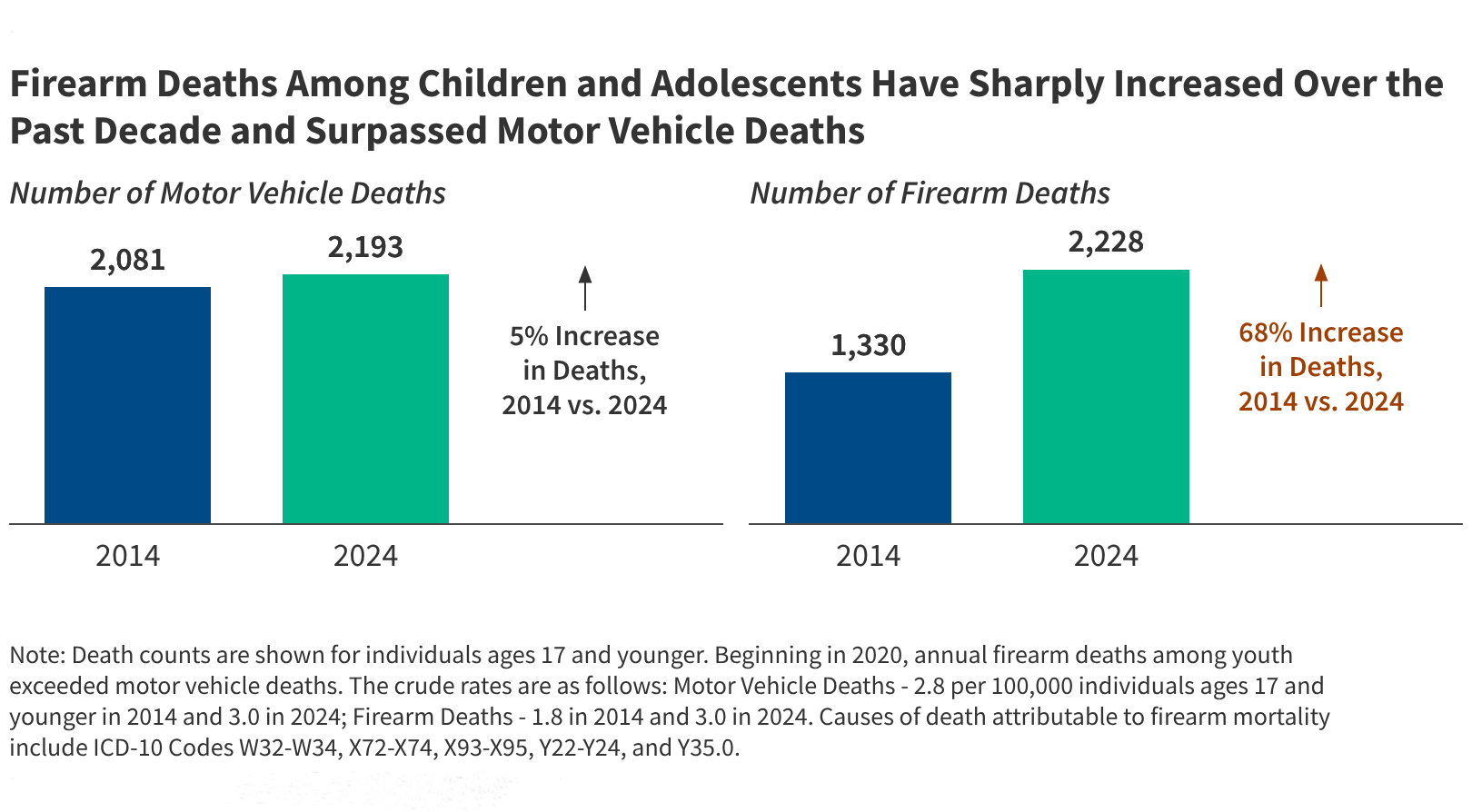
Trends in Child and Adolescent Firearm Deaths
Over the past decade, nearly 22,000 youth ages 17 and younger died by firearm. This analysis examines the latest mortality data from the Centers for Disease Control and Prevention to explore the impacts of gun violence on children and adolescents, including changes in death rates over time and by demographics.
Also: The Impact of Gun Violence on Youth Mental Health and Well-Being
Also: The Impact of Gun Violence on Youth Mental Health and Well-Being
Key CDC Data
-
Opioid Deaths: National, State and Demographic Trends
Opioid overdose deaths fell sharply from 2023 to 2024, driven largely by decreases in fentanyl-involved deaths.
-
Suicide Deaths: National, State and Demographic Trends
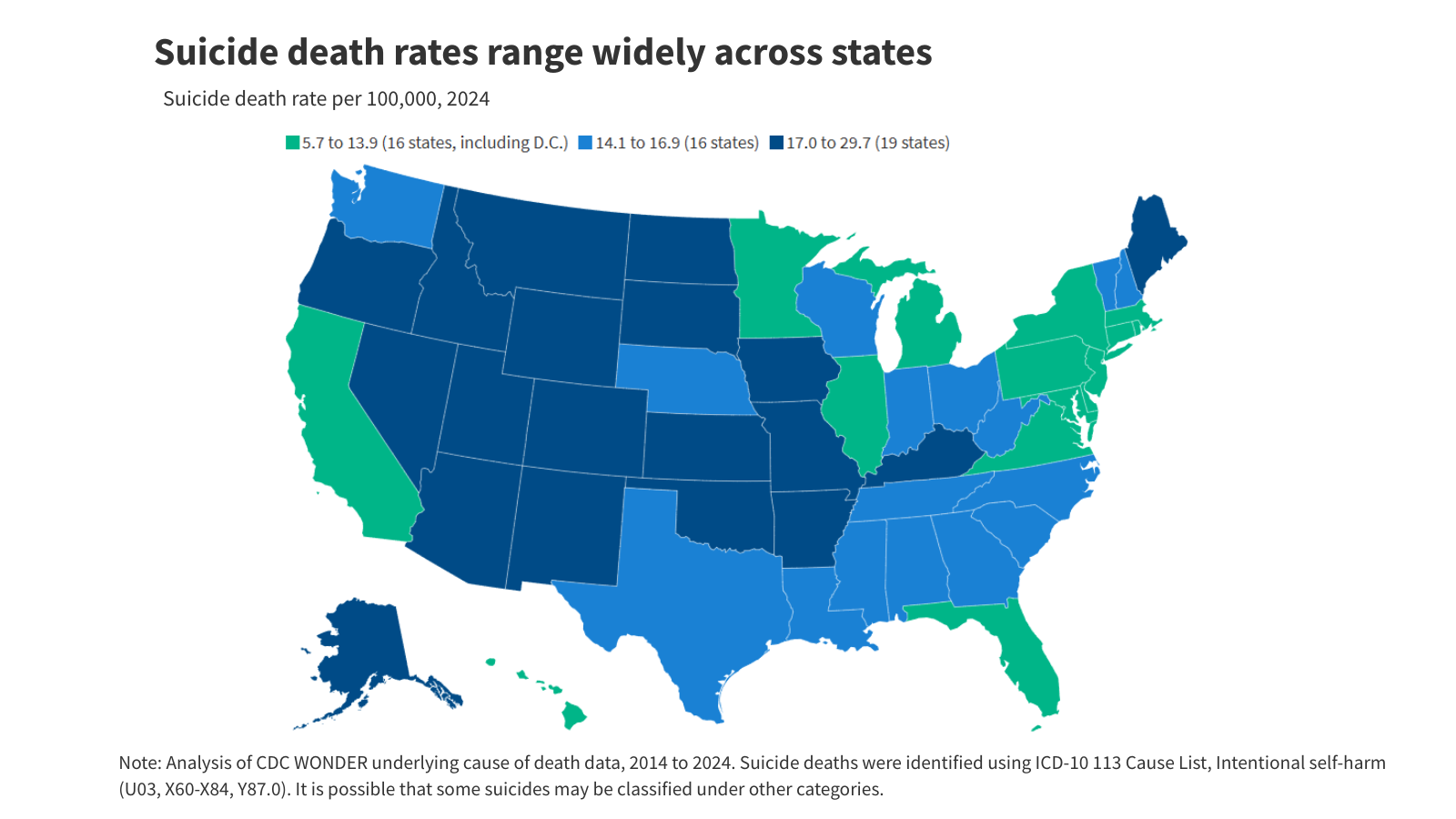
Overall suicide deaths fell slightly from their peak, but firearm suicides reached their highest level and accounted for 57% of all suicides.
-
Alcohol Deaths: National, State and Demographic Trends
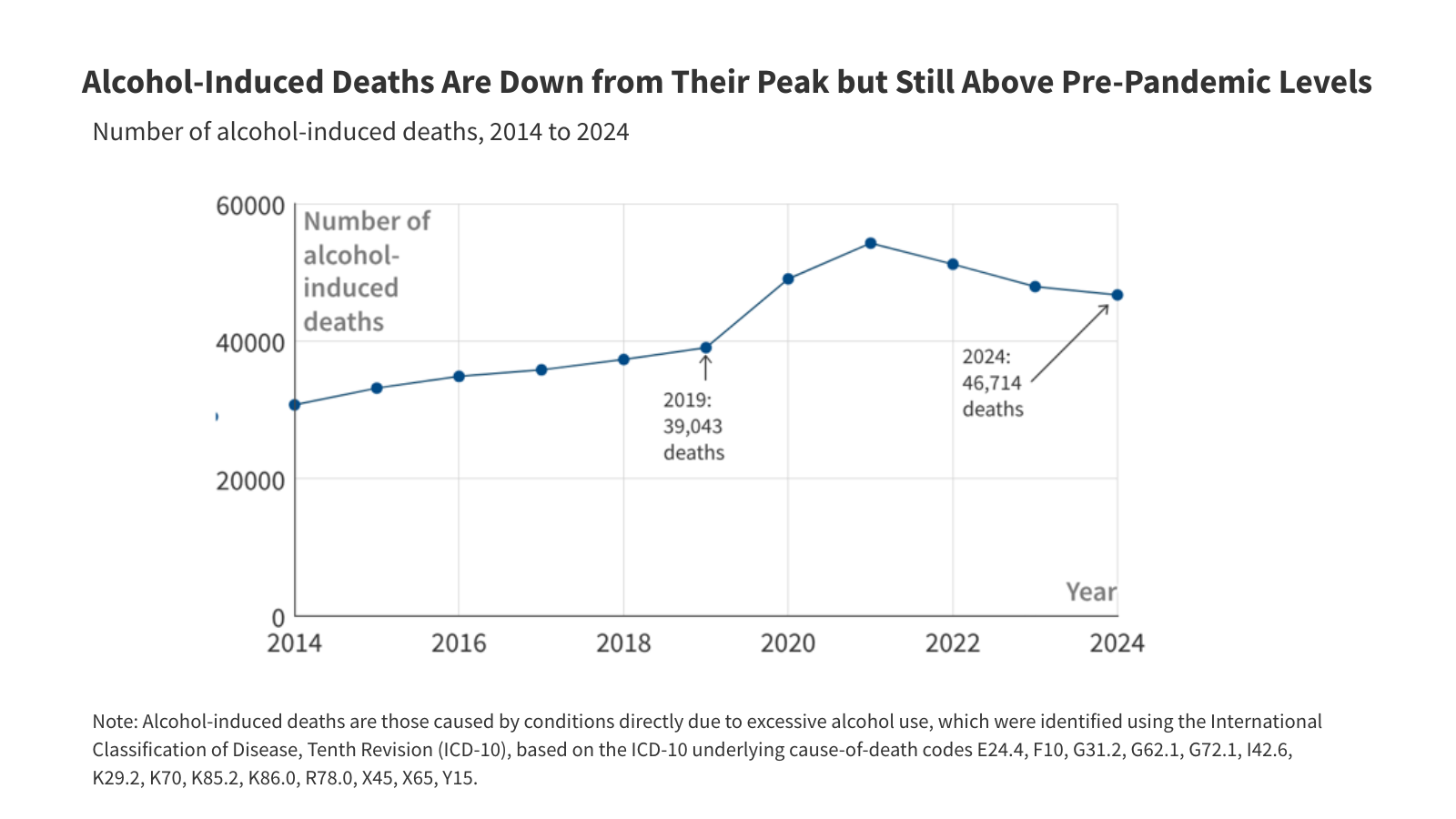
Alcohol deaths increased gradually before the pandemic, jumped in 2020 and 2021, and have fallen somewhat since then.
Access and coverage
Mental Health Parity at a Crossroads
More than 25 years after the first federal mental health parity protections were put in place, adequate coverage for behavioral health care remains elusive. This brief explains the federal behavioral health parity requirements and sets out key policy issues.Section 1115 Waiver Watch: Contingency Management
Of the 800,000 Medicaid enrollees aged 12 to 64 with a diagnosed stimulant use disorder in 2019, about 20% were in states that now have approved 1115 Medicaid waivers for contingency management services.The Landscape of School-Based Mental Health Services
In the 2024-2025 school year, 18% of students utilized school-based mental health services. This issue brief explores the landscape of mental health services, including services offered, utilization, barriers, and funding, as well as recent federal actions.5 Key Facts about Medicaid Coverage for Adults with Mental Illness
Nationwide, an estimated 52 million nonelderly adults live with mental illness, and Medicaid covers nearly one in three (29%) of them, or about 15 million adults.What Federal Medicaid Cuts Could Mean for the Opioid Epidemic
Medicaid covers 47% of all nonelderly adults with OUD and is the primary coverage source among those receiving treatment services. This brief offers a look at what federal Medicaid spending cuts could mean for this population.
Latest News



Subscribe to KFF Emails
Choose which emails are best for you.
Sign up here