






Mental Health

Key CDC Data

Access and coverage
  • Mental Health Parity at a Crossroads

    More than 25 years after the first federal mental health parity protections were put in place, adequate coverage for behavioral health care remains elusive. This brief explains the federal behavioral health parity requirements and sets out key policy issues.
  • Section 1115 Waiver Watch: Contingency Management

    Of the 800,000 Medicaid enrollees aged 12 to 64 with a diagnosed stimulant use disorder in 2019, about 20% were in states that now have approved 1115 Medicaid waivers for contingency management services.
  • The Landscape of School-Based Mental Health Services

    In the 2024-2025 school year, 18% of students utilized school-based mental health services. This issue brief explores the landscape of mental health services, including services offered, utilization, barriers, and funding, as well as recent federal actions.
  • 5 Key Facts about Medicaid Coverage for Adults with Mental Illness

    Nationwide, an estimated 52 million nonelderly adults live with mental illness, and Medicaid covers nearly one in three (29%) of them, or about 15 million adults.
  • What Federal Medicaid Cuts Could Mean for the Opioid Epidemic

    Medicaid covers 47% of all nonelderly adults with OUD and is the primary coverage source among those receiving treatment services. This brief offers a look at what federal Medicaid spending cuts could mean for this population.

Subscribe to KFF Emails

Choose which emails are best for you.
Sign up here

Filter

191 - 200 of 249 Results

  • 2020 Employer Health Benefits Chart Pack

    Feature

    This slideshow captures key data from the 2020 KFF Employer Health Benefits Survey survey, providing a detailed look at trends in employer-sponsored health coverage, including premiums, employee contributions, cost-sharing provisions, offer rates, wellness programs, and employer practices.

  • Health Care and the 2020 Presidential Election

    Feature

    This side-by-side comparison examines President Trump’s record and former Vice President Biden’s positions across a wide range of key health issues, including the response to the pandemic, the Affordable Care Act marketplace, Medicaid, Medicare, drug prices, reproductive health, mental health and opioids, immigration and health coverage, and health care costs.

  • COVID-19, Mental Health, and the 2020 Election: A Review of Candidate Platforms

    Issue Brief

    This brief examines where the candidates stand on four key aspects of the nation’s mental health and substance abuse challenges: the opioid epidemic, suicide rates, mental health parity, and mental health workforce. On each issue, the brief summarizes the policy positions of President Trump and former Vice President Joe Biden.

  • Increasing Share Say Coronavirus-Related Stress is Negatively Impacting Their Mental Health

    Feature

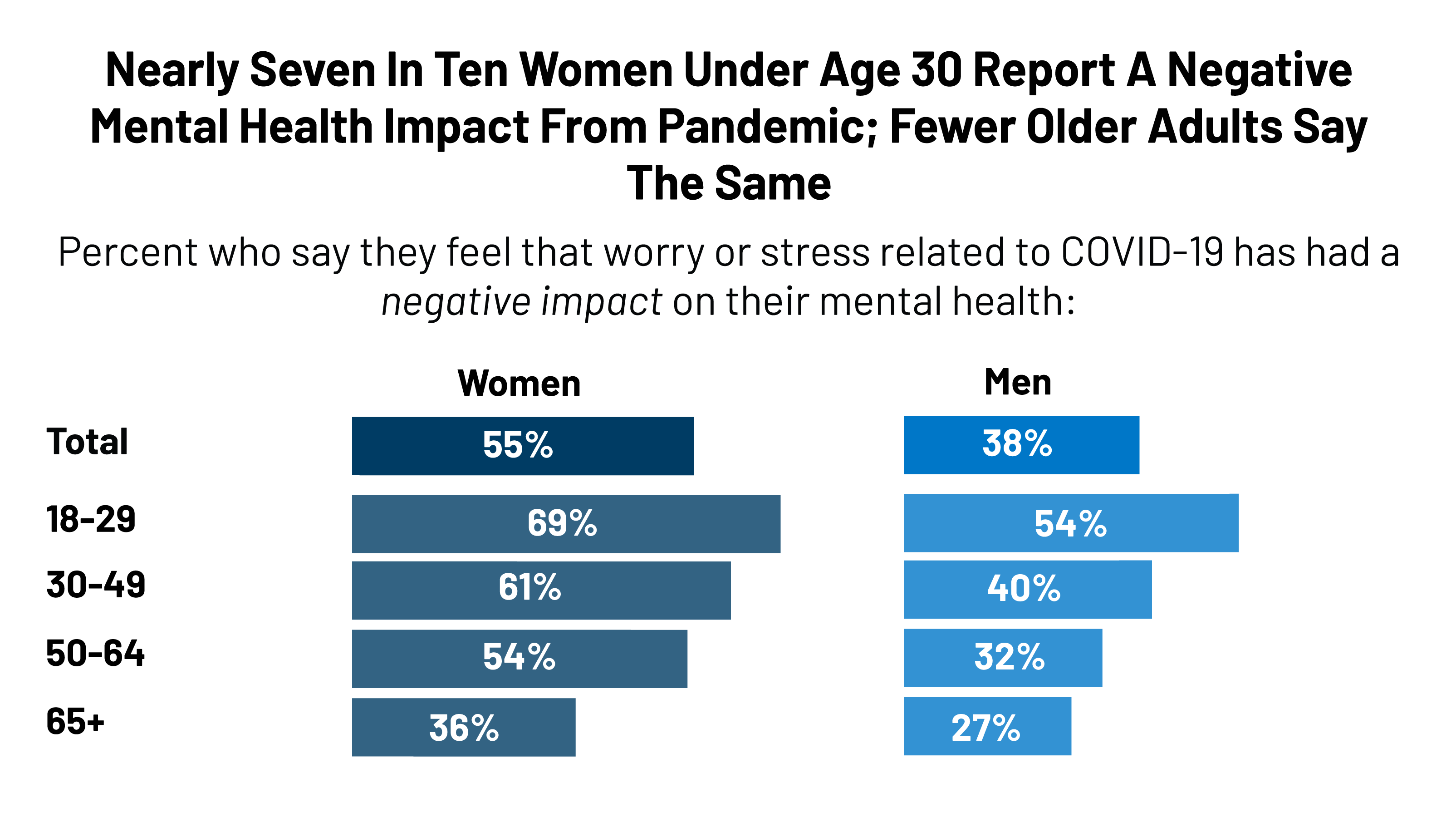
    The pandemic is increasingly taking an emotional toll, with a majority of U.S. adults (53%) saying that worry and stress related to coronavirus has had a negative impact on their mental health. It's the highest share so far. Women, young adults, Black people and those struggling financially are among the most affected. Learn more in this Chart of the Week.

  • Taking Stock of Essential Workers

    Policy Watch

    The COVID-19 outbreak has changed the reality of working life for most of the U.S. workforce, with essential workers at the forefront of performing crucial services for the public in the midst of the pandemic. This post examines who essential workers are and what challenges they are facing in light of coronavirus.