Medicaid

Work Requirements

Challenges with Implementing Work Requirements

Many states are anticipating a variety of implementation challenges, including the need for complex system changes, a compressed implementation timeline, and limited staff capacity.

What is the Medicaid Hardship Exception?

The number of Medicaid expansion enrollees who ultimately qualify for the high unemployment hardship exception will depend on how the exception is implemented and how unemployment rates changes.

Tracking Implementation of the 2025 Reconciliation Law: Medicaid Work Requirements

KFF’s interactive tracks key data and policies that will affect how states implement Medicaid work requirements, which are required under the 2025 budget reconciliation law starting in January 2027. The tracker includes state-level data on Medicaid enrollment and renewal outcomes as well as current state enrollment and renewal policies.

Medicaid Budget Survey

Medicaid Home Care

Using data from the 23rd KFF survey of officials administering Medicaid home care programs, this issue brief describes the mechanisms states are currently using to limit Medicaid spending on home care and their plans for adopting new mechanisms in state fiscal year (FY) 2026.

A Look at Waiting Lists for Medicaid Home- and Community-Based Services from 2016 to 2025

This data note provides new information about waiting lists in Medicaid home care before many of the provisions in the 2025 reconciliation law go into effect. The data come from KFF’s 23rd survey on Medicaid home care programs in all 50 states and DC.

KFF regularly surveys states about their Medicaid home- and community-based services (HCBS) programs and their eligibility policies for people who are eligible for Medicaid on the basis of having a disability or being 65 and older.

states-are-most-likely-to-offer-home-care-to-eligible-people-with-intellectual-developmental-disabilities_FI_v2_7f7f71.png

This issue brief provides an overview of what Medicaid home care (also known as “home- and community-based services” or HCBS) is, who is covered, and what services were available in 2024.

Eligibility and coverage
  • Eligibility, Enrollment, and Renewal Policies

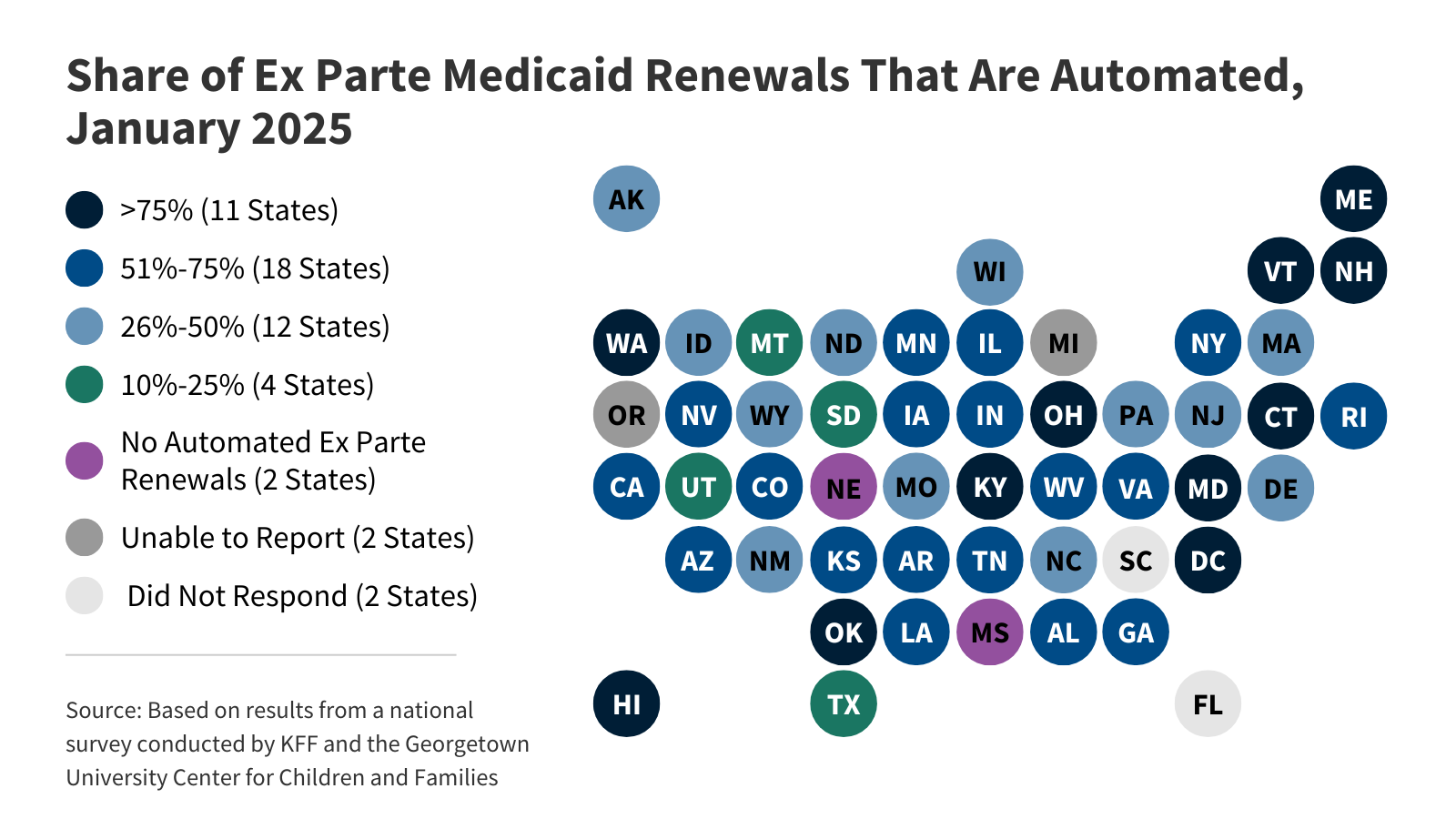
    KFF's survey findings capture state actions that seek to improve the accuracy and efficiency of Medicaid and CHIP enrollment and renewal processes, as of January 2025.
  • Seniors and People with Disabilities

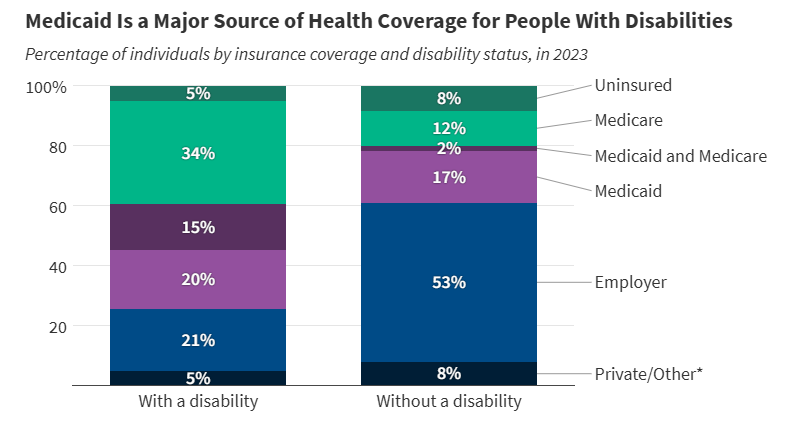
    More than 1 in 3 people with disabilities (15 million) have Medicaid (35%). In comparison, only 19% of people without disabilities have Medicaid.
  • Children with Special Needs

    Amid debates about proposed cuts to federal Medicaid spending, this brief analyzes key characteristics of children with special health care needs and explores how Medicaid provides them with coverage.
  • People With Intellectual and Developmental Disabilities

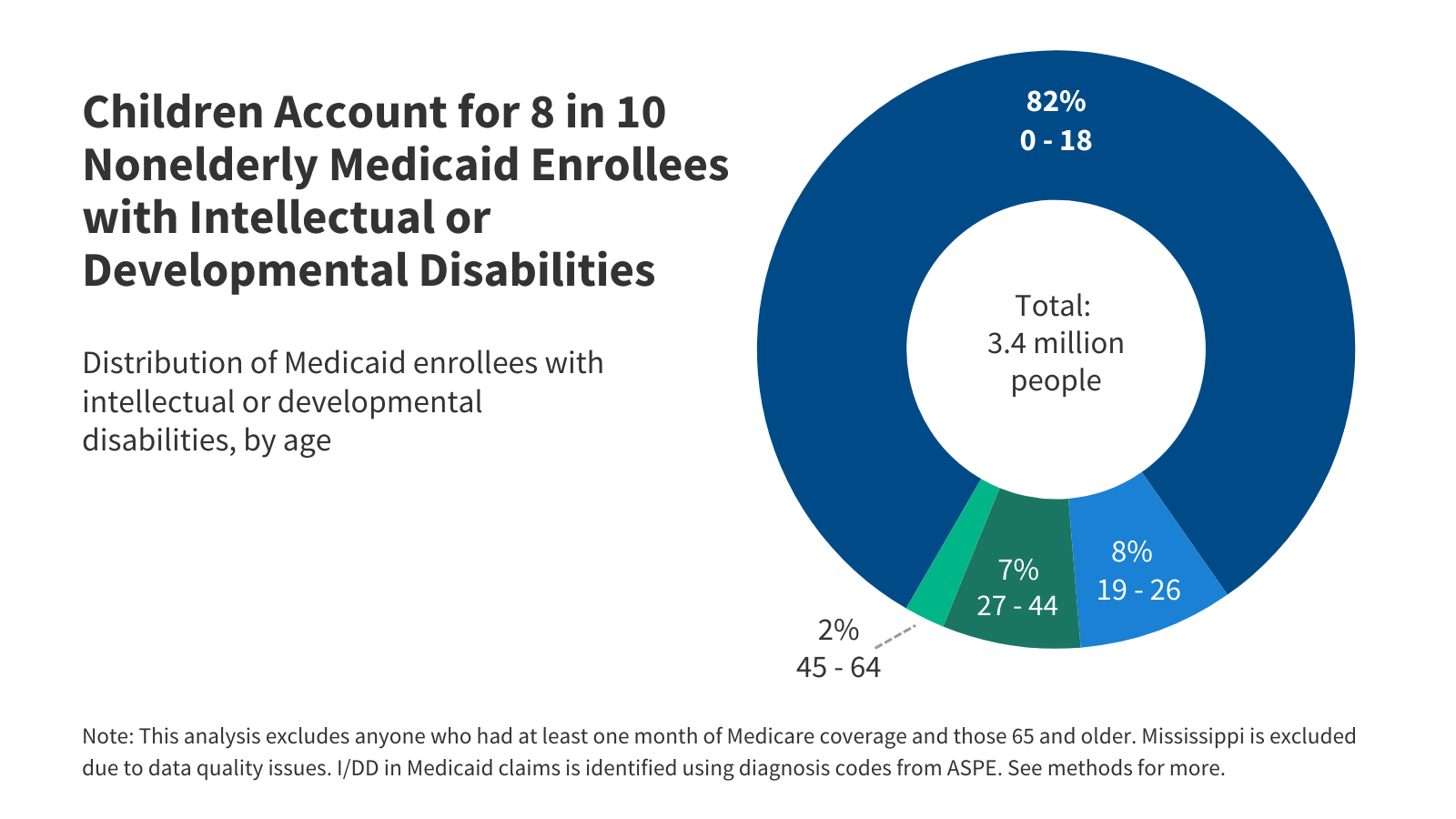
    Among the estimated 8 million people with intellectual and developmental disabilities (I/DD), over three million have Medicaid coverage.
  • Adults with Chronic Conditions

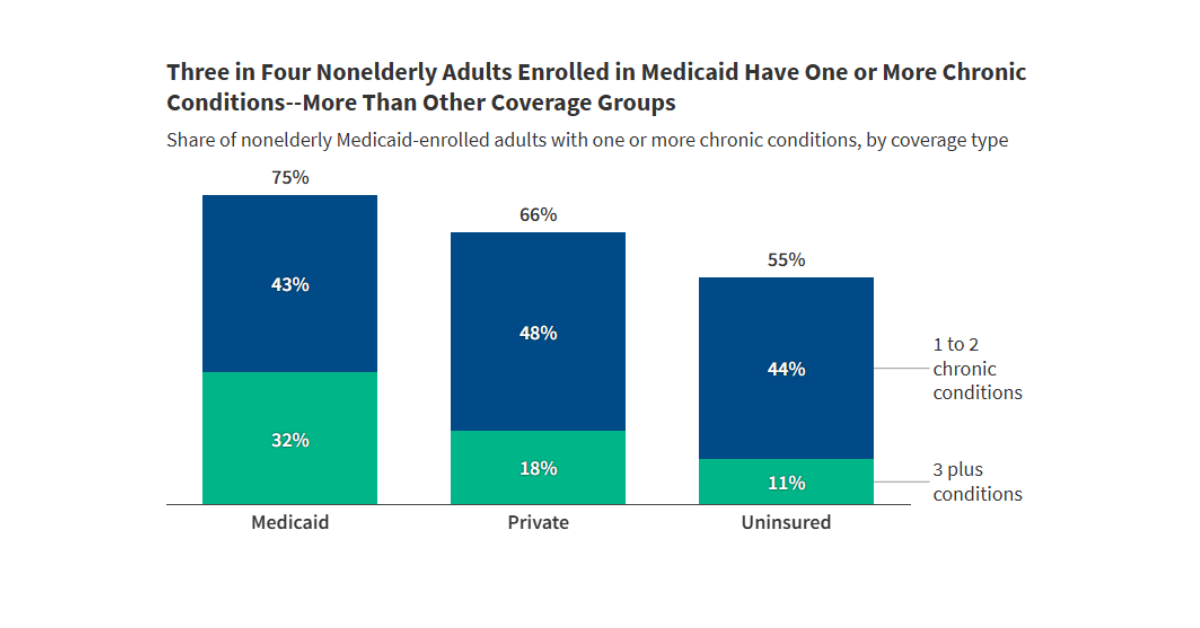
    Among working age adults enrolled in Medicaid, approximately three quarters have one or more chronic conditions, and nearly one-third have three or more.

The Essentials
  • 5 Facts: Immigrants and Medicaid

    This brief provides five key facts on Medicaid and immigrants as context for understanding the potential impacts of policy changes under the Trump administration.
  • 5 Facts: Medicaid and Hospitals

    This brief explains the role of Medicaid for hospitals, including how much spending on hospital care comes from Medicaid, the share of births covered by the program, and how Medicaid expansion has impacted hospital finances.
  • Medicaid Financing: The Basics

    Medicaid is a major source of financing for states to provide health coverage and long-term services and supports for low-income residents. This brief examines key questions about Medicaid financing and how it works.
  • 5 Facts: Medicaid’s Share of National Health Spending

    This brief explores how Medicaid spending contributes to national health spending and how different service areas contribute to Medicaid costs.
  • 5 Facts: Medicaid and Nursing Facilities

    The substantial Medicaid savings in the reconciliation bill could have major implications for nearly 15,000 federally certified nursing facilities and the 1.2 million people living in them.

Subscribe to KFF Emails

Choose which emails are best for you.
Sign up here
Filter

411 - 420 of 2,672 Results

  • Do State Decisions to Prioritize Renewals for Medicaid Enrollees Who are Likely Ineligible Affect Early Disenrollment Rates?

    Policy Watch

    Some states are prioritizing Medicaid renewals for enrollees flagged as likely to be ineligible. Early data from Arizona, Idaho, and Pennsylvania show disenrollment rates for flagged enrollees are higher than for other enrollees. This analysis considers why different state approaches to renewals may explain some – but not all – variation in disenrollment rates across the U.S.

  • How Do Dual-Eligible Individuals Get Their Medicare Coverage?

    Issue Brief

    People who are dually eligible for both Medicare and Medicaid coverage can get their Medicare coverage in a variety of ways. The brief breaks out the data for traditional Medicare, Medicare Advantage plans that are available to all Medicare beneficiaries, and plans that are designed specifically for dual-eligible beneficiaries.

  • New OIG Report Examines Prior Authorization Denials in Medicaid MCOs

    Policy Watch

    Congress asked the U.S Department of Health and Human Services (HHS) Office of the Inspector General (OIG) to investigate whether Medicaid MCOs are providing medically necessary health care services to their enrollees. OIG found that Medicaid MCOs had an overall prior authorization denial rate of 12.5%–more than 2 times higher than the Medicare Advantage rate. Prior authorization denial rates ranged widely across and within parent firms and states. After a prior authorization request is denied, Medicaid enrollees can appeal, but it’s not always straightforward and many appeals don’t change the initial decision. Unlike in Medicare Advantage, if a Medicaid MCO upholds its original denial, there is no automatic, independent external medical review. OIG found that state Medicaid agency oversight of prior authorization denials is limited. The OIG report underscores concerns about prior authorization and access in Medicaid managed care, keeping this issue at the forefront of ongoing policy discussions.

  • Health Care Issues in the Early Stages of the 2024 Election

    Perspective

    In this JAMA Health Forum column, Larry Levitt examines differences in the Republican presidential candidates’ records and positions on health issues, including Medicaid and abortion, that could play a role in the primaries and would set up a sharp contrast in the general election against President Biden.

  • Addressing the Opioid Crisis: A Look at the Evolving Landscape of Federal OUD Treatment Policies

    Issue Brief

    Federal policies governing substance use disorder treatment have undergone rapid changes during the pandemic; however, the extent to which these changes can address the surge in opioid overdose deaths is unclear. Some of these policy adjustments are permanent, while others could revert to pre-pandemic regulations. In this brief, we examine the following 5 key federal policies and implications for access and treatment for OUD.