Medicaid

new and noteworthy

Medicaid: What to Watch in 2026

Medicaid: What to Watch in 2026

In this brief, KFF explores how state fiscal pressures are likely to converge with the implementation of the 2025 reconciliation law to affect Medicaid coverage, financing, and access to care over the next year, especially leading up to the midterm elections.

Medicaid Watch

Featuring policy research, polling and news about how Medicaid is changing, and the impact of those changes due to the tax and spending cuts law

Medicaid Work Requirements

Tracking Medicaid Work Requirements: u003cbru003eData and Policies

To implement Medicaid work requirements, states will need to make important policy and operational decisions, implement needed system upgrades or changes, develop new outreach and education strategies, and hire and train staff, all within a relatively short timeframe. The information tracked here can serve as a resource to understand Medicaid work requirements and state options, gauge readiness, and track implementation of the requirements.

understanding medicaid

Medicaid Financing

Medicaid represents $1 out of every $5 spent on health care in the U.S. and is the major source of financing for states to provide health coverage and long-term care. This brief examines key questions about Medicaid financing and how it works.

Medicaid and Provider Taxes

All states except Alaska cover some state Medicaid costs with taxes on health care providers. This brief uses data from KFF’s 2024-2025 survey of Medicaid directors to describe current practices and the federal rules governing them.

5 Facts: Medicaid and Hospitals

Absorbing reductions in Medicaid spending could be challenging for hospitals, particularly for those that are financially vulnerable. This brief provides data on the reach of Medicaid across hospitals, patients, and charity care.

Medicaid Home Care in 2025

This issue brief provides an overview of what Medicaid home care (also known as “home- and community-based services”) is, who is covered, and what services were available in 2025.

5 Facts: Medicaid Program Integrity

This brief explains what is known about improper payments and fraud and abuse in Medicaid and describes ongoing state and federal actions to address program integrity.
2025 Medicaid Home Care survey

Payment Rates Ahead of 2025 Reconciliation Law

This issue brief describes Medicaid payment rates for home care and other workforce supports that are in place in 2025, before the majority of the 2025 reconciliation law provisions start taking effect.

Home Care Support for Family Caregivers in 2025
number of responding states, including DC, that allow payments for family caregivers by type of home care program and type of caregiver.

This issue brief describes the availability of self-directed services and supports for family caregivers in Medicaid home care in 2025, before most provisions in the reconciliation law take effect.

States’ Management of Home Care Spending

This issue brief describes the mechanisms states are currently using to limit Medicaid spending on home care and their plans for adopting new mechanisms in state fiscal year (FY) 2026.

Waiting Lists for Medicaid Home Care, 2016 to 2025
A Look at Waiting Lists for Medicaid Home- and Community-Based Services from 2016 to 2025

This data note provides new information about waiting lists in Medicaid home care before many of the provisions in the 2025 reconciliation law go into effect.

Eligibility and coverage
  • Eligibility, Enrollment, and Renewal Policies

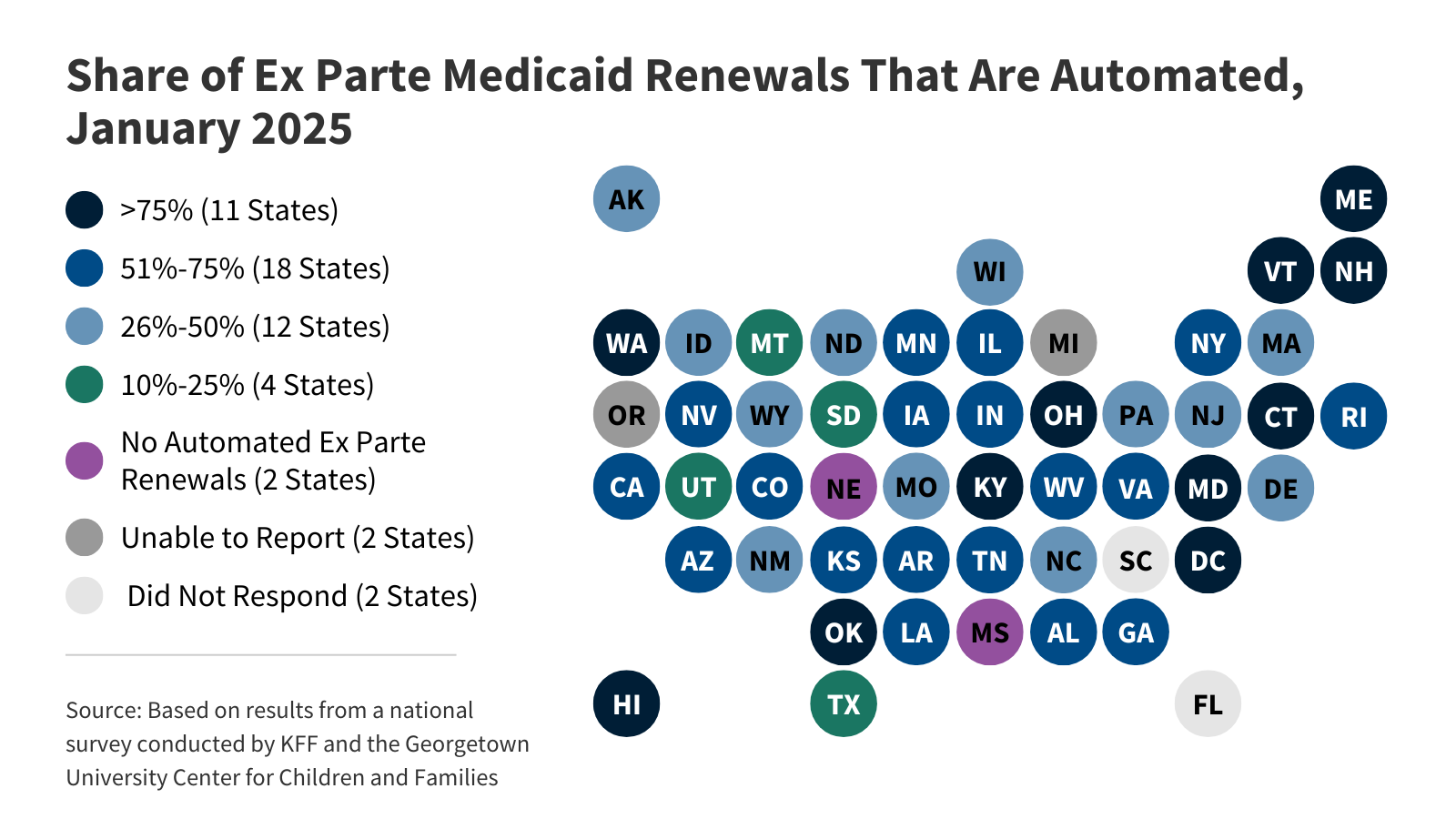
    KFF's survey findings capture state actions that seek to improve the accuracy and efficiency of Medicaid and CHIP enrollment and renewal processes, as of January 2025.
  • Seniors and People with Disabilities

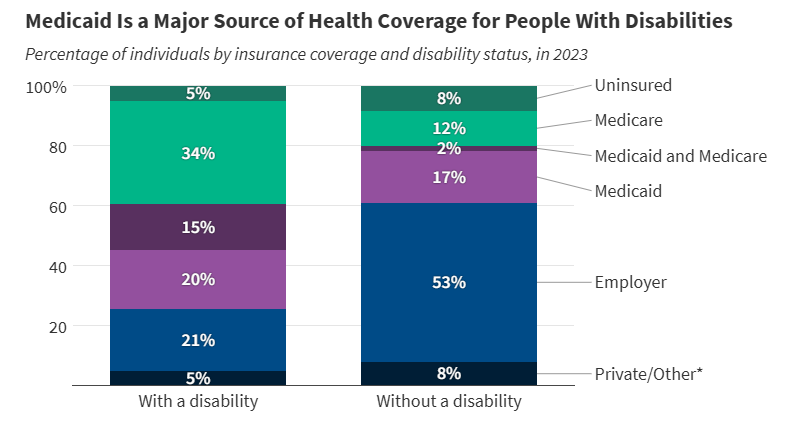
    More than 1 in 3 people with disabilities (15 million) have Medicaid (35%). In comparison, only 19% of people without disabilities have Medicaid.
  • Children with Special Needs

    Amid debates about proposed cuts to federal Medicaid spending, this brief analyzes key characteristics of children with special health care needs and explores how Medicaid provides them with coverage.
  • People With Intellectual and Developmental Disabilities

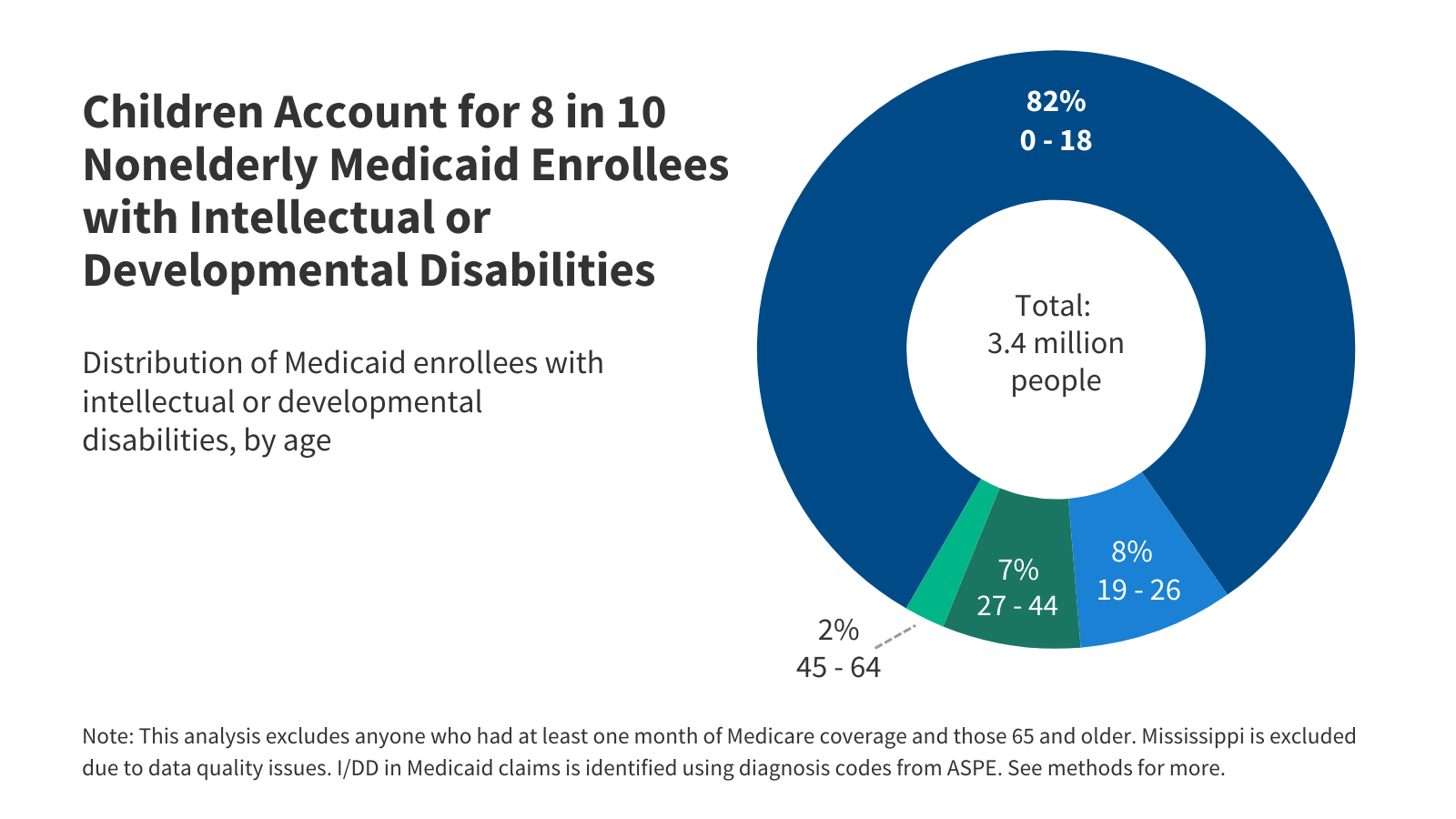
    Among the estimated 8 million people with intellectual and developmental disabilities (I/DD), over three million have Medicaid coverage.
  • Adults with Chronic Conditions

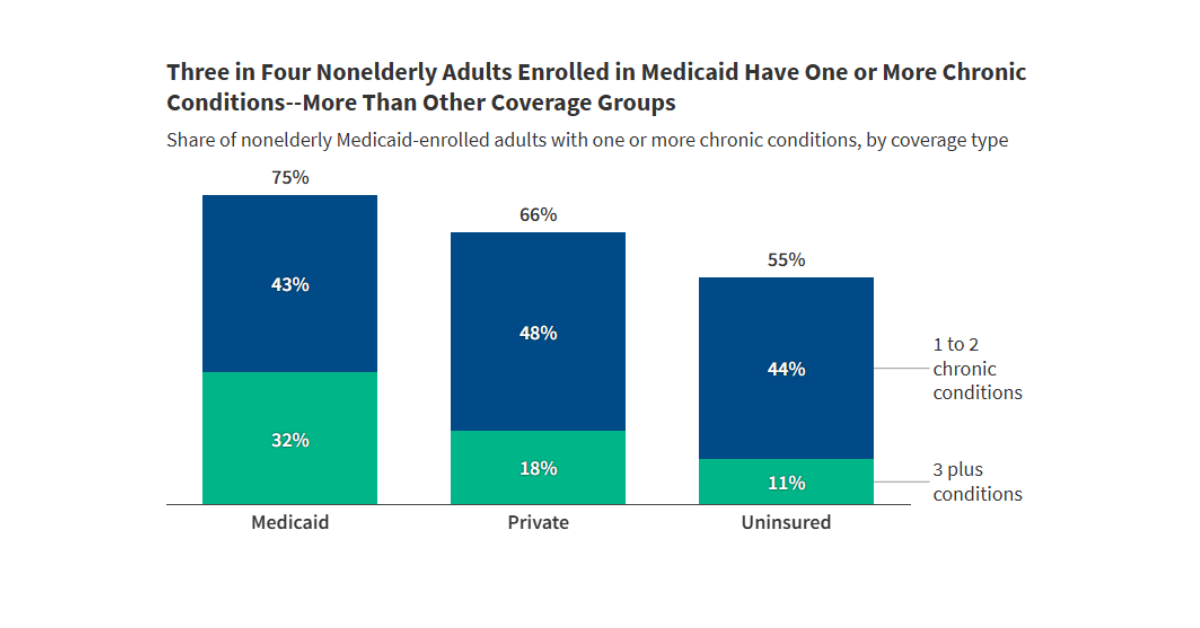
    Among working age adults enrolled in Medicaid, approximately three quarters have one or more chronic conditions, and nearly one-third have three or more.

Subscribe to KFF Emails

Choose which emails are best for you.
Sign up here

Filter

2,661 - 2,670 of 2,689 Results

  • Where is Medicaid Spending Headed? – Fact Sheet

    Fact Sheet

    Medicaid Enrollment and Spending Growth Overview In 1995, Medicaid provided health and long-term care for 34.8 million low-income, elderly, and disabled Americans at a cost of $157.3 billion, $151.8 billion for services and $5.5 billion for administration. After expanding considerably in the early 1990's, Medicaid spending and enrollment growth have slowed markedly. Medicaid spending growth has declined from 22.4 percent per year to 9.5 percent per year between 1992 and 1995. Preliminary data suggest the…

  • Where is Medicaid Spending Headed?

    Fact Sheet

    This content package page includes a report providing an overview of the changes in Medicaid expenditures since 1988, including an analysis of the slowdown in Medicaid growth since 1992. Also included in the package is a press release, chart pack and fact sheet on Medicaid spending and enrollment trends. News Release News Release: Medicaid Spending Growth Rate Slows Fact Sheet Fact Sheet Report Report

  • Where is Medicaid Spending Headed? – Report

    Report

    Where is Medicaid Spending Headed? Prepared for: The Kaiser Commission on the Future of Medicaid Prepared by: John Holahan and David Liska, The Urban Institute December 1996 In 1995, the United States witnessed a major debate over the future course of the Medicaid program. At the heart of this debate were the individual entitlement to benefits, the desire to limit federal spending, and the degree of control and flexibility given to states over their separate…

  • Medicaid Update: Expenditures and Beneficiaries in 1994

    Issue Brief

    This policy brief analyzes Medicaid enrollment and spending in 1994. It examines changes in program enrollment and spending between 1992 and 1994 and explains the factors behind the spending growth. Detailed tables and trend information can be found in Medicaid Expenditures and Beneficiaries: National and State Profiles and Trends, 1984-1994 (#2045).This data book provides extensive informationon Medicaid expenditures and beneficiaries nationally and for each state in 1994. Information is included by type of service and…

  • The Southern Institute on Children and Families: Uninsured Children in the South

    Report

    Second Report The Southern Institute on Children and Families released the first report on Uninsured Children in the South in November 1992. The report provided estimates of uninsured children by state with age and income breakouts related to Medicaid. This is the second report on Uninsured Children in the South. It provides estimates of uninsured children in each southern state from two perspectives: number of uninsured children in 1993 with percent of uninsured children by…

  • Medicaid Update: Expenditures and Beneficiaries in 1994

    Other Post

    Table 1Medicaid Beneficiaries by Group, 1988-1994 United States Beneficiaries (thousands) Average Annual Growth (%) Beneficiary Group 1988 1990 1992 1993 1994 1988-1994 1988-90 1990-92 1992-94 1988-94 All Beneficiaries 22,014 24,066 29,811 32,441 34,183 7.6 4.6 11.3 7.1 9.2 Cash Assistance 15,945 16,144 18,460 19,475 19,847 3.7 0.6 6.9 3.7 4.5 Other Beneficiaries 6,068 7,922 11,351 12,966 14,336 15.4 14.3 19.7 12.4 18.8 Elderly 3,130 3,167 3,547 3,680 3,828 3.4 0.6 5.8 3.9 4.1 Cash Assistance…

  • Medicaid Update: Expenditures and Beneficiaries in 1994 – Policy Brief

    Issue Brief

    Medicaid Expenditures and Beneficiaries: 1994 Update October 1998 Medicaid is the nation's major public financing program for low-income Americans. After several years of rapid increase in the early 1990s, enrollment and spending growth have moderated and returned to historical levels. For the second consecutive year, annual growth in Medicaid spending was under 10 percent. The estimates presented in this policy brief are based on analyses prepared by The Urban Institute and update previous analyses conducted…

  • Kaiser Family Foundation/Field Institute Survey of Californians on the Health Care Initiatives, Propositions 214 and 216 – Toplines/Survey

    Other Post

    Kaiser Family Foundation/Field Institute survey of Californians on the Health Care Initiatives, Propositions 214 and 216 August 14-21, 1996 September 23-30, 1996 Questionnaire and Toplines 1. Are you currently covered by medical insurance or some other form of government or private health plan that will pay all or part of your doctor bills or hospitalization should you require it? August 1996 September 1996 Yes, covered 81% 82% No, not covered 19% 18% Don't know *…

  • Kaiser Family Foundation/Field Institute Survey of Californians on the Health Care Initiatives, Propositions 214 and 216

    Report

    Results of two surveys that track Californian's knowledge of the two initiatives on the California Ballot, Propositions 214 and 216 (also known as the Patient Protection Acts) and attitudes towards them as the debate unfolds. The surveys were conducted from August 14-21, 1996 and from September 23-30, 1996. Also included with this material is data on how much is being spent on television advertising for and against the propositions and who is being reached by…

  • A Profile of Disability Among Families on AFDC – Report

    Report

    Profile Of Disability Among Families On AFDC Prepared by Pamela Loprest and Gregory Acs of the Urban Intitute Prepared for The Henry J. Kaiser Family Foundation August 1996 Executive Summary Introduction What is Disability? Disability Among Women Receiving AFDC Severity of Disability Type of Disability Health Care Service Use Summary Disability Among Children Receiving AFDC Type of Disability Health Care Service Use Summary Disability Among Families Receiving AFDC Disability and Work Conclusions Data Appendix Executive…