Medicaid

Medicaid Budget Survey

Work Requirements

Challenges Implementing Work Requirements

To better understand how states are preparing for Medicaid work requirements, states were asked to discuss anticipated challenges to implementing work requirements by the end of 2026, including related system changes and data matching.

Medicaid Home Care

Using data from the 23rd KFF survey of officials administering Medicaid home care programs, this issue brief describes the mechanisms states are currently using to limit Medicaid spending on home care and their plans for adopting new mechanisms in state fiscal year (FY) 2026.

A Look at Waiting Lists for Medicaid Home- and Community-Based Services from 2016 to 2025

This data note provides new information about waiting lists in Medicaid home care before many of the provisions in the 2025 reconciliation law go into effect. The data come from KFF’s 23rd survey on Medicaid home care programs in all 50 states and DC.

KFF regularly surveys states about their Medicaid home- and community-based services (HCBS) programs and their eligibility policies for people who are eligible for Medicaid on the basis of having a disability or being 65 and older.

states-are-most-likely-to-offer-home-care-to-eligible-people-with-intellectual-developmental-disabilities_FI_v2_7f7f71.png

This issue brief provides an overview of what Medicaid home care (also known as “home- and community-based services” or HCBS) is, who is covered, and what services were available in 2024.

Eligibility and coverage
  • Eligibility, Enrollment, and Renewal Policies

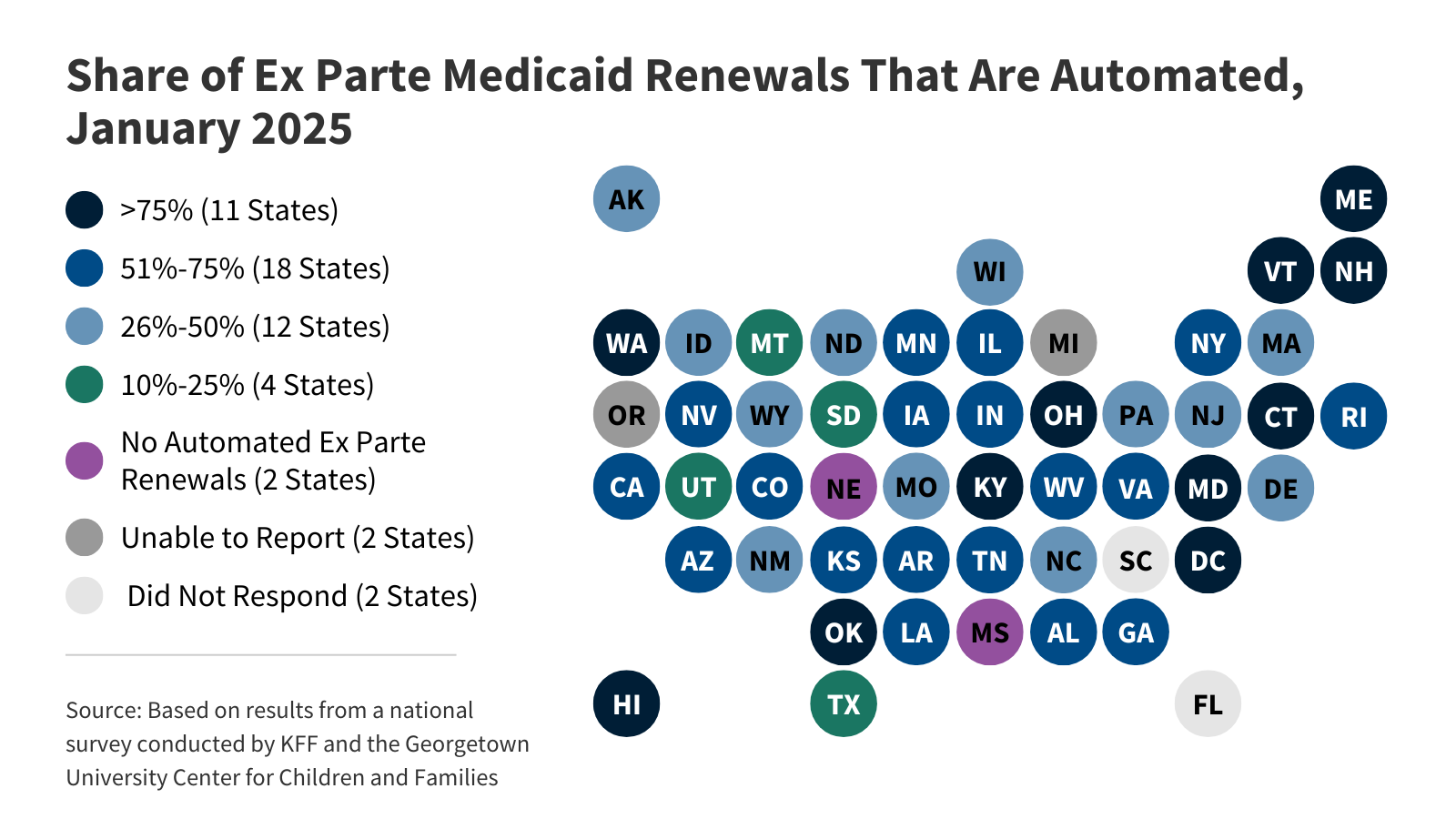
    KFF's survey findings capture state actions that seek to improve the accuracy and efficiency of Medicaid and CHIP enrollment and renewal processes, as of January 2025.
  • Seniors and People with Disabilities

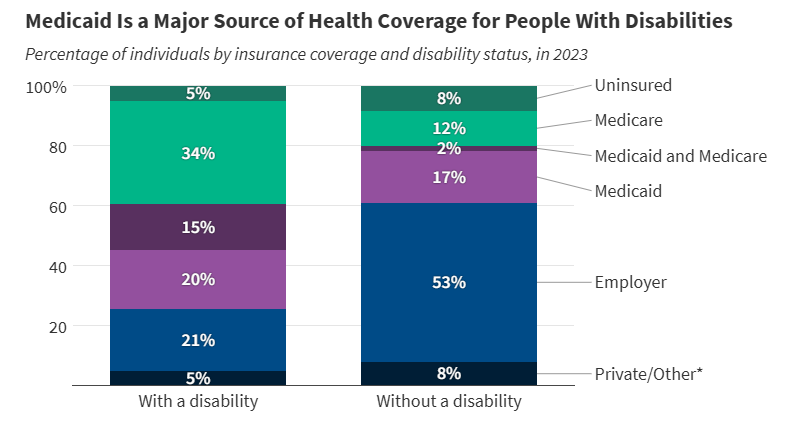
    More than 1 in 3 people with disabilities (15 million) have Medicaid (35%). In comparison, only 19% of people without disabilities have Medicaid.
  • Children with Special Needs

    Amid debates about proposed cuts to federal Medicaid spending, this brief analyzes key characteristics of children with special health care needs and explores how Medicaid provides them with coverage.
  • People With Intellectual and Developmental Disabilities

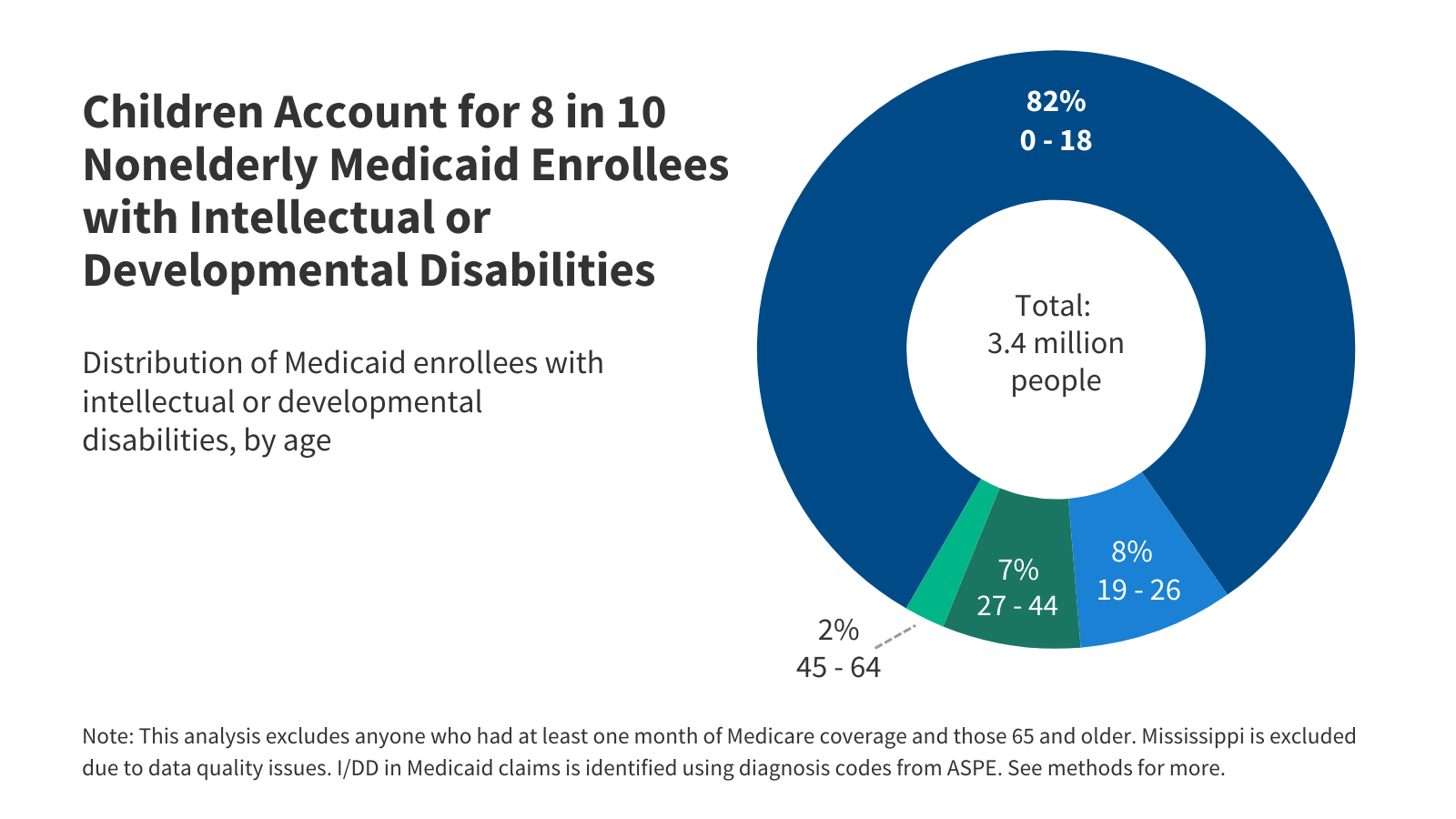
    Among the estimated 8 million people with intellectual and developmental disabilities (I/DD), over three million have Medicaid coverage.
  • Adults with Chronic Conditions

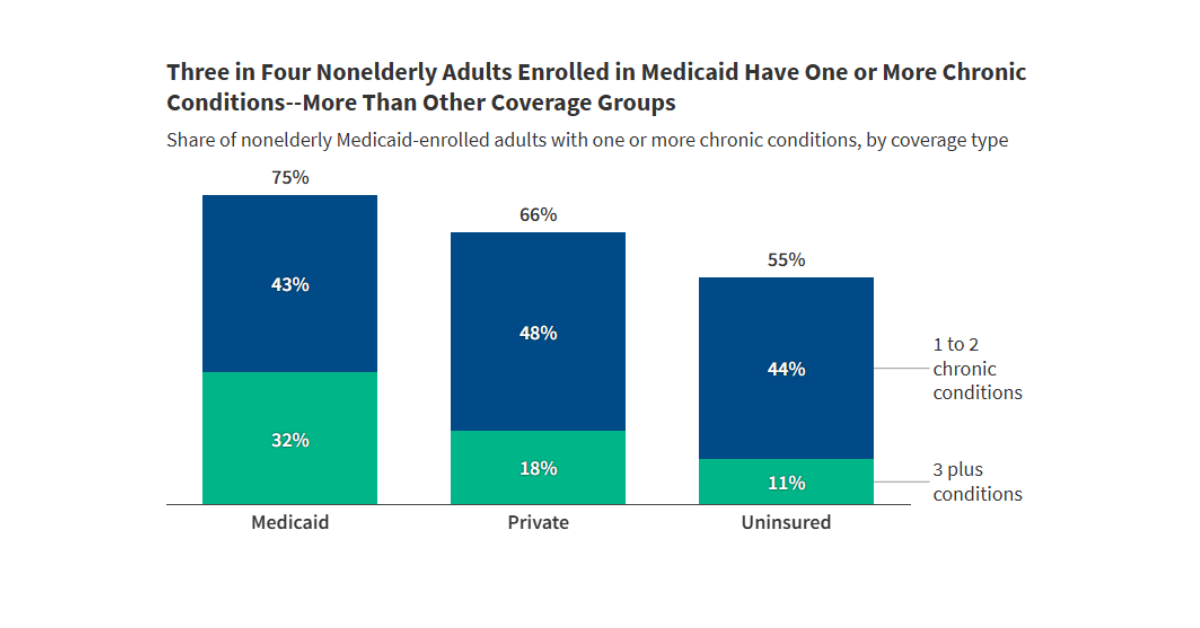
    Among working age adults enrolled in Medicaid, approximately three quarters have one or more chronic conditions, and nearly one-third have three or more.

The Essentials
  • 5 Facts: Immigrants and Medicaid

    This brief provides five key facts on Medicaid and immigrants as context for understanding the potential impacts of policy changes under the Trump administration.
  • 5 Facts: Medicaid and Hospitals

    This brief explains the role of Medicaid for hospitals, including how much spending on hospital care comes from Medicaid, the share of births covered by the program, and how Medicaid expansion has impacted hospital finances.
  • Medicaid Financing: The Basics

    Medicaid is a major source of financing for states to provide health coverage and long-term services and supports for low-income residents. This brief examines key questions about Medicaid financing and how it works.
  • 5 Facts: Medicaid’s Share of National Health Spending

    This brief explores how Medicaid spending contributes to national health spending and how different service areas contribute to Medicaid costs.
  • 5 Facts: Medicaid and Nursing Facilities

    The substantial Medicaid savings in the reconciliation bill could have major implications for nearly 15,000 federally certified nursing facilities and the 1.2 million people living in them.

Subscribe to KFF Emails

Choose which emails are best for you.
Sign up here

Filter

2,511 - 2,520 of 2,663 Results

  • Medicaid and HIV/AIDS Policy: A Basic Primer

    Report

    The Medicaid Primer presents in depth information on Medicaid, the federal/state program that provides health coverage for low-income families and people with disabilities and is the largest source of public financing for HIV/AIDS care in the

  • A Profile of the Low-Income Uninsured

    Issue Brief

    This policy brief provides an overview of the low-income, uninsured population. Based on an analysis of the March 1998 Current Population Survey, the report discusses the demographic characteristics of this vulnerable population.

  • Access To Health Care:

    Report

    Promises and Prospects For Low-Income Americans This book explores critical issues affecting access to health care for low-income Americans by assessing the importance of expansions of health coverage for the poor, the emerging challenges providers who serve low-income and uninsured populations face in a rapidly evolving health care delivery system, and the effects of these…

  • Enrollment Increases in State CHIP Programs: December 1998 to June 1999

    Report

    A new survey of state officials, conducted by Vernon Smith of Health Management Associates for the Kaiser Commission on Medicaid and the Uninsured, found that the number of children enrolled in stateCHIP programs has grown to more than 1.3 million in June 1999 from about 835,000 in December 1998.

  • Medicare and Low-Income Beneficiaries

    Fact Sheet

    As part of The Faces of Medicare, a collection of fact sheets profiling the characteristics and health needs of different groups of Medicare beneficiaries, highlights key facts about Medicare's low-income population, who have have greater health needs than those with higher incomes.

  • Medicare and The Under-65 Disabled

    Fact Sheet

    As part of The Faces of Medicare, a collection of fact sheets profiling the characteristics and health needs of different groups of Medicare beneficiaries, Medicare and the Under-65 Disabled highlights key information about Medicare's under-65 disabled, whose disproportionately high rates of health and cognitive problems are compounded by low incomes.

  • Medicaid and Managed Care

    Fact Sheet

    This fact sheet provides an overview of the Medicaid program's increasing reliance on managed care to deliver services.

  • The Faces of Medicare

    Fact Sheet

    The Medicare beneficiary population is often described in homogenous terms, yet those covered by the program vary significantly in terms of their health, income, supplemental insurance status, and medical service use.