Medicaid

Medicaid Budget Survey

Work Requirements

Challenges Implementing Work Requirements

To better understand how states are preparing for Medicaid work requirements, states were asked to discuss anticipated challenges to implementing work requirements by the end of 2026, including related system changes and data matching.

Medicaid Home Care

Using data from the 23rd KFF survey of officials administering Medicaid home care programs, this issue brief describes the mechanisms states are currently using to limit Medicaid spending on home care and their plans for adopting new mechanisms in state fiscal year (FY) 2026.

A Look at Waiting Lists for Medicaid Home- and Community-Based Services from 2016 to 2025

This data note provides new information about waiting lists in Medicaid home care before many of the provisions in the 2025 reconciliation law go into effect. The data come from KFF’s 23rd survey on Medicaid home care programs in all 50 states and DC.

KFF regularly surveys states about their Medicaid home- and community-based services (HCBS) programs and their eligibility policies for people who are eligible for Medicaid on the basis of having a disability or being 65 and older.

states-are-most-likely-to-offer-home-care-to-eligible-people-with-intellectual-developmental-disabilities_FI_v2_7f7f71.png

This issue brief provides an overview of what Medicaid home care (also known as “home- and community-based services” or HCBS) is, who is covered, and what services were available in 2024.

Eligibility and coverage
  • Eligibility, Enrollment, and Renewal Policies

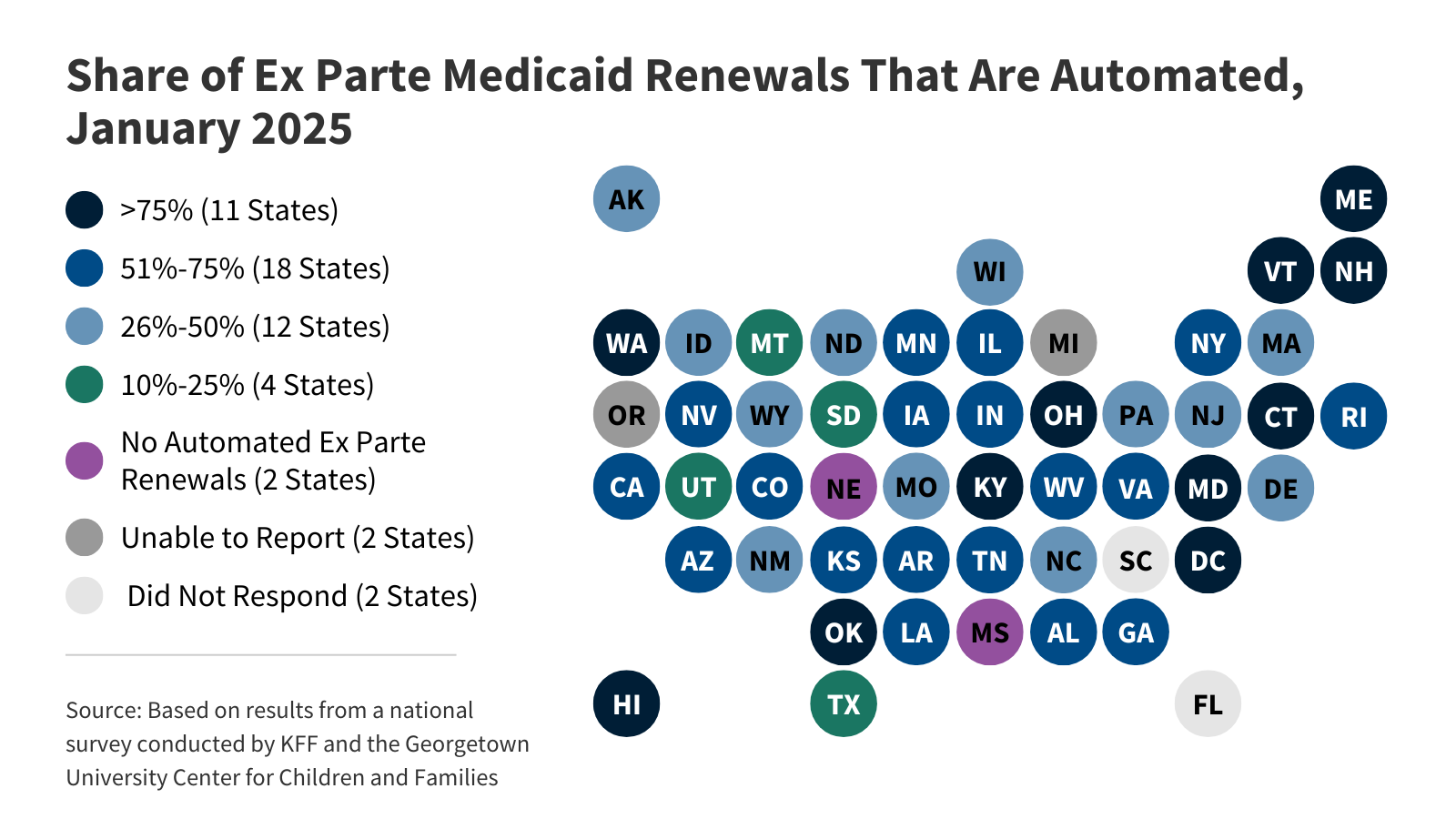
    KFF's survey findings capture state actions that seek to improve the accuracy and efficiency of Medicaid and CHIP enrollment and renewal processes, as of January 2025.
  • Seniors and People with Disabilities

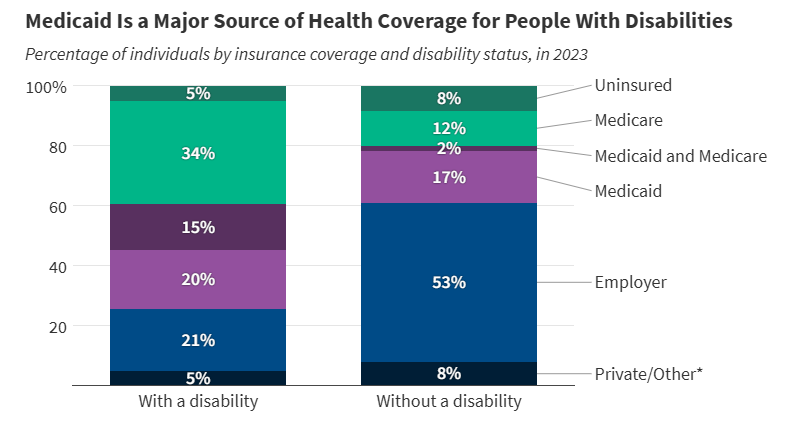
    More than 1 in 3 people with disabilities (15 million) have Medicaid (35%). In comparison, only 19% of people without disabilities have Medicaid.
  • Children with Special Needs

    Amid debates about proposed cuts to federal Medicaid spending, this brief analyzes key characteristics of children with special health care needs and explores how Medicaid provides them with coverage.
  • People With Intellectual and Developmental Disabilities

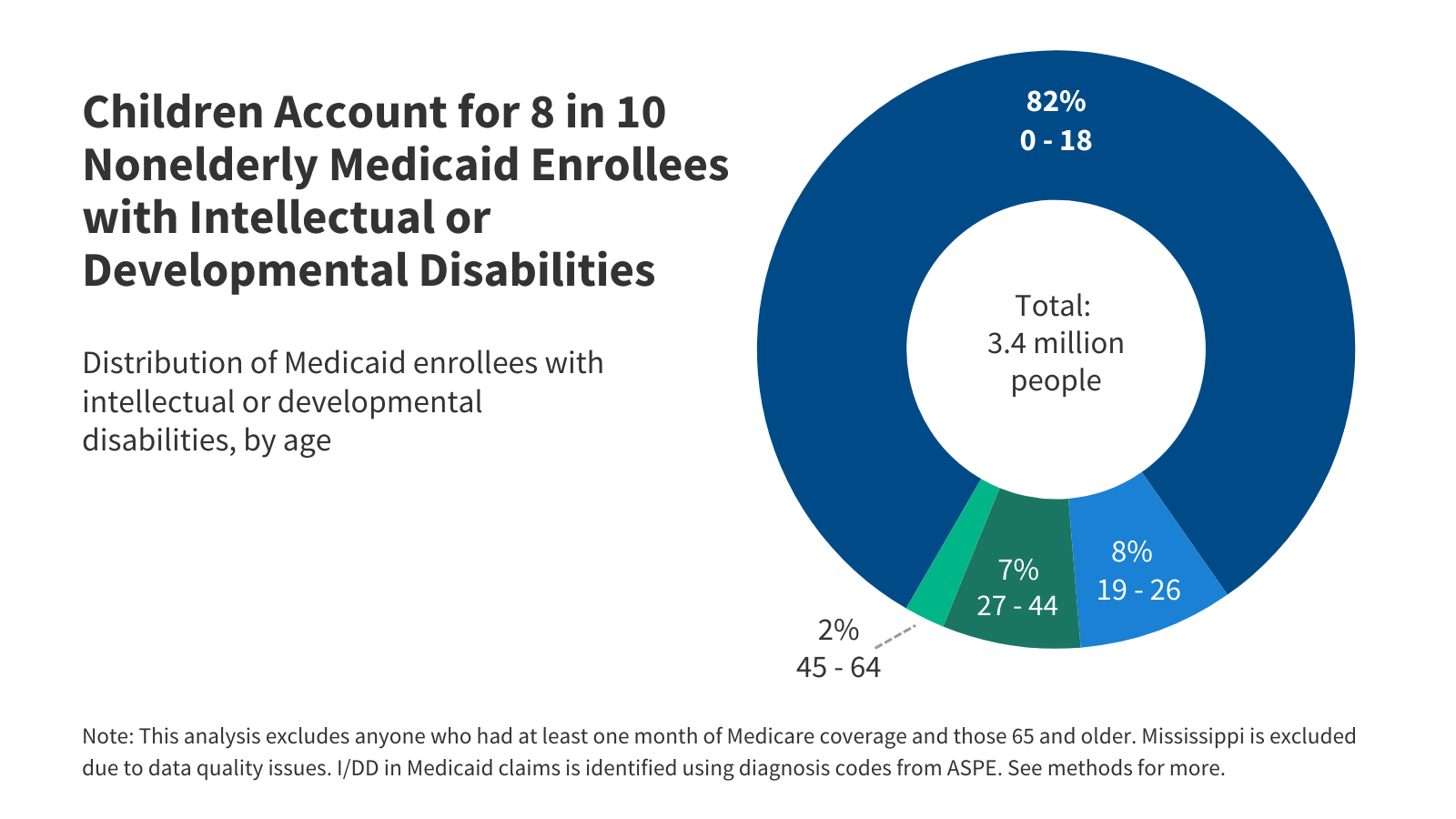
    Among the estimated 8 million people with intellectual and developmental disabilities (I/DD), over three million have Medicaid coverage.
  • Adults with Chronic Conditions

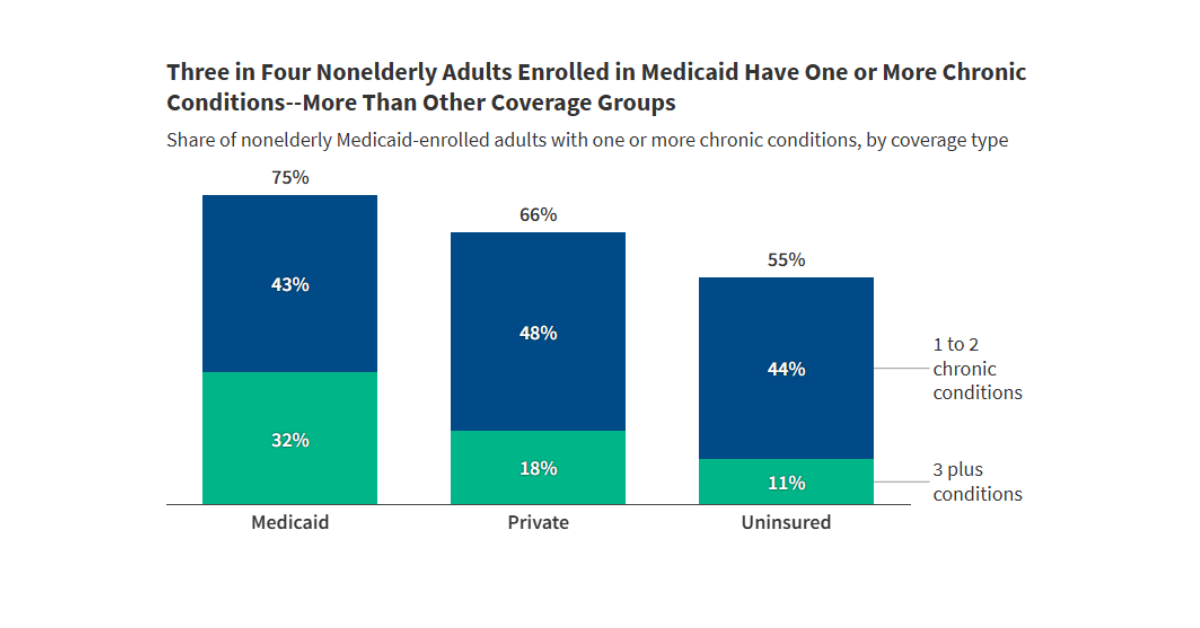
    Among working age adults enrolled in Medicaid, approximately three quarters have one or more chronic conditions, and nearly one-third have three or more.

The Essentials
  • 5 Facts: Immigrants and Medicaid

    This brief provides five key facts on Medicaid and immigrants as context for understanding the potential impacts of policy changes under the Trump administration.
  • 5 Facts: Medicaid and Hospitals

    This brief explains the role of Medicaid for hospitals, including how much spending on hospital care comes from Medicaid, the share of births covered by the program, and how Medicaid expansion has impacted hospital finances.
  • Medicaid Financing: The Basics

    Medicaid is a major source of financing for states to provide health coverage and long-term services and supports for low-income residents. This brief examines key questions about Medicaid financing and how it works.
  • 5 Facts: Medicaid’s Share of National Health Spending

    This brief explores how Medicaid spending contributes to national health spending and how different service areas contribute to Medicaid costs.
  • 5 Facts: Medicaid and Nursing Facilities

    The substantial Medicaid savings in the reconciliation bill could have major implications for nearly 15,000 federally certified nursing facilities and the 1.2 million people living in them.

Subscribe to KFF Emails

Choose which emails are best for you.
Sign up here
Filter

2,481 - 2,490 of 2,663 Results

  • The Public Opinion Update on The Uninsured

    Other Post

    Kaiser Public Opinion Update, April 2000 summarizes key findings from past surveys on the uninsured conducted by the Kaiser Family Foundation and the Harvard School of Public Health and a new survey conducted by the Foundation in conjunction with The NewsHour with Jim Lehrer.

  • Public Opinion Update-3006-Public-Opinion-Update

    Other Post

    Public Opinion Update Public Opinion Update Public Opinion Update THE UNINSURED The debate over how to expand health insurance coverage to the over 44 million Americans without it continues to be one of the most challenging issues facing policymakers today.

  • The Olmstead Decision: Implications for Medicaid

    Issue Brief

    In June, 1999, the Supreme Court rule in Olmstead v L.C. that states were required to provide services to persons with disabilities in community settings rather than institutions, if certain conditions were met. This Policy Brief provides an overview of the Olmstead case, including the facts, the court ruling, and the disposition of the case.

  • Medicaid-Related Provisions in the Ticket to Work and Work Incentives Improvement Act of 1999

    Report

    In December, the President signed into law the Ticket to Work and Work Incentives Improvement Act of 1999, which includes provisions that will give states additional options for extending Medicaid coverage to working disabled individuals. This memo presents an overview of the eligibility options offered under the new legislation (Publication #2187).

  • Join the Debate: Health Issues in the 2000 Election

    Other Post

    Developed as part of a nonpartisan public education initiative of the Henry J. Kaiser Family Foundation and the League of Women Voters Education Fund, this guide provides basic facts about five key health policy topics candidates are discussing in the 2000 election.

  • Access to Care for Low-Income Women: The Impact of Medicaid

    Issue Brief

    Health coverage is of critical importance to low-income women. This study was undertaken to assess how low-income women with Medicaid, private insurance, or no insurance vary with regard to personal characteristics, health status, and health utilization.

  • Continued Slow Growth for Medicaid Spending in 1997

    Report

    This issue paper provides an overview of Medicaid spending in 1997. Beginning with a recap of spending and enrollment trends since the early 1990s, the authors report that Medicaid spending grew by 4.1 percent between 1996 and 1997, continuing the recent trend of slow spending growth.

  • Health Centers’ Role as Safety Net Providers for Medicaid Patients and the Uninsured

    Report

    This issue paper profiles the role America's health centers have played in providing care for Medicaid patients and the uninsured. The paper presents information on health center patients and revenue sources and analyzes similarities and differences both between health centers and private practices and among health centers.

  • Access to Care for Low-Income Women: The Impact of Medicaid

    Other Post

    Health coverage is of critical importance to low-income women. This study was undertaken to assess how low-income women with Medicaid, private insurance, or no insurance vary with regard to personal characteristics, health status, and health utilization.