Medicaid

new and noteworthy

An Early Look at States’ Differing Approaches to Implementing Medicaid Work Requirements Amid Cost and Time Constraints and Uncertainty

A new KFF survey of state Medicaid officials and focus groups in eight states captures the different choices states are making about how to implement Medicaid work requirements, with seven states planning for a more restrictive approach to verifying work or exemption status or to implement work requirements early. These implementation plans are taking shape as states encounter time, cost, and other constraints as well as uncertainty about how to define and verify certain exemptions due to delayed federal guidance.

Medicaid Watch

Featuring policy research, polling and news about how Medicaid is changing, and the impact of those changes due to the tax and spending cuts law

Medicaid Work Requirements

Tracking Medicaid Work Requirements: u003cbru003eData and Policies

To implement Medicaid work requirements, states will need to make important policy and operational decisions, implement needed system upgrades or changes, develop new outreach and education strategies, and hire and train staff, all within a relatively short timeframe. The information tracked here can serve as a resource to understand Medicaid work requirements and state options, gauge readiness, and track implementation of the requirements.

understanding medicaid

Medicaid Financing

Medicaid represents $1 out of every $5 spent on health care in the U.S. and is the major source of financing for states to provide health coverage and long-term care. This brief examines key questions about Medicaid financing and how it works.

Medicaid and Provider Taxes

All states except Alaska cover some state Medicaid costs with taxes on health care providers. This brief uses data from KFF’s 2024-2025 survey of Medicaid directors to describe current practices and the federal rules governing them.

5 Facts: Medicaid and Hospitals

Absorbing reductions in Medicaid spending could be challenging for hospitals, particularly for those that are financially vulnerable. This brief provides data on the reach of Medicaid across hospitals, patients, and charity care.

Medicaid Home Care in 2025

This issue brief provides an overview of what Medicaid home care (also known as “home- and community-based services”) is, who is covered, and what services were available in 2025.

5 Facts: Medicaid Program Integrity

This brief explains what is known about improper payments and fraud and abuse in Medicaid and describes ongoing state and federal actions to address program integrity.

2025 Medicaid Home Care survey

Payment Rates Ahead of 2025 Reconciliation Law

This issue brief describes Medicaid payment rates for home care and other workforce supports that are in place in 2025, before the majority of the 2025 reconciliation law provisions start taking effect.

Home Care Support for Family Caregivers in 2025
number of responding states, including DC, that allow payments for family caregivers by type of home care program and type of caregiver.

This issue brief describes the availability of self-directed services and supports for family caregivers in Medicaid home care in 2025, before most provisions in the reconciliation law take effect.

States’ Management of Home Care Spending

This issue brief describes the mechanisms states are currently using to limit Medicaid spending on home care and their plans for adopting new mechanisms in state fiscal year (FY) 2026.

Waiting Lists for Medicaid Home Care, 2016 to 2025
A Look at Waiting Lists for Medicaid Home- and Community-Based Services from 2016 to 2025

This data note provides new information about waiting lists in Medicaid home care before many of the provisions in the 2025 reconciliation law go into effect.

Eligibility and coverage
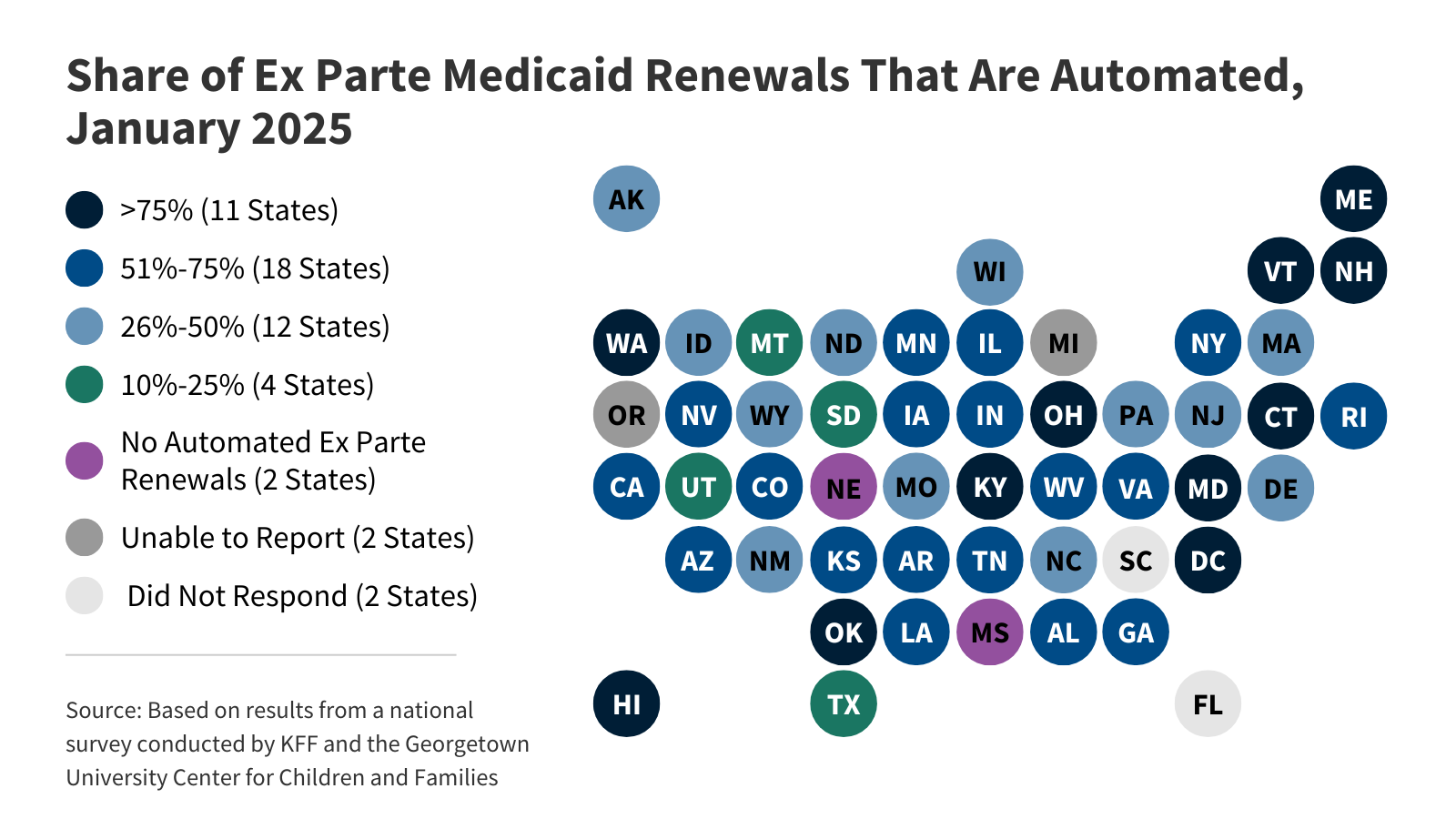
  • Eligibility, Enrollment, and Renewal Policies

    KFF's survey findings capture state actions that seek to improve the accuracy and efficiency of Medicaid and CHIP enrollment and renewal processes, as of January 2025.
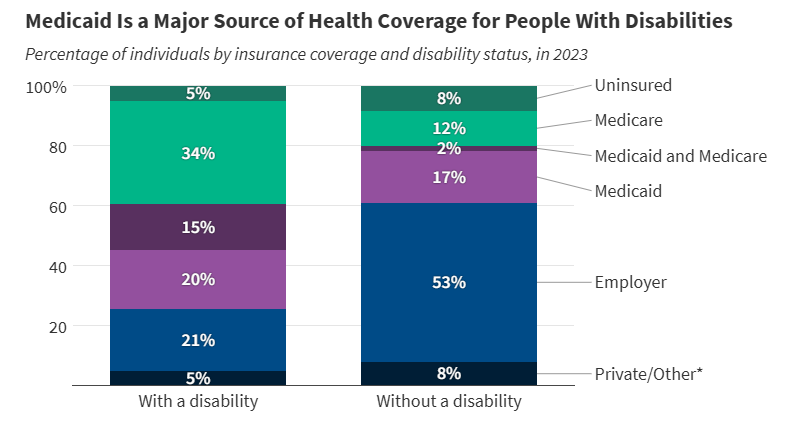
  • Seniors and People with Disabilities

    More than 1 in 3 people with disabilities (15 million) have Medicaid (35%). In comparison, only 19% of people without disabilities have Medicaid.
  • Children with Special Needs

    Amid debates about proposed cuts to federal Medicaid spending, this brief analyzes key characteristics of children with special health care needs and explores how Medicaid provides them with coverage.
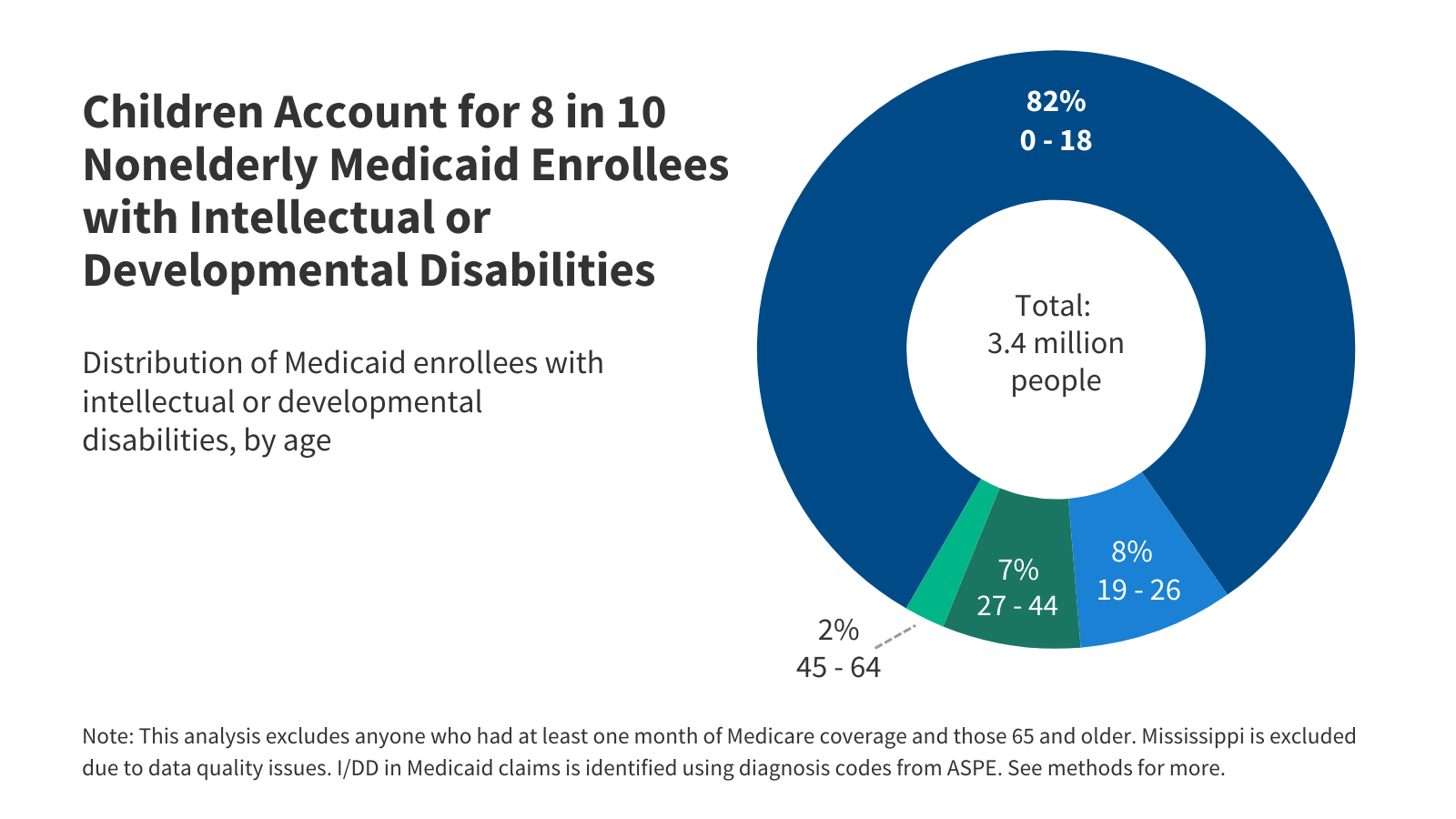
  • People With Intellectual and Developmental Disabilities

    Among the estimated 8 million people with intellectual and developmental disabilities (I/DD), over three million have Medicaid coverage.
  • Adults with Chronic Conditions

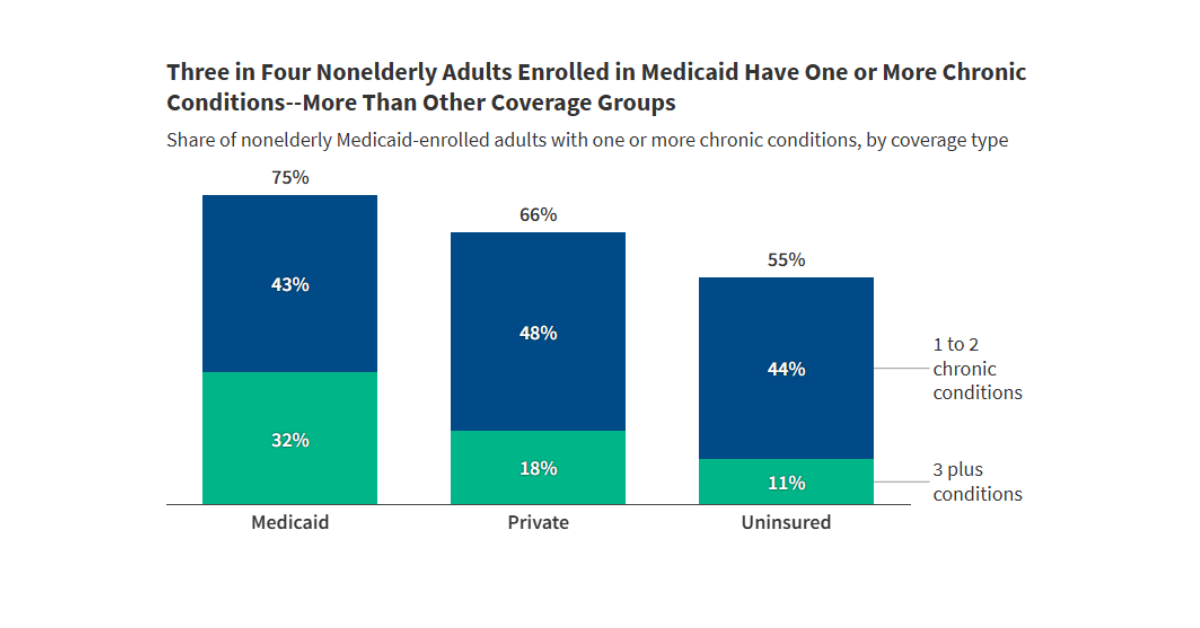
    Among working age adults enrolled in Medicaid, approximately three quarters have one or more chronic conditions, and nearly one-third have three or more.

Subscribe to KFF Emails

Choose which emails are best for you.
Sign up here

Filter

2,421 - 2,430 of 2,693 Results

  • Medicaid: Purchasing Prescription Drugs

    Issue Brief

    Medicaid: Purchasing Prescription Drugs A policy brief explaining how Medicaid purchases outpatient drugs and outlining the policy tools available to states to limit the rate of growth in spending on prescription drugs. Policy Brief (28 pages)

  • Medicare Chartbook

    Report

    The Medicare Chartbook includes data and background information critical to understanding the Medicare program and the challenges it faces in keeping up with the rising costs of health care and in ensuring the program s future financial security.

  • Women’s Health Data Book: A Profile of Women’s Health in the United States

    Fact Sheet

    The Women's Health Data Book: A Profile of Women's Health in the United States, offers the latest data and trends on the wide range of health issues that affect women across their life spans. Published by the Kaiser Family Foundation and the Jacobs Institute of Women's Health, the Data Book is edited by Dawn Misra, Ph.D. This book addresses social and economic factors and provides up-to-date information on chronic conditions, reproductive health, mental health, violence,…

  • Medicaid and Managed Care

    Fact Sheet

    This fact sheet provides an overview of the Medicaid program's increasing reliance on managed care to deliver services. Fact Sheet

  • Trends in Health Plans Serving Medicaid — 2000 Data Update

    Report

    An updated study follows trends in commercial health plan participation in Medicaid managed care and includes new analyses on the performance of Medicaid-dominated and commercial plans on measures of effective care and access to care, and on the extent to which plans restrict their Medicaid service areas.

  • Disparities in Women’s Health

    Other Post

    Disparities in Women's Health Disparities in health and health care continue to burden women, particularly affecting women of color or those who are poor. To shed more light on the factors contributing to inequalities in health and access to care for women, the Kaiser Family Foundation provided support for the newest issue of the Journal of the American Medical Women's Association (JAMWA) Disparities in Women's Health. This special issue features an editorial by Surgeon General…

  • Talking with Voters About the Uninsured

    Report

    Ten focus groups were conducted with voters April through July 2001, prior to the tragedies of September 11th and broad public recognition of an economic slowdown. The report, Effective Language and Themes for Talking About the Uninsured, finds that at that time: voters were still surprised by basic facts about the uninsured; voters seemed ready for messages about the uninsured that focus on the health and financial consequences of being uninsured, especially those centered on…

  • Prescription Drug Trends:  A Chartbook Update

    Report

    This November 2001 Chartbook updates data from last year's chartbook, including information about prescription drug coverage, expenditures and prices, utilization, drug promotion, and the pharmaceutical industry.

  • Issues Related to Unspent S-CHIP Money

    Issue Brief

    A new policy brief discusses issues involving over $11 billion of S-CHIP funds that states have not spent. It has been proposed that states could apply to use the funds for unemployed workers in these tough economic times. What are the implications? ISSUE BRIEF Download