Medicaid

new and noteworthy

An Early Look at States’ Differing Approaches to Implementing Medicaid Work Requirements Amid Cost and Time Constraints and Uncertainty

A new KFF survey of state Medicaid officials and focus groups in eight states captures the different choices states are making about how to implement Medicaid work requirements, with seven states planning for a more restrictive approach to verifying work or exemption status or to implement work requirements early. These implementation plans are taking shape as states encounter time, cost, and other constraints as well as uncertainty about how to define and verify certain exemptions due to delayed federal guidance.

Medicaid Watch

Featuring policy research, polling and news about how Medicaid is changing, and the impact of those changes due to the tax and spending cuts law

Medicaid Work Requirements

Tracking Medicaid Work Requirements: u003cbru003eData and Policies

To implement Medicaid work requirements, states will need to make important policy and operational decisions, implement needed system upgrades or changes, develop new outreach and education strategies, and hire and train staff, all within a relatively short timeframe. The information tracked here can serve as a resource to understand Medicaid work requirements and state options, gauge readiness, and track implementation of the requirements.

understanding medicaid

Medicaid Financing

Medicaid represents $1 out of every $5 spent on health care in the U.S. and is the major source of financing for states to provide health coverage and long-term care. This brief examines key questions about Medicaid financing and how it works.

Medicaid and Provider Taxes

All states except Alaska cover some state Medicaid costs with taxes on health care providers. This brief uses data from KFF’s 2024-2025 survey of Medicaid directors to describe current practices and the federal rules governing them.

5 Facts: Medicaid and Hospitals

Absorbing reductions in Medicaid spending could be challenging for hospitals, particularly for those that are financially vulnerable. This brief provides data on the reach of Medicaid across hospitals, patients, and charity care.

Medicaid Home Care in 2025

This issue brief provides an overview of what Medicaid home care (also known as “home- and community-based services”) is, who is covered, and what services were available in 2025.

5 Facts: Medicaid Program Integrity

This brief explains what is known about improper payments and fraud and abuse in Medicaid and describes ongoing state and federal actions to address program integrity.

2025 Medicaid Home Care survey

Payment Rates Ahead of 2025 Reconciliation Law

This issue brief describes Medicaid payment rates for home care and other workforce supports that are in place in 2025, before the majority of the 2025 reconciliation law provisions start taking effect.

Home Care Support for Family Caregivers in 2025
number of responding states, including DC, that allow payments for family caregivers by type of home care program and type of caregiver.

This issue brief describes the availability of self-directed services and supports for family caregivers in Medicaid home care in 2025, before most provisions in the reconciliation law take effect.

States’ Management of Home Care Spending

This issue brief describes the mechanisms states are currently using to limit Medicaid spending on home care and their plans for adopting new mechanisms in state fiscal year (FY) 2026.

Waiting Lists for Medicaid Home Care, 2016 to 2025
A Look at Waiting Lists for Medicaid Home- and Community-Based Services from 2016 to 2025

This data note provides new information about waiting lists in Medicaid home care before many of the provisions in the 2025 reconciliation law go into effect.

Eligibility and coverage
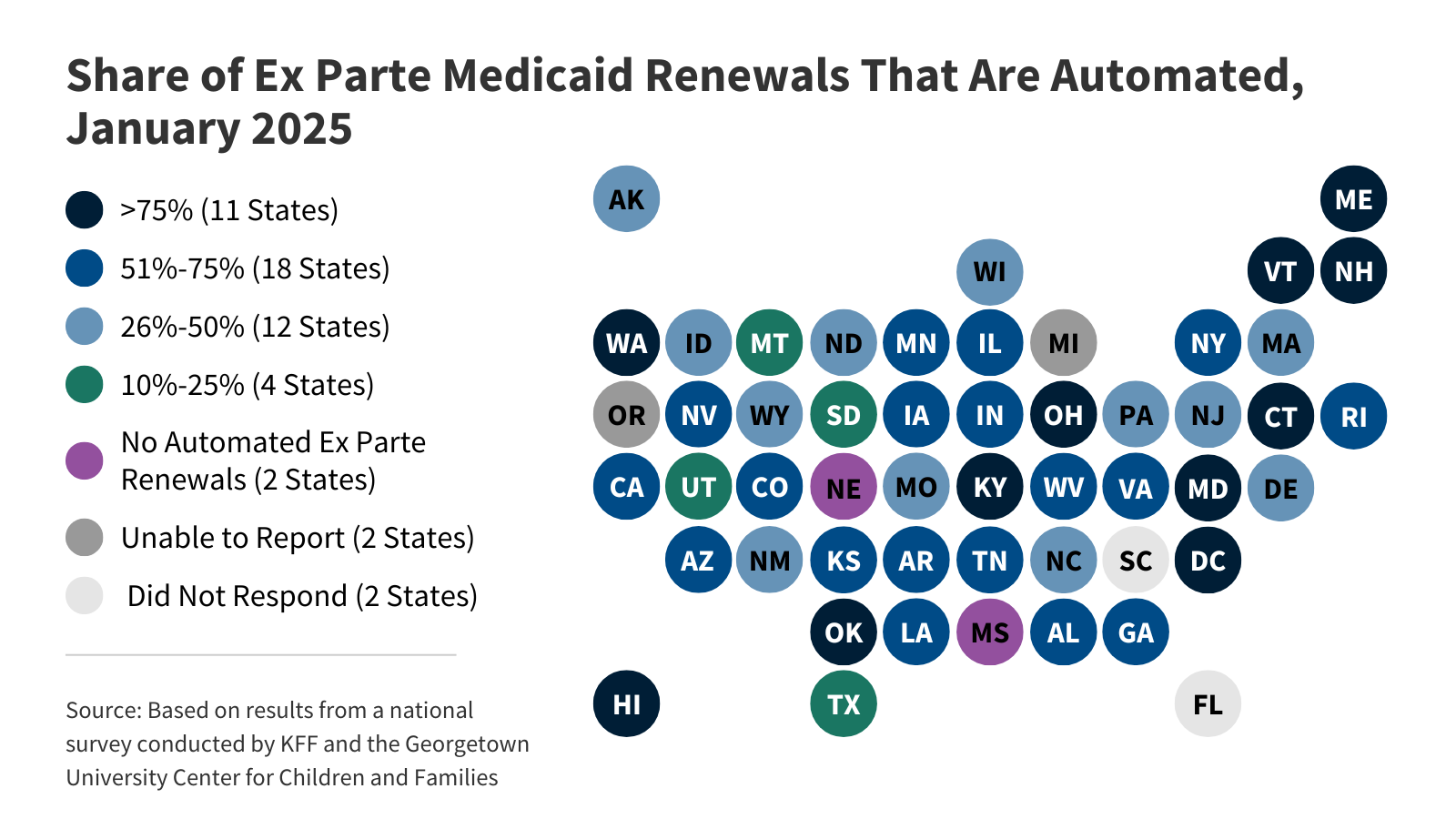
  • Eligibility, Enrollment, and Renewal Policies

    KFF's survey findings capture state actions that seek to improve the accuracy and efficiency of Medicaid and CHIP enrollment and renewal processes, as of January 2025.
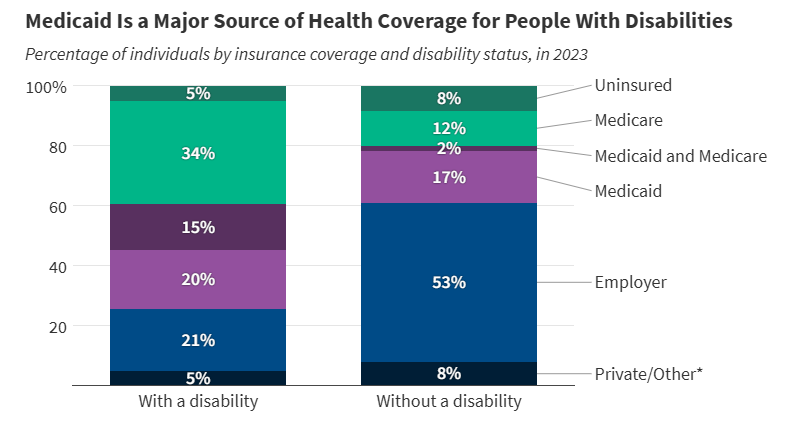
  • Seniors and People with Disabilities

    More than 1 in 3 people with disabilities (15 million) have Medicaid (35%). In comparison, only 19% of people without disabilities have Medicaid.
  • Children with Special Needs

    Amid debates about proposed cuts to federal Medicaid spending, this brief analyzes key characteristics of children with special health care needs and explores how Medicaid provides them with coverage.
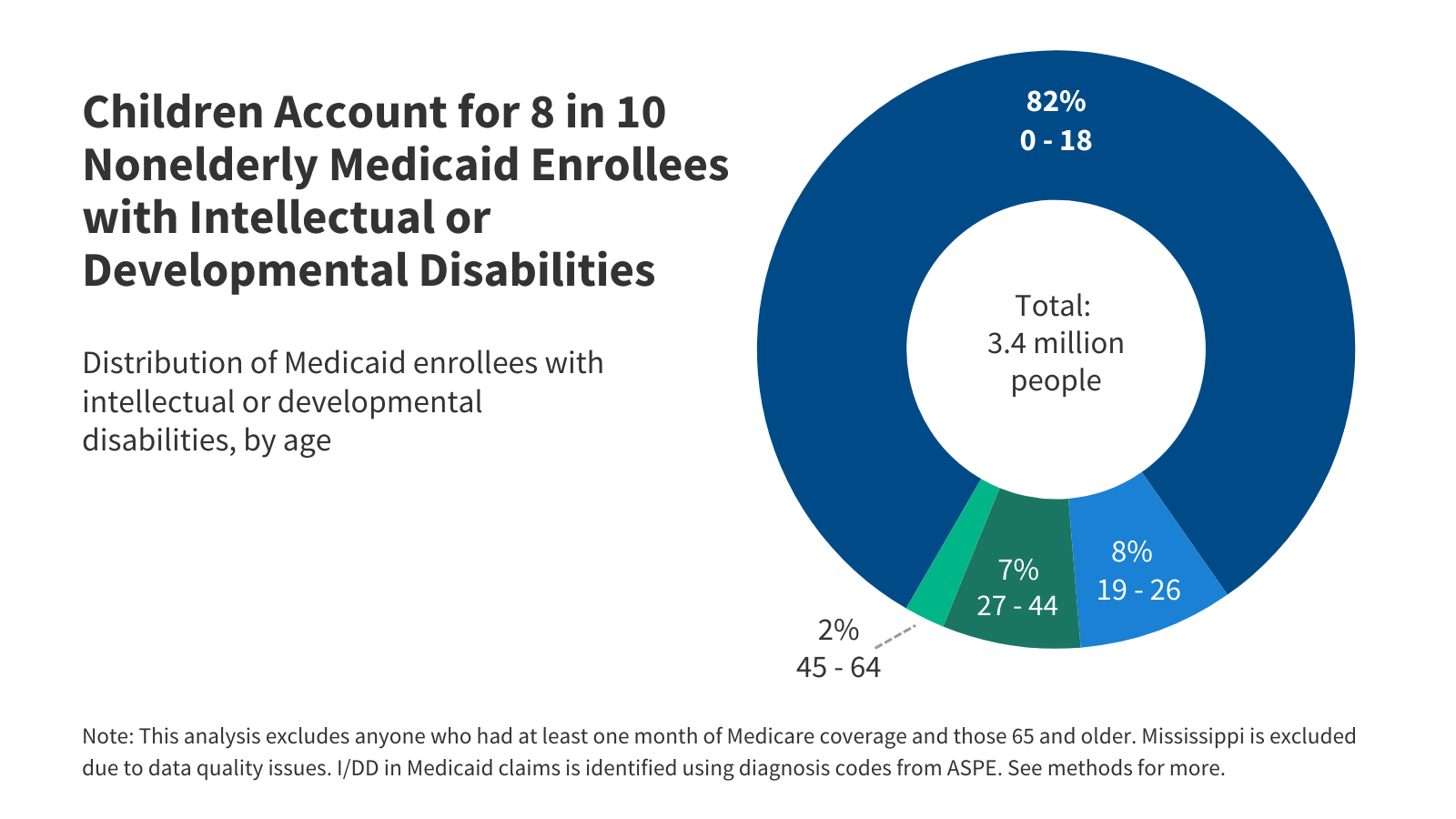
  • People With Intellectual and Developmental Disabilities

    Among the estimated 8 million people with intellectual and developmental disabilities (I/DD), over three million have Medicaid coverage.
  • Adults with Chronic Conditions

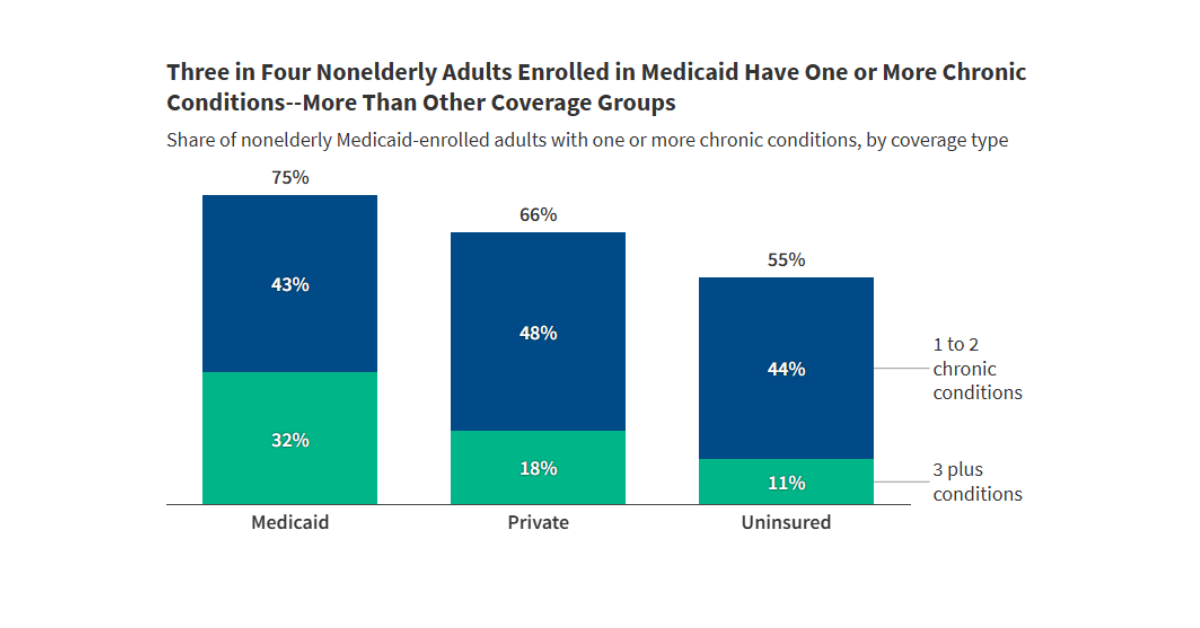
    Among working age adults enrolled in Medicaid, approximately three quarters have one or more chronic conditions, and nearly one-third have three or more.

Subscribe to KFF Emails

Choose which emails are best for you.
Sign up here

Filter

2,371 - 2,380 of 2,692 Results

  • Medicaid and the Prescription Drug Benefit

    Issue Brief

    This policy brief includes background information on Medicaid and its drug benefit, provides examples of how states are using the cost containment mechanisms at their disposal and addresses issues surrounding beneficiary access to outpatient drugs. Policy Brief

  • Medicaid Enrollment in 50 States: December 2001 Data Update

    Report

    This publication provides state-by-state enrollment information and identifies national trends from the data. Some of the findings include: The rate of Medicaid enrollment growth doubled during 2001. Overall enrollment increased in all 50 states and the District of Columbia, with positive enrollment growth in the categories of families, children and pregnant women as well as the aged and disabled. Data suggest that Medicaid continues to evolve from a welfare-based program to a more traditional health…

  • Medicaid’s Role in Covering Families

    Other Post

    Medicaid's Role in Covering Families Twelve years ago, the U.S. Congress passed the law requiring that by the end of fiscal year 2002, states would complete a series of incremental steps to ensure all children in families with incomes at or below the federal poverty line would have Medicaid coverage. The day, September 30, has arrived and the Commission put together a brief description of how Medicaid assists low-income American families with their health coverage.…

  • Recent Publications on Medicaid and State Budgets

    Other Post

    Medicaid is a joint federal-state program in which Federal Medicaid matching payments are projected to be $147 billion FY 2002, while state spending is estimated at about $100 billion. Because Medicaid is such a large part of state budgets and states are struggling with their overall fiscal situations, the Kaiser Commission on Medicaid and the Uninsured continues to follow developments in Medicaid progams related to state budgets. Below are the most recent publications on this…

  • Medicare+Choice in California: Lessons and Insights

    Report

    Thirty-five percent of all California Medicare beneficiaries are enrolled in a M+C plan, far in excess of the 14 percent rate nationwide. This report seeks to identify what lessons for the nation can be drawn from the California M+C experience, as Congress debates the implications of major withdrawals from the M+C program and potential policy changes aimed at reversing this trend. The report is based largely on analysis of M+C data on plan participation, withdrawals,…

  • Medicare’s Disabled Beneficiaries: The Forgotten Population in the Debate Over Drug Benefits

    Report

    About 5 million Americans under age 65 qualify for Medicare coverage because they are totally and permanently disabled. They are more likely than the elderly to live in poverty, to be in poor health, and to experience difficulties living independently and performing basic daily tasks. A new study from The Commonwealth Fund and the Henry J. Kaiser Family Foundation, reports that the disabled have few options other than Medicaid for obtaining prescription coverage. In ,…

  • Nursing Home Staffing Standards

    Report

    This policy brief describes the current federal staffing requirements and how states separately regulate staffing levels in nursing homes. It also presents data showing actual staffing levels in over half of this country's nursing homes exceed the levels that states and the federal government require. Report PDF Download