Medicaid

new and noteworthy

An Early Look at States’ Differing Approaches to Implementing Medicaid Work Requirements Amid Cost and Time Constraints and Uncertainty

A new KFF survey of state Medicaid officials and focus groups in eight states captures the different choices states are making about how to implement Medicaid work requirements, with seven states planning for a more restrictive approach to verifying work or exemption status or to implement work requirements early. These implementation plans are taking shape as states encounter time, cost, and other constraints as well as uncertainty about how to define and verify certain exemptions due to delayed federal guidance.

Medicaid Watch

Featuring policy research, polling and news about how Medicaid is changing, and the impact of those changes due to the tax and spending cuts law

Medicaid Work Requirements

Tracking Medicaid Work Requirements: u003cbru003eData and Policies

To implement Medicaid work requirements, states will need to make important policy and operational decisions, implement needed system upgrades or changes, develop new outreach and education strategies, and hire and train staff, all within a relatively short timeframe. The information tracked here can serve as a resource to understand Medicaid work requirements and state options, gauge readiness, and track implementation of the requirements.

understanding medicaid

Medicaid Financing

Medicaid represents $1 out of every $5 spent on health care in the U.S. and is the major source of financing for states to provide health coverage and long-term care. This brief examines key questions about Medicaid financing and how it works.

Medicaid and Provider Taxes

All states except Alaska cover some state Medicaid costs with taxes on health care providers. This brief uses data from KFF’s 2024-2025 survey of Medicaid directors to describe current practices and the federal rules governing them.

5 Facts: Medicaid and Hospitals

Absorbing reductions in Medicaid spending could be challenging for hospitals, particularly for those that are financially vulnerable. This brief provides data on the reach of Medicaid across hospitals, patients, and charity care.

Medicaid Home Care in 2025

This issue brief provides an overview of what Medicaid home care (also known as “home- and community-based services”) is, who is covered, and what services were available in 2025.

5 Facts: Medicaid Program Integrity

This brief explains what is known about improper payments and fraud and abuse in Medicaid and describes ongoing state and federal actions to address program integrity.

2025 Medicaid Home Care survey

Payment Rates Ahead of 2025 Reconciliation Law

This issue brief describes Medicaid payment rates for home care and other workforce supports that are in place in 2025, before the majority of the 2025 reconciliation law provisions start taking effect.

Home Care Support for Family Caregivers in 2025
number of responding states, including DC, that allow payments for family caregivers by type of home care program and type of caregiver.

This issue brief describes the availability of self-directed services and supports for family caregivers in Medicaid home care in 2025, before most provisions in the reconciliation law take effect.

States’ Management of Home Care Spending

This issue brief describes the mechanisms states are currently using to limit Medicaid spending on home care and their plans for adopting new mechanisms in state fiscal year (FY) 2026.

Waiting Lists for Medicaid Home Care, 2016 to 2025
A Look at Waiting Lists for Medicaid Home- and Community-Based Services from 2016 to 2025

This data note provides new information about waiting lists in Medicaid home care before many of the provisions in the 2025 reconciliation law go into effect.

Eligibility and coverage
  • Eligibility, Enrollment, and Renewal Policies

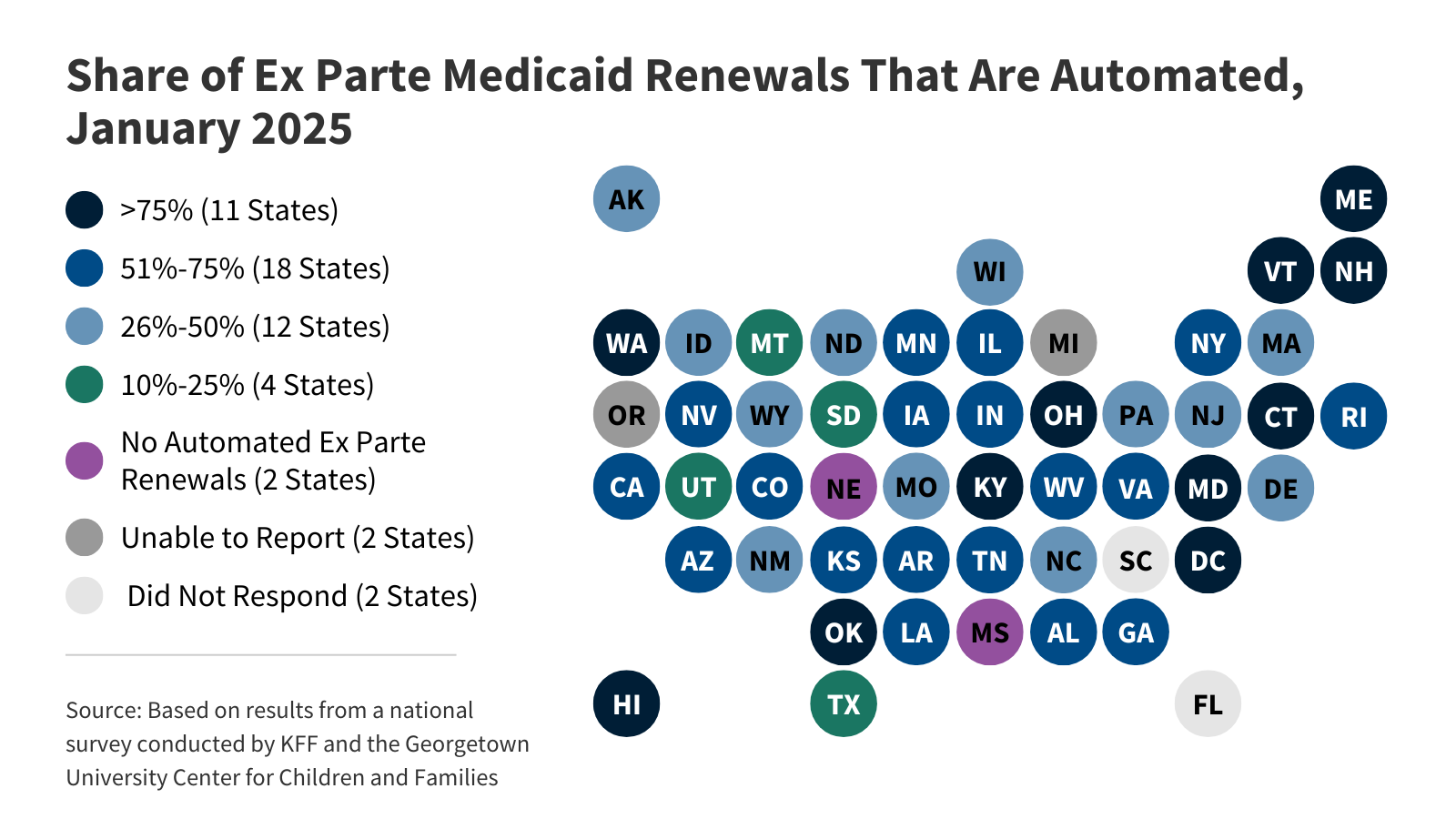
    KFF's survey findings capture state actions that seek to improve the accuracy and efficiency of Medicaid and CHIP enrollment and renewal processes, as of January 2025.
  • Seniors and People with Disabilities

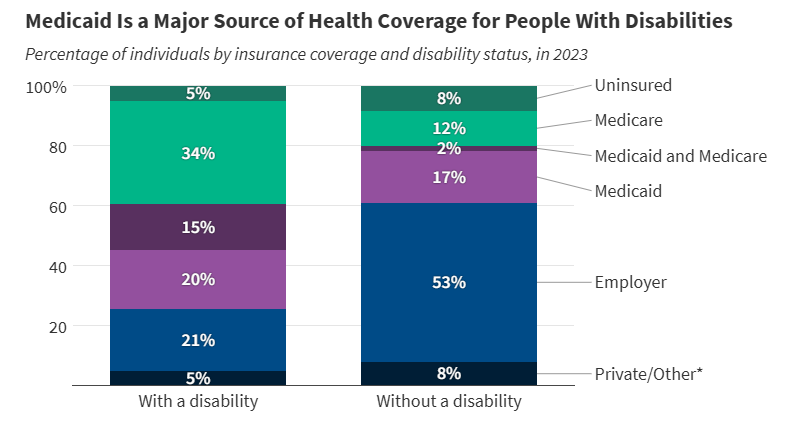
    More than 1 in 3 people with disabilities (15 million) have Medicaid (35%). In comparison, only 19% of people without disabilities have Medicaid.
  • Children with Special Needs

    Amid debates about proposed cuts to federal Medicaid spending, this brief analyzes key characteristics of children with special health care needs and explores how Medicaid provides them with coverage.
  • People With Intellectual and Developmental Disabilities

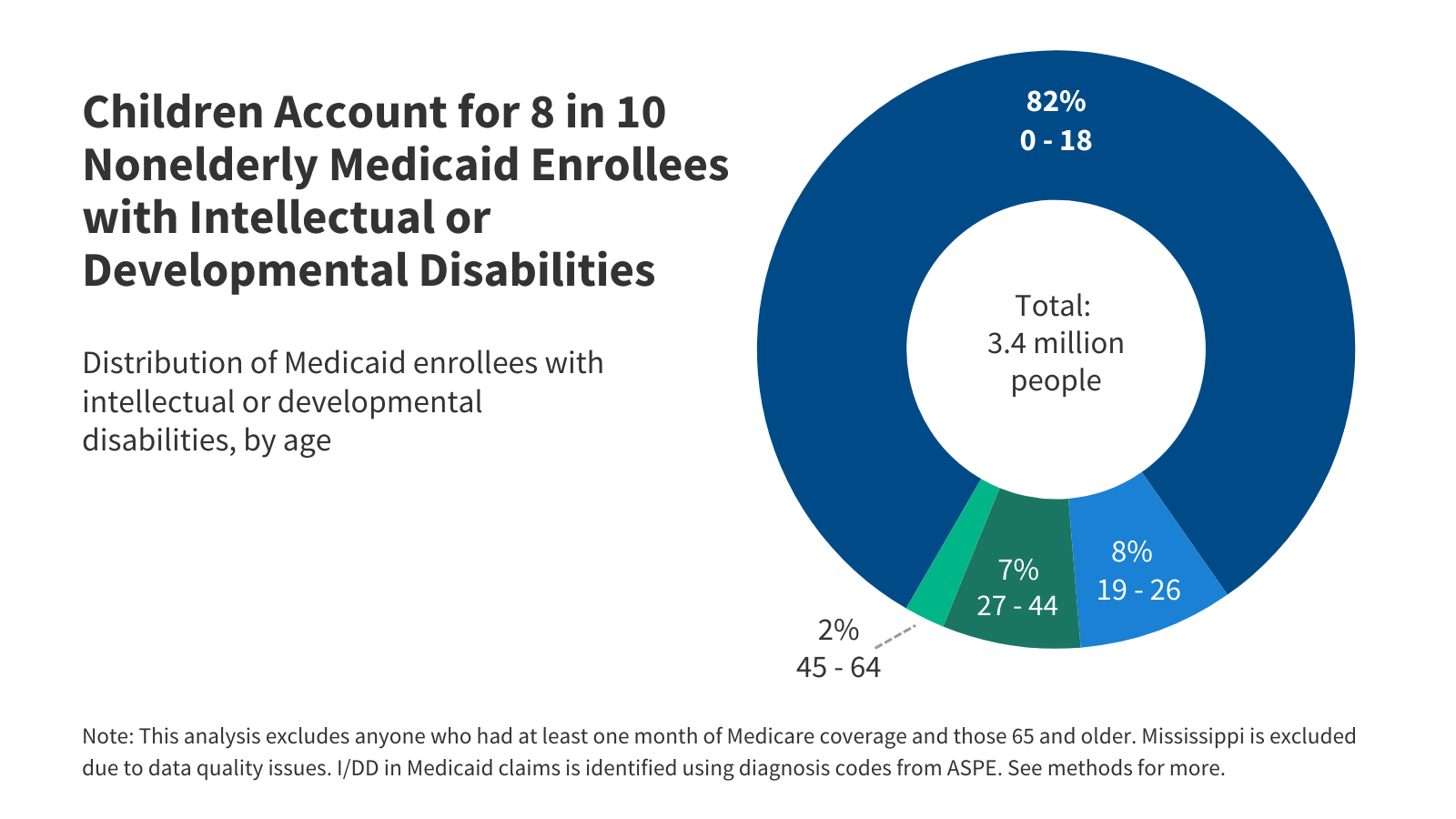
    Among the estimated 8 million people with intellectual and developmental disabilities (I/DD), over three million have Medicaid coverage.
  • Adults with Chronic Conditions

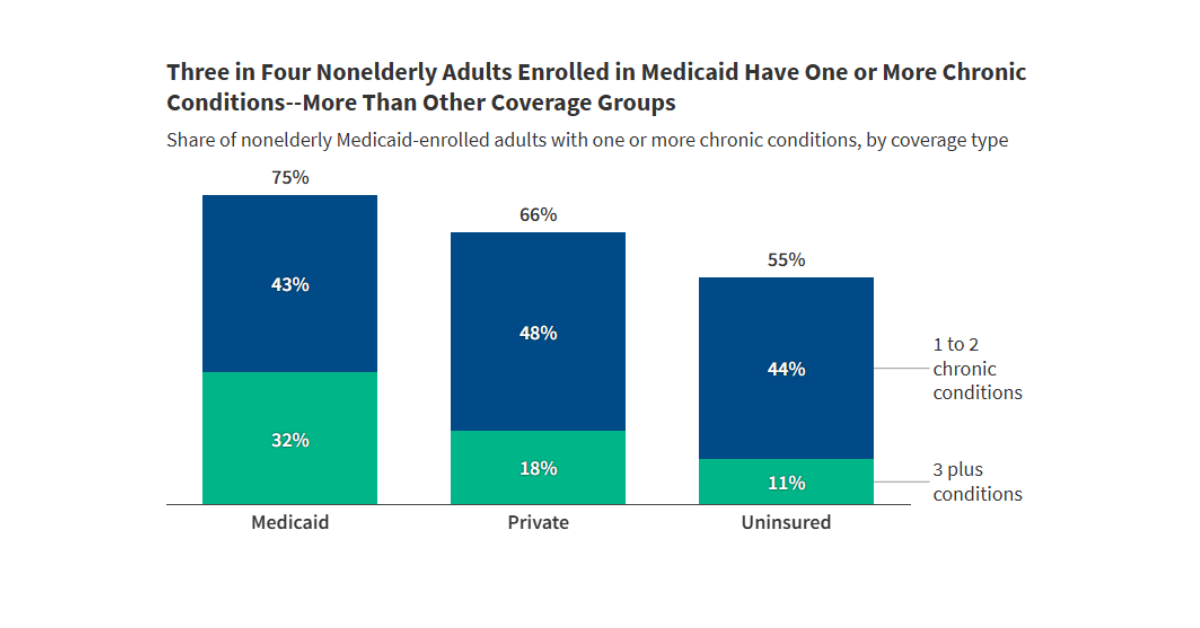
    Among working age adults enrolled in Medicaid, approximately three quarters have one or more chronic conditions, and nearly one-third have three or more.

Subscribe to KFF Emails

Choose which emails are best for you.
Sign up here

Filter

2,241 - 2,250 of 2,693 Results

  • The Impact of Recent Changes in Health Care Coverage for Low-Income People:  A First Look at the Research Following Changes in Oregon’s Medicaid Program

    Issue Brief

    The Impact of Recent Changes in Health Care Coverage for Low-Income People: A First Look at the Research Following Changes in Oregon's Medicaid Program Oregon recently restructured its Medicaid program through a Section 1115 waiver and other program changes, largely in response to particularly difficult state budget problems. This report summarizes key findings on the impact of Oregon's changes, based on work conducted by a research collaborative within the state. The experience in Oregon may…

  • Medicaid and Long-term Care – Report

    Report

    Medicaid and Long-term Care This report examines Medicaid's role in providing long-term care services, including the services provided, the population needing services, and how the services are delivered. Current policy issues and challenges for Medicaid's role in providing these services are also discussed. Report (.pdf)

  • Summary Of Early Observations Of The Transition Of Immigrant Families From A Medicaid Look-Alike Program To Basic Health In Washington State

    Issue Brief

    In 2002, the state of Washington eliminated state-funded Medicaid look-alike coverage for certain immigrant families. These families then became eligible for more limited coverage in the state's Basic Health program. This report details the process of this transition and the outcomes for coverage and access for these individuals. Research Brief (.pdf)

  • Recent Growth in Medicaid Home and Community-Based Service Waivers

    Report

    Medicaid spending on home and community-based service (HCBS) waivers dominates spending on community-based long-term care services offered through the Medicaid program. This paper examines trends in HCBS waiver enrollment and spending in recent years. Report (.pdf)

  • Medicaid and State-Funded Coverage for Adults:  Estimates of Eligibility and Enrollment

    Report

    Medicaid and State-Funded Coverage for Adults: Estimates of Eligibility and Enrollment Lack of health insurance coverage for low-income adults remains a pressing policy challenge. In 2002, low-income adults who were uninsured accounted for nearly half of the uninsured population. This report provides an overview of nonelderly adult eligibility for and enrollment in Medicaid and state-funded coverage, nationally and in 13 study states. Executive Summary (.pdf) Full Report (.pdf) Appendix (.pdf)

  • Challenges and Tradeoffs in Low-Income Family Budgets:  Implications for Health Coverage

    Report

    Challenges and Tradeoffs in Low-Income Family Budgets: Implications for Health Coverage - Report This report explores the experiences of families trying to make ends meet on limited budgets. By discussing these families’ work, spending patterns, financial challenges, priorities and tradeoffs and health care and coverage, this report intends to provide a deeper understanding of families’ financial pressures and choices and information to assess the impact of current and proposed policies. Report (.pdf)

  • Preparing for the Medicare Drug Discount Card Rollout: A Conference Call Discussion

    Other Post

    Preparing for the Medicare Drug Discount Card Rollout A Conference Call Discussion With Medicare beneficiaries eligible to subscribe to a discount drug card as of May 3 and use them as of June 1, there is little time to clear up any confusion or answer outstanding questions about the program. Dozens of private companies are sponsoring national or regional cards, including some Medicare managed care plans. Enrollment fees could be as high as $30 per…

  • Striving to Make Ends Meet:  Low-Income Families’ Finances and Health Coverage

    Other Post

    Striving to Make Ends Meet: Low-Income Families’ Finances and Health Coverage The Kaiser Commission on Medicaid and the Uninsured released new reports and held a policy briefing on the challenges and tradeoffs low-income families face when dealing with their budgets and the implications for health coverage. Challenges and Tradeoffs in Low-Income Family Budgets: Implications for Health CoverageFaces of Medicaid Webcast of April 20, 2004 Policy Briefing