Medicaid

Medicaid Budget Survey

Work Requirements

Challenges Implementing Work Requirements

To better understand how states are preparing for Medicaid work requirements, states were asked to discuss anticipated challenges to implementing work requirements by the end of 2026, including related system changes and data matching.

Medicaid Home Care

Using data from the 23rd KFF survey of officials administering Medicaid home care programs, this issue brief describes the mechanisms states are currently using to limit Medicaid spending on home care and their plans for adopting new mechanisms in state fiscal year (FY) 2026.

A Look at Waiting Lists for Medicaid Home- and Community-Based Services from 2016 to 2025

This data note provides new information about waiting lists in Medicaid home care before many of the provisions in the 2025 reconciliation law go into effect. The data come from KFF’s 23rd survey on Medicaid home care programs in all 50 states and DC.

KFF regularly surveys states about their Medicaid home- and community-based services (HCBS) programs and their eligibility policies for people who are eligible for Medicaid on the basis of having a disability or being 65 and older.

states-are-most-likely-to-offer-home-care-to-eligible-people-with-intellectual-developmental-disabilities_FI_v2_7f7f71.png

This issue brief provides an overview of what Medicaid home care (also known as “home- and community-based services” or HCBS) is, who is covered, and what services were available in 2024.

Eligibility and coverage
  • Eligibility, Enrollment, and Renewal Policies

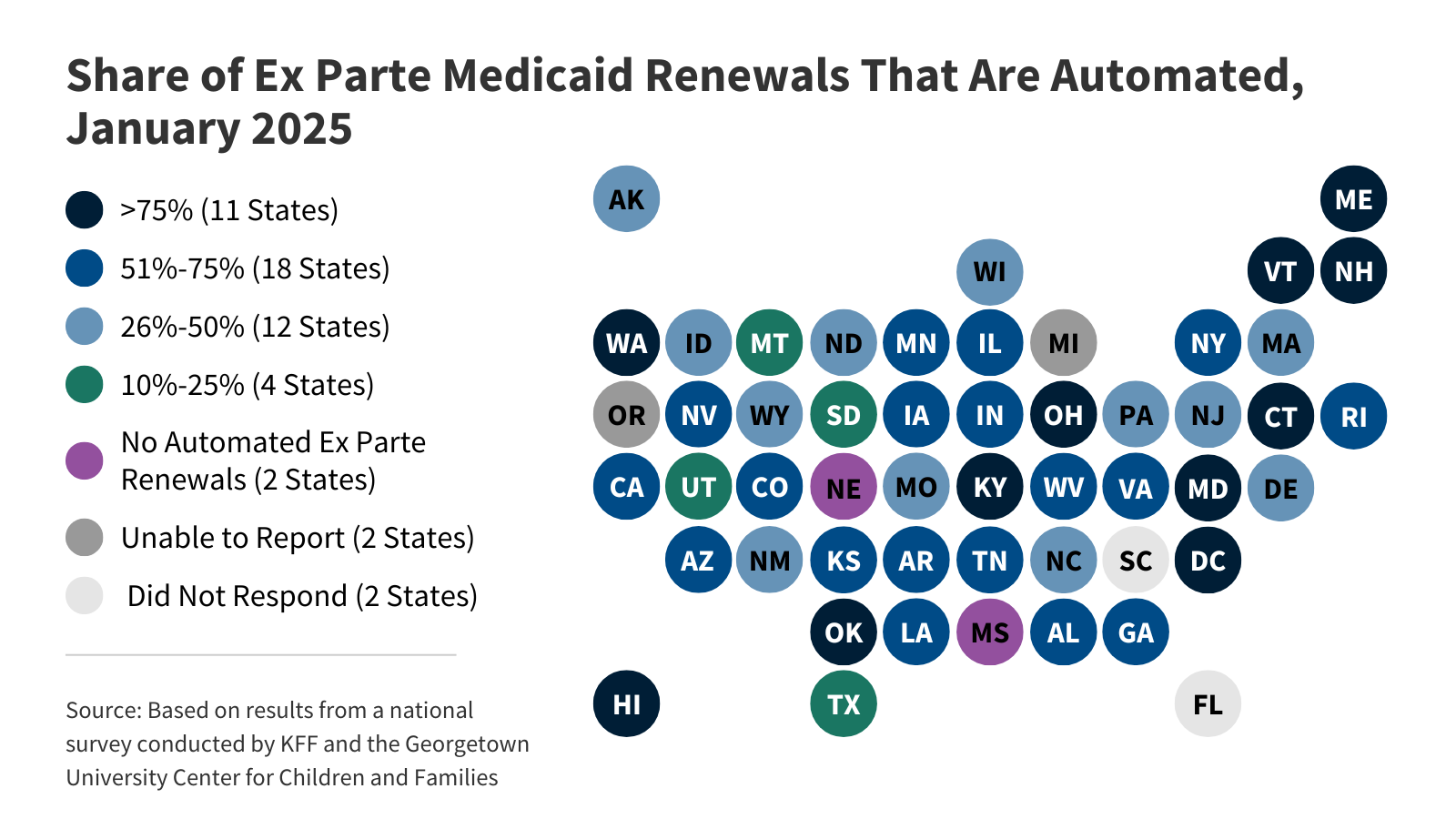
    KFF's survey findings capture state actions that seek to improve the accuracy and efficiency of Medicaid and CHIP enrollment and renewal processes, as of January 2025.
  • Seniors and People with Disabilities

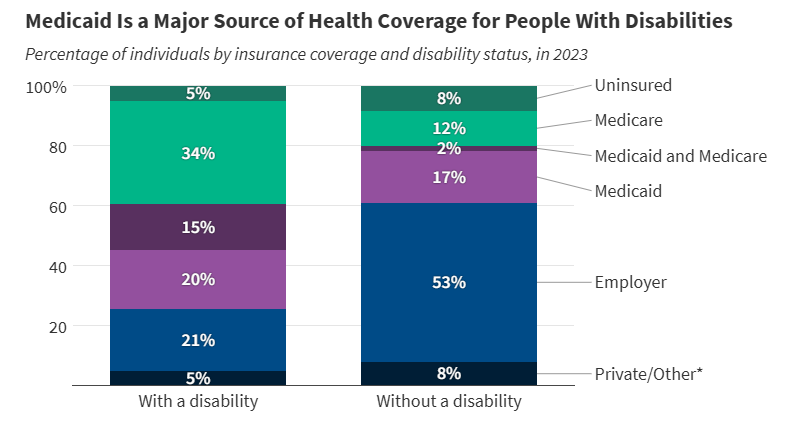
    More than 1 in 3 people with disabilities (15 million) have Medicaid (35%). In comparison, only 19% of people without disabilities have Medicaid.
  • Children with Special Needs

    Amid debates about proposed cuts to federal Medicaid spending, this brief analyzes key characteristics of children with special health care needs and explores how Medicaid provides them with coverage.
  • People With Intellectual and Developmental Disabilities

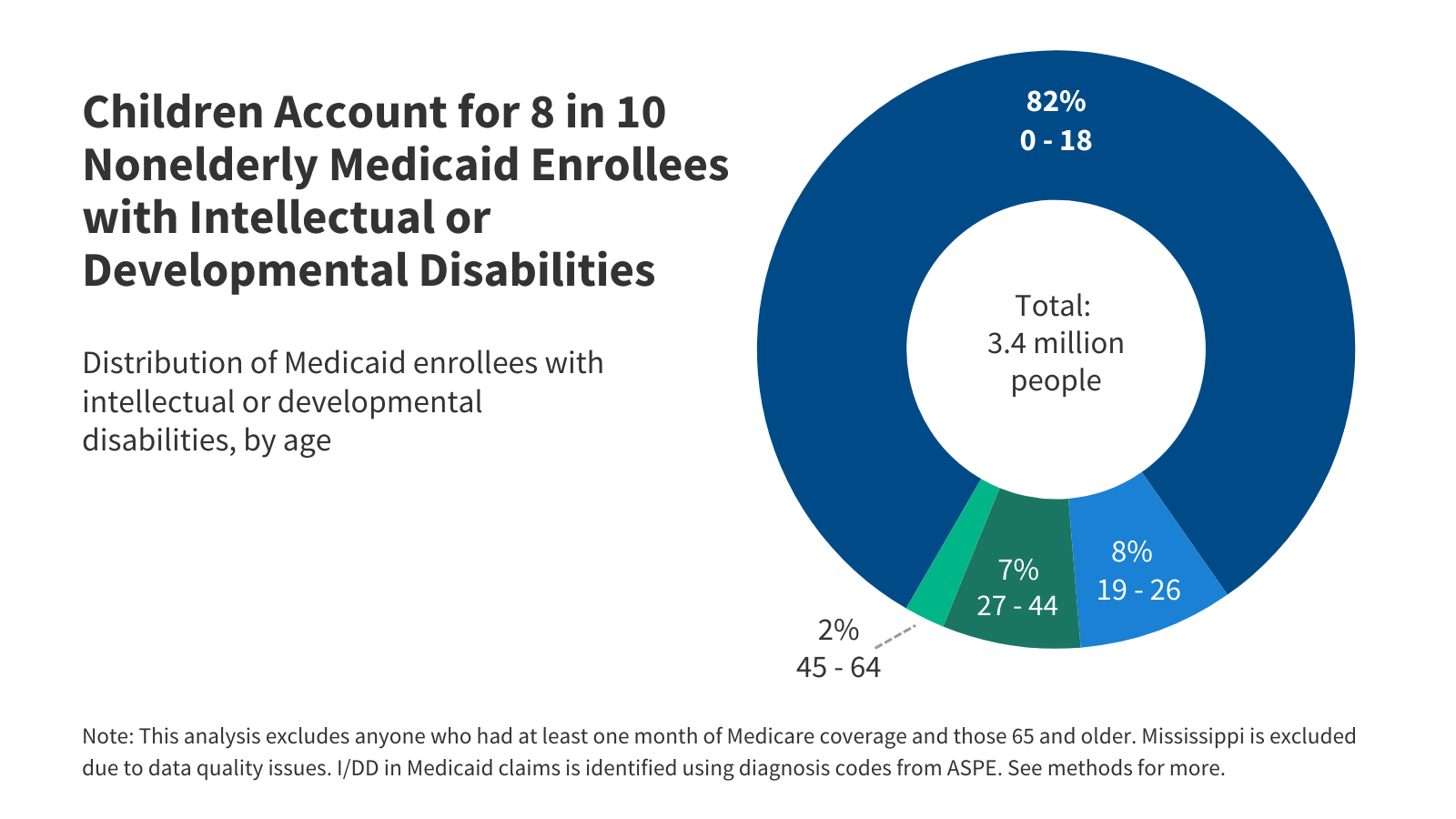
    Among the estimated 8 million people with intellectual and developmental disabilities (I/DD), over three million have Medicaid coverage.
  • Adults with Chronic Conditions

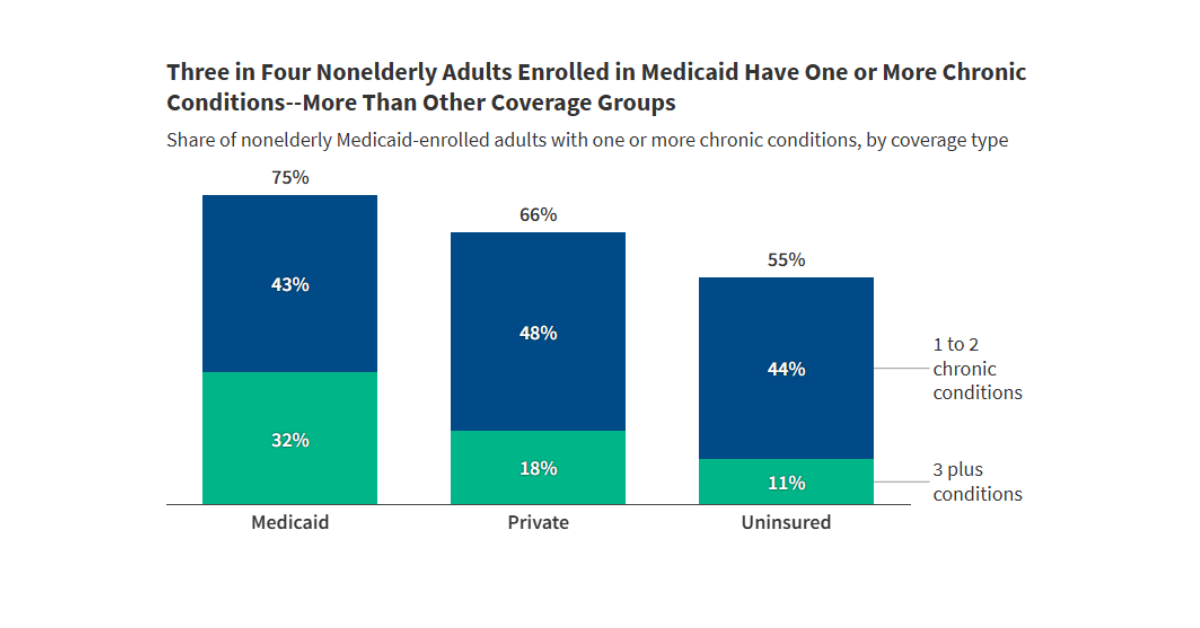
    Among working age adults enrolled in Medicaid, approximately three quarters have one or more chronic conditions, and nearly one-third have three or more.

The Essentials
  • 5 Facts: Immigrants and Medicaid

    This brief provides five key facts on Medicaid and immigrants as context for understanding the potential impacts of policy changes under the Trump administration.
  • 5 Facts: Medicaid and Hospitals

    This brief explains the role of Medicaid for hospitals, including how much spending on hospital care comes from Medicaid, the share of births covered by the program, and how Medicaid expansion has impacted hospital finances.
  • Medicaid Financing: The Basics

    Medicaid is a major source of financing for states to provide health coverage and long-term services and supports for low-income residents. This brief examines key questions about Medicaid financing and how it works.
  • 5 Facts: Medicaid’s Share of National Health Spending

    This brief explores how Medicaid spending contributes to national health spending and how different service areas contribute to Medicaid costs.
  • 5 Facts: Medicaid and Nursing Facilities

    The substantial Medicaid savings in the reconciliation bill could have major implications for nearly 15,000 federally certified nursing facilities and the 1.2 million people living in them.

Subscribe to KFF Emails

Choose which emails are best for you.
Sign up here
Filter

2,181 - 2,190 of 2,662 Results

  • SCHIP Program Enrollment:  December 2003 Update

    Report

    SCHIP Program Enrollment: December 2003 Update The latest survey of states on State Children's Health Insurance Program shows an enrollment decline in the second half of 2003--the first decline in the six-year history of the program. Report (.

  • Roundtable Discussion of Medicaid Waivers: Lessons for California

    Other Post

    Medicaid Waivers: Lessons from California, a roundtable discussion hosted by the Foundation and the University of California, Berkeley Center for Health and Public Policy Studies on Wednesday, July 28, 2004, provided an overview of current Section 1115 waiver activity across the states, focusing on Health Insurance Flexibility and Accountability (HIFA) Initiative waiver efforts.

  • Consumer Protection Issues Raised by the Medicare Prescription Drug, Improvement, and Modernization Act of 2003

    Report

    This paper identifies and examines consumer protection issues that arise from the Medicare Prescription Drug, Improvement, and Modernization Act of 2003. Key issue areas include: beneficiary information, marketing, enrollment and disenrollment, the drug benefit package and cost-sharing, the appeals process, concerns for low-income beneficiaries, challenges for nursing home issues, and fraud and abuse. Report (.

  • The President’s FY 2005 Budget Proposal:  Overview and Briefing Charts

    Report

    The President's FY 2005 Budget Proposal: Overview and Briefing Charts The overview and briefing charts present information on the President's FY 2005 budget proposal to Congress beginning with federal surplus/deficit spending historical data and a summary of the overall composition of the Administration's budget request.

  • The New Medicare Rx Benefit:  Challenges for Maintaining Access to Prescription Drugs

    Other Post

    The New Medicare Rx Benefit: Challenges for Maintaining Access to Prescription Drugs With the launch of the new Medicare Part D prescription drug benefit less than 18 months away, and growing interest in beneficiaries’ access to medications in the future, the Kaiser Family Foundation is pleased to release two new publications that examine issues concerning…

  • The “Clawback:” State Financing of Medicare Drug Coverage

    Issue Brief

    This issue paper describes the origins of the clawback, the formula by which each state’s clawback amount is calculated, and the clawback’s implications for states and for low-income Medicare beneficiaries. Issue Paper (.